Zero Tariffs: How China Quietly Rewriting Africa’s Trade Future

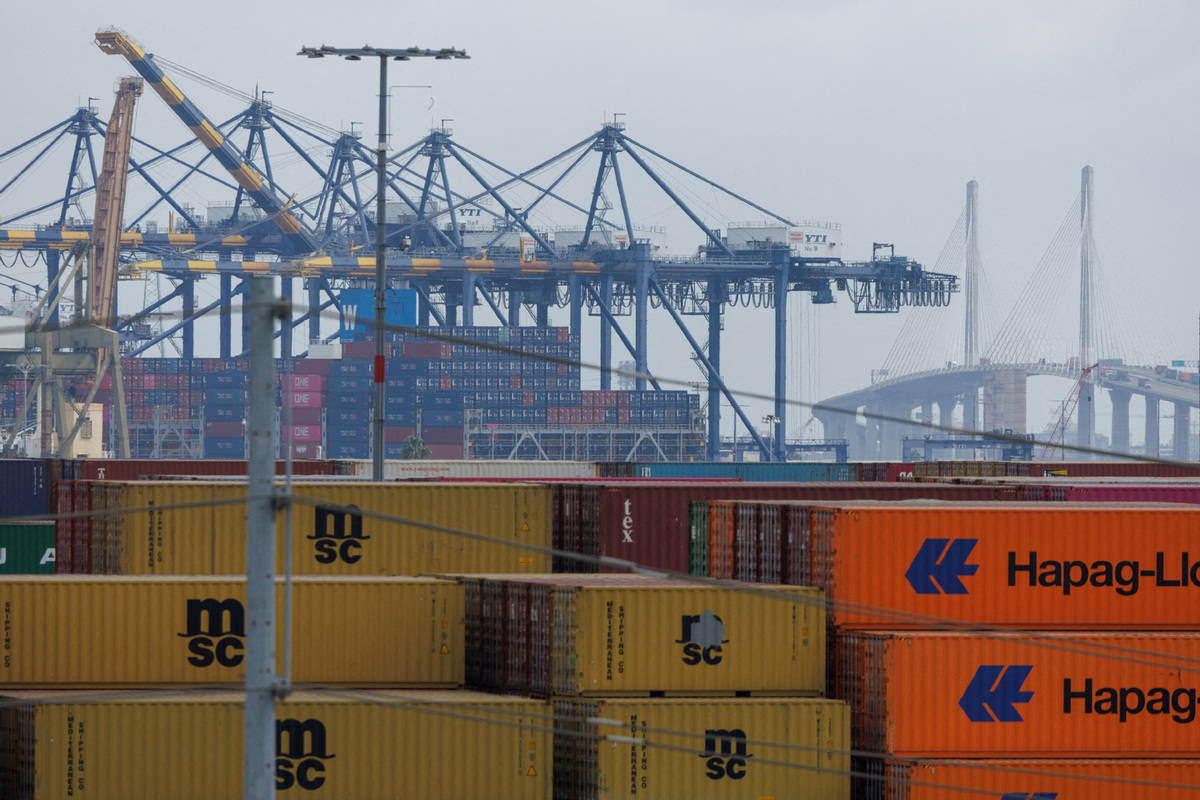
At a time when trade wars are raging across the world, something remarkable happened. China opened up its market to Africa fully, as it had promised during FOCAC 9 in September 2024. This write-up will have characteristics of great power contestation concerning the African continent, but it’s not a blind hip of praise for Beijing. It’s a fact that China has not in the past treated Africa with an imperial hand, unlike its counterparts in the West, especially Washington, that only deals with Africa on vertical level.

Present Trump 2.o has decided commercial diplomacy will shape his foreign policy, and Tariffs are at the forefront of his arsenal as the United States deals with the rest of the world especially Africa. Even when Washington established the famous African Growth and Opportunity Act (AGOA) in 2000 to give African economies duty free access, at the end of the day countries that didn’t obey US orders were kicked out. The orders are normally political conditions such as human rights records that are hypocritical, after all they set up their country after genocides against native Americans.

China’s policy to grant African countries duty free access was not an overnight decision, it has been decades in the making, based on pragmatic dialogue between the two sides. It all started back in the Forum on China Africa Cooperation (FOCAC) Ministerial conference in Addis Ababa in the December of 2003 when zero Tariff were introduced on selected African exports to China from 30 countries, and by 2018 the number increased to 33.

In September of 2024 the 33 countries were formally granted zero tariff treatment to all their experts to China beyond the selected goods from the past, and this took effect in the following December. Through further dialogues most notably the most recent FOCAC followup ministerial meeting held in Changsha in June of 2025, it was announced that all goods from the 33 African countries, and an additional 20 that have diplomatic relations with Beijing would be eligible for 100% duty free access to the world’s second largest economy.

At the moment all African countries except Eswatini that recognizes Taiwan as a country, have a duty free access to the Chinese market. Eswatini’s diplomatic stance does not make sense because even the United States doesn’t recognize Taiwan in that capacity. As Africa was still figuring out the African Continental Free Trade Area (AfCFTA) nothing is going to boost the continent’s main trade vehicle like the Chinese gesture for trade and corporation.

Today China has the second largest economy on the planet with a population of about 1.4 billion people, it has a middle class of over 400 million people, this middle class is still growing and it has the characteristics of other middle classes world over, it desires high quality products of all sorts. This opens several opportunities for the African continent, for example through AfCFTA, to meet Chinese demand for beauty products by African start ups in that sector across the continent will require collaboration, and coordinated efforts to make it into the Chinese market for starters. It’s going to take enhanced regional supply chains that will require regional hubs to facilitate the logistics before they hit the ports to head out for China.

For the youth on the African continent to make into sectors like fashion on the Chinese market, they have to scale up production jointly across the continent, improve economies of scale and export competitiveness are some of the areas that African women making designer clothes that meet the Chinese standards will have to take on from time to time to survive. Automatically to meet the Chinese demand African governments have to make sure there are policies in place to foster intra-Africa trade as industrial diversification will be vital.

On July 15th 2025 as Trump was proposing to impose 10%+ Tariffs on the global South, Beijing gave every African a chance to experience this remarkable natural trade evolution between China Africa Corporation, it’s not imperialistic, it’s coherent and inclusive. The question now, is how does each African from an individual level especially the educated youth benefit from having access to 400 million people with enough disposable income and consuming everything at the moment from goods like coffee, and shea butter, to services like art and music? Most African governments know exactly what they will be exporting to China, but it’s important that the individuals also position themselves to benefit from the duty free access.

To get an African product to the Chinese market there must be agents involved, its not a usual opportunity for Africa to be at the up stream of a supply chain as goods get exported to China. To meet the quality standard, more jobs will be created in agriculture, at rural industrial hubs, and in mining. Even in fashion their will be some form of machinery operations. To facilitate logistics, transport is an endless expanse. The best informed will take up the space of export consultancy. To penetrate the Chinese market, online platforms and E commerce are a must.

A few policies at state level must be put in place across the African continent under the watch of the African Union and it’s 2063 agenda the backbone of the AfCFTA, but also individuals like you and me must be ready to take up the opportunities that will be present to benefit from Africa’s zero Tariff access to the world’s largest population.

The author is a research fellow at the Centre for BRICS Studies, Uganda.  


Trump’s Economic McVeighism: Another Gamble with the Global Economy

This month opened in typical Trump-fashion, with Washington imposing blanket tariffs on imports to the US. Following the announcement, markets from New York through Shanghai witnessed severe shockwaves.  Subsequently, the internet was awash with Trump supporters celebrating the effect particularly on the Shanghai and Hong Kong stock markets; praising Trump’s ingenuity. However, a week later, Washington announced a 90-day pause on all tariffs above 10% for imports from all territories except China. Be this as it may, experts have continued to rank Trump’s trade policy as the least friendly in 100 years.

Whereas some commentators argue that the pause was a response please to negotiate, reciprocal tariffs quickly set ‘Trump’s genius move’ and the US economy on a crash course. Moreover, the escalation involving China-the supplier of nearly 40% of American’s imports would mean that: either the 125% tariff gets transferred on to the American consumer or a reliance on alternative sources creates gaps in supply elsewhere. More importantly, the emergent supply deficits would likely create new market opportunities for China while the US risks forfeiting the 1.4 billion strong Chinese market. However, regardless of how this goes, Trump doesn’t seem to have a winning hand, at least not in the short term.

In my opinion, China-US trade tensions are not about China but rather the US’ strong belief in its legitimacy as the sole global power. However, the foundations of this belief ignore the fundamental fact that growth isn’t always infinite or uninterrupted. Indeed, it is for this simple reason that global dominance has always switched hands throughout history. Therefore, from this we can infer that China’s legitimate right to development has always been seen as a threat to this privileged position. Further, this is exacerbated by the US’ deteriorating economic footing seen from a $295 billion trade deficit and close to a trillion dollars of US debt to China. Without the significant progression through time, Trump might have tried the method the British used in 1833 or in 1856 using battleships to enforce “fair trade”; luckily these methods are buried 192 years deep.

The innovation, learning curve theory synergy; China’s engine of growth. Trump during his second state of the nation address in 2019 blamed China of ‘stealing American jobs’ and intellectual property. But in a highly interconnected and interdependent world, how is this to be avoided? Besides, this has always been the way of development. Trailblazers lowering entry barriers for those that follow. History shows that even before Robert fortune went to China disguised as a native to steal the secret of Chinese tea making, corporate espionage was a crucial stage on the path to modernisation. Indeed, Germany would never have replaced Britain as Europe’s industrial power early in the 20th century. Not even the American industrial revolution would have been as successful without both European immigrant capital, skills and knowhow. But more key in China’s rapid growth has been the learning curve theory and innovation; its ability to master cost efficient production.

Away from that, not even the 90-day pause on tariffs on certain countries targeted in Trump’s economic aggression changes the general outlook. In fact, Bloomberg economics projects the general US tariffs to only come down from 27% to about 24%. Despite the three-percentage point reduction, this will still be the highest in 100 years. Moreover, this does not take into account the 125% tariff on China hitherto the source of over 40% of all US imports. However, this can have any or a combination of a number of implications. In one scenario, the tariffs are endured but the products arrive at a much higher price with the America consumer having to bear the burden or, targeted territories seek alternative markets. However, when this happened in 1982 with Japan reducing car exports, the domestic automotive industry produced even less cars making it even harder for the ordinary American to own a car as a result of high prices.

The other possible outcome is that a move is made to readjust supply-chains which might require intensive investment in infrastructure, skills development and new technology in the short to medium term. Some experts are already expressing concerns that it could take decades for America to produce all it needs domestically. In the meantime, this certainly creates a supply deficit. On the other hand, if the US is to source these products from alternative sources, the deficit could potentially emerge elsewhere, likely creating a market opportunity for China given China’s relations with much of the developing world where this deficit is likely to manifest.

Until this point, the discussion has been about China and the US but what does Trump’s economic McVeighism mean for the rest of the world. Normally in such economic conflicts, when a major power faces off with a smaller nation, the outcome is more certain unlike when two major powers face off. In the former, the smaller nation loses badly but in the latter, the whole world suffers.  Moreover, when all other sorts of nations are tossed into the mix, the situation becomes even more complex and could have far reaching consequences. For example, as reciprocal tariff walls sprout in different targeted territories this phenomenon poses a significant threat not just to the US but also to global trade. This situation however seems to isolate the US signalling the potential for serious adversity for the domestic economy.

On the contrary, China has over the recent decades build strong and reliable logistic and infrastructure networks through the Belt and Road Initiative (BRI) cooperation. In addition, the Chinese have through innovation been able to master efficient production. These combined do not merely mean China’s supply-chains may not require much readjusting but rather making it more of a reorientation. The logistic and infrastructure network and efficient production methods also imply that China will be more ready to capitalize on any supply deficits should they occur, but what does this mean for the US?

White House data as of April 10 indicated that China’s share of total US imports had dropped sharply from 34% to just 13.4%. Moreover, with further hiking of the tariffs to 145%, one can expect this to regress even further. NVIDIA for example expects to take a 5.5 billion hit in charges on account of the limiting chip exports to China the company’s biggest market for AI chips. Indeed, economists concur that besides affecting American companies, consumers will also have to deal with soaring prices as firms pass on some all their extra costs not to mention the loss of jobs as was the case in 2018 when Trump first made this gamble. According to the WTO, the resulting contraction of bilateral trade between the world’s two biggest economies will certainly be felt in many places as well.

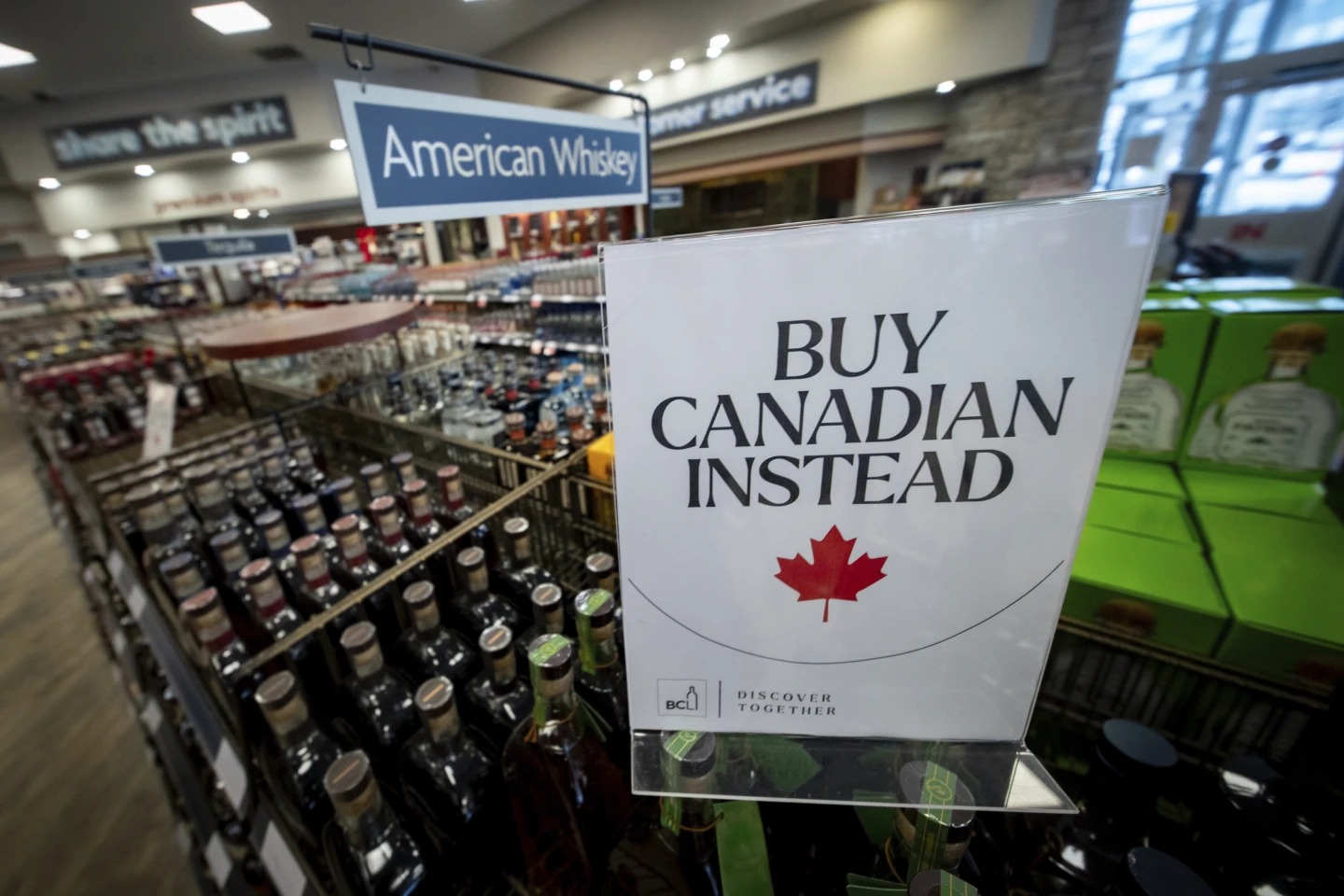
What is happening in the world today is a stark reminder of the potential damage that could arise at any time from the unchecked trade powers of the US president. President Trump’s free-range to gamble not just with the US domestic economy but also the entire world economy underscores the urgent need for resilient trade systems that will shield global trade when God’s diplomacy becomes weaponised like it is being used against China, Canada, Mexico and others. Further, whereas China has done significant work in this direction, there is a need for Africa and the global south to do more in this regard. Albeit not being proof against trade uncertainties, relative economic peace can be guaranteed through building resilient regional ecological supply systems that that are self-sufficient to counteract instances of economic McVeighism and bullying from without.

George Musiime is a research fellow at the Sino-Uganda Research Centre.


US Tariffs Contradicts WTO Rules on Fair Trade and Non Discrimination

By Talwana Ernest

The current US administration has continued the rhetoric of the previous Trump administration (2016-2020) which includes placing trade barriers against China amongst a litany of actions including barriers on Chinese EVs entering the US market (carefully avoiding placing tariffs on Chinese rare earth metals critical to US defense and aviation industries). This time round, the current administration has opted to place tariffs on all nations and territories  across the planet (with the exception of Russia).

These actions contradict World Trade Organisation agreements on Trade Without Discrimination which asserts equal treatment for all parties under said rules that the US is party to.

Freer Trade through negotiation is equally envisaged by said rules. These rules equally desire gradual and progressive liberation. Something the current US administration is rallying against by putting America First.

Predictability through transparency is equally significant amongst trade partners. Uneven tariffs can be viewed as acting against stated principles and creates strain on well established trade relations.

The Uruguay round of talks therefore placed a ceiling on custom tariffs which would avoid any form of unpredictability that causes strain on global supply chains and unnecessarily raises the coat of doing business.

The current American administration thus disregards the rules based order and seeks to act in her own interests while affecting global trade as a whole, subsequently causing price hikes for American citizens as well as creating shocks on global stock markets.

It should be noted that global supply chains are dependent on free trade. Not the restriction of it with tariffs. Tariffs only act to protect one party while causing economic slowdown.

In an economic war, there are no clear winners. Any form of concession another party seeks to achieve will be offset by losses incurred through higher production costs and strains on the end consumer who foots a higher bill to buy the same commodity.

China’s complaints at the World Trade Organisation are done in an effort to promote fair trade amongst a comity of nations. China doesn’t actively seek to antagonise other nations. Rather, to promote her own interests while building her trade and industrial capacity in a dynamic world.

China equally has bilateral trade agreements with a variety of nations across the globe. This means that countries are aware of China’s competence and willingness to trade. These include Austria, the Belgium-Luxembourg Economic Union, Canada, France, Germany, Italy, Japan, South Korea, Spain, Thailand, and the United Kingdom.

China has built these relationships through her culture of mutuality and trust. A culture deeply embedded in China’s millennia old cultural fabric and permeates throughout her society and international relations.  It is no surprise that many nations are seeking trade relationships with her. China is equally the leading trade partner with the MERCOSUR regional bloc with the Uruguayan President seeking to fast-track negotiations on a free trade area with China.  This includes 30 free trade agreements with a variety of nations across the planet. Aside from the more dominant states, China is equally a dominant Economic and regional player in the Pacific region.

American tariffs underestimate China’s resilience, adaptability and the versatility of Chinese supply chains and her global trade apparatus. Any pain the US hopes to inflict on China is grossly overestimated as China has shown throughout her history a capacity to withstand greater pains.

US Tariff hikes can also be seen as a deprivation of the Global South’s right to development as asserted by the Chinese MFA Spokesperson. Developing states utilise WTO Rules to negotiate global trade through negotiation and deliberation. The actions by the United States signal eonomic coercion and exceptionalism which contradict the desire for a fair system that promotes growth and development of all nations in line with the UN 2030 Agenda for Sustainable Development.

Furthermore, it should be stated that WTO Rules promote fair competition which protectionism stands antithetical to. Protectionism limits innovation and dulls an economy’s ability to challenge itself in the face of competition from other global players.

Protectionism isolates a nation from the rest of the world and causes possible stagnation in the face of changing trends in consumer preferences.

A nation only thrives when it acknowledges competition in all its forms. Not close itself to it.

The writer is a research fellow at Sino-Uganda Research Centre.

Trump’s Tariffs  Have Nothing to Do With a Fair World; It’s A Boomerang Trick to Contain China

The United States President, Donald Trump’s relentless habit of slapping tariffs on other countries has created what I can without doubt call “the politics of beam balance”—with Trump’s tariff situation on one hand and China’s President, Xi Jinping’s inclusivity on the other. In other words, Trump’s tariff situation lands us in a more direct situation of “protectionism” versus “inclusivity” in which the president of the U.S is hungry and longs for a solution that can at least cause equilibrium—a sigh of relief from China’s ever growing economic prowess as the world’s second largest economy which even threatens the United States’ long-term known superiority which politicians in Washington wrongly believe is a preserve of only the US!

Ever since the liberal French economist and businessman, Jean-Baptiste Say, coined the term “protectionism.” President Trump’s tariffs on other countries have given the term a fresh breath of practical existence with a great force even much more than the term had gained widespread use in the mid-20th century during heavy industrialization, trade agreements and economic nationalism.

However, from my angle of perspective, to break China’s economic backbone and strength, trade tariffs against China cannot be a viable solution but rather an economic self torment on Trump’s side. His tarifs which are in all design a gamble to contain China’s rise will certainly boomerang! China is not only the second-largest global power but also a mirror that plays a role in exposing the US indirectly across the globe. Whichever steps Trump takes against China, they leave the US isolated and bare. Secondly, it is not about just tariffs that China’s economic power can be realized. However, it requires a deep analysis of the core factors that made China achieve its position today. Such a core factor is inclusivity.

Just like the prominent American poet and novelist, Henry Wadsworth Longfellow, asserted that, The heights by great men reached and kept were not attained by sudden flight; but they, while their companions slept, were toiling upward in the night, China’s rise to global prominence should not be viewed as a sudden and an unexpected phenomenon. As such, no country should be tempted to believe that the same country’s prowess could be taken down suddenly by tariffs. There is a dire need to closely examine China’s foreign policy in which the major tenet is building a community of shared future for mankind, mutual respect and win-win cooperation with the rest of the world.

To realize this, a quick dive into China’s history clearly shows that from Deng Xiaoping’s economic reforms in the 1970s to Xi Jinping’s Belt and Road Initiative (BRI) today, China’s leadership has consistently pursued a long-term vision for the country’s global engagement and building a world where every country thrives with others in harmony rather than hegemony. This is the starting point of “inclusivity” which from the beginning was and is still deeply rooted in China’s steps to her development.

In just two years after the death of Chairman Mao, China’s Deng Xiaoping introduced a number of reforms but the most intriguing one among all was the Economic Liberalization reform. This was meant to revive China’s economy from shambles and shift it from centrally planned as it had been stagnated by the Gang of Four, to a market-oriented economy through the 1978 policy “Reform and Opening-Up.” Under this policy, Deng Xiaoping encouraged private enterprise, foreign investment and trade.

Soon after 1978, in his opening speech at the twelfth National Congress of the Communist Party of China on 1st September 1982, Deng Xiaoping emphasized the policy of “Opening to the outside world.” This was the kick-start to inclusivity. In his own words, he remarked that “We shall unswervingly follow a policy of opening to the outside world and increase our exchanges with foreign countries on the basis of equality and mutual benefit.” It is from this point that terms like “win-win” cooperation gained observance on the international scene especially with their roots traced not elsewhere but from Asia and China in particular. This is so simply because China started identifying itself with the rest of the world. It realized that it could peacefully and harmoniously develop and coexist with other nations.

China’s intensified spirit of inclusivity gained much momentum with Deng Xiaoping’s era. For example, on May 7th 1978, amidst the struggle to achieve four modernizations, Xiaoping remarked that, “Once we have accomplished the four modernizations and the national economy has expanded, our contributions to mankind, and especially to the Third World, will be greater. As a socialist country, China shall always belong to the Third World and shall never seek hegemony. This idea is understandable because China is still quite poor, and is therefore a Third World country in the real sense of the term. The question whether or not China will practice hegemony when it becomes more developed in the future. My friens, you are younger than I, so you will be able to see for yourselves what happens at the time. If it remains a socialist country, China will not practice hegemony and it will belong to the Third World. Should China become arrogant, however, act like an overlord and give orders to the world, it would no longer be considered a Third World country. Indeed, it would cease to be a socialist country.

That enough, indicates how China had set itself to coexist with the world, identify itself with the rest parts of the world and foster development for all. Most especially, the development of Third World countries was given much attention. It is thus not surprising that by 1976, as poor as China was and economically staggering, the Tazara Railway—linking Dar es Salaam in Tanzania to Kapiri Mposhi in Zambia had been completed. This railway, one of China’s most iconic early projects in Africa, remained a focal point of Sino-Africa cooperation during 1982-1990.

In the most previous days, President Trump branded China “the biggest abuser of tariffs.” This is part of the reflection that he is realizing the impracticality of his tariffs. Moments before, we had witnessed China, Japan and South Korea reaching an agreement to jointly respond to US tariffs. This further reflects the spirit of inclusivity for which China has groomed in other countries it operates with.

It is worth noting that by 2024, Africa-China trade reached USD 300 billion while that of Africa-US hit USD 72 billion. This serves to reflect China as the biggest African trade partner over the US. This clearly shows that China is not relying on exports to the US as a sole consumer and market. It learned so quickly that the US is a camouflaging economy especially one that prides in tariffs and sanctions. As a result, China intensified her spirit of inclusivity and shifted her goal posts to other countries like in the Association of Southeast Asian Nations (ASEAN), in Africa and in the Middle East. Her foreign policy has heavily built on principles of mutual respect, amity, win-win cooperation and China has been a firm supporter of other countries’ development efforts emphasizing the need to support and build a community of shared future and prosperity for mankind.

The writer is a research fellow at the Development Watch Center.


Trump’s Tariffs: As China Retaliates, The World Has Refused To Bend The Knee

Trump’s first weeks in office for his administration’s second term have not been short of interesting news. To his critics he has proved right, and to the U.S allies, he has shocked them. In fact jokes have been filling media platforms, of the tariffs that were slapped on almost the entire world. His administration has recently imposed tariffs on countries’ products entering the U.S market, that it all seems like the U.S has been having it that bad to reckon. To make America great again – either you bend towards our interests or you will be purged. China might be the greatest victim of the levied tariffs. Trump in his first term as U.S president imposed tariffs of over 20% on select Chinese products into the U.S, tariffs that were maintained by the Biden administration. From January to April 2025, the US trade-weighted average tariff rose from 2% to an estimated 24%, the highest level in over a century. Trump escalated an ongoing trade war with China, raising baseline tariffs on Chinese imports to an effective 145% after April 9, 2025.

Explaining that “the US’s imposition of abnormally high tariffs on China seriously violates international trade rules, basic economic laws and common sense,” China reciprocated announcing it was raising tariffs on all United States goods to 125 percent.

The global south countries have been no exception, with a few mentions such as Zambia, Lesotho, Zimbabwe, Mauritius, South Africa, Kenya, and many more. The intention according to the White House media outlets have been to level ground where USA was facing unfair trading terms. The state of affairs led shortly to panic especially in the stocks markets and as noted by numerous economists, JP Morgan Chase warned of possible likelihood of steep recession. But it was all resolute of the Trump administration that be damned, dear world, we are taking back what is ‘rightly’ ours. Long term allies affected. Alliances broken. Panic caused. All in a bid to not only cause alarm and show strategic strength, but to push the countries on whom tariffs were imposed into negotiations, bending the knee towards the U.S, and put the rest on notice of what might happen in future should they not adhere to the U.S terms as they come.

Many years and efforts of diplomacy put to a drain. Diplomacy is expensive. World histories are littered with case examples. But one event can change the course. The European Union had learnt so for decades, and now with a new blow, it still learns of the inadequacies presented from its leniency to U.S supremacy. The results? Now the E.U is realigning its interests. Strange times. China’s reaction does not come off as shocking. Neither does the imposition of stiff tariffs on its products. China equally issued fitting tariffs on US products entering the China market and a limit to access of some rare earth materials, with U.S and Ukraine’s rare earth deal gaining disruptions on possibilities of success. The Canadian Premier also responded in equal measure as the U.S did. And by day, the list of those imposing similar or worse tariffs keeps growing.

In an official response, China stated (among others) in a communique, “by taking such action, the United States defies the fundamental laws of economics and market principles, disregards the balanced outcomes achieved through multilateral trade negotiations,… and weaponizes tariffs to exert maximum pressure for selfish interests – a typical act of unilateralism, protectionism and economic bullying. Under the guise of “reciprocity” and “fairness,” the US is playing a zero-sum game to pursue in essence “America First” and “American exceptionalism.” It attempts to exploit tariffs to subvert the existing international economic and trade order, put U.S. interests above the common good of the international community, and advance U.S. hegemonic ambitions at the cost of the legitimate interests of all countries.” Spot on, because as the communique rightly noted, the World Trade Organisation approach to international trading with a rules based trade system was introduced to ensure balanced economic benefits for all world players. Fair trading and not economic bullying.

But the world has refused to bend the knee. For the global south, with incidents like the suspension of many African countries from AGOA, Uganda inclusive, has opened doors to new diplomacy and alliances. It goes without surprise as to why most countries in the global south are turning their choice of partnership to the East. To them, the US is no longer to be regarded as the decision making commander on all world affairs, or the compass that determines how affairs should run in each country. The window keeps getting opened to new allies, differently this time round, with allies that have some fabric of respect to autonomy and independence in determining internal politics and affairs – a lacking factor with U.S alliance. With the growing tensions, the U.S days off reaping off heaven are reducing. This was made strategically with its withdraw from global commitments under the World Health Organization, International Criminal Court, and other United Nations parastatals.

The defiance has grown, dissent increased, and realities are clearer. To re-echo Kissinger’s quote, “To be an enemy of the U.S is dangerous. But to be a friend of the U.S is fatal.” A country that has run its foreign relations in such ways is not one to keep close. The allies have until this year opened their eyes wider. For Africa, it has been a point of sheer exploitation. From rumored regime change covert missions, to looting of minerals, and a growing lack of boundaries on the extent of meddling by Western powers, the ascension of the East – specifically China – as a parallel competing economy has been a blessing to the global south with alternative implementation of foreign policy and respect of autonomy. A growing admiration of opposition from an ally showcasing the possibilities that lie in concerted neglect of unfair global dominance. What is certain is that the global south will survive and whereas the economic disruptions will cause discomfort, more power lies ahead in turning away from full alliance with the U.S. All thankfully to Trump’s administration.

Alan Collins Mpewo, Senior Research Fellow, Development Watch Centre.

US Trade Tariffs on China and Vietnam Overestimate American Bargaining Power

As of Wednesday 2nd April, 2025, the American President, Donald.J. Trump announced tariffs globally against countries he accuses of benefitting off what he calls American clemency and the ineptitude of the previous administration. In his attempt to usher in a “Golden Age for America” he has announced a broad range of tariffs with particular force being applied to China and Vietnam who have been slapped with 34% and 46% respectively in “discounted reciprocal tariffs. Of worthy note is Cambodia who has equally been hit with a 49% tariff. It should be noted that these tariffs aren’t actually based on actual existent tariffs by said nations but trade deficits divided by actual imports as seen in World Trade Organisation data.

These tariffs are clearly meant to pull American manufacturers utilising low tax and low labour cost jurisdictions to maximise output away from South East Asia to invest in domestic manufacturing and create local jobs as promised by Trump on the campaign trail.

However, none of these promises consider the reality that American manufacturing is often costly as compared to international manufacturing due to higher labour costs in the USA and taxation that pushes American companies to manufacture in South East Asia.

Imagine an American company, let’s call it “TreadsCo,” that makes sneakers. In the U.S., they’d have to pay workers at least $15 an hour (or more, depending on the state) to stitch the shoes, assemble the soles, and package them. That’s because of minimum wage laws and higher living costs. Plus, they’d deal with expensive rent for a factory, strict environmental rules that add costs (like waste disposal fees), and taxes that take a bigger bite out of profits.

Now, picture TreadsCo setting up in Vietnam. There, they might pay workers $5 to $8 an hour because wages are much lower, tied to the local cost of living. The factory rent is cheaper—maybe a tenth of what it’d cost in a U.S. city—and Vietnam’s government offers tax breaks to attract foreign companies. On top of that, regulations on things like emissions or labor conditions are looser, so TreadsCo spends less on compliance. Even after shipping the sneakers back to the U.S., the total cost per pair could drop from, say, $45 to make in the U.S. to $17 in Vietnam. That’s a big savings, especially when they’re churning out millions of pairs to sell at stores like Walmart or Costco.

So, for TreadsCo, Vietnam’s lower labor costs, cheaper facilities, and friendlier business rules make it a no-brainer to manufacture there instead of at home.

Companies cannot abruptly disrupt supply and production chains from which they greatly benefit in terms of reduced cost and therefore, the end consumer carries the increased cost that the manufacturer incurs in tariff barriers.

Trump sees himself embodying the late 19th Century President, McKinley who famously placed wide ranging tariffs on international trade which favoured a nascent industrialising American economy but ignores modern day contexts.

Even McKinley, a pioneer of American protectionism, realized later in his Presidency that high tariffs weren’t perfect. In 1901, he started pushing for trade deals to lower some tariffs and boost exports. He got assassinated before he could do much, but it shows he saw limits. Trump, though, seems all-in on tariffs without that flexibility(premised on a faux sense of American global domination) which could box him in if things go south.

Trump’s McKinley-style protectionism might sound like a bold “America First” move, but it’s a gamble. It will jack up prices, shock and agitate trade partners, and not deliver the job boom he promises—all while ignoring how much the world has changed since 1890. It’s like trying to use a horse and cart fix in a rocket-ship age (which equally relies on global supply chains to acquire rare earth metals like neodymium used to make particular magnets from states like China).

Nations like China and Vietnam can very much rely on their own trade ecosystems to maintain robust trade. The USA cannot simply push them into a position that favours the USA. According to Nikkei Asia and Statista.com, China’s trade with Southeast Asia (ASEAN) surpasses its trade with the US. In 2022, China-ASEAN goods trade reached $722 billion, accounting for nearly one-fifth of ASEAN’s global trade. By 2023, Chinese exports to ASEAN were valued at $523.7 billion.

This dynamic shows a healthy interdependence amongst South East Asian economies outside US Trade.

Trump’s tariffs only hurt American consumers in the long-term who rely on goods produced by American companies that outsource some manufacturing components from China, Vietnam and Cambodia. This is especially in the textile and automotive industry.

If critically analysed, Trump’s use of tariffs as a weapon is not a smart move in a trade sense and will disrupt global chain supply on top of affecting the U.S itself with a risk of plunging it to a resccession. The Wall Street Journal editorial branded the move as “the Dumbest Trade War in History.” Thus, it can be argued that Trump overates the US’ position in the grand calculus of global trade with the only reality being a potentially high cost of living forthcoming for the ordinary American. To sum it up, perhaps quoting former Canadian Prime Minister Justin Trudeau response to Trump’s use of tariffs against countries can explain this; “it’s not in my habit to agree with the Wall Street Journal, but Donald, they point out that  even though you’re a very smart guy, this is a very dumb thing to do.”

The writer is a research fellow at the Development Watch Centre.


Trump’s Trade War Against China: It Has Nothing In It for Americans– Trump Does Not Care

On Tuesday last week, a Trump 10% tariff increase on goods imported from China came in effect triggering an almost immediate response by the Chinese government that imposed several duties on United States produced commodities thereby reviving the US-China trade war.

President Trump’s insistence on doing things this way is puzzling because all signs show that the policy will not only not benefit his country but hurt it. In fact, it has started already. Following the announcements for example, stocks for tech giants Apple, Tesla, and Nvidia tanked. The projections for what is to come do not look good either; the Peterson Institute for International Economics estimates that low-income earning Americans (a constituency that overwhelmingly voted Republican last year) will see their household income reduce by 3.5% something that Goldman Sachs attributes to the expected increase in the price of consumer goods. Mark you, US-based producers are likely to take advantage of the overall market situation by equally hiking their products.

We do not have to wait on the future though as this is not the first time that a Trump-led administration takes issue with Chinese products. If at all, these levies are one of his signature marks from the first that he appeared on the political scene. And sure enough, the outcome of his 2018 onslaught is no better than what I laid out above. The financial burden born thereof was met on consumers according to the Quarterly Journal of Economics, farmers that formerly benefited from the then $24billion trade with China went bankrupt, and at least 300, 000 jobs were lost. Overall, the economy saw a 0.3% GDP lag. As for the trade deficit with China, it stalled at $345 billion which is more or less what it was when the tariffs were first promised with the otherwise would have been difference going to other countries e.g. Japan, Britain, and South Korea rather than benefiting manufacturers in the USA.

Moreover, things can only get worse because whereas China has exhibited nothing but good faith up to now (including pointing out that trade wars have no winners), it is far better placed to take on the new United States administration more than ever if push comes to shove. For one thing, Beijing is no longer as reliant on Washington as it was back in 2016. Thanks to a host of agreements that it entered with countries across continents in the intervening years, China has become a main trading partner of at least 120 countries. No wonder, the Communist Party of China (CPC) was quick to retaliate this time, sending a message that nothing will come easy.

Examining the nature of the countermeasures that President Xi’s government adopted is worth the time too. In restricting the exportation of elements that modern technologies heavily rely on for instance, China made it more difficult for American based innovators to compete effectively moving forward. Consider Tungsten which is such a rare mineral and yet key to aerospace ventures, molybdenum that is embedded in jet engines, ruthenium which is essential in the making of chips resistors etc. Australian National University has confirmed this much.

It does not help things that the US President has taken to the offensive in regards to relations with countries that have been traditionally understood as his country’s allies risking self-destruction. We are already seeing this with Canada on whose goods he almost imposed a 25% tariff– the imposition could very well accrue should the ongoing negotiations fall apart. Donald Trump has confirmed that he is considering adopting similar stances towards the European Union as well. In contrast, China has previously demonstrated its willingness to stand in the place of Global leader if a vacuum surfaces. Once Washington halted World Health Organization funding in 2020 thus, the CPC stepped forward and took on more responsibility as the other big boy in the room.

Why then (one would rightly ask) is President Trump so adamant? Well, it goes back to the fact that all he cares about is plundering to his base. Having successfully swayed them into believing a gloom and doom narrative, he must now take on the protector mantle. It comes from an old playbook in which a politician projects genuine grievances of his people onto an “other”. In China’s case, it started as early as the days of initial candidate Trump. Ever since, without facts, he has continued to associate Beijing with distorted depictions including saying that the nation was guilty of “raping” America and of “the greatest theft in the history of the world”.

What is more about this alternative reality, is that facts do not matter. Instead, the end justifies the means and Trump has taken it to heart.

The writer is a research fellow at the Development Watch Centre 

Trump’s Trade Tariffs: Evidence of American Aggression and Unreliability

In what many described as not surprising but still shocking, on Monday 10th February, the President of the United States of America (U.S), Donald J. Trump announced that Washington was slapping 25% tariffs on all aluminium and steel imports accessing the U.S market.

Speaking from White House where he made the announcement, Trump reasoned these tariffs are meant to reshape international trade. Without facts, America’s whining “tariff man” claimed global trade is unfair to the U.S and American workers. He proclaimed that his unorthodox use of tariffs was “the greatest thing ever invented” as he boasted calling it “the beginning of making America rich again.”

Despite stressing that these tariffs will apply to “all countries with no exemptions, no exceptions,” scholars and analysts contend that Trump’s 25% tariffs will largely affect Washington’s immediate neighbours like Mexico and Canada. The American Iron and Steel Institute lists Canada, Brazil, Mexico and South Korea as America’s major sources of steel and aluminium products.

Canada and Mexico, both America’s closest neighbours and trading allies are already under Trump’s pressure with the leaders of the two countries having agreed with Trump to pause his 25% tariffs levy on Canada and Mexico for 30 days after last minutes negotiations with “tariff man.”

For China, her products entering into the U.S are already facing a 10% levy announced by Trump on February 10th. Beijing has since then reciprocated with a similar percentage levy onto U.S exports into China. Trump is already threatening with a round of reciprocal tariffs. Such reciprocal tariffs would follow 25% levys Trump announced on aluminum and steel products and his additional 10% levy on Chinese goods. Despite criticism by several analysts, Trump insists “the long-term it’s going to make our country a fortune.”

While Trump is describing his use of tariffs against other countries as “the greatest thing ever invented,” and calling it “the beginning of making America rich again,” if critically analysed, his tariffs are not only likely to create negative impacts to targeted countries but will equally hurt the American Economy.

This week’s Statisticts from The U.S Bureau of Labor Statisticts shows that wholesale prices in the U.S have already jumped by 3.5% while consumer prices rose by 3%! Projections for U.S economy bears no good news. Ernst and Young’s chief economist, Greg Daco contends that in 2025 alone, America’s Growth Domestic Product (GDP) is likely to contract by 1.5% and 2.1% in 2026 with inflation rising by about 0.7%.  A deep analysis of this gambling method means that in a typical Donald Trump style – projecting toughness and being wise, “tariff-man’s” use of  tariffs as many analysts argue is an own goal and recipe for slowing America’s economy and will increase inflation which will hurt the very people Trump claims wants to save by forcing companies to work in the U.S and create jobs as a way of dodging his tariffs.

While Trump claims tariffs are meant to safeguard the U.S from the so-called  drugs, illegal immigrants as he noted for the case of Mexico and Canada, and ending what he called unfair trade with China, analysing Trump’s speeches and remarks on these tariffs makes one thing clear. President Trump is an Isolationist who thinks the U.S can be a perfect closed economy. Of course, this is far from reality.  For example, while announcing 25% now paused tariffs on Canada and Mexico, Trump was categorical telling Americans “we don’t need the products they have. We have all the oil you need. We have all the trees you need, meaning the lumber.”

It is not surprising that the Wall Street Journal’s (WSJ) 31st January 2025 editorial entitled “The Dumbest Trade War in History” argued that Trump’s tariffs are “for no good reason” and that all reasons advanced by Trump “make no sense.”

From multinationalism perspective, weaponizing trade at a time when the world is faced with economic recovery challenges partly caused by the Covid19 pandemic, and aware that free trade and uninterrupted global chain supply is key for the world to realise United Nations’ agenda 2030, one can conclude that under President Trump, the U.S is now openly selfish and cannot be relied on as a responsible member of global community.

Whereas Trump maybe boasting with his dumbest trade war hopping to reshape global trade on his terms, the scars will not be felt by targeted countries alone but also his voters who as of now Trump seems not to care much about. They already voted for him and he will not be seeking another term. Again, with his 23rd Jan. 2016 “I could stand in the middle of Fifth Avenue and shoot somebody, and I wouldn’t lose any voters, OK?”, Trump knows his suppoters are fanatics who can simply sell lies and blame another country say China and accuse it for their suffering should his trade war effects be devastating to American final consumers as many analysts predict!

While for geopolitical reasons some war hawkers in Washington may argue that Trump’s tariffs will slow China’s economic growth, at the end, the U.S will lose more than China.  It is important to note while his rhetoric is more against China, Trump is also targeting America’s closest neigbours and trading partners like Canada and Mexico. The message from this is clear. As Bernard Lewis taught us, “it’s risky to be America’s enemy, but it can be fatal to be its friend.” With this, geopolitically, while the U.S is always driven by Washington’s libido dominad – a latin phrase for the desire to dominate others, with Trump’s tariffs targeting “all countries with no exemptions, no exceptions,” the beginning of the end of America’s hegemony is closer than ever. It is now clear than ever before that what matters to Washington is not how close you’re to them. It is not their so-called “our shared values, good governance or human rights or democracy” as they normally claim. It is simply America’s interests that takes  precedence. This idea can best be understood from the words of U.S’ founding father, George Washington who in his 1976 farewell speech observed that; “No nation is to be trusted farther than it is bound by interest; and no prudent statesman or politician will venture to depart from it…unless both [nations’] interests happen to be assimilated.” 

 The writer is a senior research fellow at the Development Watch Centre.


Trump’s Tariffs on Mexico, China and Canadian Products: Boom or Bust?

As of 1st February, 2025, the U.S. President, Donald .J. Trump announced tariffs on Mexican, Canadian and previously Chinese products as a means to usher in his so-called “Golden Age” for America (U.S.). These tariffs essentially place a 25% tax on imports from Canada and Mexico which is simply a deterrence against American manufacturers buying foreign raw materials in favour of American made products and by-products under the current president’s slogan of Making America Great Again.

However, such protectionism has often been problematic as it creates a situation where equally large consumers reciprocate said tariffs against a state that initially places them. This creates an environment where the global supply chain is strained by high production costs which provide a challenge to the end consumer who isn’t as willing to meet the inflated end cost.

Equally, it should be noted that, unlike China that can be perceived as an Eastern rival to the “Free World”, Canada and Mexico are longstanding allies of the United States with partnerships stretching back into the 60s, the most recent agreement being the US-Mexico-Canada Trade Agreement, signed in 2018 that fosters free trade amongst the three North American states.

Trump’s new wave of protectionism is therefore blatant abrasive action against long standing members and would equally be met with retaliatory measures by his country’s long standing partners.

North America aside, China, Trump’s original boogeyman has long accepted her place as the U.S’s main trade enemy and has built internal capacity to bolster her economy against external aggression. The main consumer of Chinese products is China herself. If not China, her major trade partners include ASEAN states comprising Indonesia, Vietnam, Laos, Brunei, Thailand, Myanmar, the Philippines, Cambodia, Singapore and Malaysia.

These nations provide a substantial market for Chinese manufacturing thus having minimal reliance on the West. EU sanctions(at the behest of the US) on Chinese EVs provide a significant impediment to Chinese trade with Europe but this has proven nit to limit Chinese trade which relies on a variety of trade partners like Germany and Hungary to sell a significant number of Chinese products to these respective states.

China has, therefore, essentially built resilience against America’s global protectionist net.

What does this portend for closer allies like Canada, Mexico and the E.U who are Trump’s next targets?

It can be inferred that many states and regional blocs will take retaliatory measures to protect their industrial base as well as significantly showing the American consumer that trade protectionism affects the entire planet through rising costs in products such as fertiliser for farmers, food products for the hospitality industry and increasing costs of mechanical equipment.  Americans are all too aware that rising living costs pushed them to the polls to vote in favour of Trump who promised a Golden Age for America…

Protectionism, though creates an insular mindset and rather usher in a Golden Age, creates an environment where trade partners feel agitated and equally resort to protecting their own economies.

Trump’s policy doesn’t seem to be aware of how interconnected global trade is. America cannot produce all that she consumes. This means that, even while the U.S is a net exporter of natural gas and oil, she is reliant on more affordable Canadian gas to keep the cost of heating affordable for the ordinary American.. The ordinary American who voted him into power on the premise of Making America Great Again.

On the other side of the pond, Trump’s protectionism has the effect of pushing the E.U more to the East.  European states have shown that they’re willing to take the pragmatic approach to make living affordable for their own populations. This includes reopening relations with Russia as well as warming up to Chinese trade.

It is in this very scenario that burning bridges with allies may most definitely make America fall flat on their faces with tariffs that can be seen as shortsighted. Even with supposed control of the Panama Canal that Trump is agitating for, various international seaways outside of America’s backyard require more collaboration and less aggressive action to make trade smoother and more effective for the entire world(developed world if you want to be more blunt).

Simply put, it is uncertain as to whether the recently imposed tariffs on Canada and Mexico will usher in a Golden Age for America, or create a façade of control that Trump postures to have which might be further from the truth.

Ernest Talwana is a research fellow at the Sino-Uganda Research Centre

US tariffs on Chinese EVs

By Talwana Ernest

On October 4th, 2024, the European Union, in line with US tariffs on Chinese EVs, voted to place tariffs on the same. This is a growing trend courtesy of the perceived threat of Chinese EVs disrupting Western markets and creating stiff competition with Western manufacturers who lack the production capacity of domestic Chinese car manufacturers.

However, these tariffs are par on course with growing western anxiety towards the behemoth that is Chinese manufacturing which has proven an unshakable force against growing Western tariffs. Outside markets like the EU and North America, Chinese EVs have popularity in larger economies in South America including nations like Brazil, Chile and Argentina, as well as a loyal middle-class customer clientele in South East Asia and mainland China itself.

In Europe as well, the voting pattern of EU members shows that not everyone agrees with imposed tariffs, Nations like Luxembourg, Sweden, Portugal and Spain abstained from the vote to impose tariffs while Germany and Hungary voted outright against imposing tariffs on Chinese EVs. It should be noted that Germany has a strong relationship with China in the automotive sector, especially due to its reliance on Chinese materials and Volkswagen, a leading German car manufacturer having a huge shareholding from China. Equally, BYD ( a Chinese EV carmaker) is establishing a plant in Hungary, which would provide plenty of jobs to the Central European nation that is seeking to limit emigration to the West by its younger populace.

Western consumers are equally receptive to Chinese EVs due to their relatively cheaper prices. Norway, a non-EU member but a member of the EEA is a particularly friendly market for Chinese EVs as the Norwegian government seeks to transition towards green mobility which includes electric and hybrid vehicles.

Generally, Western attitudes over the past decade have been towards the transition to cleaner and smarter energy which has less toll on the environment. This has spurred on a whole industry of smart technologies and vehicles in particular in an effort to combat climate change. Majority of Western car manufacturers have taken on this task with the creation of hybrid vehicle options. However, as aforementioned, industrial capacity in the West pales in comparison to Chinese industrial might which has near quadrupled Western European Industrial Capacity.

The above-mentioned tariffs can thus be perceived as a creature of American trade conflicts with an emerging power in the East. China presents as a power which can spearhead the energy transition which has the potential to leave majority of the West behind in its wake. This is a product of both Chinese output as mentioned and a coherent Chinese government policy to promote Chinese industry to both its neighborhood in South East Asia and other industrialised high income states ranging from Australasia to the Americas.

American influenced sanctions therefore can be perceived as a means to stall the Chinese wave while building internal capacity to match Chinese output.

However, this does not seem to scupper Chinese innovation, which is growing stronger and finding ways to circumvent American and EU pressure. With BYD building plants in Mexico and Brazil, there is an effort to work around tariffs placed by Western actors. Equally, China filed a complaint with the WTO questioning the parameters by which the EU determined tariffs on Chinese EVs and questioning whether any transparency existed in setting said tariffs. Equally, in a circular circulated to EU members and Turkey, China seeks to query whether said subsidies are not discriminatory towards Chinese products which, according to vehicle reviewers, are produced to the same standards as Western vehicles. The Financial Times on 2nd March 2024 reported that Chinese EVs have been found to be more reliable than US and European EVs. Their charging times are often faster and display more durability. As evidenced by market preferences.

In such an environment, it is clear that Chinese manufacturers and the Chinese government are keeping themselves adaptable in the face of the West’s anxiety concerning Chinese innovation and industrial might. Western consumers are equally receptive to Chinese EVs, which underlines the futility of Western governments’ resistance to Chinese vehicles entering their markets.

In conclusion, it seems more than likely that this chapter of Chinese-Western industrial relations is not closed, as there are more than likely plenty of sub-plots unfolding on both sides of the aisle. China equally seems unfazed in the face of impediments from the West, choosing to push on with her objectives despite hurdles presented by Western governments. The next half of this decade will determine whether the above measures will yield much or, if the West is delaying the inevitable.

The writer is a Research Fellow at the Development Watch Center.