Two Sessions 2026: 14th National People’s Congress holds press conference

The 14th National People’s Congress has held a news conference, briefing the public on key concerns and policy signals that may ripple across the globe. Our reporter Feng Yilei has the latest.

14th National People’s Congress is ready for its fourth session starting Thursday.

Deliberation on China’s social and economic plan for the next half-decade sits high on the agenda.

It’s not just about numbers or growth targets, but about growth quality – as China doubles down on future industries and a 1.4 billion-strong market.

LOU QINJIAN Spokesperson, Fourth Session of the 14th NPC “This year, we will expand domestic demand and boost consumption to build a strong domestic market. We will upgrade consumption, improve the international environment, and host the ‘Buy in China’ campaign, while linking people’s wellbeing with consumption.”

The top legislature is positioning its legislative agenda as a guarantee.

National legislators will review the National Development Planning Law to cement long-term strategic goals during the two sessions.

New legislation in healthcare, childcare is also on the table throughout the year, with the aim to turn social security into a catalyst for consumption.

Meanwhile, China remains wide open for foreign businesses and investors and vows to expand institutional opening-up and defend multilateral trade, and deepen Belt and Road cooperation in the next five years, to grow the global pie and sharing opportunities guaranteed by a more transparent legal framework.

LOU QINJIAN Spokesperson, Fourth Session of the 14th NPC “China stands ready to strengthen communication with the US at all levels to expand bilateral cooperation, while firmly safeguarding its sovereignty, security, and development interests.

We will work with Europe to uphold our partnership, properly handle economic and trade differences, expand cooperation, and jointly address global challenges.

Guided by the Central Conference on Work Related to Neighboring Countries, we will build a community with a shared future with neighboring countries, following the principles of amity, sincerity, mutual benefit, and inclusiveness, to jointly create a peaceful, prosperous, and friendly home.”

Despite external headwinds, China has reaffirmed its stance to immediate halt to military action, and called for a return to dialogue to prevent further escalation in safeguarding the Middle East’s stability.

LOU QINJIAN Spokesperson, Fourth Session of the 14th NPC “No country has the right to control international affairs, dictate the fate of others, or monopolize development advantages – still less to act as it pleases on the world stage.

As a major country and permanent member of the UN Security Council, China stands ready to work with all nations to firmly safeguard the authority and standing of the United Nations, uphold the purposes and principles of the UN Charter, and practice true multilateralism, contributing further to reforming and improving global governance and building a community with a shared future for humanity.”

FENG YILEI Beijing “Against a backdrop of escalating regional flashpoints and a volatile global trade environment, observers here appear to be eager to see one thing above all else from the sessions over the coming week–certainty. China is trying to prove that its roadmap is not merely to solidify its foundation for socialist modernization by 2035; but also intended to be a reliable engine for the globe through the geopolitical storm. Feng Yilei, CGTN, Beijing.”

Source CGTN

Protect Taiwan Act Escalates Tensions, Interference in China’s Internal Affairs

On February 9th, the House of Representatives in Washington passed bill H.R. 1531 a law which if it comes into force will by far be the most extreme action that the United States government has undertaken in as regards to China-Taiwan affairs in a long while.

Also known as the Protect Taiwan Act (PTA), the legislation that was introduced by Representative Frank Lucas stipulates among other things, that in the event that USA determines that certain activities by Beijing threaten “the security or the social or economic system of the people of Taiwan”, it shall acting through the Board of Governors of the Federal Reserve, the Secretary of the Treasury, the Securities and Exchange Commission etc. take all measures possible to see to it that the perceived antagonist is cut out of the International Organization of Securities Commissions, the Group of Twenty (G20), the Basel Committee on Banking Super-vision, the Bank for International Settlements, the Financial Stability Board, and the International Association of Insurance Supervisors. In other words, if successful, such a move would see China become completely isolated by the international monetary system.

That the United States of America opted to further escalate its Taiwan position without provocation is not surprising as it has in recent years shown that it is capable of crossing redlines that even the least hopeful analysts imagined if one goes back a decade or so. In 2025 for instance, the House increased its security support for the Province of China by more than threefold (from $300 million to $1 billion).

What is concerning instead, is that the modality that H.R 1531 takes is so extreme that it is literally the last step to war. Given the stakes involving Taipei when it comes to technology, anyone looking on should be gravely concerned. The island’s involvement with the manufacturing of computer chips employed in the artificial intelligence industry has brought about what has come to be understood as the “Silicone Shield” making Taiwan a national security issue for Washington.

Further important to underscore is that PTA was by all estimations bipartisan (395 representatives voted in its favour as opposed to the 2 that opposed it). It also arrived in a time when the US is doing all that it can to downplay its already existing obligations both under acceptable geopolitical norms but also in international law when it comes to Taiwan. A September 2025 publication by the Congressional Research Service thus sought to portray “one-China policies”― which is what the US is supposedly involved in― as different from the one-China principle.

This is of course, is a clear bending of history. At least if one looks at the three joint communiques (1971, 1979, and 1982) which are understood to be the bedrock of modern diplomatic relations between the United States and China. Respectively, they provide that; “the U.S. acknowledges that all Chinese on either side of the Taiwan strait maintain that there is but one China and that Taiwan is a part of China”, that “the government of the USA acknowledges the Chinese position that there is but one China and Taiwan is part of China”, and finally that “(USA) has no intention of infringing on Chinese sovereignty and territorial integrity, or interfering in China’s internal affairs, or pursuing a policy of ‘two Chinas’ or ‘one China, one Taiwan”.

Finally, as long as UN Resolution 2758 adopted in October 1971 still takes precedence over any other claim regarding the subject of our inquiry today, the US may do as it pleases albeit its actions will remain contrary to the general assembly instrument. By recognizing the government of the People’s Republic of China “as the only legitimate representative of China”, the United Nations settled once and for all any questions pertaining to whether Taiwan is a sovereign state or not. And because of this, her leadership lost their seat in New York and they have never regained it to date.

To pretend otherwise would be to undermine declarations such as the one on the Inadmissibility of Intervention and Interference in the Internal Affairs of States (1981) which have reinstated the fact post World War II, when it comes to inter-state relations, the international dispensation is governed by mutual respect.

The US then has two options; either it proceeds to ignore the law whilst being aware of the violations or it does the right thing and tone down. What it cannot do is eat her cake and have it at the same time.

The writer is a reserch fellow at the Development Watch Centre.

China’s FDI Pivot is Uganda’s Road to Real Growth

By Shemei Ndawula

The Chinese Belt and Road Initiative has defined Africa’s relationship with China for over a decade. Within this time the average Ugandan’s interaction with China was largely limited to the importation of “cheap” Chinese goods and the Entebbe Expressway. The latter has always been an infamous scapegoat in conversations of the fictitious “Debt trap diplomacy” while the former also triggered misgivings with a belief that lower prices construe a compromise on quality.

Fortunately, these narratives have greatly been discredited with the Entebbe Express still standing as one of Ugandas most ambitious infrastructure projects (the detractors of this development always conveniently forget that Mandela National Stadium was also constructed in the early 2000s with a Chinese loan but the debt has never trapped us). Additionally, Chinese imports have switched the moniker of “cheap” for “reliable value for money” and we now have Chinese brands like the Sinotruck that have become synonymous with construction sites in the Kampala metropolitan. This is exactly how Uganda’s relationship with China has been reshaped, with real work, real progress and mutual benefit.

Now China is taking on it’s biggest challenge yet, the shift from infrastructure development to Foreign Direct Investment (FDI) into the Ugandan economy. This does not simply represent a change in policy; it’s restructuring Uganda’s path to development with a focus on building the industrial and processing capacity of the nation.

China’s dialing down on the big loans and ramping up foreign direct investment fast tracks all development because it means Chinese companies are putting their own cash on the line, becoming partners and not just lenders. It’s definitely a pragmatic approach for China; securing resources and markets, but from the Ugandan perspective it’s a breath of fresh air. In the oil and gas sector the China National Oil Company has invested billions of US Dollars into the Kingfisher field, not as a loan but for an equity stake in the project that will define Ugandas economy for at least the next decade.

This is also a large boon for our national GDP because FDI isn’t money that vanishes after a project is wrapped up,  it’s a long term vote in the country’s future. This is evident in the industrial parks being set up, like  Mbale which Chinese investment has turned into a buzzing industrial hub with factories and assembly lines producing clothes, gadgets, cutlery among others. This puts approximately 10,000 Ugandans on payroll, excluding  auxiliary and support industries such as transporters. The slice of manufacturing in our GDP is pushing 27%  and wiyh this strategy we can expect more impressive numbers because we’re not shipping out raw materials anymore but we’re adding value, processing ores, assembling products for the East African market and beyond.

And the best part is this model builds skills that last. In these joint ventures, Ugandans are learning the ropes from high-tech assembly lines to supply chain tricks. It’s helping us adapt to global market turbulence. When coffee prices tank, having a diverse economy with factories humming along is west keeps the lights on. The government only needs to regulate local content policies so that more of the money stays in Uganda.

The reduced debt burden is also not something to complain about, a huge portion of our national budget is already going to debt repayment so China’s new policy could not have come at a better time. This way, China can meet its commitment to invest in renewable energy like solar panel plants and its bamboo research which matters when climate change hits our farmers hard(Uganda is a frontline state in Global Warming effects). With a population as young as ours (over half under 25) this job creation is crucial and foreign direct investment is the most sustainable approach to facilitate this.

As we gear up for talks like FOCAC next year, we need to keep pushing for deals that put us first. China’s shift in strategy to Foreign Direct Investment could be Uganda’s ticket to high-tech sectors, innovation hubs, all fueled by smart partnerships and technology sharing (Rwanda already got a great deal in its e-vehicle manufacturing plant). It matches our drive for self sustainability and solid growth that does not erase what makes us Ugandan.


China’s Trade Surplus: A Signal of Economic Resilience and Engineering Stable Global Systems

Last year, China registered a $ 1.2 trillion trade surplus the largest in the history of any economy; a scenario that would have made president Trump right in using the favorite phrase “Like nothing anyone has seen before.” Surprisingly, the record surplus came at a time of unprecedented uncertainty and policy hostility that appeared destined to break global supply chains and the global economy. Indeed, last year was the pinnacle of Newman and Farrell’s hypothesis on the “Age of weaponized interdependence.”

With an administration acting more like a rogue state in Washington, Trump II showed no restraint in using control over critical nodes in global economic systems to hold the world at ransom. Meanwhile, despite criticism of China’s surplus as a vulnerability linked to overreliance on Chinese production, there’s more to it than can be heard in mainstream sources. For instance, China’s focus on climate conscious technology; EVs, clean energy, AI products and high tech production systems which are the technologies of the future. In addition, for the global south, the resulting reshoring, and technological leakages mean diversified production sources, an increased role in the global economy and eventually paving the way for a more stable economic system.

The tiny but significant blemish with the argument that China’s trade surplus is a result of over-subsidizing exports to fix slowing domestic consumption is that it overlooks the country’s growing manufacturing capacity over decades. China’s manufacturing sector has not only been transitioning from a low cost, labor intensive model to a more sophisticated one, specializing in new technology and high-end products. In terms of volume for example, China’s manufacturing output had by 2023 reached $4.6 trillion surpassing the next three largest manufacturing economies namely, the US, Japan and Germany. The massive surplus is thus more about the expanding manufacturing capacity than it is about slowing domestic consumption. And whereas global consumption is not about to slow down, shifts towards new technology, and hi-tech production systems are strategies to counter pitfalls on the cost to the consumer side of the equation.

Moreover, the narrative of returning manufacturing jobs to some places also falls flat on its face when examined against China’s current trajectory. A case in point is the pivot from climate conscious technology and energy sources back towards fossil fuels – ‘beautiful coal’ which might as well have cleared the way for the surplus given a substantial portion of it came from Electric Vehicles, batteries and solar panels. Conversely, a focus on high tech production systems means jobs being lost to Chinese people is a thing of the past. Any jobs being lost today will be to technology and the benefit of efficient production systems.

Therefore, what is been framed as salient vulnerability associated with a ‘less visible but still central role’ of China could as well be the beginning of a new dynamic. What we noticed in 2025 was the moving of production processes to new countries in the global south, in a bid to route around the mounting geopolitical pressure. While this has been faulted for its reliance on Chinese intermediate inputs, technology and sometimes expertise, it also means diffusion of jobs, technology and skills to the new economies. Ultimately, this reinforces the production capacity of destination economies in the global south, and provides cushioning against similar shocks in the future. Resilience might be a result of systems stability however; such stability must be engineered by evenly distributing risk across multiple nodes as a safeguard against cascading failure starting in a single dominant node.

The events of the past year and the fallout from a global surge in economic nationalism and protectionism were a warning sign against the implications of concentrating risk in a single dominant hub. The tariff wars by Washington indeed highlighted how vulnerable global supply chains were under the old West-dominated configuration.  Additionally, in the event of the kind of shocks as instigated by the geopolitical strife seen through the tariff wars, the developing parts of the world risked taking the biggest blow. This is why China’s reshoring, and diversification albeit not breaking global dependence on Chinese manufacturing immediately, breaks ground for more stable supply chains in the long run.

However, with globalization on the raise and a more interconnected global system, a strong multilateral foundation becomes ever more important for its emphasis on mutual cooperation. Otherwise, unilateral action towards geostrategic outcomes that chokes a single critical node could jeopardize or even crash the entire system. Obviously, China’s surplus is not a sign of a win in the geopolitical standoff primarily because we are only in the very initial stages of system readjustment.

Moreover, as bellicosity becomes internationalized, targeting gray-area nodes in the supply systems could eliminate the second country of origin option unless any tethering to the parent corporations is severed. We saw this last year with threats of 50% tariffs on nations allied with China and BRICS and more recently a 100% tariff on Canada over trade with China.

In the ultimate end, China’s Trade surplus may not be a direct win in the geo-economic contest but it signals the initial stages of readjustments in the global system. As corporations move operations to other economies, the diffusion of technology, skills, and risk is dispersion that follow provide cushioning against failures of the kind the world was threatened with during the peak of last year’s tariff war. Reshoring and routing against pressure might have produced resilience that resulted into China’s surplus, but in the long term the same could reduce reliance on a single dominant hub enhancing economic stability.

George Musiime is a Research Fellow, Development Watch Center.

On Keir Starmer’s Visit to China

By Nnanda Kizito Sseruwagi

It had been almost eight years since a British Prime Minister had last set foot in Beijing. Keir Starmer’s January 28 visit to China is therefore a pivotal moment that signals a recalibration of UK-China relations, in particular, and British foreign policy generally, especially given the current paradigm shifts Western nations are making in the face of an increasingly fragmented global order. It has now become obvious to middle powers that, in the post-Cold War era, their economic and security concerns may not be permanently and reliably abdicated to the American leadership.

To understand the objective of Starmer’s trip, let’s look at the composition of his delegation to Beijing. Among his nearly 60-member entourage were cultural representatives and business executives from some of Britain’s major corporations, such as HSBC (a British universal bank and financial services group), AstraZeneca (a British-Swedish multinational pharmaceutical and biotechnology company), and Airbus (a European aerospace corporation). Both the entourage and the timing of the visit speak to economic engagement as Starmer’s primary objective at a time when the Labour government he leads is struggling at home to deliver on its economic growth promises. Whereas there is a trade deficit between the UK’s trade with China – the UK, having long-ceased to be the world’s workshop – in the services sector, the UK enjoys a surplus. This implies that there is a demand in the Chinese market for British services if Britain could leverage its expertise in finance, consulting, and professional services.

However, it is not just economic interests at the table for this visit. The past few years and even months have been frosty in the bilateral relations of the two nations. In the past, there were concerns in the UK over allegations of Chinese espionage. The UK also raised queries on claims that China was supporting Russia in the Ukrainian conflict. And of course, in typical Western fashion, the UK has always contested the way China governs in Hong Kong, claiming there is a crackdown on civil liberties. Two months before Keir Starmer’s visit, Jimmy Lai, a British citizen, had also been a subject of conflict between the two states following his conviction under Hong Kong’s national security law. As such, whereas Starmer may pragmatically focus on prioritising economic opportunities for Britain, the issue of human rights will linger in the background.

In order to show a spirit of good faith, which is key in improving relations, Starmer also approved the construction of a mega Chinese embassy in London ahead of his trip, which is one of the trade-offs taken to reset diplomatic relations between the two countries. This is a good move since, in any negotiation, each party needs to make concessions to build trust.

Keir Starmer’s government has articulated its approach to UK-China relations as characterised by a comprehensive and consistent strategy. This strategy is defined by the compartmentalisation of various aspects of the two countries’ relations in order to separate economic cooperation from the often sticky, contentious political concerns. Nevertheless, it is plausibly expected that there will be domestic opposition in the UK over the traditional points of suspicion and accusations regarding human rights violations, espionage, and related concerns, which other political parties in the UK will exploit to undermine the achievements Starmer’s Labour party is trying to realise.

If we take a broader vantage point of the developments in the global geopolitical arena, we find that Starmer’s context is shared by multiple Western leaders who have recently sought to improve relations with China and proactively reconfigure their ties with Beijing. Among the recent guests in the red dragon’s courtyard were French President Emmanuel Macron, Australian Prime Minister Anthony Albanese, and Canadian Prime Minister Mark Carney. Clearly, middle powers have established a pattern of hedging their bets with China in the midst of increasing unpredictability and uncertainty about the next move from Trump’s America. China is a much more “what you see is what you get”, stable, reliable trade partner that any country can aspire to have now. There is no need to pay the cost of navigating America’s tariff-punctuated, transactional economic terrain.

The American-dominated world order has been rapidly turning into a system of unilateralism and protection. It is China that has lit the way in championing multilateralism. With World leaders such as Irish Prime Minister Michael Martin, South Korean President Lee Jae Myung, and Finnish Prime Minister Petteri Orpo successively paying homage to China since this year began, China has demonstrated its indispensability as a resourceful global economic stability partner. It was therefore not surprising that this would spike tensions with the United States.

With Starmer’s visit, the UK has made a profound diplomatic statement in Beijing. Every country now has to engage China. Isolation would be costly. China is not to be ignored or contained but partnered with. Starmer has acknowledged without stammering that “like it or not, China matters for the UK!” This reflects a pragmatic appreciation of the dynamics of economic interdependence as constituting both vulnerabilities and opportunities that must be carefully negotiated.

Nnanda is a Senior Research Fellow, Development Watch Center.

Inside the China-Canada Trade Deal

By Nnanda Kizito Sseruwagi

Mark Carney, the Prime Minister of Canada, is currently one of my favorite leaders in the West. His speech at the recently concluded World Economic Forum was a breath of fresh air, rarely breathed from a Western leader. The essence of his message was that “middle powers” should unite against economic coercion by great powers. Profound! Without mincing words, he called out American hegemony, denounced the weaponization of economic integration, and the exploitation of the vulnerabilities of supply chains. Whereas these ideas were not new, they were unanticipated coming from a Western leader. Carney had just visited China between January 13th -17th where he met Chinese leaders including President Xi Jinping, Premier Li Qiang, and Chairman Zhao Leji of the Standing Committee of the National People’s Congress. The last time a Canadian Prime Minister had been to Beijing was nine years ago in 2017.

Carney took opportunity of the visit to commend the exemplary leadership of Xi, noting that the partnership between their two countries “sets us up well for the new world order.” His proposition to the Chinese leader had a list of key items for strategic partnership. Carney sought to partner with China on energy, finance, agriculture, security, and multilateralism.

China is a major trade partner of Canada. It consumes $30 billion worth of Canadian exports annually. This translates into 400,000 jobs for Canadians. The relations between the two countries had been strained in the past. The former Prime Minister Justin Trudeau had brushed China the wrong way on a number of occasions, including such incidents as the arrest of the Huawei executive, Meng Wanzhou, in 2018. These are the scratches that Carney now meant to mend.

Prime Minister Carney has a clear understanding of the world his country finds itself in today. Unlike most Western leaders, he seems undeluded by prejudices about China which are centered on the ideological disparities between the East and West. His narrative has been consistent about highlighting the fact that the world has changed, and China is now a key partner in setting up Canada for the new world order.

Unlike the USA, China has a stable political leadership under the Chinese Communist Party, which has been in power since 1949 and is consistent about its principles, both domestically and abroad. Carney understands, and notes that China offers a more predictable relationship with Canada as opposed to Donald Trump’s America. With China, what you see is what you get.

Canada has not had an easy time with its historical partner, USA, ever since Trump started his second term. Upon coming to office, Trump imposed tariffs on Canada’s key sectors like metals and automotives. He then moved to arbitrarily end a longstanding North American free trade agreement between Canada, the US and Mexico.

While Trump is rendering America’s trade agreements with Canada irrelevant and their future uncertain, China is moving to drastically reduce tariffs on Canadian goods, such as canola seed from 84% to around 15% by the beginning of March. It is also removing tariffs on Canadian lobsters, crabs and peas. On the other hand, Canada is also removing tariffs from Chinese electric vehicles (EVs) from 100% to 6.1% for the first 49,000 vehicles imported each year. Carney also promised that this quota could rise up to 70,000 in half a decade. This is a significant step for China, which is the world’s largest producer of EVs, accounting for 70% of global production.

It is obvious what these developments spell for the US, politically and economically. Whereas Trump had initially been indifferent towards the recalibration of the Canada-China relationship by Carney, in the wake of signing these trade deals, he has stood up and threatened to hit Canada with 100% levies on all goods and products going to the USA. This only confirms the case Carney has been making about the weaponization of economic integration by the US and the need for middle powers to rise up against the hegemonic coercion they suffer from big powers. But it is latently clear to Carney that in order to build a stronger Canadian economy, he needs to diversify his trade partnerships throughout the world, and escape the hostage of Trump’s America.

With America threatening a trade war against multiple allies, Carney is spot on about the risks involved in relying highly on USA a s a trade and security partner. Renewing and improving the China-Canada relationship is therefore important in guarding against unforeseen reactions from an unhinged Trump administration.

Carney understands well that largely due to American hegemony, the rules-based world order is fading and the era of great power rivalry is here. The rules-based order was celebrated for its principles and predictability, neither of which can be spoken about today. It is a fiction that lost its power of collective faith, and now the world comes to a rupture from that order, instead of a transition.

The writer is a senior research fellow, Development Watch Center.


Making Sense of China’s Foreign Minister, Wang Yi’s 2026 tour of Africa

As the world was being sent back into barbarism by President Trump’s actions in Venezuela, China was being consistent on the diplomatic front on the African continent. For 36 consecutive years the Chinese foreign ministry has made Africa it’s first stop of the year. It’s now a tradition in global diplomacy that the Chinese foreign minister makes his first formal appearance on the African continent as the year starts. In 2026 foreign minister Wang Yi was to visit Somalia, Ethiopia, Tanzania and Lesotho, but a few last minute changes happened as we shall note in this write up.

2026 marks a seven (7) decade diplomatic milestone between China and Africa relationship. Foreign Minister (FM) Wang Yi started his tour with a visit to Ethiopia one of Beijing’s biggest brain Child on the continent and also Africa’s political capital since it hosts the HQ of the African Union. Ethiopia is one of those African countries that value it’s relationship with China to an extent that, it was the first African country to waiver tarrifs on Chinese electronic vehicles (EVs). Ethiopia in the bid to modernize it’s economy is the second biggest holder of Chinese debt behind Angola on the African continent.

For FM Wang to make Addis Ababa one of his main stop centers on the customary African tour was a geopolitical strategy. Over time there has been a pragmatic mutual relationship between the two countries. Prime Minister Abiy Ahmed Ali  and FM Wang Yi held discussions on infrastructure, energy and economic cooperation between the two countries. The Ethiopian head of state stressed the need for cooperation on what he referred to as new energy and AI given the global outlook on technology driving development at the moment. He referred to China as a historical trustworthy strategic partner to Ethiopia. FM Wang Yi said China expects Ethiopia to play a major role in regional and global affairs especially now that it is member of the BRICS.

While in Ethiopia FM Wang Yi officially launched the 2026 China-Africa Year of People-to-People exchange and during the opening ceremony he conveyed the contents of a letter from President Xi Jinping that had the message that emphasized the importance of cultural dialogue and mutual learning to strengthen friendship and advance modernization. President Xi called for closer ties between China and Africa’s 2.8 billion people, promoting Global South solidarity and building a shared future for humanity.

From his meeting with the Chairperson of the African Union (AU) H.E Mahmoud Youssouf, FM Wang Yi issued a joint call to uphold international law, sovereignty and territorial integrity given what had just happened in Venezuela and what is going on with Greenland.  FM Wang Yi emphasized the idea of African solutions to African problems and China would play a predictable supportive long term partner of the journey through its Global Security Initiative and Global Governance Initiative to blaster the AU agenda 2063 and African Union silencing the guns initiative by 2030. For China a peaceful Africa is very important for regional and global trade if prosperity for all is to be archived.

China has tried to put peace at the forefront of it’s agenda in the greater East African region since 2022 actively, when it put in place a special envoy for the Horn of Africa whose objective and task is to resolve conflicts through integration of infrastructure projects like ports and railways rather than political meddling.

Wang Yi trip to Somalia was called off at the last moment for reasons not yet clear but possibly security, but the fact that Mogadishu was on the list was a big statement just after Tel viv tried to compromise the territorial integrity of the country by recognizing Somaliland as an independent state. It was more than a diplomatic gesture because China can relate especially with its situation with Taiwan.

2026 marks the 50 years of the Tanzania-Zambia railway the famous TAZARA that makes Tanzania a very huge strategic piece for China not just in East Africa but on the continent. TAZARA connects the Indian Ocean supply chain to the Zambia and DRC mineral deposits and a huge rival to the US song of the Lobito Corridor that connects Zambia to the Atlantic, but Tanzania for China is more that a supply chain piece. The Chinese leadership School on the African continent is also set up in the country that is supposed to link various African parties to the CCP. FM Wang Yi’s visit to Tanzania would also go a long way to support new Administration that started off on rocky grounds as it was tested from its core a few weeks back.

Foreign Minister Wang Yi’s last stop was in the South of the continent to the tiny nation of Lesotho, a country that is fully surrounded by South Africa. Lesotho as been at the receiving end of President Trump’s Mafia diplomacy of late, first it was severely affected by Mr. Trump’s tarrifs when he slapped a 50% that has since been reduced to 15% which is still huge for the small nation. Lesotho has also been serious affected by the halting of AGOA that was very critical to its textile industry and they did negotiate with China for alternatives for their products especially now that through FOCAC Africa has Zero tarrifs access to the Chinese market.

At the end of the day FM Wang Yi’s 2026 tour of Africa will go down as a strategic attempt to reinforce Beijing’s role as an alternative geopolitical and geoeconomic pole that offers the global South in general a special avenue of engagement centered on sovereignty, development and institutional partnerships.


The writer is a research fellow at the Sino-Uganda Research Centre.

China’s Rise as a Global Science and Technology Superpower

By Nnanda Kizito Sseruwagi

President Xi Jinping has articulated the strategy of China in the 21st Century as including adherence to science and technology as the number-one productive force, talent as the number-one resource, and innovation as the number-one driving force. China’s national-strategy is to be-the world leader in AI by 2030.

Today, the United States and other Western nations are no longer distant leaders in Artificial Intelligence (AI) research. Chinese Universities like Tsinghua and Peking publish more research on AI than any other academic institution in the world. In volume of publish AI research, China has the most highly cited and impressive papers. Chinese academic and research institutions publish almost five times more AI papers than the U.S. and more than the U.S., U.K., India, and Germany combined.

China’s investment in fundamental technologies like bioscience and cleantech is peerless. By 2008, China had overtaken the U.S. in number of PhDs produced, while at the same time producing double the number of STEM PhDs than America. Since 2020, China’s R&D spending is 90% of the U.S.’s, and it remains in a distant lead on the number of patents applications registered.

China has more of the world’s top 500 supercomputers than any other country in the world. China is home to the BGI group – one of the world’s leading life science and genomics organizations. BGI has extraordinary DNA sequencing capabilities and capacity, employs thousands of scientists, and holds vast reserves of DNA data and computing capacity. The rest of the world altogether has fewer robots than China. In terms of technology, the U.S. is several years behind China’s supersonic missiles development. China remains the world leader in 6G communications and photovoltaics – the technology that converts of light into electricity using semiconducting materials. China’s expertise in quantum computing is also notable. Since 2018, China has filed twice as many patents in quantum technology as the United States.

In 2016, China launched the Quantum Science Experiment Satellite. The Quantum Experiments at Space Scale (QUESS) project was designed to facilitate quantum optics experiments over long distances to allow the development of quantum encryption and quantum teleportation technology. Under this project, China sent the world’s first quantum satellite, Micius, into space. Micius is expected to provide a more secure communications infrastructure.

In 20117, China built a two-thousand-kilometre quantum link between Shanghai and Beijing for transmitting secure financial and military information. The country is also building the National Laboratory for Quantum Information Sciences in Hefei, which will be the world’s biggest such facility. Hefei scientists even claimed to have built a quantum computer that is ten times faster than Google’s Sycamore superconducting quantum processor.

The persistent stereotype against China, circulated by the West, was that China is just good at mimicking, lacks creative capabilities and is too restricted for transformative ingenuity. All this turns out to have been wrong. China has instead emerged as a contemporary titan of science and engineering.

In the field of synthetic biology, China is also leading innovative medical applications. In 2025, the Children’s Hospital of Fudan University in Shanghai successfully treated a 4-year-old Pakistani girl with severe thalassemia. Using Chinese-developed gene-editing drug, her dependency on blood transfusions ended and she has returned to living a normal life. The treatment used a base-editing drug called CS-101, designed to target severe beta-thalassemia. Professor Zhai Xiaowen, in collaboration with CorrectSequence Therapeutics, a Shanghai-based biotech company, had launched the clinical research project in 2023.

Chinese scientists have showcased the possibility of integrating AI with synthetic biology to speed up innovation. They have reduced the process of designing novel proteins to weeks rather than months, and there is potential applicability for these lad-ready proteins in drug development, diagnostics, and other biotech tools. China’s advances cell and gene therapies are also top notch, ranking the country second globally. By 2020, it had conducted approximately 1,000 clinical trials, targeting diseases like cancer, HIV, and hereditary disorders.

The field of nanotechnology is also being conquered by Chinese researchers. Recently in June 2025, researcher at the College of Integrated Circuits and Micro-Nano Electronics at Fudan University in Shanghai harnessed the mineral tellurium to create nanowire implants used in a biocompatible device that restored vision in genetically blind mice as well as a monkey, while giving them the ability to see “invisible” light. By this innovation, China has been able to not only create an artificial retina that restores sight but one capable of giving super vision – the extraordinary ability to see infrared light.

The author is a senior research fellow at the Development Watch Center.


2025 Saw More Consolidation of China-Africa Ties

2025 was significant as far as China-Africa relations go. For one thing, a major reception was hosted in June in Huan Province to mark twenty five years since the establishment of the Forum on China-Africa Cooperation. Now that we are in December, it is deserving that we take a moment to reflect on the different milestones that characterized the Beijing-Africa partnership throughout the year.

In executing the task ahead of me, I have divided the piece in three broad areas and we will start with Trade. I elected to begin with the economics because while development partners often talk about having good intentions in their dealings on the continent, following the money always provides clarity about who means what they say.

Whichever metric one looks at, it is clear that there has been tremendous growth in economic activity between China and Africa over the last twelve months. By May thus, trading between the two parties had already reached  $134.16 billion an increase of 12% in comparison to 2024. In part, this owed to the fact that Africa provided an alternative market to Beijing following Trump’s trade war. But performance also increased in terms of the quantity of exports from the African Union states. As Africanews reported in August, the said nations had shipped out over $18 billion worth of goods by then to different regions of the Communist Party (CCP) administered territory. That figure as well, exceeds last year’s state of things.

What is more is that many of these endeavors built on what came before them while others ensured the smoothening of future collaborations. This helps frame the CCP-Africa workings as long-term thereby showing just how either of the players values the other. In regards to building on past commitments, Capital News reported in June that the Chinese government had continued to deliver on President Xi Jinping’s promise at the 2024 Beijing summit by elevating agriculture, healthcare, green growth, security etc. and that more than 45,000 jobs had been created up to that point. As for the future, the Changsha Declaration which removed tariffs on African exports to China for fifty-three countries is perhaps the single-most overarching mark arrived at this year.

Again, in order to consolidate the progress realized thus far in Africa, Beijing continued with what has been one of its signature campaigns for the last decade or so i.e. infrastructure development. By mid-2025 therefore, the Green Finance and Development Centre revealed that the Belt and Road Initiative had already seen projects worth $39 billion embarked on. As with trade, the Communist Party of China and her African allies sought to get involved in pursuits that cement their cooperation for years to come.

Among other ventures, this spirit was evidenced by the China-Africa Internet Development and Cooperation Forum hosted in Xiamen. The first of its kind, the Xiamen forum laid down foundations for partnerships in cyberspace and telecommunication that will span decades. The other part of this specific development equation was the rehabilitation of existing constructions as evidenced by the $1.4 billion agreement to revamp the Tazara railway.

2025 was also characterized by high level delegations of leaders flying across the Indian Ocean traveling in either direction. This too is a crucial signifier of countries taking each other seriously since high ranking officials are busy people who only attend to matters of utmost priority to their agendas. In other words, this is another case of actions speaking far louder than words.

For China’s case then, foreign minister Wang Yi kept up with the long tradition of his country in which officials occupying his current position travel to Africa for all their first visits each year. In this case, the FM paid courtesy calls to Namibia, Nigeria, Chad, and the Republic of Congo in January. And in November, the second most senior ranking member of the Communist Party, Premier Li Qiang visited both Zambia and South Africa. Similarly, Presidents William Ruto, John Dramani, Hakainde Hichilema, and Emmerson Mnangagwa of Kenya, Ghana, Zambia, and Zimbabwe respectively headed missions to China at different times this year.

There is more that I could say including the dynamism showcased by the private sector (say Yadea’s showcasing of electric bikes purposefully designed for the African terrain) but that would require a lot more than I am able to fit in a single column. I hope though that you now have an idea of the trajectory that things followed this year.

The writer is a Lawyer and Research Fellow at the Development Watch Centre.


Global South Partnership: China-Africa Cooperation is Good for Global Diplomacy

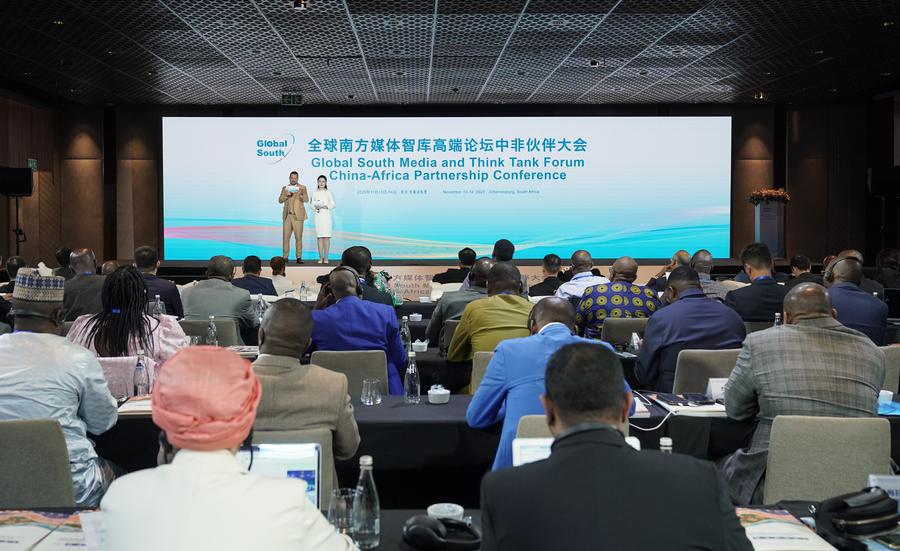
The Global South Media and Think Tank Forum China-Africa Partnership Conference which was held in South Africa-Johannesburg on November 13, 2025, was a perfect step made at a perfect time. For some bold reasons as elaborated below, I will confidently say that this is yet another great step of China-Africa partnership whose results must help a lot to shape Global diplomacy.

Reechoing the words of America’s author and entrepreneur, Amy Jo Martin, “ Social media is the ultimate equalizer. It gives a voice and a platform to anyone willing to engage,” I can emphatically say that social media had ruined and is ruining global diplomacy and such a conference, plays a big role in restoring order.

For instance, the conference whose theme was “ Reforming Global Governance: New Roles and Visions for China-Africa Cooperation,” the conference’s main target was to analyze how the collaboration between media and think tanks could result into a better-for-all global governance.

This implies that the conference created enough room for mass awareness of the roles of think tanks vis-à-vis media, especially print media like newspapers. Culturally, newspapers have been one of the most dropped sources of providing information over the ages as civilization advances. This has made the print media to be left aside for a few elites, topped by digital media like TikTok and Facebook. This ultimately points out the view that the conference’s masterminds identified a crucial problem of information disorders largely engineered by digital media.

The simplest response to the why-question that has popped up into your mind especially after my opinion on digital media is; the reading culture is decaying. People, especially the biggest percentage of the world’s population which is made up of the youth prefer scrolling up and down on their devices to watch short videos for information, and tapping other pieces of information from platforms like Facebook than reading newspapers.

How this is a constraint to global diplomacy can easily be seen through the lens of foreign policy, aware that foreign policy feeds global diplomacy. As reflected in the words of Amy Jo earlier, social media especially digital media, “ Gives a voice and a platform to anyone willing to engage.” This makes it the easily manipulated type of media because “anyone” is given a voice and platform to engage. It does not matter whether you are academically qualified to discuss pertinent issues as long as you are able to speak. This trend cannot be found within the print media where think tanks and media houses must write and research in order to provide thoroughly analyzed and well backed up information.

Two forms of information disorders heavily influence how information trends under digital media because it is often mishandled in the name of “content” yet it is greatly consumed by the biggest number of audiences who believe that such information is true without verification.

Misinformation is the biggest problem in Uganda and it greatly affects diplomatic ties of several countries. This is where the information being spread is false, but the person disseminating it believes it is true. In other words, they also do not know if the information is true or not, but for the love of likes from the audience, they go ahead and circulate such information. Remember social media gives a voice and platform to “anyone.”

I cite China-Uganda relations as a key example where social media has for some good number of times sabotaged the relations of these two states. In 2021, earth-quaking headlines emerged on various social media platforms and on social media handles of prominent bloggers in Uganda. The invalid but widely believed news that Chinese bank had taken Uganda’s only international airport spread like wildfire.

The misinformers picked on an interesting bit of information, clung on it, and made the public to believe them. HUEN—which is an International Civil Aviation Organization location indicator code for Entebbe international airport, became their mask of support. Since the airport had been expanded to fit the international standards with the help of loans from the Exim Bank of China under the Belt and Road Initiative, upon its completion, the airport gained that code.

However, to the misinformers, the code sounded like a Chinese name replacing “Entebbe”. Maybe we could say “Chen,” one of the commonest Chinese names. Little did they know or bother to make research to realize that each letter in that code implies something. For instance, “H” is a locator for all airports in Africa according to ICAO. “U” indicates Uganda as the main location of the airport. “EN” represents the real name of the airport (Entebbe) since ICAO normally uses the first two letters of the airport to award it a code.

Such information was easily believed owing to the nature of the code’s pronunciation and given the fact that by then, the Western narrative of “debt trap” slapped against China was waving across the globe.


With disinformation, where the information is false and the person disseminating it knows it, but intentionally goes ahead to lie, is also common. We can refer to the previous example. Since 2021 was a season of politics in Uganda, some political opportunists saw this as an advantage to achieve their agendas. Of course, this affected the least informed biggest percentage of people on ground who depend on social media as their source of information.

Previously, the same issue has reappeared. On 17th August 2025, President Museveni comissioned the Wagagai gold mining project in Busia District. The project is believed to achieve 99.9% purity in gold processing locally and create over 5,000 jobs for Ugandans. To achieve this, Uganda collaborated with China, seeking provision of capital-intensive infrastructure and resource extraction projects to secure access to critical minerals, foster economic ties, and promote local value addition. However, bloggers were too quick to say that a clique of people in power were secretly selling gold to China.

This was based on the assumption that there was little information available about this project. Little did they know that official handles of China’s embassy in Uganda had already provided this information. The only problem was—such information was provided on twitter where there is fewer audience unlike on Facebook and TikTok where the audience is big and exploited by bloggers.

Therefore, the Johannesburg conference was remarkably important for letting the audience know of other sources of information like think tanks where one can find trusted information. It also gave a green light to think tanks to know that they are also trusted pillars to the media towards shaping coherent and inclusive global diplomacy. In the end, this will not support China and Africa alone, foreign policy feeds global diplomacy.

The writer is a research fellow at the Development Watch Centre.