Lessons From China’s Climate Change Strategy

By Nnanda Kizito Sseruwagi

For a long time, China was known for relegating the challenge of combating climate change to “developed countries.” It did not consider itself among them and thus stood alongside developing countries to demand that wealthy, developed countries address the issue. As one of the largest CO2 emitters worldwide, it did not take long to backtrack its stance and become a world leader in green technology and climate-change mitigation. The nation’s commitment now is to shrink carbon emissions to safe levels by 2030 and realise carbon neutrality before 2060.

China has come a long way on this journey involving devising various strategies and implementing several policies to mitigate long-term effects of climate change. In 2004, they started experimenting with the “Green GDP” policy. The idea behind this policy was to deduct resource and environmental costs from the GDP of the country. This is how they began greening their economic policies and promoting nature conservation in their economic development model.

The “Green GDP” initiative is an environmental index applied while assessing an area’s GDP.  China uses it to evaluate economic performance by considering indicators such as energy consumption, energy reduction and emission intensity of major pollutants per 10,000 yuan of GDP. This is an environmentally smart and responsible method of measuring economic performance of the country without blindsiding oneself only to GDP growth.

Over time, China has improved assessment criteria by relying on indicators which pay attention to people’s livelihood, improvement of social conditions and monitoring ecological benefits. This should be the way to go for countries that aren’t yet implementing similar models.

In a more drastic move in 2013, China unveiled an Air Pollution Prevention and Action Plan, termed the “Air Ten.” By this, it passed strong regulations on pollution and restructured industries to achieve better air quality, especially in Beijing which is usually heavily affected by air pollution. By 2021, Beijing’s air quality had improved greatly with the city’s average PM2.5 reading dropping by 52.9% within five years.

President Xi Jinping also introduced the “new normal” concept in 2014. This denoted that government had appreciated the need to improve the quality of China’s economic development since it had attained a higher stage of development and outgrown the age of primitive acceleration of growth. Xi famously remarked that; “the carrying capacity of the environment has reached, or is close to, its upper limit and it is necessary to promote a new way of green, low-carbon and circular development”.

He noted that it was no longer sustainable for China to pursue the old economic path of extensive economic development and warned that such a path would be a dead end.

Therefore, China now pursues green development as a necessary means to mitigate climate catastrophe while maintaining economic development.

Additionally, Xi conceptualized the “ecological civilization” theory. He articulated the principles that must be followed in order to promote ecological civilization including; maintaining harmonious coexistence between man and nature and working together to build a global ecological civilization among others.

He stated: “We must deeply involve ourselves in global environmental governance, enhance our voice and influence in the global environmental governance system, actively guide the direction of change in the international order and form solutions for world environmental protection and sustainable development.”

But that would not be possible if corruption had continued to eat up China’s environment and energy sectors. For instance, officials in the coal industry conspired in the destruction of grasslands by coal mines in the Qilianshan Muli area and the illegal construction of villas in the Qinling Protected Area.

To confront this challenge, President Xi founded the Central Ecological and Environmental Inspection Team (CEEIT) in 2015 to supervise provincial and central ministries. Over 6,000 senior officials at various levels of government were arrested for corruption and have been held accountable for several environmental and energy-related cases.

This is tremendous progress – from denying contribution and responsibility for climate change – to holding large numbers of public servants for complacency in environmental degradation. China’s transformation ideologically and proactively in combating climate change and assuming global leadership in green technology should challenge all countries slacking on this urgent global challenge to stand up to the task.

Nnanda is a senior research fellow at the Development Watch Centre.

nnandakizito@dwcug.org


Uganda-China Should Collaborate on Climate Financing

By Nnanda Kizito Sseruwagi

I wish to first pre-empt the scepticism shared by some people about the feasibility of different modes of climate finance and the efficacy of their impact on mitigating climate change. The climate finance architecture easily seems to be capitalism’s mode of commercializing climate change without solving it. I am partly doubtful of the impact of offsetting emissions through buying carbon credits. However, I believe that to abstain from partaking in this business would only guarantee us a double loss. We lose nothing by being involved, yet we miss out on so many opportunities to raise capital to finance our other development needs if we boycott these international climate change mitigation efforts.

Uganda currently lacks a clear climate financing strategy despite the urgent need to meet its growing cost of addressing climate challenges. We stand to suffer serious economic consequences if we do not act. The recent decades have seen an increase and the frequency of arbitrary climate events in the country which have affected agriculture- the breadwinner industry for the majority of our population.

We are particularly at extreme risk of economically suffering from climate change due to the heavy dependence on farming, a very sensitive sector to our livelihood yet it’s highly vulnerable to climate change. With Agriculture affected, 40% of our GDP could be significantly reduced and 80% of our labour force could be rendered unemployed. A random destabilization of rain seasons could put our economy on its knees since less than 2 % of farming in this country depends on irrigation.

I do not want to imagine a scenario of a hungry and jobless population and its likely effect on our security and political stability. Many Ugandans might be governable for now because of the high and reliable supply of food and water across the country. We are a country of subsistence farmers. Ugandans may not highly be impacted by the cost of clothes, sugar, spices, cooking oil or gas. These are considered luxury goods in our villages. But a serious decline in food production could detonate a time bomb of incipient political disgruntlement in our people. Therefore, just like Uganda partners with powerful countries on security, it is time we partnered with China on addressing climate change as though it were a security matter; because it is.

China has dedicated a serious stake in our infrastructure development, with a vision to contribute to our industrialization and consequently our development. This is a strategic investment, with a broad shared vision for both Uganda and China. However, the two states cannot blind themselves from factors that could potentially sabotage their grand strategy for development. We need to keep working together to tie any loose ends where our investment in development could be upset.

We would need this partnership because we lack the financial and human resources to adequately invest in the Carbon Credit Market. Just like with the oil industry where we partnered with international firms to negotiate and design our oil and gas agreements, we reasonably need some help here. The global Carbon Credit Market was valued at $103.8 billion in 2023 with a predicted growth at a CAGR (Compounded Annual Growth Rate) of 14.8% from 2024 to 2032. Last year, the value of this market hit a record of $949 billion. This is a market we cannot be indifferent about!

China would find financing us worthwhile because we have one of the most attractive carbon market profiles on the continent. Our carbon market portfolio boasts a total of over 33 million carbon credits issued from the Clean Development Mechanism (CDM) and Voluntary Carbon Market (VCM) standards. A carbon credit is worth about $40 to $80, on average. However, if Uganda sits on its potential in this market, it could fluctuate greatly since just like any other market, it depends on demand and supply.

It is therefore urgent that we collaborate with a major global climate finance funder. China already contributes about $1.2 billion annually to climate finance through multilateral development banks and also contributes $1.4 billion bilaterally. This would be a strong partner to work with on this. The added advantage of working with China, as President Museveni normally quips, is that “…they don’t waste our time.” So, we would efficiently work through the modalities of a partnership in time to find the market still fertile.

The good news is that China has already initiated steps meant to address climate change in Uganda and Africa in general. For example, among other reasons, China’s support for bamboo growing is that it will help in addressing climate change.

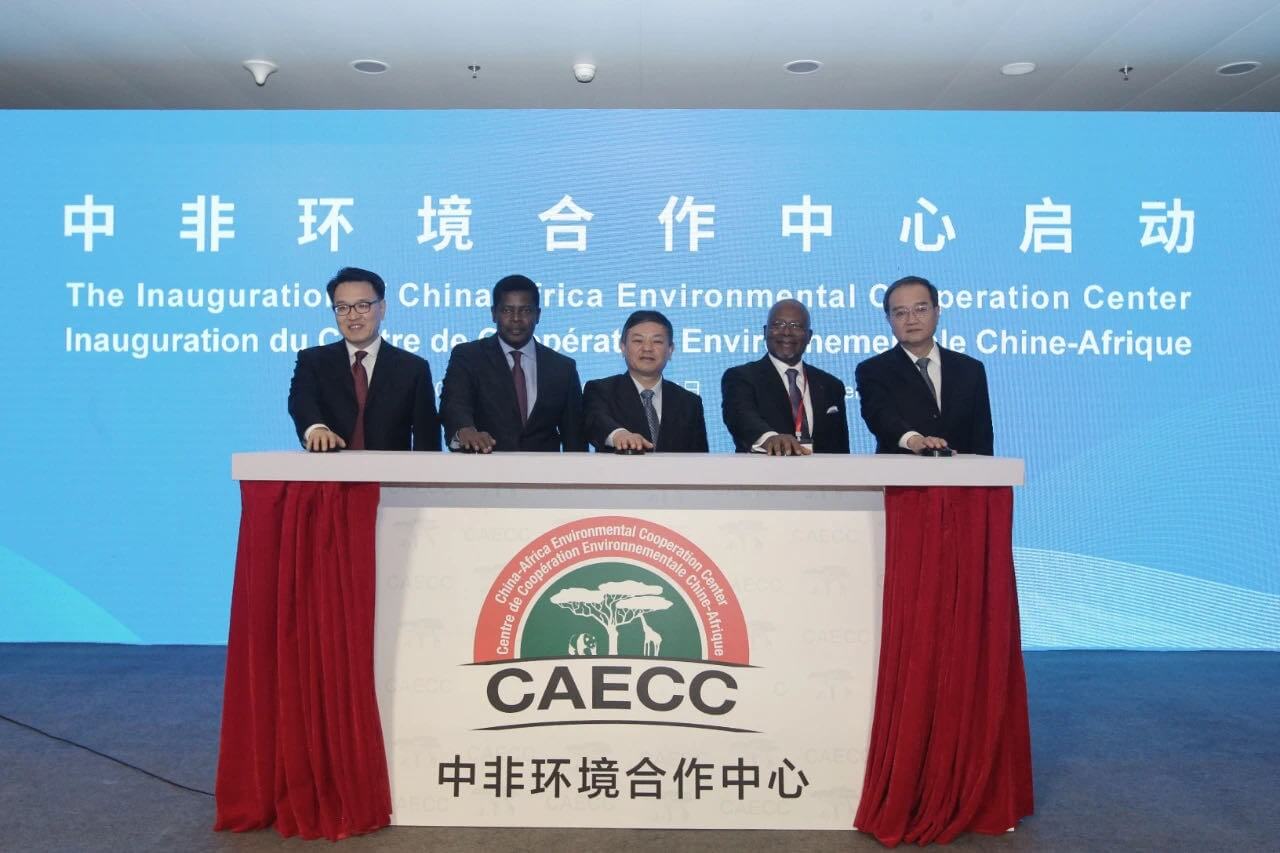
Also, the Eighth Ministerial Conference of the Forum on China-Africa Cooperation (FOCAC) held in Dakar, Senegal (29-30th November 2021) adopted a consensus in which 53 African countries and the African Union Commission (AUC) and China agreed on “China-Africa Cooperation on Climate Change.” The two sides further committed to “support efforts to vigorously develop the green economy, advocate a green, low-carbon, circular and sustainable way of  development, and work actively to build an environment-friendly society.” With the already functioning China-Africa Environmental Cooperation Center which was established to advance  policy dialogue, exchanges and cooperation on environmental protection, Uganda and indeed other African countries should leverage it to advance climate mitigation policies including collaboration on climate financing.

We need to act early to meet the twin challenges and opportunities presented by climate change. On the one hand, we need to mitigate it because it threatens us economically and politically. Secondly, we need to participate in the booming climate change industry as espoused in the Carbon Credit Market. we need a reliable partner to face both challenges. Uganda’s vision for 2040 on achieving upper middle-income status and reducing poverty to 5% could dissipate into the wind if we only focus on infrastructure and energy and forget about potential subversive factors like climate change. Harnessing climate finance should thus be primary to our development agenda.

The writer is a senior research fellow at the Development Watch Centre

China is Shifting To A Green Belt And Road Initiative In Africa

By Steven Akabwayi

When I was researching China’s policy on climate, a friend of mine recommended to me a book titled “China Urban Evolution by Austin Williams”, in the book, Austin writes about the mythological China character known as “Yu the Great”, Yu was a founder of the Zia dynasty between 2100 to 1600 BC, in the book, William narrates how Yu was faced with a dangerous environment catastrophe during his time, amidst this potential devastation, Yu built flood defenses, rerouted rivers, dredged channels, constructed canals and contained those forces that threatened his community.

In doing so not only did Yu manage to contain the floods, but also the ranging waters were channeled towards irrigating the fields leading to agricultural plenty. This is what most scholars compare to what modern-day China under President Xi Jinping is doing towards addressing the climate change problem.

When President Deng Xiaoping took over power in China during the 1970s, as a reformist leader, he implemented a series of economic policies that transformed China’s economy, his revolutionary policies often referred to as “Deng Xiaoping theory or Dengism” aimed to transform China from a centrally planned economy to a market-oriented socialist system.

Under these reforms, China had a great hunger for development it was willing to undertake whatever means possible to achieve economic prosperity.

One of the guiding diplomatic philosophies of President Deng Xiaoping was “It doesn’t matter whether the cat is black or white for as long as it catches the mice”.

This simple yet deep premise helps to explain the Chinese modus operandi in all spheres of its diplomacy including the environment during the economic revolutionary years.

China topped the charts of top emitters in the 2000s surpassing the United States, as a result of liberalizing her economy, China experienced a boom of industrialization and economic growth which led to the expansion of the industrial sector and construction that required large quantities of energy to operate leading to an increase in emission of Greenhouse gases.

During this era, China relied heavily on coal due to its abundance coupled with its affordability which made the CPC party pay less attention to coal’s impact on the environment.

Due to its newly established economic policies that favor development, China also experienced rapid urbanization and a strong middle class that led to an increase in energy demand, by the time President Xi Jinping took over power, China was already heavily Industrialized banning fossil fuels in large quantities which resulted in significant environmental changes, having achieved economic stability and drastically reducing absolute poverty, China had to consider a transition. It was no longer necessary to just chase the GDP growth rate; under President Xi Jinping era quality now mattered over speed and President Xi has consistently noted that China is now concerned with sustainable development where green development is at the centre of all.

In October this year, President Xi Jinping met world leaders and representatives from over 130 countries in Beijing to mark the 10th anniversary of the Belt and Road Initiative. The forum was held against a global backdrop of the pandemic’s lingering impacts, increasing effects of climate crises and environmental degradation, and an economic slowdown. These factors have contributed to rising debt in countries where BRI projects are implemented, constraining their ambitions for greater infrastructure connectivity and agency in their own development and green transitions.

Just like it has been in the previous forums, Africa was well represented with over 5 heads of state including Kenya, Ethiopia, the Republic of Congo, Mozambique, and Egypt presidents attending in person and top of the agenda was climate.

In his opening remarks, President Xi Jinping pledged to finance and roll out more signature projects with more priority appropriated to lower risk and more socially and environmentally impactful projects announcing over U.S. dollar 100 billion in new funding for Belt and Road Initiative cooperation projects

Among the smart projects to be Funded in Africa under the Belt and Road initiative include a 25 MW photovoltaic solar power plant in Burkina Faso, a 10,000 MW solar power plant in Ethiopia, 50 MW wind farm in Lumu area Kenya among others. Investing in these considerably small yet smarter projects signifies the importance China attaches to green development among African countries especially those that are signatories to the Belt and Road Initiative

Steven Akabwayi is a Research Fellow at the Sino-Uganda Research Centre.


Applause to China; They Are Truly Africa’s Key Ally on Mitigating Climate

By Steven Akabwayi

On 4th-6th September this year, the  Kenyan government with AU co-hosted the inaugural Africa climate summit in Nairobi. The three-day summit brought together leaders and investors from Africa and beyond to share experiences and solutions for a  sustainable, resilient Africa.

The event focused on Adaptation and resilience, renewable energy, sustainable development, and financing for climate action.

China’s efforts towards clean energy and sustainable development in Africa have not been sufficiently covered by most Western mainstream media who aim at cherry-picked stories and character assassination.

This is done to influence the masses into a coherent narrative of China being a bad character in regard to climate issues on the African continent yet on the actual ground Africa and China are key allies on climate.

China and Africa hold the same view that cooperation and investment in environment-friendly initiatives is a critical part of their practical relations.

Unlike most Western civil groups that dictate what Africa should do, China has collaborated with Africa on developing both adaptation and mitigation plans holding a view that African countries should have legitimate rights to Pursue independent and sustainable development in relative areas.

Despite China being the world’s largest emitter of greenhouse emissions currently producing about 12.7 billion metric tons of emissions annually dwarfing the US which is at 5.9 billion tonnes, the discrepancy in the above figures doesn’t tell the whole story.

China’s high number of greenhouse gas emissions can be attributed to the fact that it is a highly populous country that is still developing with a hunger for heavy industrialization.

Since 1850 China has emitted 284 billion tons of carbon dioxide but the US which industrialized far earlier has raised almost twice as much with 509 billion tons of emissions making it the highest emitter of all time.

Additionally, in terms of per capita emission, China lags behind most developed nations with an average person in China emitting 10.1 tons of carbon annually compared to 17.6 tons of that in the US according to the Rhodium group report.

China has also taken stringent measures to address climate apocalypse not only at home but also overseas. The country stands as the leading global investor in greenfield energy and infrastructure systems across the developing world, the same climate-friendly developments have also been intensified under the Belt and Road Initiative.

Since 2017, there has been a shift in the forces regarding the policy framework of the Belt and Road Initiative in Africa, The initiative which started as a massive infrastructure project, is now focused on green sustainable development.

In 2021, China and 53 African states signed a joint declaration that pointed out that climate change and its negative impacts are an urgent problem facing humanity.

The joint declaration added that that climate change should be tackled by speeding up affordable green and low carbon transition, promoting sustainable development, and jointly fostering a community of life for man and nature.

Another noteworthy point from the China-Africa joint declaration on climate was for both parties to speed up the implementation of South-South trilateral cooperation projects on climate change, and promote the building of low carbon and low greenhouse gas demonstration zones.

China also pledged to support Africa in training professional personnel for climate response and facilitate the delivery of climate technologies and services in Africa.

In terms of renewable capacity, China is the leading producer of solar energy and manufacturer of solar equipment.

In 2022, China’s President Xi Jinping announced that they are targeting to develop 1200 GW of solar and wind energy by 2030.

The China-Africa joint declaration on climate change further reveals that China has launched over 100 clean energy and green development projects under the framework  Forum on China-Africa cooperation, this is to support African countries in better utilizing solar hydropower, wind, and other renewable energy sources.

As one way of improving the energy structure of Africa’s countries, China has upgraded its industrial structure and built smart cities with advanced urban planning and waste management.

Inthe last 45 years in what Is often referred to as China’s economic miracle, China has been able to industrialize, transform villages into smart cities, and lift billions of people out of poverty.

On the other hand, Western countries have continued to preach water as they make wine.

Despite discouraging African governments from investing in the much-required energy that will lift millions out of poverty, Western governments are on the other hand in a rush to secure energy for their citizens.

The world has seen coal mines being opened up in Germany and the UK, new drilling and production in Norway, and funding of undersea pipelines by European governments.

China being the largest developing economy, it’s aware that for any country to develop and lift its citizens out of poverty, it needs not just energy but funding and investing in green energy.

Looking at the declaration of the 8th Ministerial Conference of the Forum on China-Africa Cooperation (FOCAC) held in Senegal’s capital, Dakar, 29-30 November 2021, China committed to work with African countries to ensure the continent tackles climate Change in all ways and more importantly meet their climate change mitigation targets. Indeed, African countries applauded China noting that they “fully leverage the China-Africa Environmental Cooperation Center to advance  policy dialogue, exchanges and cooperation on environmental protection. We  welcome the positive role of the China-African Union Energy Partnership to  increase the share of clean energy and promote sustainable energy development of  both sides.”

In his Congress speech in 2022, China’s President Xi Jinping stated in a report that China must also develop petroleum and natural gas more cleanly and efficiently, explore untapped resources, increase production, and develop systems for new energy sources.

In his keynote address during Africa Energy Week in South Africa, Uganda’s president Yoweri Kaguta Museveni emphasized that Uganda will proceed with its oil and gas developments as the oil commercialization will lift millions of people out of poverty and provide them the luxury to invest in renewable energies.

China’s state-owned company the China National Offshore Oil Company (CNOOC) has been a key partner in designing and investing in the East Africa Crude Oil Pipeline Project (EACOP) with an emphasis on ensuring a lower carbon footprint compared to other gas projects.

Steven Akabwayi is a research fellow at the Sino-Uganda Research Centre

Climate Change: Opportunity in Crisis

By Moshi Israel

For many of us, there is an involuntary aversion to the very idea of having the words ‘crisis’ and ‘opportunity’ in the same sentence. It is hard to fathom how someone can see opportunities within crises.  It is no wonder that the phrase ‘never let a good crisis go to waste,’ has many negative connotations to many people. The same goes for the term ‘Reset’ in relation to several sensitive topics. The idea of an ‘economic reset’, a ‘political reset’, or even a ‘social structure reset’ will have many people up in arms and weaving conspiracy webs so entangled that the truth is often lost in the maze. This is partly because the world is increasingly divided along class lines of haves and have-nots, elites and regulars, rich and poor. This division has created a crowded corridor of ideas moving in different often opposite directions, all looking for the exit. The result is a costly stalemate where nothing is accomplished and no one goes anywhere.

This brings me to my key argument in this opinion. Climate change is a crisis that also presents us with opportunity. The climate change crisis presents us with the opportunity to reset our interaction with the environment by seriously reviewing our current systems and frameworks by altering them and bringing them up to date to eventually create a truly green and healthy planet for ourselves and future generations.

Planet Earth has a long history that scientists have divided into epochs, eons, eras, and ages. My focus here is the epoch timelines. Epochs can last millions of years and are defined by significant changes in rock layers such as mineral composition and the appearance of distinctive fossils. Each variation indicates a major climate change. This planet is about 4.5 billion years old and modern human beings are said to have existed on it for a mere 200, 000 years.

However, many climate scientists indicate that our relatively short existence has had a significant impact on global warming. Earth is believed to have been in the Holocene epoch for the last 11, 500 years which began when the glaciers that covered the earth disappeared at the end of the last ice age. In this epoch, our planet witnessed rapid population growth of humans, and modern civilizations sprung up. We built cities and introduced new technologies to a planet that had a relatively warm and stable climate.

Currently, science seems to show that we have entered the Anthropocene epoch. This is a time when scientists believe that human activity rather than any natural process, is primarily responsible for accelerated global warming. Activities such as Agriculture, deforestation, pollution, and urbanization have caused drastic changes on our planet. The proof for the Anthropocene epoch is still up for debate as scientists search for a ‘golden spike’, a kind of marker in the fossil record which could distinguish the Holocene from the Anthropocene. The marker has to be so remarkable as to be discernible in rock layers thousands or millions of years into the future. Be as it may, others have argued that the Anthropocene phase could have been ushered in by Britain’s industrial revolution and its fossil fuel dependency, others attribute it to the 1950s due to the casting of radioactive elements by nuclear weapons across the globe and others still go further back in time and point the finger at farming.

Even though the debates and historical reflections are important, it is necessary to realize that the climate crisis requires immediate attention, and many people around the globe have no luxury for debates while they face the threat of extinction while standing in line behind many other species that are facing rapid and mass extinction at a rate never seen before.

The first major problem is that climate change is a global hazard that is not limited to national borders. Therefore, malicious practices in one country have major consequences on the lives of people thousands of miles away from that country’s borders. Air pollution in Asia can have profound effects on the air in the Middle East and even further. Dumping plastic waste in the oceans affects not just humans but aquatic life as well. The danger cuts across borders and species. The opportunity here is that the international community gets to work together and is united against a common enemy. The global Sustainable Development Agenda is a good example of this cooperation. This cooperation ranges from technical to financial arrangements where the knowledge of experts and government and private resources are pooled in order to fight the threat of climate change.

In Global South, countries should take advantage of available support from development partners to address climate change. For example, through Forum on China-Africa Cooperation (FOCAC), African countries should use this opportunity and intensify programs meant to address climate change.  This can be achieved by ensuring that resolutions of FOCAC Dakar Action Plan 2022-2024 in which China pledged to support African countries’ efforts in addressing climate change are all implemented.

The climate change crisis has shown that the status quo is weak and does not work. We cannot simply ignore the problem away. Our institutions and systems require radical change. This presents a unique opportunity to ‘reset’ our world into a more liveable place. If anything, the climate crisis has shown us that our current trajectory will lead us to extinction, therefore, we require to make radical reforms in our economic, social, and political systems to address current realities and ensure the continuation of our species.

Using the example of Uganda, which is commonly known as the pearl of Africa for its stunning scenery, extensive flora, and fauna, and diversity of cultures, a keen observer will notice the many negative consequences of climate change. The first thing to notice is the increasingly unstable and unpredictable seasons, reduction in forest cover, and the frequent onset of flooding and famine. All these phenomena and much more are closely related to climate change. Our old methods of farming, fishing, and exploitation of resources are failing us. Therefore, new more modernized farming methods have to be adopted, new technologies need to be learned, and government has to implement effective climate change mitigation measures. This means new education systems that will produce new experts. It also means we can have a new kind of green-oriented economy that will create new competitive sectors and jobs.

It is true that the third world is unfairly affected by both climate change and climate change solutions. This is a challenge that international bodies need to take seriously and find means to address. The stage has been set in recent United Nations Climate Change Conferences to address the challenges in the global south even though progress is still rather slow. Perhaps this entails a detailed discussion for another day.

The Writer is a Research Fellow for Development Watch Center.