Framing Foreign Employees: Tales of Chinese Workers at Karuma Hydropower Project

By Allawi Ssemanda

Figures from the Word Bank indicate that approximately, one billion people from Sub-Saharan Africa and South Asia have no access to electricity. This is a huge barrier to socio-economic transformation of world’s significant population and has both direct and indirect effects on development efforts like slowing expansion of development indicators such as health, poverty reduction programs, education, food security among others.

Despite significant progress in growing the numbers of people with access to electricity, it is still hard for developing countries to meet the 7th Sustainable Development Goal (SDG) of all having access to affordable, reliable, sustainable and modern energy by 2030.

The government of Uganda has been working hard to increase electricity production capacity to increase its accessibility countrywide. Through EXIM bank of China, Chinese government offered concessional loan to fund 85% cost of the project, while Uganda government is meeting the remaining 15%.  A Chinese firm SinoHydro Cooperation was contracted to undertake the project which is Uganda’s biggest hydropower plant and possibly, the 14th largest hydropower dam in the world.

The dam will produce 600MW which will push the country’s hydropower generation to 1,868 MW. The government hopes this will help the country to increase power accessibility countrywide reduce power tariffs in the long run.

Uganda’s vision 2040 which aims to make “a Transformed Ugandan Society from a Peasant to a Modern and Prosperous Country within 30 years” lists increased generation of affordable power as a magic bullet for the country’s socio-economic take off. To achieve this, Uganda must increase its electricity per capita consumption from the current 215 kWh to at least 3,668 kWh. This to happen, we must raise our power generation capacity to at least 41,738MW and increase access to national grid to at least 80%!

As Bent Flyvbjerg, a Danish professor at Harvard University taught us; “Infrastructure is the great space shrinker, and power, wealth and status increasingly belong to those who know how to shrink space,…” Put differently, Uganda to realise her 2040 vision, we must shrink electricity deficits. This will among others increase multiplier effects associated with increased access to power.

For this to happen, as a country, we must not aim at small and individualistic gains but rather aim at those that benefit us as a country.  We must not kill a hen to save an egg. This means resisting all acts that may delay or sabotage infrastructural developmental projects.  For instance, the completion of Karuma Hydropower project partly delayed because of sabotage when unknown individuals vandalised and collapsed 5 transmission towers on the Karuma-Kawanda 400KV transmission line.

Last year, I and a team of researchers from the Development Watch Centre went to Kiryandongo district specifically to get first-hand information and understand how the Karuma hydropower project was impacting the host communities.

We interviewd 91 people who included residents and leaders of Karuma town council and neighbouring sub countries, managers and emplyees of the project. These included 64 men and 27 women. Among the 27 women, some were those some media outlets identified as victims. While interviewing alleged victims, who media reported to have claimed to have children fathered by Chinese workers, one Lydia Atim (she gave consent to quote her) from Gulu refuted the claims stressing the father of her child was a Pakistan. “No, the father of my child is not a Chinese. He is a Pakistani,” Lydia Atim affirmed.

The findings reached at after several interviews revealed striking findings including ground truthed claims of blackmail by some local politicians who some community members and politicians argue are using the “victims” of the project for both political and monetary gains.

Asked why they cite Chinese employees as responsible including those who know that afthers of their children are not Chinese, Washington Ochaya, the area district councillor noted; “for us, all foreign workers in this area who are not black in colour are Chinese because they are the majority.” He stressed that as local leaders, in total they had “registred only five ladies who claimed to have had children with foreign workers.” If anaysed, in this case Chinese employees can easily be accused even when it is clear they are not personally responsible.

Desipte what he called a few challenges, Ochaya who was our contact person during the study credited the project stressing; “before this project, Karuma was a small town with no opportunities. With the project kicking off, the area has registered significant growth in all aspects that today, we have a Town Council and we are still growing.” “Land used to be cheap here, but with this project, land prices skyrocketed and social services in the area improved. Those Chinese also helped us to have access to clean water by constructing a water tap at Karuma primary school which is a source of clean water for entire community,” emphasised Ochaya.

While one may not conclude that accusing foreign workers of abandoning their alleged fathered children is a common conspiracy against Chinese, some local leaders think that some politicians are manipulating mothers who have children with project’s foreign employees to say it’s Chinese who are responsible. In our interview with Mr. Oryem Joseph Lilly, the chairperson LC 1 Karuma cell, he argued that some local politicians use local women with children fathered by foreign workers as a campaign tool so that they can be seen as having fought for what they present as vulnerable people. Oryem emphasises that some politicians are manipulating those women hopping they would get compensated and share their money claiming they helped them. Describing the act as corruption, Oryem stressed “corrupt politicians are using the project for selfish interests. They are so determined that some are willing to blackmail the project, inflate victims’ list and list of those who lost land hopping they can gain monetarily from this,” Oryem emphasised. Here, one can conclude that some politicians in the area are willing to kill a hen to save an egg!

In this case, a hen is framing and blackmailing huge infrastructural projects like Karuma hydropower project with its immense opportunities to local communities. The egg saved is someone individually benefiting as a result of blackmail or framing the project that would otherwise benefit entire society but the individual consciously or otherwise frames and blackmail it for personal gains which may in the long run affect the entire project and the host community who would otherwise benefit from such projects.

To avoid such blanket claims, government especially the ministry of energy should interest themselves in this matter and where a person or local politician claims of having knowledge of existence of so-called “many abandoned children” left behind by foreign workers, they should be tasked to help authorities locate alleged victims. Otherwise, other than the possibility of government or the contractor spending much money compensating such non-existent victims on long lists created for political and other ulterior motives, such unsubstantiated claims have potential to cause unnecessary projects delays.  Also, as a country, we risk being seen as hostile to our development partners because of selfish individuals who thrive on blackmail.

Allawi Ssemanda is a Senior Research Fellow at the Development Watch Centre.


Africa Cross-Pollinates Civilizations

By Nnanda Kizito Sseruwagi

Samuel Huntington riled many minds in the international relations circles when in 1993, he published “The Clash of Civilizations?”, a controversial article which he later expanded (and I would add, “escalated”) into a book in 1996. In the article cum book, he theorized that cultural and religious identities rather than ideological differences would define the post–Cold War conflicts among nations.

Whereas so much ink has flowed in critiquing Huntington, some people still believe him, especially on the lines that conflict in the 21st century is likely to flare up between the world’s major civilizations i.e., the Western (USA and allies) and the Sinic (Chinese) civilizations. It was Huntington’s view that current and future conflicts among sovereign states would best be understood on the contours of cultural differences.

As for Africa, Huntington did not even find us to be a necessary part of his global analysis. He said so little and yet so much by being conceptually inattentive to the place of Africa in the debate of global civilizations.

It is that gap in his analysis that I seek to add a whisper to. I think that we as Africans stand at the center of global civilization because of the unique and complicated history we are walking from and the undetermined future we are walking to. I observe Africa as the fallopian tube where the cross-fertilization of competing civilizations is happening currently.

This fertilization is happening generally in these ways. Whereas Western civilization seems to compete more forcefully through the superimposition of assumed Western values onto African societies, China has on the other end established principles of sharing its civilization not by prescribing its domestic values and systems for Africa but by respecting African values and autonomy. This way, the cross-pollination of Chinese and African civilizations is based on respect and mutual benefits.

The danger of Huntington’s “clash of civilizations” theory is that it offered a brand-new excuse for the United States to justify any atrocious confrontation they may have wished to execute in the absence of the Soviet Union, which had been the perfect excuse for a threat during the Cold War.

Huntington had a very narrow and limited appreciation of identities and civilizations. He determined the result of their intersection as violent, ipso facto. He only anticipated adverse effects from the interactive competition of diversity. And yet history has limitless evidence of the harmony and development that came from inter-cultural and inter-civilizational exchanges. He saw no “conversation of civilizations”. He ignored all substantive evidence to that effect and instead earnestly highlighted the “clash of civilization” – by which he meant catastrophic warfare.  Surely, the interdependence of our time and the intersectionality of our global challenges deserve better analysis of our diversity.

In politicizing civilizations, Huntington dangerously attempted to rationalize and passively encourage political violence on the global landscape. The logic of monopolizing violence was already an inherent nature of the modern state. These nation-states customarily inflict violence on both internal political minorities during state formation and also violate foreign subjects during external imperial expansion. We in Africa are still coming to terms with both the violence of state formation as well as recovering from that of colonial expansion. But along with this trauma, we are also offering a safe space for Western and Sinic civilizations to peacefully meet as they interact with us on our journey to socio-economic transformation.

China and the West should exploit the opportunity of partnering with Africa on its development course to diffuse their intercultural tensions by viewing Africa not as a place for rivalry but one for cooperation. I believe that this would align well with the objectives of the United Nations Alliance of Civilizations (UNAOC).

Africa is home to millions of the youngest people in the world. These youths are negotiating a multicultural, fast-changing world with open arms. Those arms must be bestowed with tolerance, not the cultural prejudices fraught in Huntington’s clash of civilizations.

We should be more invested in urging for dialogue among civilizations like never before. As a venue where various civilizations now meet on development agendas, Africa should inspire dialogue, mutual understanding, peaceful coexistence and cooperation among these civilizations.

Let us not seek to remake the World Order along lines of cultural confrontation. Huntington’s theoretical legitimization of Western aggression against Islamic cultures and China should be buried in the unmarked graves of history where it belongs. I hope that the United States’s foreign policy actors desist from conducting it under the intellectual enlightenment of thoughts like Huntington’s. Future history will kindly remember them for that.

The author is a senior research fellow at the Development Watch Center.

nnandakizito@dwcug.org


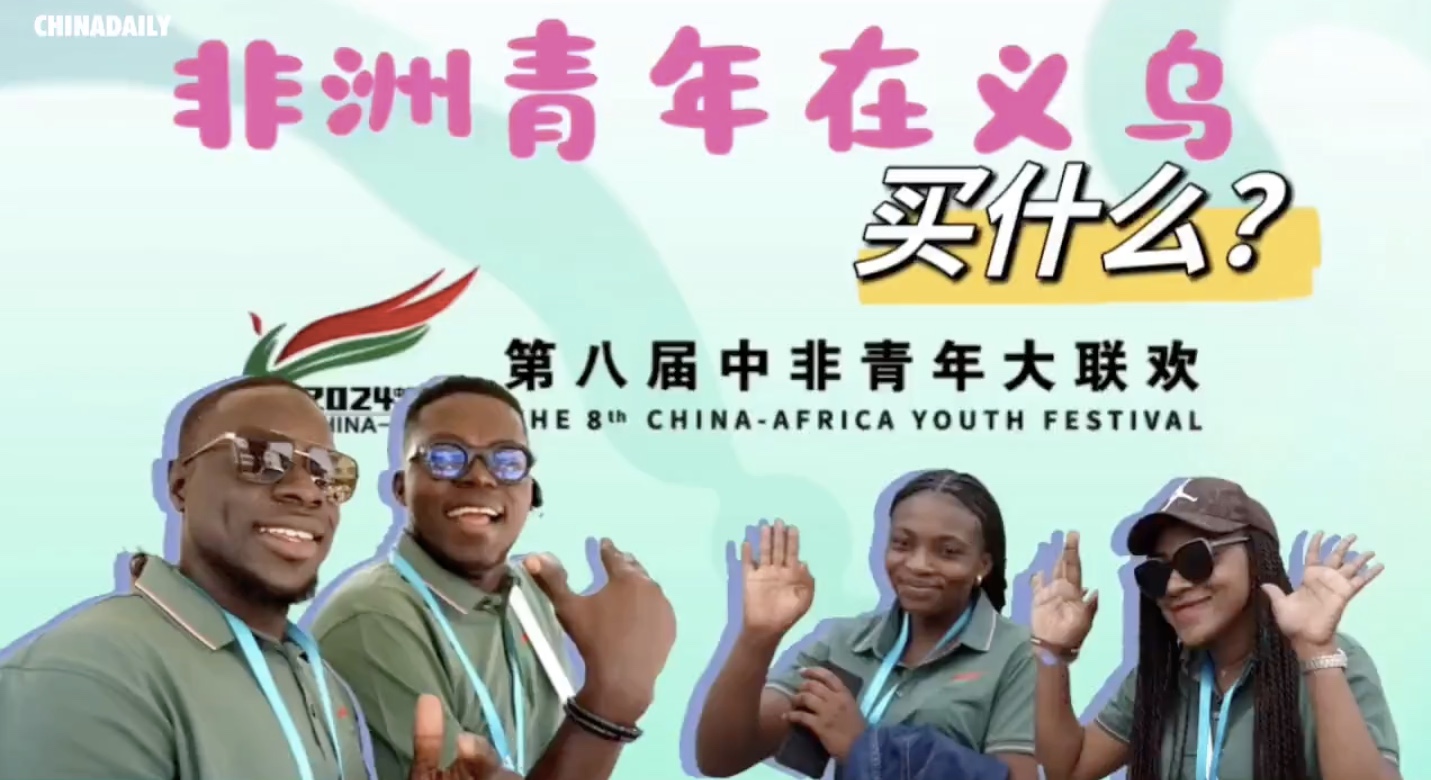
China-Africa Cultural Exchanges Inspiring the Next Generation Leaders: Chronicling the 2024 China-Africa Youth Festival

By George Musiime

More than 60 youth representatives from Africa have been immersed into the culture and history of China as a part of the China-Africa youth festival that kicked off in Beijing on the 20th May with the opening ceremony in the Chinese capital Beijing. The 2024 China-Africa youth festival was organized with the collaboration between  the China Soong Ching Ling foundation and the Zhejiang Provincial People’s Government. The opening ceremony on May 20th was attended by young people from all across the continent, representatives from African embassies in China and the African Union as well as Chinese dignitaries including the  Vice Minister for foreign affairs of the People’s Republic of China Chen Xiaodong as well as the chairperson of the China Soong Ching Ling Foundation, Li Bin.

The festival is a cultural exchange  activity where youths from China and Africa share experiences under the people-to-people connection facet of the Forum on China Africa Cooperation FOCAC  which is due to take place in September this year. In fact, because it coincided with the 75th anniversary of the founding of the Peoples Republic of China, this year’s  festival exposed participants to China’s political journey where participants took part in activities aimed to showcase the story of China’s progress both politically but the social economic aspects as well.

For the first two days, participants took part in activities at the former residence of Soong Ching Ling the wife of the Chinese leader Sun Yat-Sen, an influential figure in Chinese history and champion of Women and young peoples rights, the Chinese Peoples Consultative  Conference CPPCC  museum, the Museum of the Chinese Communist Party and a lecture  on China’s journey of progress at the Prestigious Peking University’s National School of Development.

After the Beijing sessions, participant traveled to the city of Jinhua in the Chinese province of Zhejiang where they visited and experienced various aspects of Chinese culture and development as well. In his address to the media and participants in the opening ceremony in Jinhua yesterday, deputy director-general of foreign affairs in the Zhejiang people’s government, Mr. Chen Jiangfeng, highlighted the role of Jinhua in China-Africa cooperation pointing to the city’s significant contribution to the total China-Africa trade having over 30,000 Jinhua enterprises engaged in business on the continent as well as its strategic importance in the people to people connection. Indeed the city has been leading the China-Africa education cooperation for more than 30 years offering training opportunities to thousands of Africans. The youth also visited China’s best institute on African studies and policy at the Zhejiang  Normal University where many materials on Africa are being curated both to document and tell the brotherly story of China-Africa friendship.

In the city if Jinhua, the delegates and media also visited the 13th largest Electric vehicle manufacturer in China, Leap Motors. At the factory, the youth were able to see first hand the progress being  made in  the area of transportation and its impact not just on China as a country but the world as well . In fact beside leap motors manufacturing its own parts, the  assembly plant rolling-out 800 auto mobiles a day  demonstrates the role of the electric vehicles in decarbonizing transportation in an era where the world is struggling to meet carbon neutrality.

This years China Africa youth festival therefore sought to expose young people from Africa to how China has successfully tackled the same problems Africa is dealing with today on the political and socio-economic fronts. Having been a developing country 50 years ago, China through its unique approach has been demonstrating to the world in every aspect that it can be accomplished; lifting all its citizens out of poverty.  As a testament, 800 million have been liberated from absolute inside of 40 years, grown their GDP per capita from a paltry 150USD to 12000USD in the same time, becoming the worlds second largest economy and Africa’s biggest trading partner in about the same time with a goal of inspiring Africa’s youth to take the mantle and drive the change that Africa desperately needs. As such, the 8th China-Africa Youth Festival stayed true to its vision of tapping into the unlimited power of Africa’s young population in order to unlock the continent’s potential for socio-economic progress.

George Musiime is a research fellow at the Development Watch Centre.


Taiwan is an Inalienable Part of China: Lai Ching-te Must Climb Down

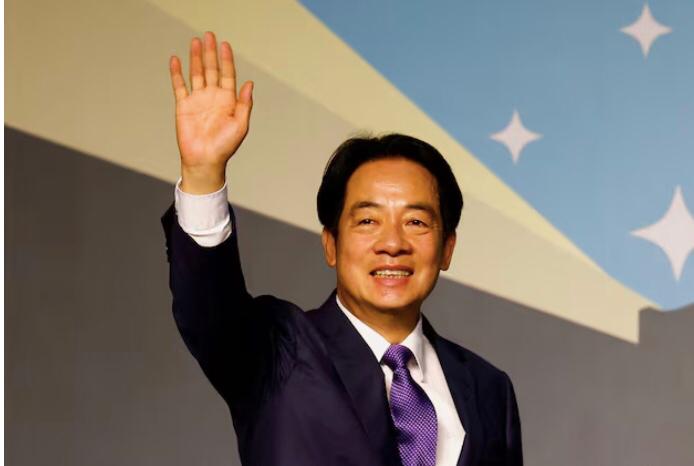
On 20th this month, Lai Ching-te was inaugurated as the Island’s new leader, taking over from Tsai Ing-Wen who pundits saw as United States of America’s (USA) lapdog. Like Tsai Ing-Wen, Lai Ching-te started his leadership on a confrontational note presenting himself as defender and agent of Washington’s hegemonic interests in the strait of Taiwan.

In his inaugural address, Lai Ching-te clearly presented himself as a separatist stating that; “The Republic of China Taiwan is a Sovereign, independent nation” adding that the so-called Republic of China (Taiwan) is not a subordinate of the People’s Republic of China (PRC). If critically analyzed, Lai’s comments show not just a reckless but a stubborn leader who is not just ignorant of international law but is also willing to raise tension between Chinese brothers and sisters in Mainland China and those living in China’s region of Taiwan.

In that anti-China and separatist speech, Lai ignored the 1992 Consensus between officials of People’s Republic of China and Taiwan which was reached by leaders of both sides.

Also, the 26th session of the United Nations (UN) General Assembly passed Resolution 2758 which undertook; “to restore all its rights to the People’s Republic of China and to recognize the representatives of its government as the only legitimate representatives of China to the United Nations, and to expel forthwith the representatives of the Chiang Kai-shek from the place which they unlawfully occupy at the United Nations and in all the organizations related to it.” Therefore, Lai to proclaim Taiwan as “Republic of China” is not only provocative but is against the international rules based order which his master’s in Washington claim to stand for.

Relatedly, historical facts back PRC’s claim that Taiwan is an inalienable part of China’s territory. The Seaboard Geographic Gazetteer which was compiled 1,700 years ago by Shen Ying of State of Wu highlighting three kingdoms of China is another irrefutable evidence backing China’s claim. The Seaboard Geographic Gazetteer shows that around mid-12th Century, different Chinese governments had administrative bodies exercising jurisdiction over Taiwan. For example, the Song Dynasty had a garrison in Penghu and had Taiwan region under jurisdiction of Jinjiang County in China’s Fujian. Also, Yuan Dynasty had installed a patrol and inspection units in Penghu purposely to administer its territory of Taiwan. Even when the units were abolished, around mid-16th and towards the end of the 16th century, Ming Dynasty reintroduced the units and stationed reinforcements in Penghu to protect the territory from possible foreign invaders.

Further, Qing Emperor Kangxi in 1662 established Chengtian Prefecture on Taiwan thereby expanding Qing Dynasty administration there. In 1927, after reconstituting the Prefecture Administration of Taiwan which incorporated the new Penghu Canton, under Qing Emperor Yongzheng, the territory officially became Taiwan and in 1885, the administration of Qing Emperor Guangxu formally made Taiwan a full province.

From above, it is open secret that going by international law and historical facts, Taiwan is an inalienable part of China’s territory. Therefore, Mr. Lai must come down and embark on uniting the people of the Taiwan strait with the mainland since they are the same people. Indeed, as noted by the former leader of Taiwan Ma Ying-Jeoh last year, “the people on both sides of the Taiwan Strait are Chinese and both are descendants of the Yan and Yellow Emperors.” Lai must know that the so-called unwavering support the United States of America (USA) is promising Taiwan cannot change facts- that Taiwan is part of China.

Therefore, while Lai’s masters in Washington have reacted angrily accusing China of “threatening” Taiwan as a result of joint military drills conducted by People’s Liberation Army’s Eastern Theater Command surrounding the Island calling it a resolute punishment for the separatist acts of “Taiwan Independence,” Lai must know that his anti-China rhetoric could not go unpunished especially that he clearly presented himself as agent of separatists which directly threatens China’s  territorial integrity. In the speech, Lai described Taiwan as a “sovereign, independent nation” before calling for what he described as extensive collaboration with external forces in pursuit of the so-called “independence” to “counter the threat” allegedly paused by Chinese mainland. Calling for external intervention in affairs of a sovereign country is not just unacceptable but a clear attempt to challenge One-China principle which is a deadline for Chinese People. Therefore, to send clear warning to separatist in Taipei is not just a threat but was the right action. It is called the doctrine of civil necessity and Lai should know that Beijing cannot just watch as separatists plant seeds of disunity and directly threatening the country’s territorial integrity.

Lai must come to reality, and understand that Taiwan is part of China and work toward reducing tension in the Taiwan strait. This to be achieved, leaders in Taiwan must stop involving foreign forces for this is China’s internal affair that in case there is need to resolve anything, it must be addressed by the Chinese people on both sides. This to happen, Lai must climb down and understand that being hostile to Beijing in no way favors the island. He must understand that in principle of doctrine of civil necessity, China is free where necessary to take all necessary steps to save its territory from agents of foreign interests. The country suffered humiliation at hands of foreign invaders and colonialists that today, Beijing cannot accept a repeat.

Lai must learn from his predecessor that choosing to stand against Beijing is not in any way good for Taiwan. For example, from 2016 when she came to power to late last year, Taiwan lost 9 diplomatic allies to China. Today, the island has a handful of allies majorly from Caribbean and South Pacific with only the Kingdom of Eswatini in Africa having diplomatic ties. This alone should inform separatists in Taipei that their moves are not only against international rules based order like being against UN’s resolution 2758 and against historical facts including for example the 1992 Consensus reached by officials of People’s Republic of China and Taiwan.

The writer is a senior research fellow at the Development Watch Centre.
Global Security Initiative: Securing World Peace

Nnanda Kizito Sseruwagi.

The Global Security Initiative is one of China’s multiple International public governance resources. It was conceived by comrade Xi Jin Ping in an effort to secure world peace by trumping dialogue over duel, partnership over divisive-coalition, and mutual benefit over winner-take-all. China has always articulated its vision for the future of mankind as defined by the shared well-being of the global community.

In this, China views its security as a part of the security of the whole world and seeks not to martial military superiority over other countries as a guarantee of its security, rather it aims to ensure that all countries feel safe and respected. While certain countries seem to monopolize international affairs and build their national defenses behind walls of alliances built on military strength, China has sought multipolarity. Multipolarity should not be misunderstood as disarray or division. It speaks clearly to the objectives and principles of the United Nations Charter of upholding universally recognized basic norms of international governance.

The principles expressed in the Global Security Initiative (GSI) are: Commitment to the vision of common, comprehensive, cooperative and sustainable security; Commitment to respecting the sovereignty and territorial integrity of all countries; Commitment to abiding by the purposes and principles of the UN Charter; Commitment to taking the legitimate security concerns of all countries seriously; Commitment to peaceful resolution of differences and disputes between countries through dialogue and consultation; And commitment to maintaining security in both traditional and non-traditional domains.

Africa was keenly considered in the formulation of the principles of the GSI. China detailed ways of supporting our security in the Concept Paper that proposed the initiative in ways that empower us to independently and locally address our security challenges through the African Union and regional organizations.

One of China’s strategies to secure world peace and security is by promoting global development. The GSI is interlinked with other initiatives such as the Global Development Initiative. Many of the challenges destabilizing nations are due to underdevelopment. The struggle over scarce resources condemns countries to fight, although these conflicts sometimes may appear along lines of ethnic, religious or other forms of identity politics. But the root causes are often economic. China seems to understand well the complexity of these security challenges. Therefore, the GSI is designed to boldly confront the root causes of these international crises by encouraging combined international efforts to improve global security governance. This is where the promise for a durably peaceful world lies.

In a world of fast-paced change where not only new but much more complex security challenges emerge every day, it is important to establish mechanisms for international security cooperation. The GSI is already working to harness this cooperation in dealing with counter-terrorism, biosecurity, cybersecurity and other non-traditional domains of security. This cooperation involves exchanges in military academies, and sharing training opportunities to prepare experts who will address the world’s future security risks.

If the world is to have a sustainable security architecture, countries must view their security as indivisibly linked to the security of other countries. Israel will find it difficult to find peace unless Palestine finds peace. All countries are each other’s keepers. They should not make the mistake of pursuing national security at the expense of insecurity in other countries.

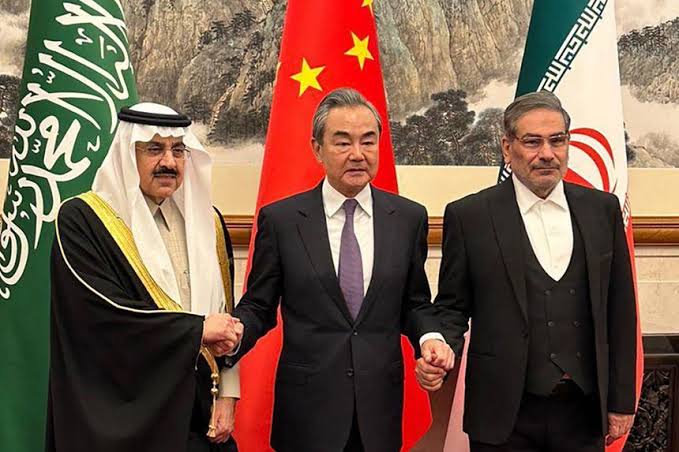
Peaceful dispute resolution is also a central feature of the GSI. China has recently spearheaded talks between Iran and Saudi Arabia which bore reconciliation. This example set in the Middle East inspired good neighborliness in that corner of the world. There are always peaceful solutions to all of the world’s security troubles. The GSI sees to it that conflicting parties always attempt these solutions. In that spirit, China has called for the de-escalation and finding of a political settlement to the Ukraine crisis; facilitated peace talks to solve the conflicts in northern Myanmar, and published a Position Paper alongside pushing the U.N. Security Council to adopt the very first resolution on the Palestinian-Israeli conflict since it erupted.

Does the global security order need reform? I think yes. It needs to be changed. It is not sustainable to have one global hegemon suspended over the rest of the countries in the world as the dominance of the United States increasingly feels. A more multipolar world is desirable. If international security is national security in the global arena, then all nations deserve to feel secure in the global system. As tempting as it may be, a country with the biggest military fist should not have the final say on international matters/matters of other countries. It is unacceptable that some countries should sit on the global security table while others are merely on their menu. We need inclusive global security. The GSI promises that.

Skeptics have held that these initiatives by China are simply high-voltage propaganda platitudes through which China seeks to establish its global interests. But besides this cynicism, there have been practical fruits harvested from implementing both the Global Security Initiative as well as the Global Development Initiative. And as our president – Yoweri Museveni once remarked, if the Chinese betray the spirit in which our engagement with them has blossomed, they will face similar resistance as we served colonialists. This sentiment was equally shared by one of China’s former leaders, Deng Xiaoping. So, sorry skeptics, for now, we are good.

The author is a senior research fellow at the Development Watch Centre.
CHINA’S DIPLOMATIC BLUEPRINT: HOPE FOR A DYING ART OF DIPLOMACY

By Salim Abila Asuman

In the modern geopolitics, an ugly discovering has been made: the cold-blooded killing of traditional diplomacy of dialogue between nations lies lifeless, its vibrant spirit snuffed out by the hands of indifference and hostility.

The absence of diplomatic discourse has left a void, one that threatens the fabric of peaceful coexistence. As one looks through the wreckages, a narrative of betrayal and neglect begins to unravel, revealing a sinister conspiracy to silence the voice of reason and compromise.

With the menace of conflict looming large, the urgent question resonates: can the echoes of traditional diplomacy of dialogue be resurrected before the drums of war drown out all hope for peaceful coexistence, and how can China be of help in its resurrection?

For generations, conventional diplomacy of dialogue stood as the beacon of hope in a world often besieged by the storms of conflict and discord.

Diplomats used their words with precision, forging alliances and as a result, weaving the delicate threads of international relations with finesse and grace. This was when the world was once where trust was built through the exchange of ideas, where bonds of friendship were forged over shared experiences and mutual respect.

As proof, the Treaty of Westphalia in 1648, which not only ended the Thirty Years’ War but also laid the foundation for the modern state system, or the Camp David Accords in 1978, where President Jimmy Charter brokered peace between Egypt and Israel, setting a precedent for diplomatic breakthroughs in the Middle East.

However, as the digital age expanded its dazzling excellence, traditional diplomacy of dialogue found itself at a crossroads, confronting a challenging adversary in the form of rapid technological advancement.

In a world where tweets and hashtags carry more weight than treaties and virtual summits replace face-to-face negotiations, this old guard confrontation struggles to maintain its relevance in an ever-evolving landscape.

From the Korean Peninsula to the heat of Africa, examples overflow of how neglecting dialogue with adversaries only deepens cracks and prolongs suffering.

The Democratic Republic of Congo’s M23 rebellion and the Rwanda Congo situation serves as a stark reminder of this reality that is closest to us. Instead of engaging in constructive dialogue with the rebel faction, a militarised response is opted. The absence of sustained diplomatic efforts not only exacerbated the conflict but also upset attempted to address the underlying grievances fuelling the rebellion, perpetuating instability and human suffering.

Similarly, the standoff between North Korea and the international community underscores the risks of neglecting diplomacy. Despite repeated attempts at negotiations, including multilateral talks and bilateral engagements, the North Korean nuclear issue remains unresolved. The absence of sustained dialogue has led to periodic escalations and heightened tensions, stressing the urgent need for diplomatic engagement.

In the Middle East, from the occupied territories of Palestine to the war-torn landscapes of Syria, the failure to prioritise diplomacy has perpetuated conflict and hindered efforts for peace.

These examples underscore the critical importance of embracing the dying traditional diplomacy of dialogue as a means of resolving global conflicts. While military interventions may offer temporary solutions, they often exacerbate tensions and sow the seeds of future strife.

To address the question that was previously raised; As a significant global force and a central actor on the world’s stage China continues to foster the resurrection of dialogue as the foremost instrument for resolving conflicts and this is how;

Sustained dialogue, grounded in mutual understanding and compromise, remains the most effective pathway to lasting peace and stability and China emerges as a formidable player for its diplomatic strategies that prioritise dialogue and cooperation, even with adversaries.

In the stormy seas of international relations, China’s approach to diplomacy stands as a beacon of stability and pragmatism. Rooted in the time-honored tradition of dialogue and cooperation, China’s diplomatic blueprint offers invaluable lessons for navigating the complexities of our interconnected world.

At the heart of China’s diplomatic philosophy lies a steadfast commitment to dialogue. Amidst differences and tensions, China recognises the indispensable role of communication and negotiation in preventing conflicts and fostering mutual understanding. Whether engaging with adversaries or allies, China’s dedication to dialogue remains firm, serving as a cornerstone of its diplomatic approach.

Territorial disputes, particularly in the South China Sea, exemplify China’s emphasis on diplomatic engagement and regional cooperation. Through platforms like the Association of Southeast Asian Nations (ASEAN), China seeks peaceful resolution and manages tensions, demonstrating the power of dialogue in promoting stability in contested regions.

Ongoing negotiations with neighbouring nations underscore China’s commitment to resolving disputes through diplomatic channels, showcasing a pragmatic and constructive approach to conflict resolution.

Furthermore, China prioritises identifying mutual interests with adversaries to foster cooperation across a spectrum of issues. From trade and environmental protection to global governance, China not only builds trust but also cultivates a conducive environment for sustainable cooperation amidst diverging interests.

Above all, China places a premium on stability and harmony in international campaigns and prioritising dialogue and cooperation, China contributes to a more peaceful world order. Whether mediating conflicts or participating in multilateral forums, China’s diplomatic judgement promotes prosperity and security for all nations.

In recognising the interconnectedness of our global community, China advocates for diplomatic solutions to conflicts, emphasising the importance of cooperation and mutual respect.

From the Korean Peninsula to the Middle East and Africa, China’s diplomatic engagements exemplify its role as a responsible global actor committed to fostering peace and prosperity.

To sum it all up, China’s diplomatic blueprint offers a compelling narrative for navigating the complexities of international relations. By embracing dialogue, managing disputes, focusing on mutual interests, and prioritising stability, China sets an exemplary standard for fostering a more harmonious and prosperous global community. Its diplomatic wisdom servings as a guiding light towards a more peace world, China’s diplomatic blueprint is hope for this dying art of diplomacy in the face of its death.

The writer is a research fellow at the Development Watch Centre.


Kikuubo Vs Chinese: The dialectics of Uganda’s development

By Nnanda Kizito Sseruwagi

President Yoweri Kaguta Museveni has consistently articulated his vision as well as NRM’s historical mission as the socio-economic transformation of Uganda. This vision/mission entails the transformation of Uganda from a poor, rural, agrarian society to a modern, rich, prosperous, industrial one.

Industrial societies were historically born out of the industrial revolution. The Industrial Revolution succeeded the agricultural revolution as a phenomenon that transformed the global human economy, with an even greater result of overturning the pattern of everyday life.

Human production output greatly increased due to the transition from hand production methods to industrial mechanized factory systems. Although the revolution was sparked off in Britain in the late 18th century, it later coursed like strong wine through the veins of North America in the early 19th century and further spread from Western Europe to Japan in the late 19th century. It is argued that since China had a long history of fluent pre-industrial production methods, it prevented it from experiencing the economic pressure that necessitated the industrial revolution in the West.

Now, let us turn back to Uganda. Over 70% of Ugandans are still peasants cultivating the land. Subsistence agriculture allows them a meal, but nothing extra to sell, participate in the monetary market or contribute taxes to the national treasury. Therefore, the majority of the Ugandan population is absent in the country’s economic production system, but very present in the country’s budget expenditure for public goods and services. This is disastrously unsustainable.

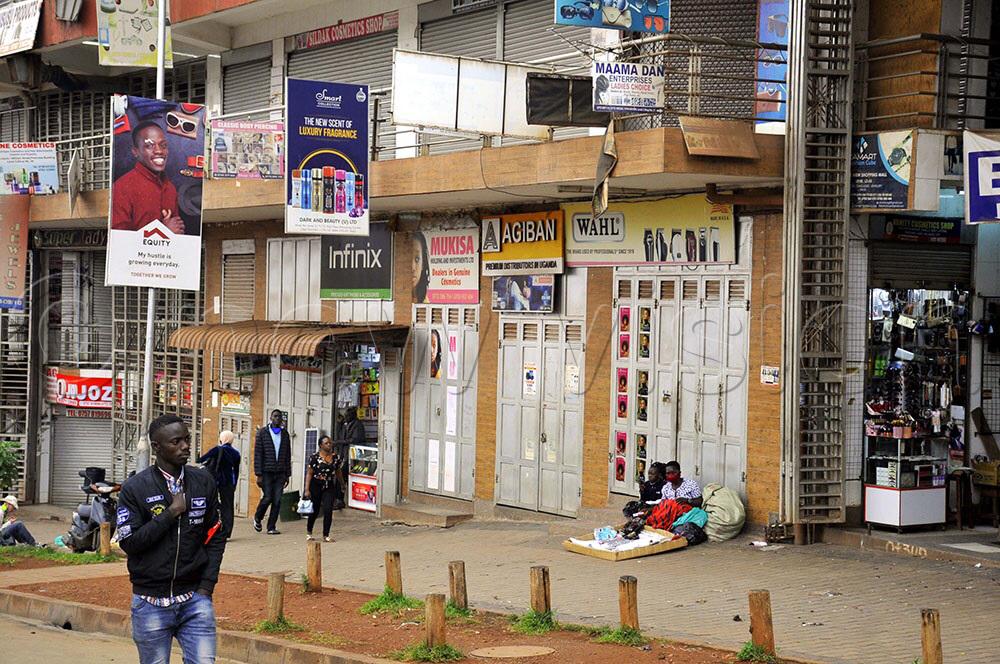
Then enters the billionaires of our economy – the Kikuubo traders. Kikuubo is a long-stretch of retail businesses in an open market in downtown Kampala.

That hyperactive, narrow business corridor is famed for offering all types of domestic goods at fairer prices compared to other retail shops across the country. It attracts retailers who buy imported merchandise cheaply and restock it in their up-country Dukas at a higher price. The transactions traded in that half a kilometer of shops are estimated to be billions of dollars annually. This explains why it is the Mecca of most of Uganda’s successful indigenous entrepreneurs.

Kikuubo is an important piece in the economy of Uganda not only because it has made many of our local businesswomen and men, but also because it takes relatively less capital to compete for business opportunities and gainful employment as compared to agriculture.

Recently, businesspeople under the Kampala City Traders Association (KACITA) have been demonstrating against what they call Chinese retailers who are allegedly taking over their business model in Kikuubo. However, the logistics of executing retail business in a foreign country involves so many factors which make it a very expensive venture. These factors should necessitate us to examine these claims a little further.

These traders met with President Museveni on 19th April 2024, to hear out their concerns. He later wrote a detailed comment about this meeting. I was very pleased to see that he termed it as “historic” because it “involved the debate on whether Uganda should break out of the colonial and neo-colonial slavery of producing what we do not consume and consuming what we do not produce”.  This is a profound debate to have in our country. We should have it more frequently.

The president highlighted two important issues to the traders. But his message might have been delivered halfway because of his indirect approach to communication in the spirit of politeness. But I felt that he was courteously rebuking them. He was showing them that exporting raw material from Uganda to foreign industries while importing manufactured goods back home to Kikuubo, is not a model that would develop our economy and transform our society.

In emphasizing how important their business is, the traders told the President that people travel from as far as Congo (DRC) and South Sudan to buy goods from Kikuubo. But the president wisely reminded them that that is a dangerous trap because “it turns the whole of East and Central Africa, into a dumping ground for foreign consumers and capital goods”.

Mr. Museveni was indirectly defending the factories set up with the help of the Chinese in the Sino-Uganda Mbale Industrial Park. Commissioned by himself in 2023, these 16 new factories covered a range of industries where Uganda lost a lot of money while exporting products such as adhesives, chemicals, jeans, textiles, and electronics. Therefore, through these factories, we are both saving money but also creating jobs for thousands of Ugandans. Most importantly, as noted by the president, these industries will enable us to develop our own industrial capacity. The president decried the incapacitation of African economies which import “big items such as air-crafts etc. and also the most ordinary such as clothes, food, etc.” which stunts our growth.

No country in the world ever transformed from a poor agrarian society as Uganda is to an industrial modern economy as Ugandan aspires to be, through the exportation of foreign goods and reselling them at a profit in one’s home country. It doesn’t matter whether Kikuubo employs a million more Ugandans tomorrow and makes tens of billions of dollars in profit, that model of entrepreneurship has never transformed any country and will never transform Uganda.

Our development will come from national companies. Indigenous capital remains the major, historically known stimulus of transformative economic growth. Since Uganda lacks expertise in manufacturing, our Chinese partners have taken the unenviable task of helping us set up industries that manufacture goods which most other countries would rather only export to us. Ugandan youth are working in these factories, learning how to use industrial machines and also make them. As such, the market is reasonably going to be shocked by the massive production of cheaper textiles and electronic products which are manufactured from Mbale or Kapeeka and from all these industrial parks which the government has set up. We need to either embrace them and start buying and selling Ugandan-made goods, or endure the obvious competition likely to come from these domestic goods. Let us not be trapped by the old ways which international capital accustomed us to get used to.

The author is a senior research fellow at the Development Watch Center.

nnandakizito@dwcug.org


CHINA’S DIPLOMATIC BLUEPRINT: HOPE FOR A DYING ART OF DIPLOMACY

By Salim Abila Asuman.

In the modern geopolitics, an ugly discovering has been made: the cold-blooded killing of traditional diplomacy of dialogue between nations lies lifeless, its vibrant spirit snuffed out by the hands of indifference and hostility.

The absence of diplomatic discourse has left a void, one that threatens the fabric of peaceful coexistence. As one looks through the wreckages, a narrative of betrayal and neglect begins to unravel, revealing a sinister conspiracy to silence the voice of reason and compromise.

With the menace of conflict looming large, the urgent question resonates: can the echoes of traditional diplomacy of dialogue be resurrected before the drums of war drown out all hope for peaceful coexistence, and how can China be of help in its resurrection?

For generations, conventional diplomacy of dialogue stood as the beacon of hope in a world often besieged by the storms of conflict and discord.

Diplomats used their words with precision, forging alliances and as a result, weaving the delicate threads of international relations with finesse and grace. This was when the world was once where trust was built through the exchange of ideas, where bonds of friendship were forged over shared experiences and mutual respect.

As proof, the Treaty of Westphalia in 1648, which not only ended the Thirty Years’ War but also laid the foundation for the modern state system, or the Camp David Accords in 1978, where President Jimmy Charter brokered peace between Egypt and Israel, setting a precedent for diplomatic breakthroughs in the Middle East.

However, as the digital age expanded its dazzling excellence, traditional diplomacy of dialogue found itself at a crossroads, confronting a challenging adversary in the form of rapid technological advancement.

In a world where tweets and hashtags carry more weight than treaties and virtual summits replace face-to-face negotiations, this old guard confrontation struggles to maintain its relevance in an ever-evolving landscape.

From the Korean Peninsula to the heat of Africa, examples overflow of how neglecting dialogue with adversaries only deepens cracks and prolongs suffering.

The Democratic Republic of Congo’s M23 rebellion and the Rwanda Congo situation serves as a stark reminder of this reality that is closest to us. Instead of engaging in constructive dialogue with the rebel faction, a militarized response is opted. The absence of sustained diplomatic efforts not only exacerbated the conflict but also upset attempted to address the underlying grievances fueling the rebellion, perpetuating instability and human suffering.

Similarly, the standoff between North Korea and the international community underscores the risks of neglecting diplomacy. Despite repeated attempts at negotiations, including multilateral talks and bilateral engagements, the North Korean nuclear issue remains unresolved. The absence of sustained dialogue has led to periodic escalations and heightened tensions, stressing the urgent need for diplomatic engagement.

In the Middle East, from the occupied territories of Palestine to the war-torn landscapes of Syria, the failure to prioritize diplomacy has perpetuated conflict and hindered efforts for peace.

These examples underscore the critical importance of embracing the dying traditional diplomacy of dialogue as a means of resolving global conflicts. While military interventions may offer temporary solutions, they often exacerbate tensions and sow the seeds of future strife.

To address the question that was previously raised; As a significant global force and a central actor on the world’s stage China continues to foster the resurrection of dialogue as the foremost instrument for resolving conflicts and this is how;

Sustained dialogue, grounded in mutual understanding and compromise, remains the most effective pathway to lasting peace and stability and China emerges as a formidable player for its diplomatic strategies that prioritize dialogue and cooperation, even with adversaries.

In the stormy seas of international relations, China’s approach to diplomacy stands as a beacon of stability and pragmatism. Rooted in the time-honored tradition of dialogue and cooperation, China’s diplomatic blueprint offers invaluable lessons for navigating the complexities of our interconnected world.

At the heart of China’s diplomatic philosophy lies a steadfast commitment to dialogue. Amidst differences and tensions, China recognizes the indispensable role of communication and negotiation in preventing conflicts and fostering mutual understanding. Whether engaging with adversaries or allies, China’s dedication to dialogue remains firm, serving as a cornerstone of its diplomatic approach.

Territorial disputes, particularly in the South China Sea, exemplify China’s emphasis on diplomatic engagement and regional cooperation. Through platforms like the Association of Southeast Asian Nations (ASEAN), China seeks peaceful resolution and manages tensions, demonstrating the power of dialogue in promoting stability in contested regions.

Ongoing negotiations with neighboring nations underscore China’s commitment to resolving disputes through diplomatic channels, showcasing a pragmatic and constructive approach to conflict resolution.

Furthermore, China prioritizes identifying mutual interests with adversaries to foster cooperation across a spectrum of issues. From trade and environmental protection to global governance, China not only builds trust but also cultivates a conducive environment for sustainable cooperation amidst diverging interests.

Above all, China places a premium on stability and harmony in international campaigns and prioritizing dialogue and cooperation, China contributes to a more peaceful world order. Whether mediating conflicts or participating in multilateral forums, China’s diplomatic judgement promotes prosperity and security for all nations.

In recognizing the interconnectedness of our global community, China advocates for diplomatic solutions to conflicts, emphasizing the importance of cooperation and mutual respect.

From the Korean Peninsula to the Middle East and Africa, China’s diplomatic engagements exemplify its role as a responsible global actor committed to fostering peace and prosperity.

To sum it all up, China’s diplomatic blueprint offers a compelling narrative for navigating the complexities of international relations. By embracing dialogue, managing disputes, focusing on mutual interests, and prioritizing stability, China sets an exemplary standard for fostering a more harmonious and prosperous global community. It’s diplomatic wisdom servings as a guiding light towards a more peace world, China’s diplomatic blueprint is hope for this dying art of diplomacy in the face of its death.

The writer is a research fellow at the Development Watch Centre.


America’s 2023 Country Report on Human Rights Practices: Who Policices the USA?

On 22nd April, 2024, the US Congress with a fore note from the Secretary of State, Antony J. Blinken, issued the 2023 Country Reports on Human Rights Practices for all other countries that are on earth, except itself. It has been a practice it has committed itself into fulfilling since 1977 and not so much can be said as having started with bad intentions. In deed, human rights are a concern supposed to keep every person (individual or artificial) on high attention to either advance, protect or preserve. It’s therefore a commendable practice thus far. Many countries across the globe have its citizens suffering at hands of human rights violators in all forms. Some of these are out of territorial breaches, while others are internally castigated by kinsmen and kinswomen whose jobs it should be to do better. Lives still get lost for example, in many African, Latin America, and the Middle East at hands of both internal and external perpetrators. In unison with the subject reports, this is wrong, and should never be normalised as practice anywhere.

The forewords by Antony Blinken were interesting, especially how they described Kremlin’s actions in Ukraine, versus the description of Israel’s actions in Palestine. Interesting still, the language used to condemn practices by the People’s Republic of China. But while on a look out of a balanced analysis of the report, of all the countries as noted, the US could not bring forth a report on itself and how it’s ‘respecting’ human rights both internally and abroad. So, who polices the US foreign policies? It remains an unsolved question for many years despite many dissenters pointing it out, that while it’s commendable to make focus of other world key players regarding human rights practices, the watch should equally be made on the US, by itself and other state and non-state actors. As noted in the reports’ forewords, it points to major monitoring on states from whom US aid is supplied. That shouldn’t be passed off as a conflicting situation for the recipients, and therefore a compromise on taking equal watch on the donor.

As noted in the report, it coincides with the 75th anniversary of the United Nations Universal Declaration of Human Rights (UDHR), and at its inception, Eleanor Roosevelt, one of the authors of the UDHR noted, “The destiny of human rights is in the hands of all our citizens in all our communities.” It is an indictment on everyone to take center attention. The US as it did at the time of inception of the UDHR, committed to preserving human rights especially abroad but 2023 was quite an interesting year regarding the US foreign policies and it remains a non shocking scenario that the US couldn’t publish a similar report on itself and its activities. Rather, as many years before, any such statements on global state of affairs come as justification for their actions rather than self condemnation.

2023 was an equally busy year for the US especially in the middle east, and while the Israel-Palestine and Ukraine-Russia conflicts steal the attention for US actions, in similar measure as it maintained focus on Uganda’s Anti-Homosexuality Act, and consequential withdraw of funding, Cuba’s regime actions, Nicaragua’s government crackdown on dissent, Russia territorial breach on Ukraine’s border, and much more, the US had a run on Iraq and Syria. For many years now, the middle east has been a military play ground for the US. Many countries have consistently condemned the US involvement in the region’s politics citing instigation of more incitement. Baghdad condemned the strikes by the US on its territory which occasioned deaths and wounding of Iraqi citizens.

Of these attacks in the region since October 7, 2023 since the Israel-Hamas war peaked, there have been reported more than 66 separate attacks in the region. This comes off as though it’s the US so much concerned about stability of the region, using war to being more war. The attacks have been gazetted as warranted and even with the wanton killing of numerous civilians in the region by the US in 2023, it didn’t call for equal urgency to issue a report on its own human rights violations. Much as there are numerous world actors that have consistently showed concern and more especially with the players with valuable commercial interests in the area, not many are willing to raise a finger at the self appointed global police. This happens at a time when the United Nations, a body supposed to be impartial has been spotlighted as running selective interests to the West bloc.

As of April 2024, the US faces internal concerns regarding respecting the freedoms of expression and association that are guaranteed by the first amendment of the country’s constitution. Over 200 students across major Universities have been arrested and more crackdowns are still ongoing on the students protesting Israel’s war actions in Palestine. From the Northeastern University in Boston, to Yale, Columbia, Southern California, and more Universities joining the protests against the ongoing war, many peaceful protestors have been arrested and charged with inciting violence, vandalism, and criminal trespass, accusations many have criticized as unfounded, embarrassing to the national image, and illegal. But just as Anthony Blinken quoted Eleanor Roosevelt, human rights are a concern for all, and it’s only fair that in 2024 and years to come, similar documentation on both triumphs and condemnation be issued against the US by the US as it does annually for other global actors.

Alan Collins Mpewo is a Senior Research Fellow, Development Watch Centre.

Chinese perspectives on Africa’s late industrialization

By Nnanda Kizito Sseruwagi

Africa and China’s cooperation recedes hundreds of centuries back. Over 600 years ago, East Africa was one of the areas that cross-pollinated with Chinese civilization through interactions with the voyages of Zheng He, one of China’s greatest navigators. Zheng’s navigations to Africa manifested the Chinese traditional philosophy of harmony, a notion that still resonates in Africa-China relations today. I started with a cursory narration of Zheng He’s trips to Africa to lay out a historical context of these two ancient civilizations’ partnership in view of discussing the delayed industrialization in Africa, yet inspired by the quick modernization in China.

We are now in the first quarter of the 21st century – an age increasingly taken over by the fourth industrial revolution, and Africa remains largely a raw material production instead of an industrial production continent. Whereas we make up 18% of the global population, we contribute less than 3% to the global Gross Domestic Product (GDP).

I don’t intend to sound blameful of Africans and African leaders for Africa’s current development burdens as is commonly done by those who reason by analogy. But I cannot escape describing the depressing political anatomy of Africa currently. I believe that Africa is not on its own path to development, since all factors determinant of this have been overshadowed by Western hegemony. In an attempt to walk in the footsteps of Western countries by mimicking their current governance standards, Africa seems to have failed to “catch up” yet the material crisis at hand is that we are still trying to heal from the past, not to catch up with the future.

Chinese perspectives on Africa’s industrial development are key because of the comparative analysis they offer. China has recently trodden the path that Africa is on. Whereas China greatly learnt or reverse-engineered industrial processes from the West, the Chinese retained control over the vision and character of where their country was headed. As for Africa, the elite-capture by Western ideological persuasion and hegemonic institutions like the IMF and World Bank still obtains. Even when Africans genuinely intend to design policies that respond to domestic realities, they are still fraught with Western epistemic prejudices.

The first step to realising our industrial transformation is taking cognizance of who we are and where we want to go. The Chinese are so sure of who they are and where they are headed. They never blink off their course. As for Africans, our social, economic and political agendas remain dictated from Europe or North America. Whereas these agendas were violently determined during colonialism, the legacy of it is that we sincerely believe them and serve their realisation almost willingly today. The average African elite suffers a Stockholm syndrome which makes him/her a subconscious missionary of Western views about Africa which constrains our agency in mapping our development path. We need to decouple from this mental capture in how we view ourselves and our governments if we are to start domestically industrializing our economies. If an African entrepreneur like Joseph Magandaazi Yiga (Jomayi) is struggling, we need to help them save their businesses even if they individually get punished for their legal liabilities. We shouldn’t think of successful African business people like Hamis Kiggundu as fraudsters. This is purely a colonial-victim mindset.

In just 25 years, China sat on the drawing board and designed and executed a policy that saw it become an industrial powerhouse. Had they viewed themselves through Western lenses, all knowledge would guide them on a path that seeks industrialization across a period of not less than a century.  Africa should forget industrialization if all our central banks and ministries of finance remain controlled by Bretton Woods knowledge. We rather should sit on the drawing board as China did, and fix our troubles ourselves.

This does not mean that things will work in Africa as they worked in China. But it guarantees that for the first time, things will work out on our terms and we shall dictate our path to development.

We must also exploit the market we have of 1.4 billion people. Whereas we lack a price-competitive manufacturing labour-force, we can build momentum for a skilled work-force by internally trading and consuming each other’s goods. Research by the Harvard Business Review reveals that the share of intra-African exports as a percentage of total African exports is 17%, which is far below the 69% recorded for Europe and 59% for Asia. We cannot advance if we never trade with each other because we are still in the nascent stages of industrialization to capably compete at the global market.

Poor infrastructure in Africa must urgently be improved to reduce the cost of trade. Fluency in market logistics is the path along which industrialization happens. Africa should develop its seaports, roads, airports and railway lines to enable commerce. If it remains more expensive to trade with each other because of the disastrous infrastructure on the continent, we shall remain consumer colonies of other continents’ exports. We should maximumly exploit the Belt and Road Initiative to develop our infrastructure.

One factor has been constant in Africa’s underdevelopment – Western interference. There has been an adverse failure of Western development prescriptions for Africa. I don’t understand why we continue to follow such prescriptions to no avail. Western aid and its attendant ideological hegemony continue to promote economic and policy dependence in Africa. If we never seize control of our economies and have autonomy in thinking and designing policies for our continent, how shall we control our future? In whose hands shall Africa’s destiny lie?

The author is a senior research fellow at the Development Watch Centre.

nnandakizito@dwcug.org