What Dong Jun’s Xiangshan Speech Signals for Global Security Governance

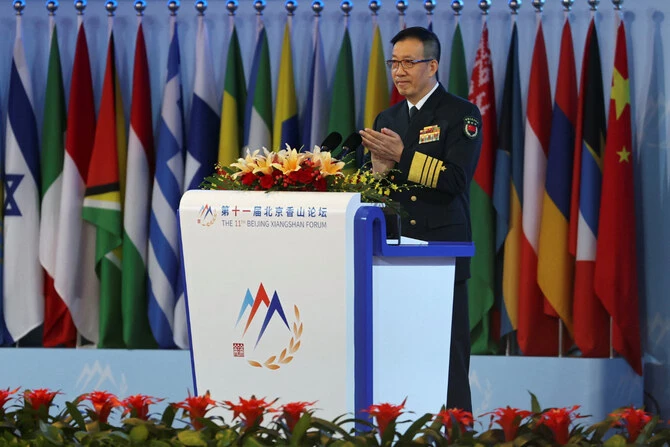
In the morning hours of 16th September, the Minister of National Defence of the People’s Republic of China (PRC), Admiral Dong Jun took to the stage at the Beijing International Convention Center to deliver an address that officially opened this year’s Xiangshan Forum. Being the 13th edition of conference’s international security and defence caucus, there was a lot that stood out in testament to the progress that has been made thereunder over the years. The fact that over 100 nations were represented for instance. For our purposes here though, we will focus our lenses on the message that Mr. Dong’s speech sent instead.

The military chief set a good tone for his audience not least because while he did not shy away from big issues, he tackled them with a cool-headed temperament. In no ambiguous terms thus, he warned against reckless usage of emerging technologies like artificial intelligence (AI) in military endeavours. Minister Dong’s demeanour on this point mirrored that of his ministry’s response a few days prior when the United States of America’s Air Force Secretary Troy Meink publicly affirmed that USA had deployed weaponry in space. There showcasing that Beijing’s preferred approach when it comes to these matters is restraint.

The rationale for this stems from an appreciation of the horrendous pitfalls that humanity has fallen into in the past whenever it has jettisoned prudence in matters of security. In Admiral Dong’s words, “we must bear the lessons of history in mind and remain highly vigilant against all latent manifestations of hegemony, militarism and historical revisionism.” In the face of this reality, the senior military officer explained that the government under which he served was ready to cooperate with other nations under the global security initiative (GSI). Notably, a key attribute of GSI is to take seriously the legitimate security concerns of all nations.

But this opener was not just about painting a picture of what could be, it was also about putting in place mechanisms that will ensure that the espoused good intentions do not go to waste. So when the Defence Minister called upon major powers to shoulder the responsibility of guaranteeing that majority of the world continues to be a conducive place to live and that the parts of it which are presently enduring conflicts overcome the same, he did not stop at that. He further made it known that China would participate in these efforts by among others, sharing its military experience and capacities with the countries that need them.

This would be in continuation with Beijing’s impressive record in say UN peacekeeping― PRC is already the leading contributor of troops among the permanent member states of the Security Council. As for innovation, Hon. Dong Jun stressed that the time was ripe for the global community to engage in extensive dialoguing with the explicit aim of formulating legal frameworks to govern the intersection of security with developments in fields such as AI. Again, we have been here before. All that the defence chief was emphasizing is that we ought to have learnt our lessons by now. Imperfect as the Nuclear Non-Proliferation Treaty was, Presidents John F. Kennedy and Lyndon B. Johnson (unlike Donald Trump today) understood that when dealing with technologies of a certain magnitude, the broader interests of humanity ought to take precedent.

Beyond the speech itself, as evidenced by the persons that took to the podium later that day as well as throughout the event, it is evident that its objectives took root fairly early on. The United Nations Under-Secretary-General for Peace Operations, Jean-Pierre François Renaud Lacroix thus, expressed his enthusiasm over the fact that the Xiangshan Forum advanced multilateralism, a value that he noted the UN shares too. Relatedly, the Secretary General of Shanghai Cooperation Organisation spoke about equal and indivisible security as a notion that the membership of the body he heads were keen on safeguarding.

One of the most remarkable speakers as far as expounding on the concepts that PRC’s Defence chief introduced goes though was Singapore’s Minister of Defence, Chan Chun Sing. Explaining that because technological iterations were happening in “days, not years”, Hon. Chan raised fears of insecurity spiralling if state actors fail to prepare ahead of time. From his standpoint, this necessitated that politicians differentiate between competition on the one hand, and enmity on the other. One model that the minister suggested could help avoiding a conflation of the two categories is being mindful of when a given player’s security aspirations turn into threats or aggravating factors to others. He then went on to demonstrate that this careful balance was not impossible to attain using the illustration of Sino-Singapore relations.

In the end, Dong Jun’s delivery stayed true to the day’s theme; “Build Consensus on Stability, Advance Security Governance Together.” As the Xiangshan Forum attendees go out in the world to forge solutions for the complicated questions that their positions inevitably bring them into contact with, the remarks will have given them something to ponder about.

Joshua Kingdom is a lawyer and a Research Fellow at the Development Watch Centre
 

Global Security Initiative: Securing World Peace

Nnanda Kizito Sseruwagi.

The Global Security Initiative is one of China’s multiple International public governance resources. It was conceived by comrade Xi Jin Ping in an effort to secure world peace by trumping dialogue over duel, partnership over divisive-coalition, and mutual benefit over winner-take-all. China has always articulated its vision for the future of mankind as defined by the shared well-being of the global community.

In this, China views its security as a part of the security of the whole world and seeks not to martial military superiority over other countries as a guarantee of its security, rather it aims to ensure that all countries feel safe and respected. While certain countries seem to monopolize international affairs and build their national defenses behind walls of alliances built on military strength, China has sought multipolarity. Multipolarity should not be misunderstood as disarray or division. It speaks clearly to the objectives and principles of the United Nations Charter of upholding universally recognized basic norms of international governance.

The principles expressed in the Global Security Initiative (GSI) are: Commitment to the vision of common, comprehensive, cooperative and sustainable security; Commitment to respecting the sovereignty and territorial integrity of all countries; Commitment to abiding by the purposes and principles of the UN Charter; Commitment to taking the legitimate security concerns of all countries seriously; Commitment to peaceful resolution of differences and disputes between countries through dialogue and consultation; And commitment to maintaining security in both traditional and non-traditional domains.

Africa was keenly considered in the formulation of the principles of the GSI. China detailed ways of supporting our security in the Concept Paper that proposed the initiative in ways that empower us to independently and locally address our security challenges through the African Union and regional organizations.

One of China’s strategies to secure world peace and security is by promoting global development. The GSI is interlinked with other initiatives such as the Global Development Initiative. Many of the challenges destabilizing nations are due to underdevelopment. The struggle over scarce resources condemns countries to fight, although these conflicts sometimes may appear along lines of ethnic, religious or other forms of identity politics. But the root causes are often economic. China seems to understand well the complexity of these security challenges. Therefore, the GSI is designed to boldly confront the root causes of these international crises by encouraging combined international efforts to improve global security governance. This is where the promise for a durably peaceful world lies.

In a world of fast-paced change where not only new but much more complex security challenges emerge every day, it is important to establish mechanisms for international security cooperation. The GSI is already working to harness this cooperation in dealing with counter-terrorism, biosecurity, cybersecurity and other non-traditional domains of security. This cooperation involves exchanges in military academies, and sharing training opportunities to prepare experts who will address the world’s future security risks.

If the world is to have a sustainable security architecture, countries must view their security as indivisibly linked to the security of other countries. Israel will find it difficult to find peace unless Palestine finds peace. All countries are each other’s keepers. They should not make the mistake of pursuing national security at the expense of insecurity in other countries.

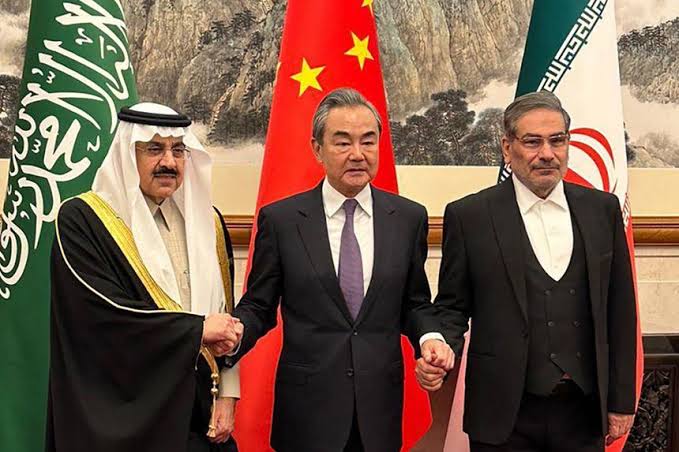
Peaceful dispute resolution is also a central feature of the GSI. China has recently spearheaded talks between Iran and Saudi Arabia which bore reconciliation. This example set in the Middle East inspired good neighborliness in that corner of the world. There are always peaceful solutions to all of the world’s security troubles. The GSI sees to it that conflicting parties always attempt these solutions. In that spirit, China has called for the de-escalation and finding of a political settlement to the Ukraine crisis; facilitated peace talks to solve the conflicts in northern Myanmar, and published a Position Paper alongside pushing the U.N. Security Council to adopt the very first resolution on the Palestinian-Israeli conflict since it erupted.

Does the global security order need reform? I think yes. It needs to be changed. It is not sustainable to have one global hegemon suspended over the rest of the countries in the world as the dominance of the United States increasingly feels. A more multipolar world is desirable. If international security is national security in the global arena, then all nations deserve to feel secure in the global system. As tempting as it may be, a country with the biggest military fist should not have the final say on international matters/matters of other countries. It is unacceptable that some countries should sit on the global security table while others are merely on their menu. We need inclusive global security. The GSI promises that.

Skeptics have held that these initiatives by China are simply high-voltage propaganda platitudes through which China seeks to establish its global interests. But besides this cynicism, there have been practical fruits harvested from implementing both the Global Security Initiative as well as the Global Development Initiative. And as our president – Yoweri Museveni once remarked, if the Chinese betray the spirit in which our engagement with them has blossomed, they will face similar resistance as we served colonialists. This sentiment was equally shared by one of China’s former leaders, Deng Xiaoping. So, sorry skeptics, for now, we are good.

The author is a senior research fellow at the Development Watch Centre.