Learning from China: Adapting Development Strategies for African Contexts

Although it may not be possible to have a comprehensive cookbook of China’s rapid development recipes, a few policy frameworks implemented in the country can provide guidance. The Chinese development model has not been uniform. It has been at every stage punctuated by state-led industrialisation alongside export-oriented growth, and strategic global engagement, among other factors/ policies. Africa sets its sights on China for direction, as a late developer, because China has mastered the art of leapfrogging growth or catching up. However, given the disparate and diverse political and economic characteristics between the two entities, we need to carefully tailor and adapt what works and leave what doesn’t, from the Chinese blueprint of late and rapid development.

There is a unique political economy framework that made China’s development success possible. Whereas Deng Xiaoping is highly credited for instituting transformative reforms, there was a strong, centralised state which he leveraged to implement pragmatic policies, i.e., special economic zones (SEZs), massive infrastructure investment, and education and technical training to spur human capital development. Deng was also granted a monopoly of power rendered by the Communist Party, which allowed him to have continuity of his policies under the stability of a cohesive political structure. It was also workable to implement policies on a largely ethnically homogenous population, with a social history of collective discipline embedded in Confucian cultural ideas. Such moral compulsion from social norms and habits can hardly be transplanted, but it facilitated the rapid policy implementation we see in China. Additionally, industrial transformation was timely in a nation which was poised to reform its large agrarian economy.

African nations emerged out of colonialism with significant infrastructure gaps. The post-colonial contexts they find themselves in require that they assert economic sovereignty and push for state-led development, which fits well with the Chinese model. It has, indeed, been China at the frontline of supporting Africa’s move to bridge infrastructure gaps, supporting such projects as Kenya’s Standard Gauge Railway and Ethiopia’s Addis Ababa-Djibouti Railway, under the BRI, among countless other projects in several African countries. Moreover, China never lends itself to political interference in Africa as a precondition for its investments, as is common with Western aid and development finance, which comes pegged with prescriptions and conditionalities of all manner, eroding away the autonomy and agency of African states.

The diversity among and within the 54 African nations, however, implies that the continent’s political economy is widely different from China’s. We have so many ethnicities, are corrupted by colonial legacies, plagued by electoral volatility undermining policy continuity, fragmented by opposing governance structures, which ultimately complicates state-led development initiatives.

Weak institutionality and corruption are a serious hindrance to Africa’s development efforts. Weak institutions make China’s state-led, long-term development strategies hard to replicate, because governments face significant opposition and illegitimacy, making the long-term stability that shelters growth absent. Corruption disorients public-spiritedness, turning ruling regimes into cash-and-carry kleptocracies. This is the challenge for countries like the Democratic Republic of Congo, making the implementation of large-scale projects unsuccessful. There is a need to earn legitimacy for African governments by ensuring merit-based and accountable governance that serves all citizens without accentuating ethnic differences. Traditional leaders should also not be merely co-opted but fundamentally involved in local and national development programs, so that they view state development policies as an inter-collective program in which they and their co-ethnics have a stake, and must therefore take responsibility and involvement.

While China’s development leveraged export-led growth to satisfy the global demand for manufactured goods, Africa finds itself in a different context. It is a resource-dependent continent; its economies survive on the extraction and sale of primary commodities like minerals, oil, or agricultural products. The key to transforming this status quo to increase returns rests in domesticating ownership and ensuring the locals have a higher stake in the businesses and industries. This will nip profit repatriation and rent-seeking in the bud. Local ownership here does not mean that indigenous people must be the only ones with economic rights, but rather that even companies owned by foreigners must register locally and transfer the most profitable work of their business to Africa.

Whereas China’s development was easy to mobilise in a socially cohesive population, Africa’s ethnic diversity should not be mourned as a challenge; rather, African governments should embrace traditional and communal participatory approaches to social mobilisation towards development goals. Africa’s ethnic groups were historically assimilationist, and this cultural heritage must be encouraged as opposed to perpetuating colonial divisions that politicised divisive ethnicity.

The writer is a senior research fellow at the Development Watch Centre.


No Reason to Take Trump’s Claims About China’s Purported Violation of the Geneva Talks

On 2nd June, China publicly responded for the first time to President Trump’s comments that Beijing was acting contrary to the agreement entered by the two countries in Geneva earlier last month. Beijing’s position was explained by the spokesperson of the country’s Ministry of Commerce (MoC), He Yongqian. Being that the pronouncements by the two parties are contradictory, it can be confusing to establish who has in fact conducted themselves improperly something that the rest of this OP-ED deals with.

To begin with, the language adopted by either administration tells a lot. On one hand, you have the MoC statement which is substantive in its claims and on the other, you have nothing but generic accusations. Specifically, Beijing pointed out that the US had despite the understanding between Secretary Scott Bessent and Vice Premier He Lifeng gone on to restrict the export of artificial intelligence chips and trade in chips with the Republic of China as well as revoking Chinese students visas among other measures. In the case of America however, Trade Representative Jamieson Greer could only afford to say that “United States did exactly what it was supposed to do, and the Chinese are slow rolling their compliance.”

One would have liked to say that Washington is treading carefully in the spirit of diplomacy except for the fact that the same leadership has not been known to act as such in recent months. They did not do so with Ukraine or South Africa so it would be a breakaway from a well-established pattern if they were to act differently in this case all over a sudden. Moreover, away from the fact that there has been no particular clarification on the facts, the rhetoric itself has been combative. In a “truth” that kicked off this whole controversy on Truth Social thus, Mr. Trump directly insinuated that it was to be expected that China would act dishonestly. His very words were; “China, perhaps not surprisingly to some, HAS TOTALLY VIOLATED ITS AGREEMENT WITH US. So much for being Mr. NICE GUY!” If he had a bomb to drop, there is no doubt that he would have proceeded to do so without any hesitation.

But it is also not that the White House is causing upheaval for no reason, it is just that its rationales are petty and selfish to say the least. We know for instance, that the presiding Commander in Chief has been known to apportion blame to an other whenever things do not go his way with China famously occupying this position for most of the time. This time round, Congress has just passed a rather unpopular law which strips essential benefits from a good number of people that voted Republican in the previous elections and so he badly needed a distraction.

Another absurd but very real scenario is that Donald Trump has long portrayed himself as a deal-maker. Unfortunately for him, President Xi’s philosophy contradicts this stance since the Asian politician believes in systems. The result of this as Bert Hofman of the East Asian Institute at the National University of Singapore put it, has been that the Secretary General of the Chinese Communist Party (CCP) has kept a healthy distance from the trade war and instead encouraged in-line officials to spearhead the negotiation process to the frustration of his American counterpart.

By artificially manufacturing friction hence, the US hopes to catch Xi Jinping’s ear. No wonder, following these developments, USA bureaucrats have been pushing for a call with the CCP head. The irony of course, is that there was one such conversation on 17th January this year the theme of which laid the foundations for the Geneva talks i.e. the very talks that the United States of America is already going back on. Why pretend to care about the future whilst presently acting in bad faith then?

Honestly, this conduct is reflective of the usual bullying from the west that we are now accustomed to. The United States forgets though that the stakes are not in its favour on this one– and, Stephen Olson, a visiting fellow at the Yusof Ishak Institute agrees. By the time it awakens, things might be too little, too late.

The writer is a research fellow at the Sino-Uganda Research Centre.

Time Africa to Adopt China-Scale Development Commitment

Africa is tied to conventional, rudimentary, unambitious, lethargic modes of governance and political-economic behaviour. We pursue cliches of democracy and development and all related norms and conformities that have been taught to us by the developed, Western world with full blindness to our crucial realities.

We lack a grand strategy for development. We are adapted to incrementalism in everything – hoping to make progress through small, gradual steps rather than largescale, ambitious reforms. This road we are on is unlikely to deliver development. And the window within which Africa must catch-up up will eventually close.

There is no guarantee that we cannot be conquered again if we don’t stand up quickly and hold a place as a peer with all developed nations. This child-like place that Africa occupies in the world is not just humiliating but may eventually be exploited through new forms of imperialism in the future in ways we cannot comprehend today.

Think about the defining factors for the survival of nations in the world today; Artificial Intelligence (AI), synthetic biology, quantum computing, robotics, and clean energy. Where is Africa’s involvement or contribution in the global competition to advance in these fields? We only seem to be offering raw materials. In fact, we are the raw materials.

In a world with advanced AI systems, where we face risks of artificial general intelligence (AGI) becoming misaligned with human values, what would Africa do to defend itself against attack in a war where AGI is optimized by an enemy country to cause catastrophic harm based on racial identity? As a continent vulnerable to pandemics, what contribution is Africa making to the development of synthetic biology to enable rapid vaccine development?

Our net contribution to the development of any of these technologies that will shape the future is close to nothing. But the consequences of this may not be as simple as missing out. Lagging behind in the next decades might slide us into new forms of recolonization unless we embrace a development model with the ambition, scale, and discipline exemplified by China’s rapid transformation.

The era and error of foreign aid inculcated in us a dependency on foreign/Western powers by which we ceded sovereignty and agency. Such dependency also drove us to withdraw our commitment to industrialization, infrastructure development, and self-reliance. Western masters disincentivized African governments from developing domestic capacity for economic sustainability because African leaders could beg or borrow to fill gaps in their national budgets. The result is where we are; capable of almost nothing in a world of tremendous opportunities.

Given the urgency of these matters, China’s example for rapid socio-economic transformation from a predominantly large agrarian society full of peasants, to an industrial power with vast skill and intellectual resource, should be studied with a goal to be appropriated and domesticated by African leaders.

Unlike Western nations where capitalism evolved organically and defined how society is governed and resources are distributed, China’s transformation emerged out of massive state-led investment in infrastructure, education, and industry, coupled with a relentless focus on self-reliance. It is the only country where the free-market enterprise developed highly without distorting the politics of the country. Because of this, capital has not succeeded in eroding the leadership of the Chinese Communist Party (CPC). Capital has not undermined the leadership of the Chinese people.

China also exposes the lie that has been told to developing countries especially in Africa – that it takes democratisation in the Western form, to develop. We have suspended all efforts and thought towards development by being tied in an endless web of political bickering over cliches like democracy, human rights, freedom, etc.

China has guaranteed the rights and freedoms of her people outside the normative governance models of the West. It has liberated over 800 million people from poverty without ticking any boxes that the West dictates to Africa as prerequisites for development.

Without Western democracy, China constructed 37,000 kilometers of high-speed rail between 2000 and 2020. Without Western democracy, China has urbanized over 500 million people, and lifted 800 million out of poverty. Without Western democracy, the CPC prioritized long-term planning over short-term populist gains and accountably executed the aims it set out to achieve for its citizens, with a discipline in execution unimaginable in the West.

Africa must suspend many political distractions and pursue a tunnel vision of development and socio-economic transformation. We are 1.4 billion people with a median age of 19. This is a demographic resource with potential to scale development – it is a tremendous work force. But the window to achieve this will not last forever. Our young people will grow old. The peace we enjoy is not guaranteed to last forever. We must coordinate our commitment to this goal when we still can.

The Writer is a senior research fellow at the Development Watch Center.

China’s First Quarter Economic Performance Vindicates Beijing’s Approach to Tump Tariffs

China’s National Bureau of Statistics (NBS) has finally released the much anticipated data on the performance of the country’s economy for last month. Ordinarily, the results should not be a big deal as China has been rather consistent for sometime now. In this case however, everyone was looking to see how things turn up because the United States President had made it an absolute priority to frustrate Beijing during the beginning months of his term. What the said statistics have shown however, is a picture far distant from this vision.

NBS’ monitoring tracked all the indicators of growth and one after another, they revealed a country that is only going strong. Figures for the year-on-year industrial production, fixed-asset investment, retail sales, and consumption increased by 6.7%, 4.2%, 6.1%, and 5.1% respectively. For the case of imports and exports, growth capped at 8% while urban unemployment declined by 5.2% and inflation remained stable at 2.5%.

Since numbers do not lie, one can confidently say that this turn of events may well be the first vindication for the measures that the Chinese Administration adopted in the wake of Washington’s offensive. The latter party might have won on rhetoric but as it turns out, strategy and foresight seem to have prevailed after all.

We remember succinctly for instance, that while warning that trade wars do not benefit anyone, President Xi took to measures such as export tax rebates, providing financial support for Chinese export companies, as well as solidifying domestic production in the face of an adamant adversary.

With Trump’s government already making concessions as substantial as the recent tariff talks in Geneva then, the NBS statistics can be seen as just one of the many hard facts that are starting to give China the edge in the new international economic dispensation. Financial institutions such as Goldman Sachs are one other example of these projections (and, they are as conservative as you can get on this issue). Morgan Stanley economists have thus gone back on their word regarding how much supplementary package China will need by the fourth quarter. They have lowered their initial estimate ($280) by more than half.

Naturally, this leads to the “what next” question. For China, there is no doubt that it will thrive following the outcomes in Geneva as it had done so even prior. The main strength that she carries here though, is that she comes to the table on her terms i.e. its economic policy will mostly proceed as the Communist Party of China (CPC) intends it to. That way, the would be uncertainty will be corrected for as the different domestic players do not have to overly rely on the mercies of what the US decides to do– which as history has shown, is not a good way to formulate policy.

But other China is hedging itself too. For this case, the CPC has introduced special treasury bonds looking to increase government expenditure and help support vital projects. $140 billion has already been injected in the process. Cao Yuanzheng of China Economic 50 Forum has pointed out that within three months (which is not far off in the future), the impact of the bonds will have begun to be felt.

Given this combination, it is expected that China’s economy will grow by an impressive 5.1% which is approximately the size of the entire Switzerland during the second quarter of the year. For context, the Swiss operate the 20th largest economy world over so it is serious expansion that we are talking about. Add to that the fact that China has had to endure times as difficult as it has and you can bet that whichever eventuality comes after the ninety days settlement with Washington, the Asian economic powerhouse will be even better positioned.

In terms of the global picture, it is anticipated that China’s contribution towards general economic development will reach a high of 35% at the end of the year which is again a testament to the country’s dynamism. This too is an improvement of 5% from what it was last year.

Looking back, it was always clear that President Trump’s approach to China was mistaken. Projections are one thing however, and reality another. Now that China’s performance aligns with the predictions however, there is a much stronger case for Xi Jinping and his team.


The writer is a research fellow at the Development Watch Centre

Freedom in Context: The Western Misunderstanding of Chinese Democracy

Several Western-based polling organizations rank China among countries with the least freedom of expression. According to Freedom House, which regards itself as the oldest American organization devoted to the support and defence of democracy around the world, China is ranked as “NOT FREE” as per their 2024 Freedom in the World report. Its Global Freedom Score and Internet Freedom Score both rank at 9/100, making it apparently not free. In addition, according to the 2024 World Press Freedom Index by Reporters Without Borders, an organisation based in France, China ranks 172nd out of 176 countries as a country with the least press freedom.

There are so many problems and caveats with these reports. Utter prejudice and malignant intentions aside, there is the major problem of genuine ignorance. Many “experts” in the Western capitals who write these reports do not understand Chinese society, history or aspirations. They understand aspects of freedom of expression within the limits of Western epistemic biases. Freedom of expression is a very subjective phenomenon. It is not a universal standard. People in different geographical, economic and historic zones around the world understand and exercise their freedom within a particular context. They also understand it in disparate ways. What Americans consider freedom might be found to be utter immorality by a people of a different society. Freedom is not only what Americans; the British; or French citizens understand it to be. The Chinese have their own understanding of Freedom, and they might not find expression within Western knowledge or experience. That does not make their idea or ideals of freedom any less viable. It is sheer arrogance and tyranny for the Western world to dictate to the world what freedom looks like.

However, it may be more informative for us to study classical works of China’s founding father – the towering Mao Zedong – to help us understand the ideas behind the nature of society in China today.

Mao Zedong was a passionate defender of freedom of expression. Again, this might sound alarming to some ears, because we have been accustomed to stereotyping him as one of the worst autocrats, even when few people have read his writing and interrogated his soul.

Mao was not just the founding political father but also the chief ideologue and philosopher whose ideas shaped modern China. In his speech, which became a classical work on political administration, titled, “On the Correct Handling of Contradictions Among the People,” Mao delineated several themes pertaining to the governance of China. He thoughtfully guided CCP leaders on how to resolve contradictions within Chinese society.

One such contradiction is related to freedom of expression in China.

He reflected on some of the questions Chinese citizens may ask genuinely regarding their free speech. He observed that since Marxism was widely approved as the guiding ideology of China, some citizens would wonder if it could be criticized. He responded that certainly it could.

He understood Marxism as a scientific truth which fears no criticism. He noted that if it did, and could be defeated in argument, it would be worthless.

Indeed, he noted that “idealists” criticized Marxism every day and in all sorts of ways but it did not lose its utility.

As opposed to suffocating freedom of speech, Mao encouraged Chinese leaders not to be afraid of criticism from any quarter. Quite the contrary, he urged them to steel themselves and improve themselves to win new positions in the teeth of criticism and the storm and stress of struggle.

He keenly observed that “Fighting against wrong ideas is like being vaccinated- a man develops greater immunity from disease after the vaccine takes effect…” If read and understood, this was a hero of countering speech with speech and ideas with ideas. Unfortunately, he has been wrongly framed by Western scholars as a brute who maimed and killed those who disagreed with him. This is an utter abuse of his philosophy and ideas on free speech.

Chairman Mao also probed into what China’s policy should be towards non-Marxist ideas.

He advised “specifically” that counterrevolutionaries and wreckers of the socialist cause should simply be deprived of their freedom of speech. However, he emphatically reiterated that it is quite a different matter when China is faced with incorrect ideas among the people. He thoughtfully remarked that it would not do much to ban certain ideas and deny Chinese citizens the opportunity to express themselves.

To capture the depth of his take on this issue, he posited thus:“It is not only futile but very harmful to use crude and summary methods to deal with ideological questions among the people, with questions relating to the spiritual life of man. You may ban the expression of wrong ideas, but the ideas will still be there. On the other hand, correct ideas, if pampered in hot-houses without being exposed to the elements or immunized from disease, will not win out against wrong ones. That is why it is only by employing methods of discussion, criticism and reasoning that we can really foster correct ideas, overcome wrong ideas, and really settle issues.”

From Mao’s line of thought on this, one realises that he clarified on how to deal with contradictions between speech by citizens genuinely expressing dissent, and “counterrevolutionaries” seeking to malignantly disrupt the government. The two categories of people are to be dealt with differently. This is not different from how almost all countries deal with such contradictions. In fact, for the World’s greatest democracy – USA, “counterrevolutionaries” are dealt with brutally, often through torture (typically euphemized as enhanced interrogation) at Guantanamo Bay.

But with regard to Chinese citizens, Mao championed the idea that they should be allowed to express themselves and in case some of the ideas expressed are wrong, people should be corrected, not silenced.

He argued that citizens should not be countered with methods of suppression to prevent them from expressing themselves, but should be allowed to do so and at the same time argue with them and direct well-considered criticism at them. Mao regarded argumentation quite highly for him to tyrannically annihilate dissent. He observed that “What is needed is scientific analysis and fully convincing arguments. Doctrinaire criticism settles nothing.”

Ultimately, China is not a perfect society. Its leaders may make mistakes – just like leaders of any society. However, as explicated above, the guiding philosophy of Mao Zedong profoundly encouraged respecting freedom of expression among Chinese citizens. Even in case of disagreement or in the face of wrong ideas, Mao advised that such contradictions should be resolved through counter-arguments and reasoning, not the use of force to silence critics. Above all, Western actors need to understand China and appreciate the differences in culture and history which define how Chinese people understand freedom. There is no one-size-fits-all in measuring freedom indices.

The author is a senior research fellow at the Development Watch Center.


BRICS Foreign Ministers Brazil Meeting: What is Uganda’s Status?

By Musanjufu Benjamin Kavubu

On Monday 28th of April, BRICS foreign affairs ministers met in Brazil and they were hosted by Mauro Vieira, their counterpart, they gathered in Rio de Janeiro to discuss the group’s role in addressing global and regional crises and their common response to the trade war with the United States. Uganda’s foreign affairs minister did not make the trip.

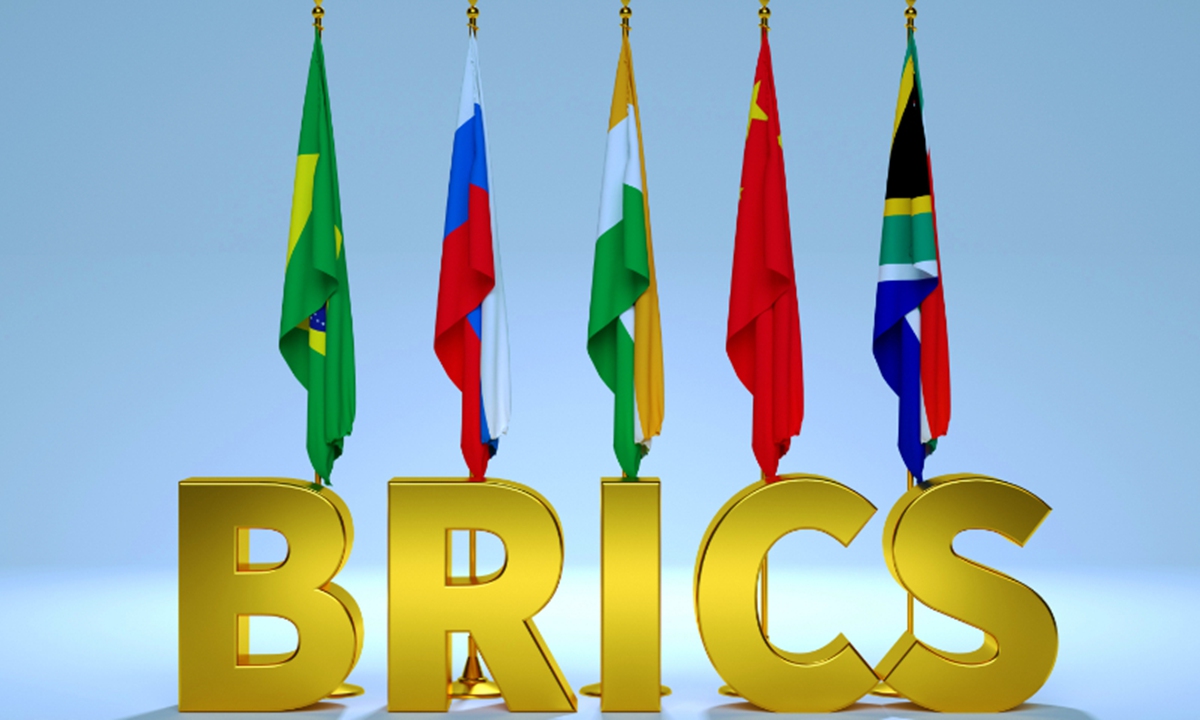
On January 1st 2025 Uganda became a partner state of BRICS, as part of its journey to join the organisation. While there was excitement both in Uganda and across the continent, it’s very vital to go about this development with realism and pragmatism. There is a new process in place to become a member of the BRICS. Since the 3rd BRICS summit when South Africa joined in 2010, there were no additions to that formation until 2024 when the Arab Republic of Egypt, Federal Democratic Republic of Ethiopia, United Arab Emirates, Republic of Indonesia and Islamic Republic of Iran joined something that spurred the global South as a multilateral world was being birthed.

During the 16th BRICS summit in Kazan Russia, a framework was put in place to ensure those sovereign countries that found it logical to join were able to. At the moment a state must first be an observer state and fortunately Uganda never underwent this phase because it was prior to the Kazan developments, instead it acquired the partner states status and then the final stage will be member state. Uganda’s journey to join BRICS started on 11th November 2024 when the foreign minister Jeje Odongo Abubakher met his Russian counterpart Sergey Lavrov who extended a formal invitation for BRICS partner state status along with 13 other countries.

By January 1st 2025 Kampala had met the criteria that was put in place in the Kazan Summit in 2024. This implied that Uganda had proved herself as a partner and was ready to start the integration phase as a member state. The criteria has aspects like economic stability, geopolitical alignment, institutional reforms and consensus approval from the existing member states. The 10th member to be admitted, Indonesia was averaging an annual economic growth of about 5% before it proved itself for membership status. Geopolitically a partner state should commit to the organization’s tenants like equal sovereignty. Countries should comply with the forum’s financial and governance standards like anti-corruption measures and in the past Brazil was able to veto Venezuela’s bid over electoral disputes. Most likely Uganda’s magic bullet will be its strategic location in East Africa as a trade gateway for the other members of BRICS and its historical role in the global South.

There are incentives that will motivate Uganda along with the other 8 countries that attained partner state status in January 2025 to strive for Member state status. BRICS is not anti-West but instead it’s an outfit that is taking up the gap of the post West dominated world. For Uganda to move from partner state to a Member of the BRICS, a number of strategic wins are on the horizon, from economic outlook to geopolitical and development space. Uganda, will have access to the New Development Banks (NDB), the famous BRICS bank. The financial institution offers alternative funding to specific infrastructure projects with better loan repayment as opposed to the IMF and World Bank.

Members of BRICS have direct access to the markets of other members which offer economic diversification. Uganda can look up to growth of its agriculture and mineral export with an already boom in coffee output and expected Petroleum production. On the economic front, BRICS is also trying to come up with a framework that is Western sanction-proof with lower dependency on the US dollar, something that can also stabilize the Ugandan Shilling if membership status is attained.

Member states of BRICS also have the opportunity to work together on technology transfer, on renewable energy for example under the new Environmental working group that was put in place during the Kazan Summit in 2024. Collaborations on such aspects can bring about a robust industrial phase that the global South needs to undergo. Geopolitically, BRICS membership offers huge leverage diplomatically especially when it comes to the United Nations setup and the need for reform including more African representatives especially on the sticking issue of the security council and the unjust veto power factor.

For Uganda to be more pivotal and influential in East Africa, BRICS membership would go a long way to facilitate its position as a regional power house, which is already a key player in Somalia’s rebuilding and the establishment of the sovereignty of South Sudan as a new country in the world. BRICS has proved itself an a balancing force that has seen China and India considered to be global rivals work together, this can give a chance to Uganda to widen it’s foreign policy beyond the established world hegemony and former colonial masters.

The beauty is that the partner status phase of the BRICS gives Kampala the flexibility to maintain its western alliances with Washington and Brussels but at the same time being watchful of over reliance on any side which is the essence of multipolarity. The stage is also a time to align with the BRICS core principles while safeguarding national and Pan-African interests on the way to Member status.

For now, the path is set and clear in the Kazan Summit declaration of 2024 on how Uganda can attain full member status of BRICS and the work should be cut out for the respective government department, agencies and ministries to cross the line. Membership Status will bring about academic cooperation and research which is vital for innovation, there a global South common interests, a promising acceleration of nuclear power output to change the energy sector, BRICS members have demographics that transition to a market for what could take up Uganda’s potential agricultural output and most importantly membership status will provide equality among the sovereign nations for starters in the formation and in the long run at the United Nation.

The writer is a research fellow at Development Watch Centre.


Trump’s Economic McVeighism: Another Gamble with the Global Economy

This month opened in typical Trump-fashion, with Washington imposing blanket tariffs on imports to the US. Following the announcement, markets from New York through Shanghai witnessed severe shockwaves.  Subsequently, the internet was awash with Trump supporters celebrating the effect particularly on the Shanghai and Hong Kong stock markets; praising Trump’s ingenuity. However, a week later, Washington announced a 90-day pause on all tariffs above 10% for imports from all territories except China. Be this as it may, experts have continued to rank Trump’s trade policy as the least friendly in 100 years.

Whereas some commentators argue that the pause was a response please to negotiate, reciprocal tariffs quickly set ‘Trump’s genius move’ and the US economy on a crash course. Moreover, the escalation involving China-the supplier of nearly 40% of American’s imports would mean that: either the 125% tariff gets transferred on to the American consumer or a reliance on alternative sources creates gaps in supply elsewhere. More importantly, the emergent supply deficits would likely create new market opportunities for China while the US risks forfeiting the 1.4 billion strong Chinese market. However, regardless of how this goes, Trump doesn’t seem to have a winning hand, at least not in the short term.

In my opinion, China-US trade tensions are not about China but rather the US’ strong belief in its legitimacy as the sole global power. However, the foundations of this belief ignore the fundamental fact that growth isn’t always infinite or uninterrupted. Indeed, it is for this simple reason that global dominance has always switched hands throughout history. Therefore, from this we can infer that China’s legitimate right to development has always been seen as a threat to this privileged position. Further, this is exacerbated by the US’ deteriorating economic footing seen from a $295 billion trade deficit and close to a trillion dollars of US debt to China. Without the significant progression through time, Trump might have tried the method the British used in 1833 or in 1856 using battleships to enforce “fair trade”; luckily these methods are buried 192 years deep.

The innovation, learning curve theory synergy; China’s engine of growth. Trump during his second state of the nation address in 2019 blamed China of ‘stealing American jobs’ and intellectual property. But in a highly interconnected and interdependent world, how is this to be avoided? Besides, this has always been the way of development. Trailblazers lowering entry barriers for those that follow. History shows that even before Robert fortune went to China disguised as a native to steal the secret of Chinese tea making, corporate espionage was a crucial stage on the path to modernisation. Indeed, Germany would never have replaced Britain as Europe’s industrial power early in the 20th century. Not even the American industrial revolution would have been as successful without both European immigrant capital, skills and knowhow. But more key in China’s rapid growth has been the learning curve theory and innovation; its ability to master cost efficient production.

Away from that, not even the 90-day pause on tariffs on certain countries targeted in Trump’s economic aggression changes the general outlook. In fact, Bloomberg economics projects the general US tariffs to only come down from 27% to about 24%. Despite the three-percentage point reduction, this will still be the highest in 100 years. Moreover, this does not take into account the 125% tariff on China hitherto the source of over 40% of all US imports. However, this can have any or a combination of a number of implications. In one scenario, the tariffs are endured but the products arrive at a much higher price with the America consumer having to bear the burden or, targeted territories seek alternative markets. However, when this happened in 1982 with Japan reducing car exports, the domestic automotive industry produced even less cars making it even harder for the ordinary American to own a car as a result of high prices.

The other possible outcome is that a move is made to readjust supply-chains which might require intensive investment in infrastructure, skills development and new technology in the short to medium term. Some experts are already expressing concerns that it could take decades for America to produce all it needs domestically. In the meantime, this certainly creates a supply deficit. On the other hand, if the US is to source these products from alternative sources, the deficit could potentially emerge elsewhere, likely creating a market opportunity for China given China’s relations with much of the developing world where this deficit is likely to manifest.

Until this point, the discussion has been about China and the US but what does Trump’s economic McVeighism mean for the rest of the world. Normally in such economic conflicts, when a major power faces off with a smaller nation, the outcome is more certain unlike when two major powers face off. In the former, the smaller nation loses badly but in the latter, the whole world suffers.  Moreover, when all other sorts of nations are tossed into the mix, the situation becomes even more complex and could have far reaching consequences. For example, as reciprocal tariff walls sprout in different targeted territories this phenomenon poses a significant threat not just to the US but also to global trade. This situation however seems to isolate the US signalling the potential for serious adversity for the domestic economy.

On the contrary, China has over the recent decades build strong and reliable logistic and infrastructure networks through the Belt and Road Initiative (BRI) cooperation. In addition, the Chinese have through innovation been able to master efficient production. These combined do not merely mean China’s supply-chains may not require much readjusting but rather making it more of a reorientation. The logistic and infrastructure network and efficient production methods also imply that China will be more ready to capitalize on any supply deficits should they occur, but what does this mean for the US?

White House data as of April 10 indicated that China’s share of total US imports had dropped sharply from 34% to just 13.4%. Moreover, with further hiking of the tariffs to 145%, one can expect this to regress even further. NVIDIA for example expects to take a 5.5 billion hit in charges on account of the limiting chip exports to China the company’s biggest market for AI chips. Indeed, economists concur that besides affecting American companies, consumers will also have to deal with soaring prices as firms pass on some all their extra costs not to mention the loss of jobs as was the case in 2018 when Trump first made this gamble. According to the WTO, the resulting contraction of bilateral trade between the world’s two biggest economies will certainly be felt in many places as well.

What is happening in the world today is a stark reminder of the potential damage that could arise at any time from the unchecked trade powers of the US president. President Trump’s free-range to gamble not just with the US domestic economy but also the entire world economy underscores the urgent need for resilient trade systems that will shield global trade when God’s diplomacy becomes weaponised like it is being used against China, Canada, Mexico and others. Further, whereas China has done significant work in this direction, there is a need for Africa and the global south to do more in this regard. Albeit not being proof against trade uncertainties, relative economic peace can be guaranteed through building resilient regional ecological supply systems that that are self-sufficient to counteract instances of economic McVeighism and bullying from without.

George Musiime is a research fellow at the Sino-Uganda Research Centre.


The International Liberal Order is not Under Attack It’s Just Being Interrogated

Proponents of the International Liberal order have spent much of its lifespan trying to shield it from criticism. They’ve actively masked its shortcomings, dismissing any flaws and Inconsistencies. A fortune has been spent on media influence campaigns and another on military campaigns to re-inforce this ideal, all to keep the rules based order well made up and hide any signs of cracking. Whether these costly efforts to preserve the sanctity of the liberal order were worth it as opposed to facing the reality of its challenges remains an open question. But here we are, it did not work. At least not in the way that the costume designers intended. The make-up still flaked and the cracks still showed. But even then, the ever zealous stylists insisted: the show must go- on.

Now, more countries are asking questions about the undisputed beauty of the rules based order and predictably, those who spent years crafting its reputation and covering up its shortcomings view this mere questioning as an attack. They overreact because deep down they are aware that the package they are marketing is not complete but hoped no one else would notice or even dare to speak up about it. This panic has made China’s genuine interrogation of the liberal order come off as an outright challenge and attack. But China will not relent and the global south has picked up the scent too.

In his book 21 lessons for the 21st century, Yuval Noah Harari argues that many critics of the liberal system point out its problems but fail to offer solutions. On this point, I beg to differ. China has offered a workable solution. It’s not pushing for the overthrow of the liberal system but rather an upgrade. China’s proposal essentially keeps many of the good things about the liberal order; Free trade, international institutions, cultural exchange, sovereignty and non-aggression, democracy and human rights—at least in principle and advocates for it to be more just and inclusive. It recognizes that the fundamental problem of the liberal order lies in its western-centric nature. And this nature automatically breeds structural inequality for all the rest. And that is China’s biggest crime in the eyes of the liberal order’s stylists: insisting that the system live up to its aspirations.

The liberal order has seen inequality widen among and within nations. The gap between the rich and the poor has significantly increased. When it comes to income, the richest 10% globally make 52% of the global income while the poorest half make only 8%. The wealth gap is even more astounding with the richest 10% owning 76% of global wealth while the poorest just owns 2%. This disparity extends to climate injustice. The wealthiest nations emit more greenhouse gases in total and per capita compared to the poorest nations and yet it’s the latter that bear the brunt of the consequences; floods, drought, food insecurity, and displacement.

We have recently gone through a global pandemic that claimed millions and tested the strength of global solidarity and are now facing a global economic downturn coupled with a surge in regional conflicts that risk escalating into something worse. The InfoTech and Biotech sectors are increasingly running out of control of public oversight, unemployment and the threat of future unemployment are on the rise and many countries are now looking to build physical, economic and ideological walls instead of bridges.

China, more than any nation seems to recognize this impasse and is proposing an alternative approach to global political management. China’s current political ideology and system are always misunderstood either deliberately or out of ignorance. The Chinese managed to borrow the best ideas from ideological currents of the modern world; Nationalism, communism and liberalism.

The Chinese are nationalists at the core with a strong identity that they revere. They have adapted a ‘socialism with Chinese characteristics’ that respects their unique identity and national realities and have chosen to participate and contribute to the global liberal order through their opening up and consistent advocacy for the rule of law and respect to international institutions. The Chinese have not made the mistake of assuming that one system is better than all and fits all national contexts. They have applied logic to international relations and let humans control the system instead of having systems control humans. They have chosen ideological pragmatism instead of ideological purity.

Should China continue on its current trajectory, it will avoid the classic trap of ideology. Essentially, humans should inform and shape ideology instead of ideology governing and informing humans. Ideologies should evolve with new experiences, data and moral insight. When ideologies inform humans, they risk becoming too rigid and form into dogma. This creates a system that resists change, punishes dissent and caters to the few. China’s concept of whole process democracy caters to all—this is why it has had a lot of success with lifting millions out of extreme poverty which is arguably the most democratic outcome of our time.

On the other hand, the West’s democratic systems or most liberal democracies allow for endless democratic processes but often produce very undemocratic outcomes. Question is; what’s the point of choosing a leader every four or so years if the life of most citizens remain unchanged or even worsen? I propose we should adapt a system that would give both in a form that respects national contexts.

While the West has managed to democratize to some extent internally, this success has failed to reflect on the international stage. This could simply indicate that while the liberal ideology in its pure form may work most of the time within western societies, it needs some adjustments when applied globally and within different national contexts.

Currently, we are witnessing the logical conclusion of liberalism within western societies. Ironically, it is liberalism itself that enables the rise of illiberal actors, who reject the very system that elevates them. In other words, liberal societies can elect a fascist or communist leader or leaders that generally reject liberal norms. In theory, the system is designed to contain such outcomes or their consequences through checks and balances but what happens when a liberal system fails to contain illiberal ideas or allows for its tenets to be dismantled from within? This is no longer a hypothetical because current upheavals within Europe and the United States indicate we are already at this stage of the equation.

A system that promised progress seems to have hit a wall and can now only offer paralysis. The liberal order is crashing in on itself—stuck in a cycle where the tools of democracy can be used to un make democracy itself. Even worse, the stylists are stuck in a loop. If they push too hard against the flaking of democracy within then they create a whole new monster. They will be viewed by the citizens as resisting or impeding the democratic will of the people—fighting against the very system they advertised as perfect.

So, the choice is no choice at all, let the will of the people prevail no matter how dangerous or fight against the people and hope for the best. It’s a fight to save the aesthetic—an image of a system that has to be seen as working and offering hope to all. But illusions cannot govern forever, eventually the people begin to see through the make-up, the show can no longer go on as usual, the system must either evolve or collapse under the weight of its own contradictions. China is ringing the alarm now, it’s not attacking the liberal order, it’s just ahead of the curve.

The writer is a senior research fellow at the Development Watch Centre


US Tariffs Contradicts WTO Rules on Fair Trade and Non Discrimination

By Talwana Ernest

The current US administration has continued the rhetoric of the previous Trump administration (2016-2020) which includes placing trade barriers against China amongst a litany of actions including barriers on Chinese EVs entering the US market (carefully avoiding placing tariffs on Chinese rare earth metals critical to US defense and aviation industries). This time round, the current administration has opted to place tariffs on all nations and territories  across the planet (with the exception of Russia).

These actions contradict World Trade Organisation agreements on Trade Without Discrimination which asserts equal treatment for all parties under said rules that the US is party to.

Freer Trade through negotiation is equally envisaged by said rules. These rules equally desire gradual and progressive liberation. Something the current US administration is rallying against by putting America First.

Predictability through transparency is equally significant amongst trade partners. Uneven tariffs can be viewed as acting against stated principles and creates strain on well established trade relations.

The Uruguay round of talks therefore placed a ceiling on custom tariffs which would avoid any form of unpredictability that causes strain on global supply chains and unnecessarily raises the coat of doing business.

The current American administration thus disregards the rules based order and seeks to act in her own interests while affecting global trade as a whole, subsequently causing price hikes for American citizens as well as creating shocks on global stock markets.

It should be noted that global supply chains are dependent on free trade. Not the restriction of it with tariffs. Tariffs only act to protect one party while causing economic slowdown.

In an economic war, there are no clear winners. Any form of concession another party seeks to achieve will be offset by losses incurred through higher production costs and strains on the end consumer who foots a higher bill to buy the same commodity.

China’s complaints at the World Trade Organisation are done in an effort to promote fair trade amongst a comity of nations. China doesn’t actively seek to antagonise other nations. Rather, to promote her own interests while building her trade and industrial capacity in a dynamic world.

China equally has bilateral trade agreements with a variety of nations across the globe. This means that countries are aware of China’s competence and willingness to trade. These include Austria, the Belgium-Luxembourg Economic Union, Canada, France, Germany, Italy, Japan, South Korea, Spain, Thailand, and the United Kingdom.

China has built these relationships through her culture of mutuality and trust. A culture deeply embedded in China’s millennia old cultural fabric and permeates throughout her society and international relations.  It is no surprise that many nations are seeking trade relationships with her. China is equally the leading trade partner with the MERCOSUR regional bloc with the Uruguayan President seeking to fast-track negotiations on a free trade area with China.  This includes 30 free trade agreements with a variety of nations across the planet. Aside from the more dominant states, China is equally a dominant Economic and regional player in the Pacific region.

American tariffs underestimate China’s resilience, adaptability and the versatility of Chinese supply chains and her global trade apparatus. Any pain the US hopes to inflict on China is grossly overestimated as China has shown throughout her history a capacity to withstand greater pains.

US Tariff hikes can also be seen as a deprivation of the Global South’s right to development as asserted by the Chinese MFA Spokesperson. Developing states utilise WTO Rules to negotiate global trade through negotiation and deliberation. The actions by the United States signal eonomic coercion and exceptionalism which contradict the desire for a fair system that promotes growth and development of all nations in line with the UN 2030 Agenda for Sustainable Development.

Furthermore, it should be stated that WTO Rules promote fair competition which protectionism stands antithetical to. Protectionism limits innovation and dulls an economy’s ability to challenge itself in the face of competition from other global players.

Protectionism isolates a nation from the rest of the world and causes possible stagnation in the face of changing trends in consumer preferences.

A nation only thrives when it acknowledges competition in all its forms. Not close itself to it.

The writer is a research fellow at Sino-Uganda Research Centre.

Trump’s Tariffs  Have Nothing to Do With a Fair World; It’s A Boomerang Trick to Contain China

The United States President, Donald Trump’s relentless habit of slapping tariffs on other countries has created what I can without doubt call “the politics of beam balance”—with Trump’s tariff situation on one hand and China’s President, Xi Jinping’s inclusivity on the other. In other words, Trump’s tariff situation lands us in a more direct situation of “protectionism” versus “inclusivity” in which the president of the U.S is hungry and longs for a solution that can at least cause equilibrium—a sigh of relief from China’s ever growing economic prowess as the world’s second largest economy which even threatens the United States’ long-term known superiority which politicians in Washington wrongly believe is a preserve of only the US!

Ever since the liberal French economist and businessman, Jean-Baptiste Say, coined the term “protectionism.” President Trump’s tariffs on other countries have given the term a fresh breath of practical existence with a great force even much more than the term had gained widespread use in the mid-20th century during heavy industrialization, trade agreements and economic nationalism.

However, from my angle of perspective, to break China’s economic backbone and strength, trade tariffs against China cannot be a viable solution but rather an economic self torment on Trump’s side. His tarifs which are in all design a gamble to contain China’s rise will certainly boomerang! China is not only the second-largest global power but also a mirror that plays a role in exposing the US indirectly across the globe. Whichever steps Trump takes against China, they leave the US isolated and bare. Secondly, it is not about just tariffs that China’s economic power can be realized. However, it requires a deep analysis of the core factors that made China achieve its position today. Such a core factor is inclusivity.

Just like the prominent American poet and novelist, Henry Wadsworth Longfellow, asserted that, The heights by great men reached and kept were not attained by sudden flight; but they, while their companions slept, were toiling upward in the night, China’s rise to global prominence should not be viewed as a sudden and an unexpected phenomenon. As such, no country should be tempted to believe that the same country’s prowess could be taken down suddenly by tariffs. There is a dire need to closely examine China’s foreign policy in which the major tenet is building a community of shared future for mankind, mutual respect and win-win cooperation with the rest of the world.

To realize this, a quick dive into China’s history clearly shows that from Deng Xiaoping’s economic reforms in the 1970s to Xi Jinping’s Belt and Road Initiative (BRI) today, China’s leadership has consistently pursued a long-term vision for the country’s global engagement and building a world where every country thrives with others in harmony rather than hegemony. This is the starting point of “inclusivity” which from the beginning was and is still deeply rooted in China’s steps to her development.

In just two years after the death of Chairman Mao, China’s Deng Xiaoping introduced a number of reforms but the most intriguing one among all was the Economic Liberalization reform. This was meant to revive China’s economy from shambles and shift it from centrally planned as it had been stagnated by the Gang of Four, to a market-oriented economy through the 1978 policy “Reform and Opening-Up.” Under this policy, Deng Xiaoping encouraged private enterprise, foreign investment and trade.

Soon after 1978, in his opening speech at the twelfth National Congress of the Communist Party of China on 1st September 1982, Deng Xiaoping emphasized the policy of “Opening to the outside world.” This was the kick-start to inclusivity. In his own words, he remarked that “We shall unswervingly follow a policy of opening to the outside world and increase our exchanges with foreign countries on the basis of equality and mutual benefit.” It is from this point that terms like “win-win” cooperation gained observance on the international scene especially with their roots traced not elsewhere but from Asia and China in particular. This is so simply because China started identifying itself with the rest of the world. It realized that it could peacefully and harmoniously develop and coexist with other nations.

China’s intensified spirit of inclusivity gained much momentum with Deng Xiaoping’s era. For example, on May 7th 1978, amidst the struggle to achieve four modernizations, Xiaoping remarked that, “Once we have accomplished the four modernizations and the national economy has expanded, our contributions to mankind, and especially to the Third World, will be greater. As a socialist country, China shall always belong to the Third World and shall never seek hegemony. This idea is understandable because China is still quite poor, and is therefore a Third World country in the real sense of the term. The question whether or not China will practice hegemony when it becomes more developed in the future. My friens, you are younger than I, so you will be able to see for yourselves what happens at the time. If it remains a socialist country, China will not practice hegemony and it will belong to the Third World. Should China become arrogant, however, act like an overlord and give orders to the world, it would no longer be considered a Third World country. Indeed, it would cease to be a socialist country.

That enough, indicates how China had set itself to coexist with the world, identify itself with the rest parts of the world and foster development for all. Most especially, the development of Third World countries was given much attention. It is thus not surprising that by 1976, as poor as China was and economically staggering, the Tazara Railway—linking Dar es Salaam in Tanzania to Kapiri Mposhi in Zambia had been completed. This railway, one of China’s most iconic early projects in Africa, remained a focal point of Sino-Africa cooperation during 1982-1990.

In the most previous days, President Trump branded China “the biggest abuser of tariffs.” This is part of the reflection that he is realizing the impracticality of his tariffs. Moments before, we had witnessed China, Japan and South Korea reaching an agreement to jointly respond to US tariffs. This further reflects the spirit of inclusivity for which China has groomed in other countries it operates with.

It is worth noting that by 2024, Africa-China trade reached USD 300 billion while that of Africa-US hit USD 72 billion. This serves to reflect China as the biggest African trade partner over the US. This clearly shows that China is not relying on exports to the US as a sole consumer and market. It learned so quickly that the US is a camouflaging economy especially one that prides in tariffs and sanctions. As a result, China intensified her spirit of inclusivity and shifted her goal posts to other countries like in the Association of Southeast Asian Nations (ASEAN), in Africa and in the Middle East. Her foreign policy has heavily built on principles of mutual respect, amity, win-win cooperation and China has been a firm supporter of other countries’ development efforts emphasizing the need to support and build a community of shared future and prosperity for mankind.

The writer is a research fellow at the Development Watch Center.