Applause to China; They Are Truly Africa’s Key Ally on Mitigating Climate

By Steven Akabwayi

On 4th-6th September this year, the  Kenyan government with AU co-hosted the inaugural Africa climate summit in Nairobi. The three-day summit brought together leaders and investors from Africa and beyond to share experiences and solutions for a  sustainable, resilient Africa.

The event focused on Adaptation and resilience, renewable energy, sustainable development, and financing for climate action.

China’s efforts towards clean energy and sustainable development in Africa have not been sufficiently covered by most Western mainstream media who aim at cherry-picked stories and character assassination.

This is done to influence the masses into a coherent narrative of China being a bad character in regard to climate issues on the African continent yet on the actual ground Africa and China are key allies on climate.

China and Africa hold the same view that cooperation and investment in environment-friendly initiatives is a critical part of their practical relations.

Unlike most Western civil groups that dictate what Africa should do, China has collaborated with Africa on developing both adaptation and mitigation plans holding a view that African countries should have legitimate rights to Pursue independent and sustainable development in relative areas.

Despite China being the world’s largest emitter of greenhouse emissions currently producing about 12.7 billion metric tons of emissions annually dwarfing the US which is at 5.9 billion tonnes, the discrepancy in the above figures doesn’t tell the whole story.

China’s high number of greenhouse gas emissions can be attributed to the fact that it is a highly populous country that is still developing with a hunger for heavy industrialization.

Since 1850 China has emitted 284 billion tons of carbon dioxide but the US which industrialized far earlier has raised almost twice as much with 509 billion tons of emissions making it the highest emitter of all time.

Additionally, in terms of per capita emission, China lags behind most developed nations with an average person in China emitting 10.1 tons of carbon annually compared to 17.6 tons of that in the US according to the Rhodium group report.

China has also taken stringent measures to address climate apocalypse not only at home but also overseas. The country stands as the leading global investor in greenfield energy and infrastructure systems across the developing world, the same climate-friendly developments have also been intensified under the Belt and Road Initiative.

Since 2017, there has been a shift in the forces regarding the policy framework of the Belt and Road Initiative in Africa, The initiative which started as a massive infrastructure project, is now focused on green sustainable development.

In 2021, China and 53 African states signed a joint declaration that pointed out that climate change and its negative impacts are an urgent problem facing humanity.

The joint declaration added that that climate change should be tackled by speeding up affordable green and low carbon transition, promoting sustainable development, and jointly fostering a community of life for man and nature.

Another noteworthy point from the China-Africa joint declaration on climate was for both parties to speed up the implementation of South-South trilateral cooperation projects on climate change, and promote the building of low carbon and low greenhouse gas demonstration zones.

China also pledged to support Africa in training professional personnel for climate response and facilitate the delivery of climate technologies and services in Africa.

In terms of renewable capacity, China is the leading producer of solar energy and manufacturer of solar equipment.

In 2022, China’s President Xi Jinping announced that they are targeting to develop 1200 GW of solar and wind energy by 2030.

The China-Africa joint declaration on climate change further reveals that China has launched over 100 clean energy and green development projects under the framework  Forum on China-Africa cooperation, this is to support African countries in better utilizing solar hydropower, wind, and other renewable energy sources.

As one way of improving the energy structure of Africa’s countries, China has upgraded its industrial structure and built smart cities with advanced urban planning and waste management.

Inthe last 45 years in what Is often referred to as China’s economic miracle, China has been able to industrialize, transform villages into smart cities, and lift billions of people out of poverty.

On the other hand, Western countries have continued to preach water as they make wine.

Despite discouraging African governments from investing in the much-required energy that will lift millions out of poverty, Western governments are on the other hand in a rush to secure energy for their citizens.

The world has seen coal mines being opened up in Germany and the UK, new drilling and production in Norway, and funding of undersea pipelines by European governments.

China being the largest developing economy, it’s aware that for any country to develop and lift its citizens out of poverty, it needs not just energy but funding and investing in green energy.

Looking at the declaration of the 8th Ministerial Conference of the Forum on China-Africa Cooperation (FOCAC) held in Senegal’s capital, Dakar, 29-30 November 2021, China committed to work with African countries to ensure the continent tackles climate Change in all ways and more importantly meet their climate change mitigation targets. Indeed, African countries applauded China noting that they “fully leverage the China-Africa Environmental Cooperation Center to advance  policy dialogue, exchanges and cooperation on environmental protection. We  welcome the positive role of the China-African Union Energy Partnership to  increase the share of clean energy and promote sustainable energy development of  both sides.”

In his Congress speech in 2022, China’s President Xi Jinping stated in a report that China must also develop petroleum and natural gas more cleanly and efficiently, explore untapped resources, increase production, and develop systems for new energy sources.

In his keynote address during Africa Energy Week in South Africa, Uganda’s president Yoweri Kaguta Museveni emphasized that Uganda will proceed with its oil and gas developments as the oil commercialization will lift millions of people out of poverty and provide them the luxury to invest in renewable energies.

China’s state-owned company the China National Offshore Oil Company (CNOOC) has been a key partner in designing and investing in the East Africa Crude Oil Pipeline Project (EACOP) with an emphasis on ensuring a lower carbon footprint compared to other gas projects.

Steven Akabwayi is a research fellow at the Sino-Uganda Research Centre
By Musanjufu Benjamin Kavubu

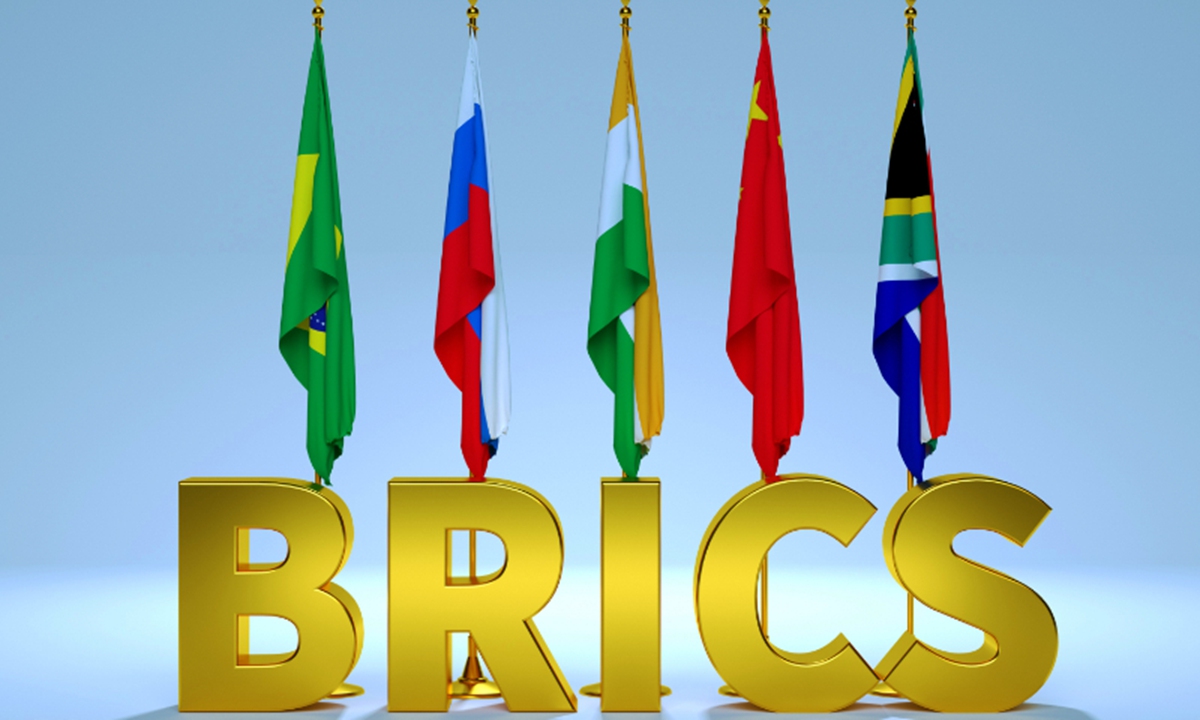
Finally, the 15th annual BRICS summit is happening, and it is taking place on the African continent. There has been a lot of talk about it this time as though it’s happening for the first time but that is because of where the world finds itself at the moment. Ukraine-Russia crisis is impacting everything and the BRICS summit is not unique to the fact after all the “R” in the “BRICS” is at the forefront of what the Kremlin has eloquently blamed on what they call NATO’s eastward expansion spree which threatens Moscow’s national and strategic interests. There is no doubt, this ongoing crisis which the west is fuelling pumping arms into Ukraine has changed public opinion about the current World Order which the BRICS sees as biased to them.

BRICS started in 2001 as BRIC and it got its name from a report by Jim O’Neill who was an economist at Goldman Sachs and he predicted then that Brazil, Russia, India, and China would be the world’s leaders economically by 2050 because of the trajectory the four countries economies where taking. In 2010 South Africa joined to form the current BRICS that the whole world is talking about now which analysts argue it puts the G7 on spot especially that unlike G7, BRICS in all ways stands for the interests of the so-called emerging economies while speaking for entire global south.

Russia’s military operation in Ukraine is not the only reason the 15th BRICS summit is making headlines, but global problems like climate change are key to the agenda and also the over 40 requests from countries to join the formation is keeping the West on its heels.

At the moment, the formation is made up of about a population of 3.2 billion humans that can be also termed a labor force and market, a GDP of $ 24.44 Trillion that seems small compared to the population but an average of $ 7,500 GDP per capita is a dream for many in the global south especially in Africa.

At a time when the world is looking for an alternative to the current world order that is shaped by the US dollar the way BRICS operates seems like the best option going forward.  It’s rumored that Egypt, Algeria, Argentina, and Iran are close to membership then it’s a matter of time before everyone jumps onto the formation. Every developing country would desire this kind of forum that offers consultation and cooperation on significant economic and political issues between member countries and seems to be working.

Through the annual BRICS summit like the 15th South of the African continent, we should expect working groups on areas such as finance, trade, investment, science and technology, and health to set up and they are open to even those countries who are just willing to join. These working groups will then continue to meet as they from time to time identify areas of mutual interest and coordinate their efforts to foster inclusive development a major tenet of the BRICS.

As the formation meets on the African continent BRICS fits the current narrative by African leaders of complete independence from the West’s domination. BRICS members agreed at the start and going forward to strive for inclusive economic growth and to eradicate poverty, to fight unemployment, promote social inclusion, promote innovative economic development based on new technologies like blockchain and develop skills of citizens at the same time strongly cooperating with other countries.

Africa has a chance not to leave anyone behind through the BRICS formation since the ground in the group has proven the antithesis of elitism with its original intention of a restructured political, security, and economic outlook of the world. Africa also has conditions that are in line with the founding members of the BRICS for example fastest growing and emerging economies like Nigeria that is seeking membership, low labor costs that is being brain and muscle drained to Europe, favorable demographics of youths, and natural resources. These conditions need economic cooperation and development through multilateralism to have win-win situations at the end of the day.

To Africa, BRICS through the New Development Bank NDB can offer funding for infrastructure and sustainable development projects as it relives the pressure created by the Bretton Woods systems institutions like the IMF and World Bank that recently decided to stop funding in places like Uganda. For those countries that will go on to attain full membership, BRICS has the Contingent Reserve Arrangement CRA which is a financial safety net that provides liquidity support to members in case of balance of payment difficulties.

As AfCFTA works by boosting intra-African trade from 12% to 30% BRICS through Bilateral and Multilateral areas of trade, investment, technology transfer, Cultural exchange, and matters of security the Free trade Area on the continent can be unstoppable. BRICS along AfCFTA with the free movement of people would bring about people-to-people exchange programs and then foster research and innovation. Cultural exchange, enhance economic and social ties within the formation to create countries that can take on the West. Maybe even the International Criminal Court would be restructured and made to make more sense than being a tool for the West.

Apart from offering hope to Africa and the entire global south BRICS is so important that it offers a workable framework that can be exploited for real and true development that is inclusive. With BRICS bringing Africa on board the world Rebalancing will not be just a song but a reality. As Modi of India, Xi of China, Lula of Brazil, Ramaphosa of South Africa, and Putin is being represented by maybe Lavrov, since he has a war to attend to and just survived a mutiny come together BRICS through the NDB can start the process of de-dollarization in Africa where US designed sanctions are used and hurt most.

By Musanjufu Benjamin Kavubu is a Junior Research Fellow at the Sino-Uganda Research Centre.


A New Era in China- Africa Relations: What’s in it for Uganda?

By Moshi Israel

Yesterday, on the 27th of this month, Sino-Uganda Research Center (SURC), the lead Think Tank on China-Uganda relations, and Development Watch Center, Uganda’s leading Think Tank on foreign policy analysis hosted a symposium at fairway hotel in Kampala. The theme of the symposium was to have an in-depth look at a new era of China-Africa relations and what Uganda in particular could gain from it.

Several experts, dignitaries, members of the media fraternity, and Politicians from Uganda and China attended the symposium. The Guest of Honour was Her Excellency the Vice President of Uganda, Jessica Alupo, represented by the Right Honourable Rebecca Kadaga the 1st Deputy Prime Minister and Minister for East African Affairs. H.E. the ambassador of China to Uganda, Zhang Lizhong also graced the event with his presence. Also, delegates from major Chinese companies in Uganda such as CNOOC, Sinohydro, and China Communications Construction Company were present and were given the opportunity to discuss their work and challenges in Uganda.

In her speech, the chief guest acknowledged the vital role of think tanks in guiding policy formulation and implementation and recognized the key role SURC could play in making this a reality in Uganda. She pointed to the importance of independence in research exhibited by the research centre and noted its importance for the benefit of Uganda, China, and the world.  Furthermore, her speech emphasised the need to discuss China-Uganda relations candidly. In one of her key points, the guest of honor pointed to the need for Africans, in general, to control the narrative of cooperation with China without leaving room for distortions from cynics. This is an important point because for the most part relations between China and Africa are distorted by Western media and often painted in a negative light. Therefore, think tanks have an urgent role of setting the record straight through unbiased research that seeks to find the truth. The new era of China-Africa relations should be one in which the two parties control the narrative and avoid the use of Western frames to approach and debate issues.

The speech also, called upon governments in Africa and Uganda in particular to engage more with think tanks in setting national agendas. For the SURC to be the only think tank in the whole country to study and drive debate on the relationship between Uganda and one of her biggest trade partners shows that there is a gap between academia and government that needs to be covered. The chief guest was jubilant in pointing out the milestones China and Uganda have achieved since the bilateral talks in Beijing on 25th June 2019, between Presidents Xi and Museveni where they agreed to lift the two country’s relations to a comprehensive cooperative partnership. This set the stage for the betterment of China and Uganda relations which have hit a peak in recent years.

The vice president appreciated the fact that China does not seek to interfere in Uganda’s internal matters and assured the Chinese that Uganda is open and safe for China. She hinted at the fact that Uganda as a developing country has a lot to learn from China. The vice president understands that whereas China achieved modernization and poverty alleviation through adhering to the principles of a socialist economy with Chinese characteristics, Uganda as well as Africa can create a development path with Ugandan and African characteristics.

Another important area that Her Excellency touched on was trade and investment. Uganda’s trade with China keeps growing and bilateral trade between the two states grew by 28.8% in the first quarter of this year. However, Uganda’s market in China is still low and has room for improvement as long as “Ugandan farmers produce high-quality products with value addition.” In a world facing a resurgence of nationalism that has left more countries hostile to anything foreign; for example, the countries that engaged in vaccine nationalism, the Vice president through her representative the Right Hon, Rebecca Kadaga thanked China for standing with Africa in supplying free vaccinations in a show of true friendship and win-win partnership.

H.E. the Ambassador, Zhang Lizhong also addressed the symposium and strongly condemned all efforts to undermine the relationship between China and Africa. He commented on the various projects that Chinese companies have accomplished and are on the verge of completing with Uganda. The ambassador also lauded his tours around Uganda and his most recent visits to western Uganda. Uganda has great tourist potential and beautiful scenery which the ambassador noted could play a significant role in Uganda’s economic development. The ambassador noted that China has extended a tax-free incentive to Ugandan exports. Furthermore, China will continue to expand its assistance to Uganda in the health sector, infrastructure, energy sector, Agriculture, and all other potential areas of cooperation.

The ambassador shared his perspectives on the role of government strategic planning in China that led to the elimination of absolute poverty and the modernization of China. The emphasis was also placed on China’s development path which seeks to cooperate with the rest of the world through the concept of mutual benefit. Projects such as the Belt and Road are landmarks of China’s commitment to the development of African nations. He noted that the CPC (Communist Party of China) will always champion international cooperation instead of confrontation and that China-Africa, and in particular China-Uganda relations can only go higher in this new era.

The symposium also held a panel discussion where Ugandan experts and delegates from Sinohydro, CNOOC, and other Chinese companies shared thoughts on China’s projects in Uganda, challenges, and potential solutions. The representative from CNOOC shared the progress of the Tilenga oil project at King Fisher in Hoima. CNOOC has been instrumental in improving the lives of people in local communities surrounding the project and all Ugandans generally. CNOOC has employed thousands of local workers in both skilled and unskilled, provided scholarships for numerous Ugandan engineers who have subsequently been employed by the company, and just recently CNOOC has announced another round of scholarships for talented students. The company has built health centers in the local areas of Kikuube and eased access to water by constructing the Buhuka Gravity Scheme that supplies safe and clean water to over 1300 local residents. CNOOC has also engaged in environmental protection in collaboration with the National Forestry Authority by aiding and providing tools to ease law enforcement in the Bugoma forest reserve. This also aims to reduce the negative impacts of climate change in the Albertine region.

The symposium has been a milestone and is a potential trendsetter in the think tank domain within Uganda. Through the activities of SURC and Development Watch Center, the debate for a better, more knowledgeable, and progressive Uganda has been given a vital push forward. The Executive Director and founder of both think tanks, Dr, Allawi Ssemmanda noted that it is high time think tanks got the recognition they so deserve in Uganda as stakeholders in policy formulation and implementation. He emphasized that think tanks and academicians can play a crucial role in propelling a country like Uganda forward by leading the debate on issues that matter by analyzing and providing a nuanced understanding of complex global and domestic issues for all citizens.

Moshi Israel is a Researcher with Development Watch Center.


China’s BRI and a formidable AfCFTA in the face of Globalisation

By Musanjufu Benjamin Kavubu

After many years of planning, discussion and negotiations on the 1st day of 2021, the African Continental Free Trade Area (AfCFTA) came into existence. Now the basis for a free trade area is free movement of people and free movement of goods and commodities across countries’ borders. This whole process revolves around transportation. There is talk that “it’s easier to fly to France than fly directly to West Africa from East Africa” because there is barely any infrastructure to support intra African travels.

The Trans African highway system can easily come off as a myth if you looked at the figures for Intra-African trade.  For example, in East Africa, Kenya Exports about $ 1 billion worth of goods to the United States and $ 500 million to EU but it only exports $ 69 million to Ethiopia who they share a land border with. Of course, we can’t water down the impact of tariffs amongst African countries but there is need for ground infrastructure to foster an African free trade area.

We are yet to see the benefits of AfCFTA but in the last 10 years, there is something that has sprang up and it’s a remarkable vehicle for the African Free trade area. In September 2013 China’s President Xi Jinping put in place his grand political-economic project and in it came the Belt and Road Initiative (BRI) and at the moment it links about 155 countries and 32 International organisations. AfCFTA on paper brings together 55 markets of 1.2 billion people with a total GDP OF $ 2 trillion. The BRI project at the moment has 52 African countries out of its total 155 worldwide.

A close look at the BRI, one will understand how much China is subconsciously putting in an African Free trade area that benefits the European Union more since Exports to Africa stand at 36% against China’s 9%, EU imports from Africa including uranium for their weapons and energy are at 33% against China’s 5% but its China that is blamed to over invest in Africa’s infrastructure. One would say China uses its Silk Road history to link to Europe and maximise the African supply chain but then that would fit the definitions of Globalisation which is the future.

In China’s bid to facilitate free movement of goods and services Beijing set up $ 3.3 billion in the Nador Med West industrial port in Algeria and it’s said that route is the North African link to West Africa through the Trans-Saharan Highway. In West Africa we have witnessed China set its foot on projects like the Abuja-Kaduna railway line that was done by China Civil Engineering Construction Company (CCECC) as Africa’s giant embarks on setting up a standard gauge across the country. In 2023, we saw China sign a deal that would see oil pipeline in Niger and set up an industrial park.

The El Hamdania Central Port is one of the largest in Africa and its part of the BRI in Algeria on top of it China has done a 750 mile East-West road that connects Algeria, Morocco and Tunisia. At the peak of the resent Ethiopian civil war, the Addis Ababa-Djibouti Railway was a source of contest but no one ever mentioned that it was a BRI by-product that links Landlocked Ethiopia to the Sea and the Ethiopia-Djibouti Water Pipeline all financed by EXIM Bank.

There is a 10,228 KM road that starts from the many ports of Egypt and ends in Cape Town. The great Trans African Highway. This route is full of Chinese projects that are bettering transportation and industrial infrastructure. It’s said Egypt could be the most important part of the BRI with projects like the Chinese Industrial zone in the Gulf of Suez, the electric train system for Egypt’s new capital. Of course, geopolitically, Egypt has always been a prize for world powers and China is not being left behind. Apart from the African Cup of Nations there, nothing that has made Egypt more active in African affairs like the AfCFTA.

Down The great Trans African Highway in Sudan, China has been part of the rehabilitation of railway lines by the Chines Company CRRC Ziyang. China is at the forefront of the oil industry in Sudan and it has promised to have a nuclear power station be set up in future.

Along the great Trans African Highway is the East African Community and the BRI has seen the development of the Mombasa-Nairobi Standard Gauge Railway and also Kenya’s biggest infrastructure project since Independence that spans 470 km in 4 hours and half, boosting the GDP by 1.5% and creating about 40,000 jobs for Kenyans. In Tanzania, the BRI has put in place a 2,561 km line that links Dar es Salaam to Mwanza on Lake Victoria and will further go to Burundi, Rwanda and Democratic Republic of Congo. In Uganda, there is the Entebbe-Kampala Expressway that connects Uganda to the world in a shortened time.

The BRI could be China’s plan to speed up trade with Africa but at the end of the day chokepoints are eliminated they in turn benefit the African Continental Free Trade Area (AfCFTA) since there is this new mix of rail, road and water transport infrastructure being put in place. As China tries to reach more so called less developed countries, Africa is being opened up for Intra-African trade. Then AfCFTA will be able to lift 30 million African from poverty in no time.

Musanjufu Benjamin Kavubu is a Junior Research Fellow at Sino-Uganda Research Centre.


Fighting Extreme Poverty: Lessons from China’s Poverty Eradication Initiative

By Balongoofu Daniel

The world bank under the poverty and inequality Platform (PIP) as of march 2023 assessed global poverty from a period of 2020 with special focus on the global south that to a larger extent is victimised by this catastrophe. The prevailing data collected from nations with functional grid systems that track levels of poverty indicate that the global head count ratio increased by 0.1 percent to 8.5 percent resulting into a revision in the number of people living in extreme poverty from 648 million to 659 million additionally from south Asia with about 5 million people, The middle east and North Africa contributing 4 million people resulting into an increase of about 11 million people living in extreme poverty hence forth.

Focusing on sub-Saharan Africa, the provisional data indicates that the global head count ratio as of march 2023 stands at about 86.4 percent and the number of poor people estimated to be about 969 million. This speaks volumes of what needs to be done to check these sharp rising poverty trends especially in this part of the world.

This to occur, countries in Global South may have to learn from other countries where the war against poverty has been successful. For example, picking from China, a self-established model in poverty eradication, African countries can learn more on how to successfully contain poverty. Arguably, China is of a great lesson to the global south and Sub-Saharan Africa in this fight that the nation evolved from a history not alien to the prevailing social-political and economic structure of the sub-Saharan region. Right from atrocities being war torn by both civil wars, the fight against colonialism, food insecurity and a big growing population with limited resources at the time. The nation embarked on a long journey of strategic self-transformation and creating of opportunities that have made it the worlds production hub and the second largest economy.

In February of 2021, president Xi announced that extreme poverty had been eradicated in the nation in what he termed as a miracle. He announced that; “Through combined efforts of the whole party and the entire nation, China has secured a complete victory in its fight against poverty in this important year”.

The unification of China by the CPC in 1949 followed major land reforms that the government under took as the first measure. It should be noted that the period during the 30-year long wars characterised with both civil and fights against the Japanese colonialists at the time which followed a complete institutional and national break down by fighting war lords who divided the nation into territories and taxed the people to fund their wars hence contributing to the acute levels of poverty. The land reforms saw the elimination of the first major institutional obstacle since the state retained exclusive rights to the land that later saw investment in improved farmlands irrigation which gave the peasants modern farming trainings and employment. The land reform also saw a redistribution of land to peasants and tenants who then acquired land which encouraged wide scale agricultural production through cooperatives later in 1953.  The government as well heavily invested in rural education, medical services as major roots and basis that the current 27 trillion dollars economy inherits.

Later during 1978, China registered great success over the poverty elimination fight under the central collective leadership of president Deng Xiaoping that declared poverty as not being socialism therefore the party undertook efforts here to liberalize the Chinese market through opening it up for foreign direct investments and commercial production. This attracted investors with huge capitals that drastically promoted value addition on the locally produced agricultural produce of which the huge population provided a ready market necessary for-profit maximization.

It should be noted that the government as well took strategic reforms to accord the high-tech state-owned enterprises that drove the of value addition initially a level of autonomy that they were to compete with other private enterprises, determine production and supply and drive reinvestment of the profits accumulated. This strategically introduced the capitalistic traits of profit maximization hence gradually abandoning the socialistic home-based production. This resulted into a massive average GDP growth of about 8.2 percent per year on average between 1978 and 2020.therefore as a result, on average there were 18.7 fewer poor people in China since 1978 hence the miracle that president Xi highlighted in his victory speech.

China’s fight against corruption is commendable and cannot be ignored while addressing the fight against poverty. It should be noted that this cancer has greatly undermined the gains of economic development especially in sub–Saharan Africa therefore the global south aught to borrow a leaf from China’s defeat of this vice. From the 1970s when China begun to carry out the policy reforms and opening up, The CPC government at the time took very stringent measures against economic crimes such as smuggling, embezzlement and taking bribes. The road to combating this cancer featured addressing of both the symptoms and the root causes of corruption. Comprehensive treatment and gradual intensification of efforts to eliminate the root causes of economic crimes were deployed and till the 21st century, China has constantly expanded the corruption prevention frame work from special prevention of individual corruption to preventive work and administrative examination with approval, financial management and cadre personal system reforms under the national bureau of corruption prevention to co ordinate the work of combating this vice and holding victims accountable by both the law and national publicity. It should be noted that China has been effective in fighting this vice which has made it swift for the implementation of these poverty eradication programs.

Conclusively, the new battle against poverty is now carried on by president Xi’s tenure. After the tremendous successes in fighting poverty which in saw Beijing announcing it had realized its first centenary goal – building a moderately prosperous society in all respects and president Xi declaring that the country was embarking on what he described as “marching in confident strides toward the second centenary goal of building China into a great modern socialist country in all respects,” he called for implementation of newer strategies to lift the remaining poor to prosperity. The new strategies call for identifying the most vulnerable, then analysis is done on the root causes of poverty. These programs have been decentralized to the lowest political composition of society that help in implementation and accountability to the central government and it should be however noted that the present-day mechanisms involve elements of poverty relief dispatched by the government directly to the affected people among special transformational programs such as electrification and connectivity through roads to encourage economic transformation and productivity. As other countries in the global south such as Uganda come up with programs meant to fight poverty such as Parish Development Model, China offers a rich pool of expertise where we can draw lessons on how to successfully end extreme poverty.

Balongoofu Daniel is a Junior Research Fellow at Sino-Uganda Research Centre


China’s Development Model: What Lessons Can African Countries Take

By Alan Collins Mpewo

For all paths of life that grace the present generation, is a story of the past inhabitants who made unsettling decisions to shape society as is. Sometimes such decisions have come off as mistakes because of the troubling situation they’ve caused, while still, sometimes such decisions have shaped the societies for the better. China in the same pursuit is part of that story. From a viewpoint of past and not long-gone events, China isn’t unique in the challenges it had to face from many other scattered countries around the globe. Imperialism leads the long line of the troubles it met along the way. With a look at China today, all seems well on the outset, giving an impression to an unsuspecting mind that everything prior has been merry. It’s a long road to walk down the memory lane, of the many failures China has encountered to inform its current status that some nations tend to emulate. But to get there, it was required of a system propagated to lead to desired results at the end of each project. That notwithstanding, the same system was required to maintain and occasionally improve the registered results.

The China Development Model is the system of focus in this article, what it entails, and what the global south may look out for. It goes without saying, that indeed there are numerous differences in the societies in the global south as compared to China. These range from cultures and traditions, political establishments, social setups, religious leanings, to mention but a least. The China Development Model is a unique parallel to the long existent Western free market-based system. A study of the two systems would boldly iron out the obvious differences and China has for over three decades established an alternative system with its development model. The economic pace in China is a point of academic regard due to the massive economic reforms it has implemented in over 30 years. The unexpected shift has led various of its societies to shift from the traditional agriculture to industrialization. The metrics of demand and supply have no half-truths especially when it’s factual that for majority global players, have almost each household at least owning a commodity manufactured from China.

That’s the power and command the industrialization in China has as impact on the global supply trends. The sharp studies by China in the growing trends and shifts in the global economy have kept shaping its focus on creation and innovation. Another main factor has been the need to provide for its population, the largest in the world, to be catered for while keeping it together. A cultural focus of its communism has been important in minimalism of Western infiltration. It thus stages the battle of capitalism versus communism. By 1970, China was isolated by the two powerhouses then, the Soviet Union and USA. How it turned the narrative around to being considered today’s leading global economy is still a marvel. China has overtime intertwined its political ideology and economic needs together, and that way, it has kept uniform in transactions on every possible socioeconomic for a. For a long run of decades, the USA has had a grip of the IMF and World Bank, sinking many global south countries into capitalism. The unsettling reality now lies in the alternative China has created.

The China Development Model has a major point of concern on continuous reduction of poverty levels, and that it has kept achieving. 100 years ago, it would have seemed to have China as one of the countries with the least corruption rates. The outlook is overly distinct. For the Global South, corruption is the largest contributor of the wallowing people that’s been biting many of its inhabitants. It takes an unshakable will and devotion to strike down corruption levels. Just like China has continuously done, the Global South is challenged to develop a nervous system to cut the corruption levels. Otherwise without such understanding, no matter how innovative the global south gets, the efforts will always be of no much great aspiration. Central planning and service delivery is greatly dependent on revenue. The routes revenue allocation takes and where they end up are a reflection of the various societies. There’s compounded poverty albeit the endless efforts by external players to issue a helping hand.

Another main aspect of the China Development Model is its decentralization and foreign investment policies. These have a major focus on advancing local entrepreneurship and robust technology growth. The tech industry that runs on the model technology is the future is constantly renewed. To grow is to know that time is at the center stage, and that informs the need to simplify human activity. There’s no doubt as to why the tech in China has greatly advanced while incorporating its cultures and traditions. The global south has made many errors. One of those is the identity crisis. There has been much of unselective assimilation into systems and cultures at the expense of their own long-standing cultural systems. China isn’t among. The global south should seek to reshape its development order on a traditional front. There’s need to regain its unique identities. Realigning the fiscal needs in the global south as is with the China Development Model will save the global south from constant embarrassment it has suffered for decades. There’s need to write a unique development script going forward.

The writer is a Senior Research Fellow, Development Watch Centre.

Unilateralism is a Knife to the Throat of Global Order

By Moshi Israel.

The international system, best represented by the body of the United Nations and enforced by its Charter is testament to how unity builds strong relationships. The international community runs on relationships among states and a relationship is by default based on mutual respect and cooperation. Therefore, any overtly individualistic and unilateral decisions by one partner only serve to antagonize the relationship because such random actions betray trust. It is obvious that not all countries are economically or socially on the same footing, but the UN charter emphasizes the equality of all sovereign states under international law.

The United States being the sole hegemon after the collapse of the Soviet Union has become the very embodiment of unilateralism in a world best served by a multipolar order. Most of the US’ unilateral actions stem from a short-term strategic desire for self-preservation as the only hegemon on the global stage, a status increasingly being challenged by countries like China. Unfortunately, the relentless desire by the US to be ‘the man’ has placed the entire global system in a choke hold with the United States holding a knife to its throat. The international system is trapped under a hostage situation and the US is not willing to relinquish her grip because that would result in surrendering a huge amount of leverage that leaves her weak and exposed. In other words, the US is also held hostage by its own ambitions which threatens global security and international law.

Realistically, every superpower has had the tendency to act unilaterally to achieve its own
interests. From the Roman empire up to the British empire and now the United States. What is unique about the US is the fact that there is an international system in place that is a direct
consequence of countries going rogue and acting solely on their interests regardless of how the pursuit thereof affects all others who must share the world with them. The current international system based on the equality and sovereignty of states exists as a lesson learned about the past and as an attempt to never again repeat the evils of the two World Wars. The United States has used its economic and military might to pursue its interests and punish perceived enemies. From the unilateral intervention in Iraq, against protests from the UN to Unilateral sanctions on Iran, Libya, Syria and unsanctioned regime changes in Africa and Latin America. There seems to be no end to the pursuit of American interests.

Charles W. Maynes, a lifelong American Diplomat identified four major reasons why there is
concern towards American Unilateralism. First is its lack of restraint. This is mainly because of the military and economic reach of the United States. The US rarely consults its allies or takes into account their interests when going on a unilateral rampage. A good example is the recent position Europe was placed in due to the US’ grudge with Russia in Ukraine. Nothing that is happening in Ukraine benefits any European nation, but the US has gone all in, making sure Russia is defeated in Ukraine no matter the cost to the continent.

Second reason Maynes identifies as a source of concern for US unilateralism is its growing
sweep. When the US acts against a country, everyone else is expected to fall in line. And the number of countries targeted have been increasing over the years. The sweeping sanctions over Iran, Cuba, Syria don’t end with them but also punish those that would collaborate with
sanctioned regimes. Today the US and allies have placed sanctions on Russia that have thrown global markets in turmoil. Additionally, Donald Trump’s personal trade war with China left collateral damage around the globe.

Another source of concern for US unilateralism is its intrusive character. Maynes employs the
example of Jimmy Carter, who after being elected president set a doctrine that no states should consider their human rights record an internal matter. This would be fine if it did not have the potential of being used as pretext to start meddling in other state’s internal affairs. Case in point is Libya, where on pretext of the Responsibility to Protect norm, the United States and NATO overthrew the Ghaddafi Regime. The consequences of this intervention are still being felt across Libya.

The final cause of concern regarding US unilateralism is it’s a historical thrust. This has to do
with the US’ indifference to history or historical context. As the US aims to achieve its interests no matter the cost, it spits on history in the long run. The US forgets or does not care that the current multipolar world exists as evidence that Unilateralism does not work. Eventually, someone will stand up. Germany and Japan as allies of the US should serve as examples of the consequences of pursuing one’s interests at the expense of everyone else’s.

It is not a coincidence that China, Russia, Iran are only getting closer because they see the United States as a common threat. Slowly, African nations are looking to the east and away from the west because they are tired of being bullied. How long before the allies in Europe decide that the US has gone too far? Will the United States keep listening to its most extreme policy pundits and bureaucrats such as former National Security Advisor to President Lyndon B. Johnson, Zbigniew Brzezinski? who in his book on geostrategy encouraged an imperialistic geostrategy whose purpose is “to prevent collusion and maintain security dependence among the vassals, to keep tributaries pliant and protected, and to keep the barbarians from coming together.” Or will the US change course and adapt a more cooperative foreign policy based on mutual respect and win-win partnership? As things stand, Washington is dancing to Brzezinski’s tune and the world wants to change the music.

The Writer is a Research Fellow at DWC

China-Africa Relations Bridging the Gap in African Countries’ Struggle for Educational Transformation

By Ssemanda Abdurahim and Charles Muwonge Chuck.

Over the years, the government of the People’s Republic of China has proved to be Africa’s
reliable development partner through supporting African countries strategic sectors. One of many key areas to note which China has greatly and religiously supported is human capacity building – a sector that is very instrumental in development of any nation. The education support China offers to African countries ranges university degree scholarships, both short and long term for professional and government financials as well as funding research and innovation programs. China has also been providing other material assistance such as helping in construction of schools and institutions as well as equipping others with computers and books.

In Uganda for example, by the end of 2021, China had provided over 5,000 short-term training opportunities for Ugandan talents, covering wide range of fields; among others agriculture, medical care, public administration, computer science and infrastructure.

If critically analysed, Chinese universities have gained more ground in the world rankings and as a result, thousands of African students are now looking at China for have attracted more African students.

Through the Forum on China-Africa Cooperation (FOCAC), China focused on supporting
African countries through capacity building by supporting talented Africans to gain expertise indifferent sectors. Indeed since 2009, China has been announcing scholarships for African
scholars during FOCAC’s annual summits. Specifically, just after the 2015 FOCAC summit,
China announced that Beijing would offer at least 30,000 scholarships annually to African
students. This has seen an increase of African students in students in Chinese Universities thanks to Chinese government scholarships that today, African students account for over 16% of China’s international students. This makes China the second country with the largest number of African students in higher institutions of learning replacing the United States of America and the United Kingdom that used to be African students’ main destination.

Similarly, China has been on the forefront of backing up Uganda’s need to transform her
education even before Uganda government’s implementation of the new curriculum. For
example, after the 2018 Beijing Summit of the Forum on China-Africa Cooperation (FOCAC)
under the theme “China-and Africa: Toward an Even Stronger Community with a Shared Future through Win-Win Cooperation,” China quickly reacted in Uganda by setting up Uganda-Luban Workshop which was launched at Sino-Uganda Mbale industrial park. The multi-vocational skills training facility focused on offering courses in mechatronics innovation and intelligent application technology, steel making technology, refining technology, vocational skills trainings in electrical control among others. Indisputably, the kinds of skills that the workshop offered are a proper target for the new curriculum which was implemented by the government of Uganda. This multi-vocational skills facility was established as a result of President Xi Jinping’s promise during his opening remarks at the summit where he proposed the establishment of eight initiatives including the establishment of 10 Luban workshops in Africa to provide vocational skills training to the youth in Africa. Thanks to the Chinese Government that Uganda was one of the states thought of and the facility was a blessing.

Also, Chinese firms and enterprises are equally supporting African governments in strengthen
and improving education sector through offering grants, cooperation and partnerships. Under
such arrangements, Chinese firms continue to offer support to equip African schools with
required support to ensure that scholars in these schools acquire necessary skills for today’s
markets. In 2017 for example, China’s telecom giant Huawei provided laptops and internet
connection to schools in Kamwenge district. In May last year, Uganda Revenue Authority in
partnership with Huawei Technologies Uganda donated several computers to Nyarilo Secondary School in Koboko district. Since then, several other donations of this kind were registered in Tororo Girls School among other regions.

Relatedly, like many other Chinese firms, China National Offshore Oil Cooperation (CNOOC)
has been offering Ugandan scholars with scholarships in strategic fields. For example,
beneficiaries like Lamech Mbangaye and Ritah Nasaazi who graduated from China University of Petroleum in Shangdong Province as petroleum engineers are now employed by CNOOC at
Kingfisher oil fields and the two are among few Ugandan engineers at the core of the country’s
oil drilling activities. This manifests how China is mutually helping Uganda’s education sector to advance by training its scholars with efficient skills as the country works hard to move to attain middle income status.

If critically analyzed, Africa-China cooperation in education sector is strategic and mutually
beneficial. Partly, this is because, African countries’ capacities to give tertiary and higher
education to their energetic and young population are constrained. According to United Nations Educational, Scientific and Cultural Organization (UNESCO), Sub-Saharan Africa is one of the largest regions in the world with a small tertiary education enrollment ratio which stands at 9.4%. This is far below the global average of 38%. If analyzed, this means that with its 16% of the global population, Africa contributes just 1% of global research. In all ways, such
undersupply of tertiary education impedes the continent’s prospects of achieving one of the
United Nations Sustainable Development Goals whose major goal is providing universal,
inclusive and higher quality tertiary education.

That said, China’s education support to African countries is timely and will go handy in aiding
Africa as a continent to achieve her scientific research capabilities which is also key among the
goals of African Union’s Agenda 2063. Growing and improving human capital will in accelerating African countries development take off. Whereas this important support is often
viewed in context of competition between China and the United States of America for what
Sino-Africa skepticists call China’s growing global influence, China’s education support is much needed by African countries to improve in skills development of their citizens. Also, African students making China their top destination for education is not a coincidence. Despite the U.S having a million plus number of international students in their universities if compared to China’s over 492,000 international students, over the years, African students opting for China than the U.S have been on rise. If critically analysed, the trend can be attributed to facts such as; China’s progress in areas of technology and poverty eradication makes their education more attractive since it seems to offer practical and fast solutions. Also, unlike China, the U.S and European countries often make unfavourable demands such as requirements for visa applications and proof of large sums of money for prospective African students to join their universities.

When it comes to language issue, one can argue that the U.S and largely other European
countries have an advantage over Chinese universities when it comes to attracting students from Africa, western countries must stop looking at African students applying for school visas as destitutes running away from their motherlands by making them go through complicated
requirements to obtain visas. They should borrow a leaf from China’s side and make education easy for African prospective scholars to obtain visas. Like China, this should not be
discriminative whether the applicant has sponsorship or otherwise. Also, the West should not
see China’s support to African educational institutions as part of the so-called geopolitical
competition between China and Western countries but see it as it is; this assistance is much
needed for if equipped with necessary skills and technical knowledge, Africa’s young population will immensely accelerate Africa’s economic and development take off.

Critics of China-Africa relations should therefore know that for over 60 years, China and almost all African countries have forged unbreakable fraternity through our struggle against imperialism and colonialism, and embarked on a distinct path of cooperation in journey toward development and revitalisation. Together, the two sides continue to write a splendid chapter of mutual assistance amid complex changes, and set a good example for building an even stronger China- Africa community of shared future in the new era.

Ssemanda Abdurahim is a junior research fellow at Sino-Uganda Research Centre; Charles Muwonge Chuck is a Junior Research Fellow at Isimba Community Hub.

China’s development model: Lessons for Uganda and Africa

By Allawi Ssemanda.

Dear Editor, during a symposium on the implication of the 20th National Congress of the Communist Party of China (CPC) under the theme, “Forge Ahead on the New Journey and Work Together for A New Era,” Chinese ambassador to Uganda Zhang Lizhong introduced Chinese path to development to Ugandan think tanks and journalists describing it as the major engine that saw China transform from a poor developing country to become the world’s second largest economy.  Ambassador Lizhong explained that as a developing country, China decided to not to move with the so-called common model of modernisation and embraced path of modernisation with Chinese characteristics.

Following a Chinese development path with Chinese characteristics, China ‘has united and led the whole country, and the people in solving many challenging problems that were long on the agenda but never resolved, making many achievements that concerned the nation’s future. As we completed the building of a moderately prosperous society in all respects and achieved the first centenary Goal, China’s economic strength, scientific and technological strength, comprehensive national strength and international influence continued to grow. In 2021, China’s economic aggregate reached 114.4 trillion-yuan, accounting for more than 18 percent of the global economy,’ ambassador Lizhong emphasised.

With glaring achievements China has registered which includes being the first country globally to eliminate absolute poverty at a record time, arguably, such a path is way to go for developing countries like Uganda which is still grappling with poverty and key social service delivery.

Following Chinese path to modernisation with Chinese characteristics, China under leadership of CPC has been able to “accomplished the arduous task of eliminating extreme poverty. We have built the world’s largest education system, social security system and medical system, Chinese people’s lives have improved in all respects,” stressed ambassador Lizhong.

Upon that background and recalling the failed structural adjustment programs (SAPs) which International Monetary Fund (IMF) imposed on Africa, it looks clear that China’s path to development if considered may be the magic bullet for African countries to attain development and modernisation, more importantly, modernisation with “African characteristics”.

But how does China’s path to modernisation look like? What are some of its characteristics? Does it really suit African countries needs or, is it best model for African countries?

In his report to CPC’s 20th national assembly, Sectary General Xi Jinping highlighted what he described as systematic exposition of the unique features and essential requirements of China’s modernisation:

Firstly, the Chinese path is the modernisation of a huge population of the more than 1.4 billion people in china; Secondly, China’s path is the modernisation of common prosperity for all. Explaining that the immutable goal of China’s modernisation drive is to meet the people’s aspirations for a better life, Beijing stresses that China “will endeavour to maintain and promote social fairness and justice, bring prosperity to all, and prevent polarisation.” China argues that achieving common prosperity is a defining feature of socialism with Chinese characteristics and involves a long historical process; thirdly, China’s emphasises that “while continuing to consolidate the material foundation for modernisation and improve the material conditions for people’s wellbeing, we will strive to develop advanced socialist culture, foster strong ideals and convictions, and carry forward China’s cultural heritage.”

The other key characteristics of China’s development path are; the modernisation of harmony between humanity and nature. Here, China commitment that its modernisation “lies in building a beautiful homeland for man and nature to live in harmony.” Lastly, China’s path to development stresses modernisation of peaceful development. Ambassador Lizhong argues that “Chinese path to modernisation emphasises mutual benefit and win-win cooperation with other countries including Uganda, promotes the building of a community with a shared future for mankind, and strives to contribute to peace and development of mankind. China will not tread the old path of war, colonisation, and plunder taken by some countries. That brutal and blood-stained path of enrichment at the expense of others caused great suffering for the people of developing countries.”

From the above, we learn that in pursuit for her development, China put her national interests first; focused on internal political concerns; and maintained firm strategic resolve with determination to never yield to coercive power as the country sought its development.

Also, from China’s path to modernisation, Uganda and Africa in general can learn that you don’t loose your identity in order to modernise. China blended modernisation to its traditions. For example, despite modernisation the country is going through, to date, family hierarchy in China is respected. It is the same rational spread throughout other institutions in context of respect.

Put differently, Chinese development path has Chinese characteristics that “to developed as a country and people they have to drink from Chinese traditions in order to tap modernity. Not to just take modernity for its sake which would leave their country at risk of losing their identity through socialisation.

For Uganda and Africa in general, in Chinese development model we have an opportunity to learn from them but we must ask questions like; Yes, we need to be modern but what is it that it speaks to our minds and our hearts in this modernisation? What is in that is Ugandan/African? This way, Uganda and African can study from Chinese model and pick lessons from what can work for Uganda or Africa to develop.

Good enough is that China does not force other countries to take what they do not believe in. At the Embassy’s symposium, ambassador Lizhong explained that “China’s modernisation goes beyond copying others” stressing that “it is an independent path to development. For modernisation, there does not exist a single definitive model. Copying mechanically is not the solution. China’s modernisation is socialist modernisation pursed under the leadership of the CPC. It has broken down the stereotyped thinking of equating to the modernisation with Westernisation, proving irrefutably that developing countries are capable of independently treading the path to modernisation that works.”

Personally, if asked, western or Chinese modernisation? I definitely would say as Africans we can choose to learn from Chinese model and we blend it with African characteristics.

Allawi Ssemanda is a senior research fellow at the Development Watch Centre.


60 Years of Diplomacy: Uganda and China Are Comrades

By Alan Collins Mpewo.

After 9 days of Uganda having attained independence from Britain, China and Uganda formalized diplomatic ties on 18’th October, 1962. It’s perhaps one of the first countries to have formally straightened diplomatic relations with Uganda.

This year, 2022, the two countries are celebrating 60 years of diplomatic relations. Last week, the Chinese Embassy of Uganda jointly with Chinese People’s Association for Friendship with Foreign Affairs held a conference on the successes of Uganda and PRC for the 60 years they’ve held diplomatic relations. Importantly, there was endless reassurance of continued diplomacy for the many years ahead. Zhang Lizhong, the Chinese Ambassador to Uganda made highlights to some of the major achievements reached as a result of this diplomatic relations.

Tracking Uganda – China successes, the Chinese Ambassador reminded participants of United Nations General Assembly Resolution 2758 that saws China regain its rightful position in the UN. When it came up to a vote, Uganda was among the many countries that voted in favor – PRC to become to the legitimate representative of China to the United Nations. Since that significant undertaking, the two countries have reached tremendous successes to now recently, and perhaps Uganda’s greatest project with PRC yet, the oil exploration in the Lake Albert Graben. With PRC’s contribution, Uganda is destined to decades of impactful oil export while both countries respectfully benefit from the arrangement.

The Oil exploration being carried out by the Chinese North Offshore Oil Company (CNOOC) has already been steadfast and with much confidence from the two partner states that commercial Oil works will commence by 2025. Besides the estimates of the proceeds that will transform the standard of living of majority of the Ugandans, the job creation that the project has so far created cannot be overemphasized. The jobs are not only limited to technocrats, but also for the informally skilled that provide additional required support and resources mainly in Uganda’s socalled oil districts. CNOOC in the same arena has had contributions on the education in Bunyoro Kingdom.

CNOOC has for over 6 years been providing scholarships to top excelling pupils and students in Primary Leaving Examinations, and Uganda Certificate of Education. Over 200 of the top excelling students benefit annually from this project. As a matter of corporate responsibility, CNOOC has also impacted major health centers area and also constructed modern houses for people affected by oil exploration in the area.

The energy sector does not only however, have impacts felt in the Oil and gas industry. Hydroelectricity, a main propeller of Uganda’s industrialization has seen Chinese input. China funded the Karuma Hydropower Plant that has an electricity generation capacity of 600 MW. Another is Isimba Hydro Power Plant which generates 183MW. When their employment capacity is combined, they employed over 9,000 Ugandans majority of whom were youths.

A significant importance of the increase in the electricity transmission capacities has been the foundation for running numerous industries which are located in the various industrial parks located in Uganda, some of which were built by China such as Uganda-China (Guangdong) Free Zone of International Industrial Cooperation, Kehong Uganda Industrial Park, and Sino-Uganda Industrial Park located in Mbale district. These industrial parks are one stop centers for a number of industries broadly dealing in both simple and complex machinery.

In the highlights from the Chinese Ambassador, another major achievement was underscored as far as countering challenges by both countries in arms. The COVID-19 pandemic brought with it huddles whose effects if not for the intervention of China, would still be ravaging majority of Ugandans. Uganda had reached a hard time getting the COVID-19 vaccines purchased, into Uganda on time since there was much competition from global purchasers for these vaccines as most of developed countries choose vaccine nationalism. The first batch of Sinovac was delivered by China in July, 2021, with 300,000 doses, whereas the second batch was delivered in October, 2021. Alongside the vaccines, emergency medical equipment was delivered along in order to secure protection of the health workers who were tirelessly fighting to save lives in Uganda.

A lot more can be said for China’s contribution in its partnership with Uganda, but so has PRC benefitted. The first of such is the ever-growing market base for Chinese products. Whereas the two countries continue to further deepen their relationships in order to have more market penetration availed for Uganda into PRC, the present revenue attained by PRC from their exports in Uganda is of commanding value. More similarly can be said for the other partnerships that have been formed such as the Oil exploration in Uganda and grant of tenders and contracts to Chinese companies especially in industrialization and construction. A lot can be said equally via agriculture, the road and belt initiative, vocational trainings, education, and many other alike.

The exchange programs on both diplomacy and culture have however been the strongest foundation as the citizens of the two countries keep sharing experiences, lessons, and solutions to present challenges. Some of these are the China-Africa Friendship Association Uganda, Chinese People’s Association for Friendship with Foreign Countries, and the Forum on China–Africa Cooperation.

In 1962 when the relations commenced, neither of the two countries would have believed they’d register their current successes in 2022, at the time of first formalization. It is a precedent set for the future of PRC and Uganda, and a reflection for ways to buttress the relations already existing. It’s therefore a kind hope to the future, that another additional 60 years will be celebrated by Uganda and the People’s Republic of China as the two nations strive to achieve common prosperity by building a common of shared future for mankind.

Alan Collins Mpewo is a layer and Research Fellow, Sino-Uganda Research Centre.