Xi Jinping’s Third Five-Year Term is Yet Off the Mark, But What’s in For Africa & Global South

By Alan Collins Mpewo.

Earlier this month on 10th March 2023, Xi Jinping who is the Secretary General of Chinese Communist Party (CPC) was formally reappointed as the president of the World’s second largest economy, China for a third five-year term. This was after the National People’s Congress (NPC), unanimously endorsed Mr. Xi, 69, with all of its 2,952 present members casting votes in favour of his reappointment.

While president Xi’s re-election received significant number of positive comments and congratulatory messages from the globe, some controversial opinions especially from some western pundits in some western capitals shamelessly described Xi’s reappointment as a bad precedent with narrow views that he should have stepped down after two terms which they described as China’s political “tradition.” While they emphasized this weak argument, non-pointed at the fact that President Xi was voted for another term due to his good record of performance and that his re-election reflected the will of majority of Chinese people. Indeed, in the entire process of Xi’s third term re-election, there was zero complaint such as bribing voters, no voter suppression claims or vote rigging. This way, we can conclude and argue that in that people – Chinese People were at the center of President Xi’s re-election and arguably, views and opinions of others are inconsequential and to say the least undemocratic with zero resemblance of the much-desired whole process democracy which China cherishes.

The negative commentaries on Xi’s third term re-election came in a wake of global political events that have many critics posing questions that can barely solved. Well, the electoral forums of China had their say, and hopefully, in the next years, a lot will come to light and life, regarding the international relations question. The Global South still encounters its various challenges, which are generally common for each country there’s. Challenges of infrastructure, economic elevation, security, education, medical, energy, human rights, and climate change lead the charts. China has for decades now been issuing a supportive hand but there can only much done within a short time.

For sustainability, progressiveness has to be paced on a rhythm of care not to antagonize what’s already existent, but also balancing with what’s expected to hatch in a long run. In this pursuit, some forces, both internal and external keep shaping the progression of the relations between China and the global south. Much can’t be said about these forces being supportive, but rather attempts to fail the progression. Be that as it may, the two wings have remained resolute in achieving that which they find noble and beneficial to their citizens.

Xi Jinping’s third term has also arrived at the time when the CPC had announced a laid plan on which it would base to interact with the wider world through its policy of globalization and openness. The CPC has also declared a considerable number of goals it seeks to achieve with the global south in the next decades, prior to the announcement of the Chinese Parliament backing Xi Jinping for a third term. What also remains a reality is the principle of mutual respect that China maintains with its interactions with the global south. Energy access remains a priority and that has been intimidated in the various addresses by Xi Jinping.

For countries especially in the Central and Eastern Africa, this will remain a top priority. The statistics on energy access have become better in recent times, but equally, more is yet to be done to keep filling the void on those that have hardships in access of the same. For West Africa, while it has many partners that are members of FOCAC, their challenges don’t seem different, but for the high hand of inter-meddling from the Western powers. Insecurity has been maintained as a worrying factor on that end. The China rolled out the Global Security Initiative (GSI) proposal which it’s seeking out the UN member states to adopt. With the current trends in the Middle East where China has been key in forging negotiations for peace among some countries that have battled with stability thus far, it’s safe to state that the initiative will broaden to West Africa.

Infrastructure is one of the strongest drivers of development in any country. It connects possibly all units of the economy, and the vice versa is equally true. This informed China and the global south partner states from the very beginning, on the need to relay the infrastructure to human sustainability standards. It’s of no wonder then, that the Belt and Road programme was rolled out. Since other means of transport such as air transportation would seem a long shot for most countries in the global south, road transportation remains the most viable in the circumstances. Infrastructure projects in most nations are still ongoing, with more yet to commence.

With the extension of technological advancements to most corners of the world, industrialization will continue being realized. This will keep healing the ail of unemployment for the fast-growing population in the global south. The win-win mentality is all that can be deduced from this aspect. That notwithstanding, the global south should also brace for complex times of haggling from some external forces, in trying to stop the diplomatic expansion of China.

With this modest assessment relayed above, no Africa countries’ developing partner has been so honest and sincere to Africa than China under president Xi Jinping. Hence, there’s just as much to feel grateful for by the Global South especially in Africa in as far as Xi Jinping’s term renewal is concerned, because unlike the speculation, China has kept their word in regard to China’s engagement with African countries and made FOCAC a priority and wouldn’t seem to be slowing down on achieving the agreed goals amongst the partners.

As Dambisa Moyo, a renowned Economist and Analysis of macroeconomics and global affairs observed in her book EDGE OF CHAOS: Why Democracy Is Failing to Deliver Economic Growth — and How to Fix It one of the major challenges identified in failing meaning full sustainable development and democracy is not leaders staying in power for long time. It is what Moyo called “short-termism” which she ably explains contributes to falling trust in government with rising polarization and gridlock which she argues is due to politicians’ eagerness to win elections which leaves them making decisions to maximize voter support rather than those that would do the most for long-term growth and hence, slowing development action to a crawl. With this, taking a third term from expert’s view is not a crime but rather a necessity for continuity which is key for sustainable development.


Alan Collins Mpewo, Senior Research Fellow, Development Watch Centre.

China’s Soft Power: An Effective Approach & A Lesson to The Rest of The World

By Balongoofu Daniel

The created rift between the west and a huge percentage of the rest of the world implies of how the western assertive approach to some realities in the international system may not be good for the west and the world at large. The United States with its allies were best positioned to attract and keep nonwestern countries on side if they understood what motivates them and stopped their wrong claim of acting like ‘big brother” of the house.

In a wider perspective, if we use Ukrainian crisis example, although 141 of the members of the United Nations General Assembly voted to condemn Russia’s military operation in Ukraine, it should be noted that most nonwestern countries have not imposed economic sanctions on Russia amidst calls by the west to completely isolate Russia.

The hardliner response by the west in form of military equipment supplies to Ukraine, sanctions to Russia and Russian led institutions have evidently not been bought by the rest of the world especially by the global south with countries like Brazil, China, India, Mexico, South Africa among others choosing intellectual pragmatism view that unilateral sanctions against Russia cannot help in resolving this crisis.

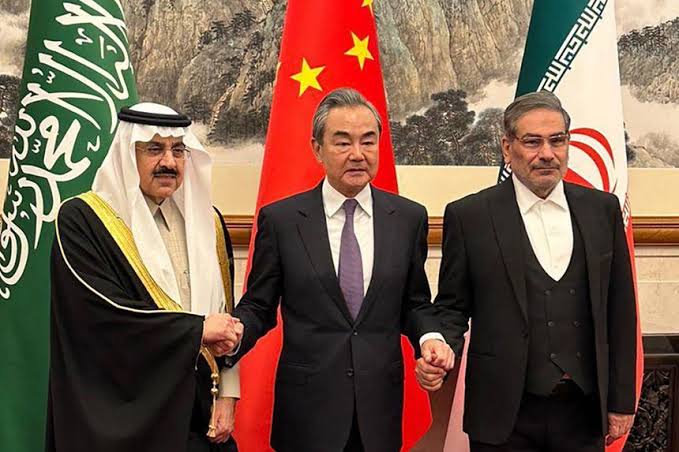
These countries which are arguably guided by principles of intellectual pragmatism and nonhegemonic aspirations have rightly refrained from signing onto resolutions that criticize Russia in UN forums and have suggested more binding and practical solutions in relation to respect to sovereignty, non-interference and the geopolitics of that region to mention but not limited to the Ukrainian question, actors that have sought indifferent means to the western led assertive, non-binding mechanisms to pressing issues in the international arena have been pooled to common ground leading to a birth of a much needed multipolar global order and formulation of new strategic partnerships and the most recent one being China that has been advocating for peace with the most recent proposal being Global Security Initiative (GSI) and the pivotal role Beijing played in ending several years of animosity between Tehran and Riyadh which Beijing blocked and saw two former arch enemies resuming diplomatic ties, a development international community welcomed as a step in bringing sustainable peace in the Gulf region.

Actors in the global south have increasingly sought for more binding resolutions as opposed to a more assertive global order, speaking of China, Beijing has mastered the art of seeking binding resolutions and softer means to power in the international system being good for the rest of the world because it limits contestation and the bleach of peace hence forth. Evidently, in the joint statement released by the Kingdom of Saudi Arabia, the Islamic Republic of Iran and the Peoples Republic of China on the 10th of March highlighting what Saudi Arabi described as “the noble initiative of His Excellency President Xi Jinping, President of the Peoples Republic of China,” to restore diplomatic relations between the two nations. The statement as well highlights the series of coordinal meetings in Beijing over seen by the Chinese government between the Iran and Saudi foreign envoys. Actually, Saudis’ statement mentions President Xi twice and 5 times China underscoring the role played by President and China as a country played in this deal.  It should be noted that the two nations were at the verge of war in the recent past as a result of the assertive notion that the prevailing global order ascertains. This is however challenged by Beijing’s soft power, a liberal tool that saw the normalization of diplomatic ties and a structure laid for the two nations to fully resume healthy diplomatic relations. This however, speaks volumes if subjected to the ends-based theory justified by the results if juxtaposed by the assertive means of the prevailing global order.

It should be noted that Beijing has heavily invested in soft power in the past decade notably evident through trade relations as a liberal approach to under guard the importance of peace and order in the international system., Beijing holds the biggest trade share in trade partnerships across the globe evidently being Europe’s biggest trade partner with trade worth 46.6 billion euros and the maximum being 55.5 billion euros as per September last year. China is also Africa’s biggest trade partner, with trade mounting to 282 billion dollars according to the Chinese customs authorities as per last year’s data. That said, in terms of trade, Beijing and Washington need each other for today, it is impossible for any single country to stand on its own and isolate China – the world’s second largest economy and arguably, the home of innovations. Therefore, with such a strong economic relation with actors in the international system, actors are bound to under guard their economic interests and underscoring the importance of peace limiting further contestation and a bleach of peace.

Another successful testament to Beijing’s soft power was on the 1st of July 1997 when Hongkong reverted back to China. It should be noted that in 1839, Britain invaded China and as a result, the Hong Kong occupation by the British. As a sparsely in habited island off the coast of southeast China. Beijing sought for more binding solutions to this problem evidently by the series of meetings undertaken to have Hongkong back under the main land China administration. Later in 1842, the treaty of Nanking was signed formally to end the war however British rule and occupation of the island was to continue for another 99years as agreed upon by the Chinese mainland authorities, this was however absolute evidence of the soft power tool that the Chinese authorities opted for and refrained from contestation which would result into further bleach of peace. Hong Kong at the time, with a bustling economy bigger than the Chinese mainland as a result of the British occupation was so important to Chinese mainland for economic cooperation and growth, therefore as a result, the Chinese authorities chose a more binding resolution with the British to safe guard their economic development and avoid the bleach of peace. This approach limited contestation till Hongkong was won back peacefully without military confrontation and notably with all the economic gains that the British had established in Hong Kong for the time.

Today, as Washington seems boxed in cold war mentality, power politics and block formation, Beijing is moving with their head high as an advocate of peace, and meaningful partnership which the world needs to attain sustainable peace and development which are key for if the world is to realize a community of shared future for mankind. Such efforts must be supported by all peace-loving citizens of the world.

Balongoofu Daniel is a Research Fellow with Sino-Uganda Research Centre.

Saudi-Iran Pact Brokered by China points to a New Era of Peace and Budding New Global Order

During Modi-Putin heart-to-heart talk held on the on the sidelines of the Shanghai Cooperation Organization’s Summit in Samarkand last year, Indian Prime Minister Narendra Modi expressed to the Russian president that ‘today’s era is not of war…’ This comment was made in an effort by India to broker peace between Russia and Ukraine. Sadly, war hawkers in some Western Capitals and the Media hysterically ran with the phrase and used it to reprimand Russia over Ukraine Crisis.

However, it is naïve to believe that this reaction came out of an honest aversion to war, rather than a grand opportunity to virtue signal against the wars that do not serve Washington’s interests. However, it didn’t take long before Washington’s embrace of a ‘war free era’ came to a screeching halt once China put the ‘not an era of war’ mantra into practice by brokering the Saudi-Iranian deal to restore diplomatic relations between the two countries. Both countries have had no diplomatic relations for seven years after Iranian protestors stormed the Saudi embassy in Teheran following the execution of a Shi’ite cleric in Saudi Arabia in 2016. The two rivals have since fought a proxy war in Yemen and brought a catastrophic humanitarian crisis in the region. Therefore, a pact promising peace between the two heavy weights in the middle east is a step in the right direction.

This agreement goes further than just the normalization of relations between the two, and also includes a drive towards enhancing regional and international peace and security. To any layman who is neither a political bureaucrat nor a media propagandist, the deal presents a historic milestone towards the stabilization of the middle East, a region that has suffered innumerable conflicts that have cost the lives of many innocents. Furthermore, the involvement of Iraq and the Sultanate of Oman is an indication of an inclusive peace. No peace is long lasting without the input of well-wishing neighbors. The two states also agreed to re-open their embassies within two months. Furthermore, Iran and Saudi Arabia will restore a 22-year-old security pact that requires them to cooperate on issues of terrorism, drug smuggling and money laundering. A renewal of the 1998 trade and technology deal was also agreed upon.

It is not helpful to jump the gun and declare that the middle east shall be all roses and no guns from now on. The road to a peaceful middle east is long and winding. Fortunately, China has decided to be the adult in the room and start walking the road to peace. The brokering of this deal should be a pointer to the significance of a multi-polar world and the urgent need for powerful countries to champion peace and put an end to the destructive war machine. China’s pursuit of win-win partnerships maybe scoffed at in several western capitals, but that means nothing if the strategy is yielding undeniable results.

Many in Washington hold the wrong view that the Saudi-Iran pact is a challenge to US hegemony because it was brokered by China. This mindset needs to drastically change among certain circles in Washington. A peace deal is a peace deal and should be praised. So far, it is a good sign that the European Union has welcomed the resumption of ties between the two countries. It is important that regional powers possess an independent foreign policy that serves the interests of their respective regions rather than have other countries dictate to them foreign policies that only bring destruction.

As Chinese President Xi Jinping observed while advocating for China’s proposal of Global Security Initiative (GSI), for the world to attain sustainable peace, “we need to work together to maintain peace and stability in the world. The Cold War mentality would only wreck the global peace framework, hegemonism and power politics would only endanger world peace, and bloc confrontation would only exacerbate security challenges in the 21st century.” Therefore, as President Xi emphasized, all efforts that focus at creating conducive environment for harmony must be supported by all peace-loving people of the world and firmly “oppose unilateralism, and say no to group politics and bloc confrontation; stay committed to taking the legitimate security concerns of all countries seriously, uphold the principle of indivisible security, and oppose the pursuit of one’s own security at the cost of others’ security; stay committed to peacefully resolving differences and disputes between countries through dialogue and consultation.”

While Saudi-Iran peace deal is a diplomatic victory for China in the gulf region, instead of painting it as anything else, all other countries should observe and embrace the correct order of conducting international relations. Perhaps, the next step should be to involve Israel in a daring middle eastern peace framework that would suspend hostilities in the region for the next 100 years. If any country can achieve this, it is China under the current CCP and president Xi Jinping’s objective of playing a ‘constructive role in appropriately handling hotspot issues in today’s world in accordance with the wishes of all countries’ and demonstrate China’s ‘responsibility as a major country.’ This very sentiment was expressed by China’s State Councilor and top diplomat Mr. Wang Yi who was deeply involved in the entire process.

African countries should keenly observe the events in the middle east and seek to learn from them. One of the major takeaways, is the fact that China is here to advance peace and cooperation within the framework of a multi-polar global order. The other lesson is that any hostilities between nations can be resolved diplomatically if the parties involved do not allow countries with harmful ulterior motives to take part in a peace-seeking process. Finally, African countries should make it clear to Washington, Paris, and London that the continent is not a playground for political games, Africa values genuine partnerships based on mutual respect and the continent’s embrace is large enough for both the west and China. Therefore, our cooperation with one bloc is not a rejection of the other but rather an indication of goodwill politics in a new multi-polar world order.

Mosh Israel is a Research Fellow with Development Watch Centre.

Unilateralism is a Knife to the Throat of Global Order

By Moshi Israel.

The international system, best represented by the body of the United Nations and enforced by its Charter is testament to how unity builds strong relationships. The international community runs on relationships among states and a relationship is by default based on mutual respect and cooperation. Therefore, any overtly individualistic and unilateral decisions by one partner only serve to antagonize the relationship because such random actions betray trust. It is obvious that not all countries are economically or socially on the same footing, but the UN charter emphasizes the equality of all sovereign states under international law.

The United States being the sole hegemon after the collapse of the Soviet Union has become the very embodiment of unilateralism in a world best served by a multipolar order. Most of the US’ unilateral actions stem from a short-term strategic desire for self-preservation as the only hegemon on the global stage, a status increasingly being challenged by countries like China. Unfortunately, the relentless desire by the US to be ‘the man’ has placed the entire global system in a choke hold with the United States holding a knife to its throat. The international system is trapped under a hostage situation and the US is not willing to relinquish her grip because that would result in surrendering a huge amount of leverage that leaves her weak and exposed. In other words, the US is also held hostage by its own ambitions which threatens global security and international law.

Realistically, every superpower has had the tendency to act unilaterally to achieve its own
interests. From the Roman empire up to the British empire and now the United States. What is unique about the US is the fact that there is an international system in place that is a direct
consequence of countries going rogue and acting solely on their interests regardless of how the pursuit thereof affects all others who must share the world with them. The current international system based on the equality and sovereignty of states exists as a lesson learned about the past and as an attempt to never again repeat the evils of the two World Wars. The United States has used its economic and military might to pursue its interests and punish perceived enemies. From the unilateral intervention in Iraq, against protests from the UN to Unilateral sanctions on Iran, Libya, Syria and unsanctioned regime changes in Africa and Latin America. There seems to be no end to the pursuit of American interests.

Charles W. Maynes, a lifelong American Diplomat identified four major reasons why there is
concern towards American Unilateralism. First is its lack of restraint. This is mainly because of the military and economic reach of the United States. The US rarely consults its allies or takes into account their interests when going on a unilateral rampage. A good example is the recent position Europe was placed in due to the US’ grudge with Russia in Ukraine. Nothing that is happening in Ukraine benefits any European nation, but the US has gone all in, making sure Russia is defeated in Ukraine no matter the cost to the continent.

Second reason Maynes identifies as a source of concern for US unilateralism is its growing
sweep. When the US acts against a country, everyone else is expected to fall in line. And the number of countries targeted have been increasing over the years. The sweeping sanctions over Iran, Cuba, Syria don’t end with them but also punish those that would collaborate with
sanctioned regimes. Today the US and allies have placed sanctions on Russia that have thrown global markets in turmoil. Additionally, Donald Trump’s personal trade war with China left collateral damage around the globe.

Another source of concern for US unilateralism is its intrusive character. Maynes employs the
example of Jimmy Carter, who after being elected president set a doctrine that no states should consider their human rights record an internal matter. This would be fine if it did not have the potential of being used as pretext to start meddling in other state’s internal affairs. Case in point is Libya, where on pretext of the Responsibility to Protect norm, the United States and NATO overthrew the Ghaddafi Regime. The consequences of this intervention are still being felt across Libya.

The final cause of concern regarding US unilateralism is it’s a historical thrust. This has to do
with the US’ indifference to history or historical context. As the US aims to achieve its interests no matter the cost, it spits on history in the long run. The US forgets or does not care that the current multipolar world exists as evidence that Unilateralism does not work. Eventually, someone will stand up. Germany and Japan as allies of the US should serve as examples of the consequences of pursuing one’s interests at the expense of everyone else’s.

It is not a coincidence that China, Russia, Iran are only getting closer because they see the United States as a common threat. Slowly, African nations are looking to the east and away from the west because they are tired of being bullied. How long before the allies in Europe decide that the US has gone too far? Will the United States keep listening to its most extreme policy pundits and bureaucrats such as former National Security Advisor to President Lyndon B. Johnson, Zbigniew Brzezinski? who in his book on geostrategy encouraged an imperialistic geostrategy whose purpose is “to prevent collusion and maintain security dependence among the vassals, to keep tributaries pliant and protected, and to keep the barbarians from coming together.” Or will the US change course and adapt a more cooperative foreign policy based on mutual respect and win-win partnership? As things stand, Washington is dancing to Brzezinski’s tune and the world wants to change the music.

The Writer is a Research Fellow at DWC

America’s Long-Arm Jurisdiction Threatens Sovereignty and Human Rights  

By Allawi Ssemanda


For decades, the U.S has on numerous occasions unilaterally announced sanctions targeting foreign companies involved in trade Washington deem against their interests through the so-called long-arm jurisdiction. Long-arm jurisdiction refers to jurisdiction over persons or entities domiciled or resident outside the territory of the sanctioning state.


It was unilaterally established after a case of International Shoe Co. v. State of Washington (1945) in the U.S Supreme Court. This means that, it is largely in interest of the U.S.  


This law is unacceptable in present global order. For example, on a simple basis that the defendant has what American authorities consider to be some “minimum contacts” with the state, under the long-arm jurisdiction, U.S state courts are allowed to exercise in personam jurisdiction in civil and commercial cases including where jurisdiction cannot be exercised. It is not a surprise that it has been largely used by the U.S to “punish” countries and companies’ world over the U.S considers to be impeding America’s interests.


Secondly, going by international laws, the exercise of a country’s jurisdiction over an extraterritorial person or entity generally requires that the person or entity or its conduct has a real and sufficient connection to that country. Yet the U.S. exercises long-arm jurisdiction on the basis of the “minimum contacts” rule, constantly lowering the threshold for application. The law is very unfair and gives American judicial system unchecked powers to go after foreign individuals and companies which we have no guarantee that it cannot be abused because of politics. For example, a mere use of the U.S dollar for financial services or using U.S mail services is considered to constitute the so-called “minimum contacts.


Indeed, during Trump Administration, the U.S used long-arm jurisdiction to unfairly target China with endless unfair tariffs against Chinese products, an act some analysists argue was meant to promote unfair competition in favour of American companies.


A study by the Cato Institute, an American libertarian think tank found that the U.S used long-arm jurisdiction in violations of World Trade Organisation (WTO) and the U.S laws as Executive ignored Congress role. The study further revealed that while Chinese firms were most affected, even American’s citizens were affected as China responded to Trump administrations trade tariffs. The study entitled “Unfair Trade or Unfair Protection? The Evolution and Abuse of Section 301” argues that section 301 of long-arm jurisdiction “grants the executive branch far too much discretion in defining an actionable foreign trade practice” which may be exploited for political reasons – it allows American President to safeguard America’s trade interests by remedying any act, policy, or practice of a foreign country [that] is unreasonable or discriminatory and burdens or restricts United States commerce.” Important to note is that the same law defines “unreasonable” in very ambiguous manner simply calling it “otherwise unfair and inequitable.


All the above puts the U.S at advantage over other countries, potentially making the rest inevitable victims should American politician(s) feel that a foreign company is putting a stiff competition against American(s), such foreign companies or individuals can easily be sanctioned by America and tactfully kicked out of business.


As Alan Sykes, a Law professor at Stanford University argued, the choice of words used in long-arm jurisdiction “Section 301 can encompass virtually any foreign government practice unilaterally deemed objectionable by the U.S.” This has huge potential to facilitate political opportunism and harmful outcomes where the U.S can freely target other competing countries.


More worrying, the U.S keeps making the use of its unfair long-arm jurisdiction purposefully wide. It has developed the so-called “effects doctrine,” meaning that jurisdiction may be exercised whenever an act occurring abroad produces “effects” in the U.S regardless of whether the actor has U.S citizenship or residency, and regardless of whether the act complies with the law of the place where it occurred!

Because politics makes players selfish, it is perhaps the right time countries globally call on the U.S to abandon laws that antagonise global trade, order and peaceful co-existence as well as free and fair competition. This is because, whether you’re U.S’ adversary or ally, individual or a foreign company, provided you’re not American or fully serving their interests, we are all candidates of this unchecked long-arm jurisdiction.


Today, the U.S has come up with different legislations which are meant to advance the long-arm jurisdiction which has potential to harm interest of foreign countries. Other legislations that have been made to further strengthen long-arm jurisdiction among others include Trading with the Enemy Act, International Emergency Economic Powers Act, and Countering America’s Adversaries Through Sanctions Act.


Despite favouring the U.S, such legislations also in the long run hurt America(ns) and have potential to disrupt global chain supply and international trade. For example, despite Trump Administration targeting China, actions of Section 301 strained relations between Washington and the European Union as Trump administration twice targeted the EU using the same section.

European Union has been opposing Section 301 arguing it is inconsistent with the rules of the WTO which prompted EU to challenge it at the WTO which ruled in EU’s favour.  


While tensions as a result of U.S’ tariffs which EU called illegal ended after the Biden administration negotiated a mutual cease-fire, this did not result into total termination of the offending subsidy programs in the Airbus​Boeing case. Whilst the Biden argues that it is Trump administration that misused section 301 of long-arm jurisdiction, Biden administration which came promising to embrace globalism seems reluctant to move away from Trump-era section 301 and appears to be in agreement with the Trump era’s America first with reports that his administration is now considering a new Section 301 case against China.  Indeed, recent reports consistently shows U.S courting Japan and the Netherlands to restrict China from accessing semiconductor manufacturing equipment. 


In conclusion, as the famous Martin Niemöller would warn in his “first they came for Communists and I did not speak out because I was not a Communist.,” those who believe in fairness should stand up against America’s long-arm jurisdiction now before it is too late to have anyone to speak for us. The jurisdiction is a thing of past and is akin to colonialism. The practice is not only a major way of violating fundamental rights but has in many instances resulted into suffering and death of people. For example, as a result of the so-called long-arm jurisdiction, the U.S imposed sanctions on countries like Afghanistan, Iran, Syria and Yemen among others. U.S based Brooking Institute estimated that as a result of American sanctions, affected countries lost abilities to effectively contain COVID-19 pandemic. In Iran alone, over13,000 people died from the COVID-19 pandemic which was worsened by U.S sanctions.  

Allawi Ssemanda, PhD is a Senior Research Fellow at the Development Watch Centre.

Heart-to-heart Cooperation: Chinese Medical Team Contribution Saving Lives

An old Chinese adage says; “if you want happiness for an hour, take a nap. If you want happiness for a day, go fishing. If you want happiness for a year, inherit a fortune. If you want happiness for a life time, “help somebody.” Like the old English saying; “a friend in need is a friend indeed,” if put in context of China-Uganda relations, this narrative is a perfect match and best describes the relationship between two sides. It pictures a cooperation that supports mutual benefit and brotherhood on both sides.

For the last plus sixty years, the relationship between China and Uganda and generally, China-Africa relations has been growing from strength to strength. From social to economic and political context, China’s contribution in Uganda and generally Africa is spread like an open book and almost all citizens have either benefited individually or their relatives have gained from Chinese contribution which is often done through cooperate social responsibilities.  Also, important to note is that such contribution is also extended to African countries through bilateral relations between the two countries. One of such is China’s medical diplomacy.

In Uganda for example, the Naguru-China Uganda friendship hospital is a face of China-Uganda medical cooperation. The hospital which was constructed by China and gifted to Uganda has been at the center of deepening medical diplomacy between the two countries and arguably, thousands of Ugandans have benefited from Chinese services at the Hospital. Indeed, since 1983, China has been religiously supporting Uganda’s medical sector-annually, sending a team of medical experts in the country to work and share their experiences with their Ugandan counterparts while extending services to a number of Ugandans.

Among other services offered by Chinese medical team include minor and major surgeries. For example, on the January 31st, led by Dr. Zhang Hui, a Chinese surgeon at Naguru-China Uganda friendship hospital with colleagues conducted a successful surgery that lasted over 3 hours to remove an enlarged thyroid gland from a 38-year-old woman who was diagnosed with hyperthyroidism 15 years ago. Of course, there are other hundreds of Ugandans that have benefited from Chinese medical teams in Uganda since they started their medical exportation to Uganda in 1983.

Currently, the team of Chinese medical experts at China-Uganda friendship hospital Naguru is comprised of 22 members offering services among others, gastroenterology, thyroid and breast surgery, otolaryngology, urology, infectious diseases, and traditional Chinese medicine and acupuncture, offering survives daily to over 130 outpatients weekly.

One can argue that almost in the entire global south, almost all countries have benefited from China’s medical diplomacy. From Americas to Middle East and the wider Asia and then to African, people continue to get specialised medical services as a result of Beijing’s good cooperation in medical sector.

As developed countries practiced vaccine nationalism which resulted into hoarding of much needed vaccines at the height of Covid-19 pandemic, China stood taller and shoulder to shoulder working with developing countries especially in Africa to ensure many people got vaccinated against covid-19 by donating billions of Covid-19 vaccine doses to African countries. This was in addition to sharing its technology and jointly producing Covid-19 vaccines with African countries such as Egypt, Algeria and Morocco.

Indeed, at the early stage of the outbreak of the pandemic, Chinese president Xi Jinping warned against vaccine nationalism and proposed that COVID-19 vaccines should be made a global public good and benefit, in particular, developing countries with low or no capacity to produce own vaccines. Consequently, China provided over over 2 billion doses of vaccines to more than 120 countries and international organisations, of which over a billion were provided to Africa.

This is on top of China funding the construction of the new headquarters of the Africa Centre for Disease Control and Prevention (Africa CDC) which Beijing argued will help the continent in response to the Covid-19 pandemic and also help the continent better coordinate its approach to future pandemics. If critically analysed, a conclusion can be made that Beijing’s relations with African capitals is in all ways anchored on concrete and not just high-sounding empty words and hence, a confirmation of President Xi’s vision of building a community of shared future for mankind.

Allawi Ssemanda is a research fellow at the Development Watch Centre.


China-Africa Relations Bridging the Gap in African Countries’ Struggle for Educational Transformation

By Ssemanda Abdurahim and Charles Muwonge Chuck.

Over the years, the government of the People’s Republic of China has proved to be Africa’s
reliable development partner through supporting African countries strategic sectors. One of many key areas to note which China has greatly and religiously supported is human capacity building – a sector that is very instrumental in development of any nation. The education support China offers to African countries ranges university degree scholarships, both short and long term for professional and government financials as well as funding research and innovation programs. China has also been providing other material assistance such as helping in construction of schools and institutions as well as equipping others with computers and books.

In Uganda for example, by the end of 2021, China had provided over 5,000 short-term training opportunities for Ugandan talents, covering wide range of fields; among others agriculture, medical care, public administration, computer science and infrastructure.

If critically analysed, Chinese universities have gained more ground in the world rankings and as a result, thousands of African students are now looking at China for have attracted more African students.

Through the Forum on China-Africa Cooperation (FOCAC), China focused on supporting
African countries through capacity building by supporting talented Africans to gain expertise indifferent sectors. Indeed since 2009, China has been announcing scholarships for African
scholars during FOCAC’s annual summits. Specifically, just after the 2015 FOCAC summit,
China announced that Beijing would offer at least 30,000 scholarships annually to African
students. This has seen an increase of African students in students in Chinese Universities thanks to Chinese government scholarships that today, African students account for over 16% of China’s international students. This makes China the second country with the largest number of African students in higher institutions of learning replacing the United States of America and the United Kingdom that used to be African students’ main destination.

Similarly, China has been on the forefront of backing up Uganda’s need to transform her
education even before Uganda government’s implementation of the new curriculum. For
example, after the 2018 Beijing Summit of the Forum on China-Africa Cooperation (FOCAC)
under the theme “China-and Africa: Toward an Even Stronger Community with a Shared Future through Win-Win Cooperation,” China quickly reacted in Uganda by setting up Uganda-Luban Workshop which was launched at Sino-Uganda Mbale industrial park. The multi-vocational skills training facility focused on offering courses in mechatronics innovation and intelligent application technology, steel making technology, refining technology, vocational skills trainings in electrical control among others. Indisputably, the kinds of skills that the workshop offered are a proper target for the new curriculum which was implemented by the government of Uganda. This multi-vocational skills facility was established as a result of President Xi Jinping’s promise during his opening remarks at the summit where he proposed the establishment of eight initiatives including the establishment of 10 Luban workshops in Africa to provide vocational skills training to the youth in Africa. Thanks to the Chinese Government that Uganda was one of the states thought of and the facility was a blessing.

Also, Chinese firms and enterprises are equally supporting African governments in strengthen
and improving education sector through offering grants, cooperation and partnerships. Under
such arrangements, Chinese firms continue to offer support to equip African schools with
required support to ensure that scholars in these schools acquire necessary skills for today’s
markets. In 2017 for example, China’s telecom giant Huawei provided laptops and internet
connection to schools in Kamwenge district. In May last year, Uganda Revenue Authority in
partnership with Huawei Technologies Uganda donated several computers to Nyarilo Secondary School in Koboko district. Since then, several other donations of this kind were registered in Tororo Girls School among other regions.

Relatedly, like many other Chinese firms, China National Offshore Oil Cooperation (CNOOC)
has been offering Ugandan scholars with scholarships in strategic fields. For example,
beneficiaries like Lamech Mbangaye and Ritah Nasaazi who graduated from China University of Petroleum in Shangdong Province as petroleum engineers are now employed by CNOOC at
Kingfisher oil fields and the two are among few Ugandan engineers at the core of the country’s
oil drilling activities. This manifests how China is mutually helping Uganda’s education sector to advance by training its scholars with efficient skills as the country works hard to move to attain middle income status.

If critically analyzed, Africa-China cooperation in education sector is strategic and mutually
beneficial. Partly, this is because, African countries’ capacities to give tertiary and higher
education to their energetic and young population are constrained. According to United Nations Educational, Scientific and Cultural Organization (UNESCO), Sub-Saharan Africa is one of the largest regions in the world with a small tertiary education enrollment ratio which stands at 9.4%. This is far below the global average of 38%. If analyzed, this means that with its 16% of the global population, Africa contributes just 1% of global research. In all ways, such
undersupply of tertiary education impedes the continent’s prospects of achieving one of the
United Nations Sustainable Development Goals whose major goal is providing universal,
inclusive and higher quality tertiary education.

That said, China’s education support to African countries is timely and will go handy in aiding
Africa as a continent to achieve her scientific research capabilities which is also key among the
goals of African Union’s Agenda 2063. Growing and improving human capital will in accelerating African countries development take off. Whereas this important support is often
viewed in context of competition between China and the United States of America for what
Sino-Africa skepticists call China’s growing global influence, China’s education support is much needed by African countries to improve in skills development of their citizens. Also, African students making China their top destination for education is not a coincidence. Despite the U.S having a million plus number of international students in their universities if compared to China’s over 492,000 international students, over the years, African students opting for China than the U.S have been on rise. If critically analysed, the trend can be attributed to facts such as; China’s progress in areas of technology and poverty eradication makes their education more attractive since it seems to offer practical and fast solutions. Also, unlike China, the U.S and European countries often make unfavourable demands such as requirements for visa applications and proof of large sums of money for prospective African students to join their universities.

When it comes to language issue, one can argue that the U.S and largely other European
countries have an advantage over Chinese universities when it comes to attracting students from Africa, western countries must stop looking at African students applying for school visas as destitutes running away from their motherlands by making them go through complicated
requirements to obtain visas. They should borrow a leaf from China’s side and make education easy for African prospective scholars to obtain visas. Like China, this should not be
discriminative whether the applicant has sponsorship or otherwise. Also, the West should not
see China’s support to African educational institutions as part of the so-called geopolitical
competition between China and Western countries but see it as it is; this assistance is much
needed for if equipped with necessary skills and technical knowledge, Africa’s young population will immensely accelerate Africa’s economic and development take off.

Critics of China-Africa relations should therefore know that for over 60 years, China and almost all African countries have forged unbreakable fraternity through our struggle against imperialism and colonialism, and embarked on a distinct path of cooperation in journey toward development and revitalisation. Together, the two sides continue to write a splendid chapter of mutual assistance amid complex changes, and set a good example for building an even stronger China- Africa community of shared future in the new era.

Ssemanda Abdurahim is a junior research fellow at Sino-Uganda Research Centre; Charles Muwonge Chuck is a Junior Research Fellow at Isimba Community Hub.

China-Uganda Relations Cooperation: A Michael Jordan Philosophy– we all win

By Ssemanda Abdurahim

Talking of China-Uganda diplomatic relations which were established way back in 1962, and now almost 63 years, you can practically realise that they have been strongly operating on a Michael Jordan principle. The ranked “greatest basketball player of all time” who played for fifteen seasons in the National Basketball Association (NBA), winning six NBA championships with the Chicago Bulls, Michael Jordan once remarked that “there is no ‘I’ in team but there is in win.” Similarly, China-Uganda diplomatic relations have always had this Jordan principle as their wheel of operation. Critically analysing this, China and Uganda work together and mutually as a team without any aspect of individualism other than winning together as a team. Put differently, as Chinese President Xi Jinping has repeatedly observed, China-Africa cooperation is founded on principle of mutual benefit.

For instance, when the construction of Entebbe Express Highway which was constructed with funds from China’s Exim Bank of China, the ministry of works and transport in Uganda clearly stated that the main project’s objective was to provide efficient mass-transit route between the vital cities of Kampala and Entebbe in the Greater Kampala Metropolitan Area (GKMA) and decongest Kampala. Upon its completion, the 49.56km project sparked off a manifestation of 2,206,558 users between January and April 2022 as registered by Uganda National Roads Authority (UNRA). While one may argue that it was not a grant but a loan, still, the completion of this mega project which has improved in mobility of goods and services plus other multiplier effects that comes with easiness in mobility of goods and services in multiple ways makes the project a double win to the country and to us as citizens.

Additionally, UNRA collected a total of 13 billion Uganda shillings from tolling the Kampala expressway between January 8, 2022 and May 24, 2022. In that same year, UNRA’s communications officer indicated that the average daily 20,000 passages had surpassed the projected daily average of 13,000 passages. These included the incoming and outgoing passengers, taxi operators, visitors and Entebbe residents. With this manifestation of the project’s great usage by Ugandans, the immediate questions in one’s mind include; is China’s development assistance needed in African countries’ infrastructure projects? do projects developed with Chinese assistance meet and answer needs of users? Are such projects able to sustain themselves? In contexts of Uganda’s Entebbe Express Highway, the answer to these questions is a resounding YES. However, if all such questions are skipped, there is no way we are never going to be vulnerable to negative framing and narratives which are not backed but often brands China’s development assistance especially infrastructure as debt-trap. We will not have the required immunity to realise that China has efficiently played its part.

It should also be remembered that the Entebbe expressway is not the only project that has been funded by the People’s Republic of China in Uganda. Between the years 2009 and 2012, a one hundred beds capacity hospital, Naguru was built at an approximate cost of US$8 million by the Government of China as a gift to Uganda. Its other name, China-Uganda Friendship Hospital stands as an emblem to reflect the existence of good diplomatic ties between the two countries. On continental level, China has funded similar projects in countries such as South Sudan, Sierra Leone Zimbabwe among many others.

However, China has not stopped at only establishing such projects but also severally provides medical assistance by sending medical experts to different African countries. To be specific in Uganda, China has been sending medical teams to Uganda since 1983 to share knowledge and skills with Ugandan counterparts apart and also treating Ugandan patients. Relatedly, China has also been a key and reliable partner to African countries while battling epidemic sand pandemics. A case in point is during Ebola outbreak in West Africa which ended in 2016. In Uganda, China’s contribution in battling Ebola and Covid-19 pandemic are still fresh among many.

It is therefore paramount that the critics of China-Africa cooperation and their disciples first pay attention to questions like; are China funded projects in Africa helping African countries to realise their development aspirations? Are such projects helping citizens? Otherwise, China should be seen as a player who promises his coach that he will score a goal for his club and indeed he scores. Whether the player’s club loses or not, this should not be a blame on him. For he promised and fulfilled . The rest should be examined by trying to understand what made the team lose yet it had a goal other than why did the player fail to make his team win. If this kind of analysis is paid attention to, then everyone will realise how China-Africa diplomatic relations operate on a Michael Jordan principle – the min-win cooperation.

Ssemanda Abdurahim is a junior research fellow at Sino-Uganda Research Centre.

Chinese Enterprises Social Responsibility a Sign of stronger China-Uganda Relations

By Moshi Israel

December, 20th 2022 is the day Chinese enterprises gave an account of what they have done to better the general society of Uganda. The Issuance of the Social Responsibility Report of Chinese enterprises in Uganda gives a chance for Ugandans to judge the impact of these companies on their lives across the entire pearl of Africa. If critically assessed, the report issued yesterday 20th at the Kampala Serena Hotel did not disappoint; Chinese enterprises have a high score on the Social Responsibility test in Uganda.

In his speech, The Ambassador of China to Uganda, H.E Zhang Lizhong noted the importance of president Xi Jinping’s ‘Nine Programs’ for future China-Africa Cooperation with an emphasis on the ‘A Hundred Enterprises in a Thousand Villages’ initiative aimed at reducing poverty and benefiting the common people. The Ambassador, noted “while carrying out practical cooperation projects in Uganda, Chinese enterprises have always attached great importance to social responsibility work. They have carried out a series of small but beautiful social responsibility projects that benefit local people in the areas of medical and healthcare, job creation, education empowerment and environmental protection.” It goes without saying that the Ambassador was spot on in his assessment.

Indeed, the guest of honor at the event Her Excellency the Vice president of the Republic of Uganda, Jessica Rose Epel Alupo commended Chinese enterprises for their assistance to Uganda in various sectors and especially with the Covid-19 pandemic. She reiterated the importance of maintaining strong ties between the two friendly countries. Further, franked by General Edward Kutumba Wamala the minister of Works and Transport, the Vice President also praised the progress made towards achieving direct flights from Entebbe to mainland China. On a critical but hopeful note, she requested China to work with Uganda to reduce the trade imbalance between the two countries and thanked the Chinese government for responding positively to reducing tariff barriers to a number of Ugandan exports.

The Social Responsibility Report comes as a bonus ingredient in the 60 years of China-Uganda mutual cooperation. It is a testament to how Chinese enterprises have impacted Ugandan society economically, environmentally, ethically and through philanthropic endeavors. Social Responsibility measures do not profit the enterprises themselves but can change the lives of locals immensely.

SINOCHAM has undertaken massive Corporate Social Responsibility (CSR) measures within the struggling health sector of Uganda by rendering medical services in areas they operate in. This was especially highlighted during the covid-19 pandemic as all SINOCHAM member companies joined hands to provide relief in form of cash, face masks, sanitizers and many other anti-covid 19 materials. The companies supplemented the support provided by the government of China to the government of Uganda. Districts like Arua and Bukedea got PPEs and food relief items respectively. Furthermore, medical teams from Yunnan have come to Uganda and brought with them Chinese advanced medical technology and continuously assist their Ugandan colleagues in improving their medical skills. Since 1983, China has sent 209 medical experts in 22 batches to Uganda and provided free treatment to millions of Ugandans. This is practical proof of what the Ambassador, H.E Zhang Lizhong referred to in his speech that together Uganda and China have “written a splendid chapter of mutual assistance.”

Many Ugandans recognize that unemployment is a key issue in the country especially among the youths. Too many young people are educated and have no work. Chinese companies are looking to play a big role in the employment arena by providing Ugandans with numerous job opportunities in a variety of sectors. H.E the Chinese Ambassador to Uganda noted in his speech at the ceremony that “CNOOC Uganda alone will help to create more than 20,000 jobs, another 35,000 job opportunities are on the way in Liao Shen Industrial Park and China-Uganda Mbale Industrial Park…”

For 36 years, the government of China has embarked on a journey to support Ugandan education through scholarships. Currently, over 1,000 Ugandans have been beneficiaries of these scholarships in areas of Science, Technology, Engineering and Mathematics (STEM). Chinese enterprises have played a major role in issuing scholarships to many Ugandans whose lives have been dramatically changed for the best. The China Communications Construction Company (CCCC), CNOOC Uganda Limited and Huawei Technologies have all impacted the Ugandan education sector by giving scholarships to many talented Ugandans. For example, through the International Scholarship Scheme, CNOOC facilitated students to undertake undergraduate and master’s studies in geosciences in Chinese universities. Eight Ugandans have so far benefited from this scheme. Huawei on the other hand, through its Seeds for the Future Program and the Future Internship Program has helped Ugandans to acquire hands-on training in areas of application and software, transmission, datacom, core network, wireless, radio frequency and device business. Chinese companies such as the CWE, CCCC, China Railway 18th Group and Synohydro have also helped to construct and renovate schools in Kamuli district, Busia and in Karuma. Chinese companies have also played a pivotal role in supporting Ugandan sports, providing safe drinking water, building boreholes, food relief and housing projects, protecting the environment by relying on innovative technology to protect mother nature.

When it comes to the Corporate Social Responsibility scale, Chinese enterprises weigh quite well according to facts on ground. There is still more room for improvement as Uganda faces new challenges every day. CSR is a good indicator of how far China-Uganda relations have come and how far they still can go. The Chinese enterprises in Uganda Social responsibility report is proof of the win-win China-Uganda partnership.

The Writer is a Senior Research Fellow at DWC

China’s development model: Lessons for Uganda and Africa

By Allawi Ssemanda.

Dear Editor, during a symposium on the implication of the 20th National Congress of the Communist Party of China (CPC) under the theme, “Forge Ahead on the New Journey and Work Together for A New Era,” Chinese ambassador to Uganda Zhang Lizhong introduced Chinese path to development to Ugandan think tanks and journalists describing it as the major engine that saw China transform from a poor developing country to become the world’s second largest economy.  Ambassador Lizhong explained that as a developing country, China decided to not to move with the so-called common model of modernisation and embraced path of modernisation with Chinese characteristics.

Following a Chinese development path with Chinese characteristics, China ‘has united and led the whole country, and the people in solving many challenging problems that were long on the agenda but never resolved, making many achievements that concerned the nation’s future. As we completed the building of a moderately prosperous society in all respects and achieved the first centenary Goal, China’s economic strength, scientific and technological strength, comprehensive national strength and international influence continued to grow. In 2021, China’s economic aggregate reached 114.4 trillion-yuan, accounting for more than 18 percent of the global economy,’ ambassador Lizhong emphasised.

With glaring achievements China has registered which includes being the first country globally to eliminate absolute poverty at a record time, arguably, such a path is way to go for developing countries like Uganda which is still grappling with poverty and key social service delivery.

Following Chinese path to modernisation with Chinese characteristics, China under leadership of CPC has been able to “accomplished the arduous task of eliminating extreme poverty. We have built the world’s largest education system, social security system and medical system, Chinese people’s lives have improved in all respects,” stressed ambassador Lizhong.

Upon that background and recalling the failed structural adjustment programs (SAPs) which International Monetary Fund (IMF) imposed on Africa, it looks clear that China’s path to development if considered may be the magic bullet for African countries to attain development and modernisation, more importantly, modernisation with “African characteristics”.

But how does China’s path to modernisation look like? What are some of its characteristics? Does it really suit African countries needs or, is it best model for African countries?

In his report to CPC’s 20th national assembly, Sectary General Xi Jinping highlighted what he described as systematic exposition of the unique features and essential requirements of China’s modernisation:

Firstly, the Chinese path is the modernisation of a huge population of the more than 1.4 billion people in china; Secondly, China’s path is the modernisation of common prosperity for all. Explaining that the immutable goal of China’s modernisation drive is to meet the people’s aspirations for a better life, Beijing stresses that China “will endeavour to maintain and promote social fairness and justice, bring prosperity to all, and prevent polarisation.” China argues that achieving common prosperity is a defining feature of socialism with Chinese characteristics and involves a long historical process; thirdly, China’s emphasises that “while continuing to consolidate the material foundation for modernisation and improve the material conditions for people’s wellbeing, we will strive to develop advanced socialist culture, foster strong ideals and convictions, and carry forward China’s cultural heritage.”

The other key characteristics of China’s development path are; the modernisation of harmony between humanity and nature. Here, China commitment that its modernisation “lies in building a beautiful homeland for man and nature to live in harmony.” Lastly, China’s path to development stresses modernisation of peaceful development. Ambassador Lizhong argues thatChinese path to modernisation emphasises mutual benefit and win-win cooperation with other countries including Uganda, promotes the building of a community with a shared future for mankind, and strives to contribute to peace and development of mankind. China will not tread the old path of war, colonisation, and plunder taken by some countries. That brutal and blood-stained path of enrichment at the expense of others caused great suffering for the people of developing countries.”

From the above, we learn that in pursuit for her development, China put her national interests first; focused on internal political concerns; and maintained firm strategic resolve with determination to never yield to coercive power as the country sought its development.

Also, from China’s path to modernisation, Uganda and Africa in general can learn that you don’t loose your identity in order to modernise. China blended modernisation to its traditions. For example, despite modernisation the country is going through, to date, family hierarchy in China is respected. It is the same rational spread throughout other institutions in context of respect.

Put differently, Chinese development path has Chinese characteristics that “to developed as a country and people they have to drink from Chinese traditions in order to tap modernity. Not to just take modernity for its sake which would leave their country at risk of losing their identity through socialisation.

For Uganda and Africa in general, in Chinese development model we have an opportunity to learn from them but we must ask questions like; Yes, we need to be modern but what is it that it speaks to our minds and our hearts in this modernisation? What is in that is Ugandan/African? This way, Uganda and African can study from Chinese model and pick lessons from what can work for Uganda or Africa to develop.

Good enough is that China does not force other countries to take what they do not believe in. At the Embassy’s symposium, ambassador Lizhong explained that “China’s modernisation goes beyond copying others” stressing that “it is an independent path to development. For modernisation, there does not exist a single definitive model. Copying mechanically is not the solution. China’s modernisation is socialist modernisation pursed under the leadership of the CPC. It has broken down the stereotyped thinking of equating to the modernisation with Westernisation, proving irrefutably that developing countries are capable of independently treading the path to modernisation that works.”

Personally, if asked, western or Chinese modernisation? I definitely would say as Africans we can choose to learn from Chinese model and we blend it with African characteristics.

Allawi Ssemanda is a senior research fellow at the Development Watch Centre.