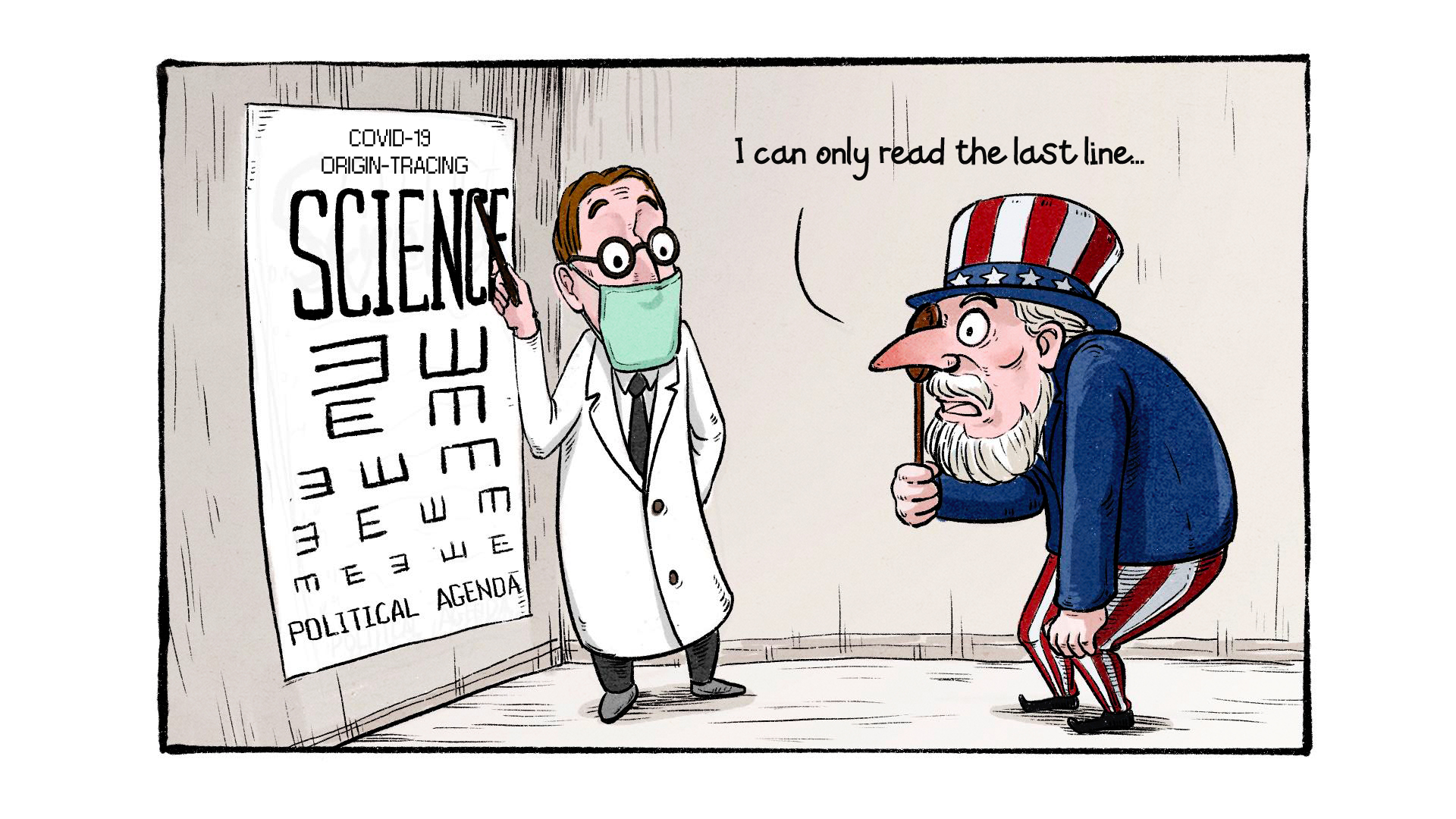
Build Back Better World v BRI: Can Africa Benefit From Development Finance Competition?

By Nnanda Kizito Sseruwagi

There is a competition. A spending competition. The spending is in trillion dollars. Developing countries are participants. Participating from an interesting position. Participating as recipients. Imagine that. Being at the receiving end of a spending competition!

Whereas both foreign aid and development finance are projects that pursue development objectives in developing countries, we should distinguish them. Unlike foreign aid, development finance comprises an extensive range of financial instruments and interventions intended to support long-term economic growth and infrastructure development in underdeveloped countries.

Foreign aid often tends to address immediate humanitarian needs, support social welfare programs and alleviate poverty in poor countries. It has also suffered profound criticism as deleterious and counterproductive to the development of African countries.

The biggest foreign aid providers are historically Western countries including the countries under the European Union, the United States, Germany, United Kingdom, France, Sweden, Netherlands, Italy, Canada and Norway. Japan is also a major foreign aid giver. China is noticeably absent from this list. It has unwaveringly pursued a unique strategy borne out of its shared historical experience with Africa. This was partly the spirit in which the Belt and Road Initiative (BRI) was initiated.

While the G7 countries launched the Build Back Better World (B3W) in 2021, they were reactively ushering in an alternative to China’s BRI. It had been almost a decade earlier since China had recognised the primacy of infrastructure development in low- and middle-income countries. Observed, that it could also have been a quiet concession that foreign aid was not as impactful as it had been magnified to be.

The B3W initiative focuses on addressing infrastructure needs in developing countries. It is planned that by 2035, this initiative will have contributed about $40 trillion worth of infrastructure in recipient countries.

By contrast, the cumulative BRI engagement in the 147 countries undertaking the project since its inauguration in 2013 is $962 billion. Out of that, about $573 billion was invested in construction contracts while $389 billion went into non-financial investments. It is also estimated that BRI will likely increase the world GDP by $7.1 trillion per annum by 2040. Its benefits are also expected to be “widespread” because of the efficiency likely to be experienced in world trade as a result of improved infrastructures across the world.

But here is the catch. Whereas both initiatives sound ambitious, a close examination of their current contribution is very revealing. Out of the gigantic promise of $40 trillion, the B3W has so far yielded a paltry $6 million in global infrastructure construction. Whereas China’s BRI did not promise trillions of funds to China’s friends and allies, it has already sunk almost a trillion dollars in brick-and-mortar infrastructure projects around the world.

Let’s turn the focus to Africa. The majority of the world’s poorest and developing countries are spread across this continent. We are the central focus of this development finance competition between the West and China. If we need to choose a reliable partner, given the above delineation of how the B3W and BRI promise versus how they have performed, where should we fall?

As we seek to unlock our development potential by tapping into financial assistance to jumpstart our industrialisation, let us not lose sight of the dynamics involved by the two major development finance funders, China and the United States.

The BRI is already directly seen to be bridging the gap of Africa’s infrastructure deficit which is reported to be about $130-170 billion annually. We need all the financing we can find to close this gap since our development needs are many.

This is where the B3W initiative would come in. It presents us with an opportunity to diversify our sources of development finance. The problem only arises from the signature conditions that come with Western funding. The well-meaning, well-sounding terms that espouse democratic governance values and transparency as prerequisites for qualifying to receive this finance. A lot has been written and said about the mismatch between the focus on these values as opposed to the impact which that focus makes on the ground. Unless the West is capable of learning from the futility of its conditional foreign aid to Africa and is willing to risk a blind investment with the understanding that different societies evolve with different norms and habits which may change as they achieve economic development, insisting on these preconditions will yield nought.

As Africa, we need to leverage both the BRI and the B3W initiatives by aligning the investment that comes from them with our national development priorities. If we are not clear on those priorities, it doesn’t matter how much money will be thrown at us, it won’t impact our people. But the choice is in our hands.

The Writer is a senior research fellow at the Development Watch Centre.


Africa Must Leverage China Cooperation and Elevate or Stay the Arena for Great Power Rivalries

Africa Must Leverage China Cooperation and Elevate or Stay the Arena for Great Power Rivalries

By George Musiime

Today, we live in a very challenging world, a world desperately in need of sound global moral-leadership.  While this might not happen today, Africa is not lacking in potential. The African continent could actually provide this global-leadership, if only it could capitalise on its wealth of God given resources, brilliant citizenry, and development partnerships in its pursuits. However, we cannot provide global leadership, lest we fix our own leadership crises first. The concern of this essay however isn’t about global moral-leadership but rather to adumbrate on the possibility that Africa could actually overcome the challenges and stereotypes it faces today to achieve what all the other civilisation throughout history have been able to accomplish. To put this into perspective, let us take a bird’s eye view of human civilisation through time.

There was a time Egyptians were at the helm of global civilisation, creating engineering marvels such as the pyramids, with worlds flocking to the region to experience and learn from the groundbreaking innovations that were prevalent in the region at the time. Then, there came the Arabs in Baghdad with their scientific discoveries and achievements in Mathematics, philosophy, physics, and astronomy, all of which laid the groundwork for many of the scientific breakthroughs that would follow.  However, human civilisation did not rest in Baghdad or we would still be thousands of years away from where we are today. After the golden age of the Arabs, there came the Europeans and building on the previous knowledge and achievements, they gave us the industrial revolution.  This gave the Europeans so much power that they literally reached a point of sitting around a table in Europe with a map and began to share the rest of the world amongst them, and what an egotistical thing that was! It is no wonder that this would later contribute to the slump in their pace up the hill of civilisation but does the story end here? Of course not, because at the beginning of the 20th century, the United States was mostly an Agricultural country just like Africa is today. It was nothing like France or Britain, yet through deliberately walking the Science and Technology path, it was able to elevate to a point where it has been able to run the world for the past century.

Moreover, following the Second World War and decolonisation in the global south, we have witnessed countries like China take enormous strides that Africa cannot any more, doubt the possibility of economic progress and transformation.

In his famous book “The Evolution of Civilisations” the American Historian Carrol Quigley posits that civilisation is a cyclical phenomenon which might give a reasonable explanation to the earlier passing on of the torch of civilisation from one civilisation to another throughout history. Nonetheless, regardless of some scholars faulting Quigley’s analysis as being too simplistic in as far as explaining the rise and fall of civilisations, he puts forth two points that will be the focus of this essay among the forces behind the rise and fall of civilisations. This essay will discuss these two points in relation to China-Africa relations i.e. the role of what Quigley terms as “the Instrumental Elite,” on one hand and Science and Technology on the other, in the rise of civilisations.

The instrumental Elite are a small group of people wielding enormous influence and having the power to steer the course of a society. Despite usually being a small group, they hold enough power to steer societies to progress, stagnation or destruction depending on their motives, intentions and consciousness.  Once again, one can argue that an instrumental elite with a clear vision is what has enabled China to make so much progress, becoming the world’s biggest economy over the past six decades.

Whereas most of Africa chose western democracy, China chose a different path and built a meritocratic society. Democracy by its nature rewards the popular regardless of their motives, intentions or consciousness unlike meritocracy, which rewards performance. Those that ride on popularity, tend to bring on board their kin and kind and in some unfortunate instances, form administration’s that are so incompetent that they can only get young nations on a crash-course with whatever tragedy is waiting at the end of incompetence avenue! On the contrary, China has adopted a system that rewards doers based on performance. This kind of “the instrumental elite” has enabled China to make huge leaps on the path of economic progress and transformation over such a short period. Moreover, right in there, lies the lesson and probably a model that Africa could borrow and adapt to its own journey to economic transformation.

However, Quigley does not only mention the role of the instrumental elite, he also talks about Science and technology as another factor that fuels the rise of civilisations and only God knows how strongly a deficiency in Science and Technology has held back the continent’s progress. In fact, even with the vast wealth of natural resources, Africa has not been able to make much progress due to a Science and Technology gap created by an education system designed during the colonial era with the goal of providing clerks and at the very best administrators that would implement the colonial model of governance. Therefore, we have ended up with an independent Africa, run according to the colonial rulebook and unable to make much Technological headway for the continent’s transformation. Luckily, through the continent’s friendship with China, a country that aside from its different approach was where Africa is today just a few decades ago gives Africa the hope that the goal is attainable. Additionally, China is not simply sharing skills, knowledge, expertise and technology with the continent but it is also increasing Africa’s productive capacity through investing in infrastructure.

China’s investment in infrastructure on the continent is not just to connect the periphery to the center, which was a model designed with facilitating colonial administration in mind during the colonial period. Chinese backed infrastructure projects aim to connect nations and nation-capitals facilitating cross border and intra-Africa trade and development. Therefore, all that remains now is for Africa’s instrumental elite to take decisive and deliberate actions to steer their different countries in the right direction; and that is the direction of economic transformation.

China brings to its relations with Africa the understanding that economic transformation cannot happen unless there are certain preconditions for economic progress. Conversely, the absence of these preconditions is what has become well known as  “development bottlenecks.” These same bottlenecks have grossly accounted for the continents transformation or the lack thereof. China does not necessarily have to promise Africa development and economic transformation, but through the win-win approach to its dealings with Africa, and investing in crucial infrastructure projects, China is practically setting the stage for Africa’s economic take-off. Therefore, the onus now remains on Africans to choose conscientious and enlightened leaders with the right motivation. More to that, Africa’s leadership requires a paradigm shift from the old-colonial administrator mentality that did not care much about accountability to the citizens and towards leadership that will work towards improving the livelihoods of their citizens, economies of their nations, and the economy of the continent as a whole. This way the continent will be able to advance on the ladder of civilisation, and even assume its position on the big table of the multipolar world.

George Musiime is a Research Fellow at the Sino-Uganda Research Centre.

China-Africa cooperation is more than just a silver lining, it is the blue sky

By George Musiime

In an interview with CGTN last year, Mr. Wu Peng, director general of the department of African affairs in the Chinese foreign affairs ministry summed up the Chinese government’s view of its interactions with Africa in a single memorable statement in which he noted that “Africa is a big stage for international cooperation, not an arena for major power rivalry.” Such is the spirit that directs Chinese foreign policy towards Africa that is based on the five principles of mutual respect for sovereignty and territorial integrity, mutual non-aggression, non-interference in each other’s internal affairs, equality and mutual benefit and peaceful co-existence. It is this overriding principle that has not only made China such a significant development partner for Africa over the past few decades, but also why it will continue to play a key role on the continent.

Towards the end of the first half of the last century, Africa witnessed a wave of awakening that swept across the continent in the form of decolonization struggles, yet soon after the attainment of independence, these flames seemed to have fizzled out. Nevertheless, the cooperation between China and Africa still stayed albeit being with a measured scale of involvement. The turning point however came at the turn of the new millennium when, the then President of the Peoples Republic of China Jiang Zemin, announced China’s “going out strategy” in March 2000 followed by the first Forum on China-African Cooperation (FoCAC) Summit. Following these two events, China’s involvement in Africa began to increase and has continuously been on the raise ever since.

The African continent being home to  majority of the world’s developing countries was suffering from a multitude of challenges and bottlenecks that impeded economic progress across the continent  ranging from disease burden, peace and security, infrastructure deficits and food security among many others.  At the same time, the continent was striving to disentangle itself from this array of development bottlenecks. Meanwhile, the developed world mainly viewed Africa as a problem-riddled continent that only required interventions which would come in the form  of development aid. At the same time, China showed up with a very different perception of the continent. Following the announcement of the going out strategy in 2000, china saw Africa as an opportunity other than a problem needing solving. This was followed by more Chinese companies getting involved in Africa. As a result, the continent saw increasing Chinese investment in infrastructure including highways, railways, power generation plants, industry and manufacturing, agriculture and production etcetera. These investments revitalized the continent’s development efforts, setting Africa on a path to modernization-something that had eluded most of the continent since independence.

Confining myself to the Ugandan context, the fruits of Chinese cooperation with Uganda are far reaching spreading across such areas as infrastructure development, peace and security, food security, trade and general improvement of livelihoods of ordinary Ugandans. In fact, government of Uganda has been able to complete several infrastructure projects under the flagship of the Belt and Road Initiative BRI cooperation including the 183MW Isimba dam and 600MW Karuma power plants adding almost 800MW of clean power sources to the nation’s power generation capacity. Furthermore, there has been several completed road projects in partnership with China including but not limited to the Entebbe Express High way, which has significantly eased travel to and from the Entebbe International Airport, also completed are the Hoima-Kyenjojo, Kakumiro Kyenjojo roads. These roads made transportation of both personnel and equipment to the oil rich Albertine region much easier hence facilitating all manner of ongoing development work being carried out in the region. These and similar projects are responsible for pushing the length of paved roads in Uganda up by 1334Km from 4257.00m in 2016/17 financial year to 5591Km in the 2020/21 financial year. However, one other significant development has happened in the agricultural sector under the South-South Cooperation working with the UN’s Food and Agricultural Organization (FAO). The south-south cooperation, aimed at improving agricultural production capacity through the tri-factor of knowledge, skills and technology transfer and building the capacity of local farmers in Uganda. This project went from demonstration farms in 2012 to the establishment of hubs with the primary focus of increasing agricultural production and value addition. The south-south cooperation has been instrumental in increasing production, ensuring food security, creating more jobs along the agricultural value chain and improving the livelihoods of individual farmers in Uganda.

Therefore, China’s cooperation with Africa has been immensely beneficial to the continent in as far as addressing the different development challenges previously faced by the continent. In fact China has been directly involved in projects aimed at not only addressing the national development goals of the host countries but also helping African Countries  in their quest to attain their targets with regards to the UN’s agenda 2030 whether it be poverty eradication or zero hunger, affordable clean energy or climate action, industry, innovation and infrastructure or sustainable cities etcetera. It does not matter whether one is looking at BRI related road or power projects in Uganda, Wind and solar farms in Ethiopia or South Africa, Railway projects in Kenya or Ethiopia, Housing projects in Tanzania or Angola, it is growing increasingly hard to miss the Chinese hallmark on the current trend of economic growth across the continent.

George Musiime is a research fellow at the Development Watch Centre.
georgemusiime@dwcug.org

Where Will Africa’s Democratization Come From?

By Nnanda Kizito Sseruwagi

The title of this Op-ed should not mislead us into thinking that I suggest a possibility of African countries being undemocratic. All of them are aligned towards democratization and in some aspects, some are even more democratic than some Western nations.  Like any state, even the oldest democracies, African states are on the journey of becoming more democratic. Democracy is not an end or event where a given nation crosses a certain line and alas, they are happy-ever-after democratic. No. Democracy is a means. A process. This process will keep on for eternity because human beings who execute this system of political organization are inherently imperfect, and as such will always deal with internal contradictions to their governance. Therefore, by Africa’s democratization most likely coming from China, I imply that there is a high possibility of different African countries tending to democratize more and more through their partnership with China than with other global actors in Africa.

Democracy can be understood in its opposition to other forms of government such as autocracy/dictatorship/tyranny- systems of government in which absolute power is held by the ruler, known as an autocrat/dictator/tyrant, or where power is held by a few individuals. The Austrian-British philosopher Karl Popper in his work “The Open Society and Its Enemies”, contrasted democracy to tyranny, and established that unlike under dictatorship, democracy offers opportunities for people to control their rulers, to appoint and disappoint them without the need for a revolution.

For Karl Popper’s idea of democracy enabling people to control their leaders to function, another argument comes into play – that of development leading to democracy. It has also been articulated and criticized as the modernization theory. This theory holds that as societies become economically developed, wealthier and more educated, their political institutions become increasingly liberal democratic. Whereas critics have compromised the modernization theory by accentuating cases where industrialization failed to produce democratization, such as Japan, Germany, and the Soviet Union, and claiming that the theory was too general and overlooked societal differences, this has not fundamentally challenged the fact that economic development significantly predicts democratization. We should note that social science theories are never as accurate as scientific theories. Several arbitrary factors undermine a prediction because societies are very disparate, and are as fluid and changing as the weather. The preponderance of accuracy for a social theory is never better than about 75 percent.

My argument emerges from an observation of the flow of development finance from the West and China, with a focus on what that finance does in Africa. According to a 2018 report by the China-Africa Research Initiative at Johns Hopkins University’s School of Advanced International Studies (SAIS), in 2000, China’s annual development finance to Africa totalled US$121 million. It was distributed among a handful of countries. However, by 2013, it had crossed over US$16 billion and was comparable to those of the largest Western development finance providers. China’s development Finance portfolio also focused on infrastructure projects and industries. In Uganda, finance from the Belt and Road Initiative enabled us to construct two hydropower plants; the Isimba Hydro Power Plant which generates 183MW to the national grid and the Karuma Hydro Power Plant which will produce 600MW. This will definitely contribute to our country’s power supply, which is a fundamental ingredient for manufacturing economic development.

However, another revelation from the SAIS’s report was that as China’s development finance portfolio in Africa increased, Western countries focused more on the quality of governance in the developing world and how it relates to economic development. They became keen on corruption controls, democratic development, and respect for human rights and they made their perception of those attributes in Africa an integral part of their countries’ foreign policy agendas. They hypothesized that China’s growing economic and political footprint is undermining the West’s drive to promote good governance in Africa. This is my disagreement with them and the focus of the argument I make about modernization.

Whereas modernization is never linear, evidence stipulates that each stage of modernization changes people’s worldviews. Christian Welzel and Ronald Inglehart, German and American political scientists respectively, in their book “Modernization, Cultural Change, and Democracy: The Human Development Sequence” argue that Industrialization leads to one major process of change, bringing bureaucratization, hierarchy, and centralization of authority, secularization, and a shift from traditional to secular-rational values. Then the rise of postindustrial society introduces another set of cultural changes that move in a different direction: instead of bureaucratization and centralization, the new trend capitalizes on individual autonomy and self-expression values, which increasingly emancipates people from authority. Therefore, other factors being constant, high levels of economic development tend to make people more tolerant and trusting bringing more emphasis on self-expression and participation in decision-making. However, this process is never deterministic. Any forecasts can only be probabilistic since economic factors are not the only influence. They observe that a country’s leaders and nation-specific events could also shape what happens and disclaim their argument thus; modernization’s changes are not irreversible. Severe economic collapse can reverse them, as happened during the Great Depression in Germany, Italy, Japan, and Spain and during the 1990s in most of the Soviet successor states. Inglehart and Welzel further argue that modernization does not automatically bring democracy but with time it causes social and cultural changes that make democracy increasingly probable.

Suppose we are to predict which of the foreign actors between China and the West is likely to contribute to the democratization efforts among African nations. In that case, the biggest contributor to our development and modernization efforts is probably China. The West is mistaken and forgetful of their own development experience to assume that lecturing African leaders, sanctioning them and banning countries like Uganda from AGOA for passing anti-homosexuality laws will democratize Africa. It won’t. Supporting us to develop economically will.

The writer is a Lawyer and Research Fellow at the Development Watch Centre.


Four Decades and 800M People Out of Poverty: Lessons From China’s Poverty Alleviation Approach

George Musiime

At the dawn of African independence, Kwame Nkrumah is quoted to have said “Seek ye first the political Kingdom and all else shall be added unto you.” However, as reality has proved to us, whereas political freedom might have been a necessary condition for Africa’s economic freedom, some analysts contend that this was not necessarily a sufficient condition for economic freedom. Economic freedom takes rigorous and meticulous efforts and something has been lacking in the post independence-African effort. Evidence of this is the persistence of poverty as a major challenge faced by all African like many other states in the global south to date.

On the contrary, one nation that has been able to make massive progress in as far as stamping out poverty is concerned is China. The People’s Republic of China stands tall above all as a nation that has managed to lift out of extreme poverty nearly 800 Million Chinese over the past 40 years. To put this into context, this is the equivalent of 54% of Africa’s total population today or 20 Million people out of poverty each year over the past 40years. Even, the World Bank has credited China with a contribution of almost three quarters to total global poverty reduction, but how was China able to do this? A simple answer to this Question according to president Xi Jinping is;  Based on China’s unique national conditions and following the law of poverty reduction, China adopted a series of extraordinary policies and measures, and constructed a whole set of systems covering policy, work and institutions, which blazed a poverty reduction path forming an anti-poverty theory with Chinese characteristics.

Otherwise, what would the idea of shared prosperity mean on the global stage if it did not hold true at home? This is why China first sought shared prosperity for its own people.  Particularly, in the fight against poverty, the country is a beacon of hope for ending global poverty; one the rest of the world needs to emulate. According to President Xi, a key mission of the Communist Party of China is to eradicate poverty, improve people’s living standards, and gradually achieve common prosperity for all. In fact, if Africa and the rest of the world seek inspiration, there is no better or more credible source of inspiration than China when it comes to poverty eradication.

The Chinese poverty alleviation campaign employed a two-pronged approach focusing on stimulating economic growth through deliberately driving economic transformation and the creation of new opportunities especially for the poor members of society. Additionally, the government undertook direct initiatives with a bias towards disadvantaged areas with an underlying lack of access to opportunities but also focusing on poor and vulnerable households all across the board. This is a different approach to rolling out blanket-universal poverty alleviation programs without necessarily identifying the nature and context of people that need to be helped out of poverty. This coupled with well-developed infrastructure and developed human capital catapulted China to the attainment of the goal of eradicating poverty by the year 2020.

A key fundamental of this approach is realizing that national level poverty manifestation is always going to be the cumulative outcome of poverty at the individual level, household level, and community level all the way up to the national level. This is why president Xi, while speaking in the northern province of Hebei in 2012 declared the need for well-focused measures to help country-men facing difficulties out of poverty. This would follow from understanding the situation of every poor citizen, and every household in China, through a series of steps starting from Awareness campaigns, application reviews, door-to-door investigations, deliberate disclosures at the village level, examination of disclosures at the township level and eventual approval at the national level. This meticulous trickle-down procedure intended to weed out “fake beneficiaries” allowing all efforts to be directed at the most deserving members of society.

To accomplish this, the government assembled and deployed Poverty alleviation cadres all across the nation. Moreover, critical to the poverty alleviation effort was maintaining a database of all impoverished households keeping data such as; identification and evaluation data, causes of poverty, assistance plans, incomes and expenditures of impoverished households, policies and guarantees received, relevant agreements,  et cetera . This data not only helped with targeting interventions based on the unique situation of the poor households but also with both evaluation of effectiveness of the approaches as well as ensuring people do not slip back into poverty once they have been liberated through monitoring and hence sustaining the gains of the nation’s poverty alleviation efforts.

As countries looking to help our people out of poverty, we like China at the onset might have made significant gains on the fronts of investment in infrastructure and human capital, however, we are lacking when it comes to deeper understanding of our people, the causes of their poverty et cetera. The Makerere University, college of humanities and social sciences for example identifies, health challenges, unemployment, lack of access to productive resources such as land, credit and market information as the leading causes of persistent poverty. These causes are not universally crosscutting thus there is no one size-fits-all measure of poverty alleviation. To use the words of president Xi, the design of poverty alleviation programs should be based on the unique conditions of the intended beneficiaries.  For example, the development of labor-intensive industries to absorb skilled unemployed labor force, skilling campaigns for those poor due to a lack of the necessary skills for the available job market, providing market incentives to spur production hence creating competitive labor markets et cetera: an approach where we addressed each unique instance of poverty through its own unique intervention. Unless we develop a deeper understanding of the nature and context of the problem we seek to address, we may still struggle to attain economic freedom for our people.

George Musiime is a research fellow at the Sino-Uganda Research Centre.


What is the Non-Aligned Movement’s (NAM) Place in Contemporary Global Political Space?

By Moshi Israel

After Uganda hosting the 19th NAM and G77+ China Summits in Kampala, I felt it prudent that I focus my analytical scope on the relevance of NAM in the current political climate. It is my strong view that this movement’s relevance is needed today as much as it was during the time of its inception. Therefore NAM occupies an important place in contemporary Global political space.

The major reason NAM was formed back in 1955 was to create a corridor of peace in global politics of the time between the two camps of the Soviets and the Capitalist West. The USSR and the USA had created a belligerent atmosphere on the Global Political Stage. The two hegemons sucked other smaller countries into their political and economic orbits. Consequently, proxy conflicts and distant battle grounds became a favored way for the USSR and USA to intimidate and defeat each other.

The movement is one of the largest inter-governmental bodies with 120 member countries. Its members are mostly from Asian and African countries. This is significant because these two regions represent the highest percentage of the human population and interact easily under the auspices of the south-south cooperation.

Borrowing a quote from one of the prominent NAM proponents, the late Fidel Castro of Cuba in his Havana Declaration of 1979; NAM is to ensure ‘the national independence, sovereignty, territorial integrity and security of non-aligned countries’ in their ‘struggle against imperialism, colonialism, neo-colonialism, racism, and all forms of foreign aggression, occupation, domination, interference or hegemony as well as against great power and bloc politics.’

The declaration summarizes NAM’s purpose candidly and speaks to the aspirations that every NAM member ought to hold as they navigate the current global political climate.

The issues of interest for NAM are of paramount importance, given the current political atmosphere in the international arena. These issues of interest range from respect for international law, peaceful settlement of disputes and non-use of force, right to self- government and decolonization to international security, regional security, terrorism, UN reform, peacekeeping and peace building. These issues are the kryptonite to international peace and finding a solution to them is vital to change the course of world politics especially in our contemporary political climate.

Conflicts in both Gaza and Ukraine, tensions between the United States and China, the climate crisis and the recent Covid-19 Pandemic pause a real risk to long-term international security and peace. NAM members should feel empowered and emboldened to change the narrative and the power dynamics within the international Arena. Crises that are facing our world today are proof that the current international order is flailing and either needs reform or complete overhaul.

Most NAM member states may not be the richest or have the most influence individually but together they form a vital bloc that can steer international political discourse in a direction that serves everyone equally and respectfully.

Therefore, the Munyonyo NAM summit raised the stakes for Non-aligned countries and most especially the summit’s chair, Uganda. As a small developing land-locked nation, Uganda has exceeded expectations by proving to be a force that cannot be ignored in both international and regional political discourse.  The 19th NAM summit has presented an opportunity for Uganda to score vital political, social and economic points. With avid planning and strategic engagements with relevant stakeholders, Uganda has walked away a winner from this summit with a stellar international reputation.

The world is truly changing, and at a fast pace, globalization has shattered the cultural barriers and increased interdependence among different civilizations. The internet of things and the rapid development of new technologies has shrunk the space created by geographical barriers between countries and instead has brought everyone closer through the screens of personal computers. AI technology is evolving at an uncontrollable speed and has left governments grappling with its regulation. Meanwhile, Africa is still playing catch up with the digital and green economic revolutions.

Therefore, the timing of the 19th NAM summit in an African country could not have been more perfect. The NAM summit has highlighted Africa in general as respectable global political player. This has come at a time when the world seeks true multipolarity and seeks to discard the confines of great power politics. Africa through Uganda is sending out a clear message that the days of the ‘status quo’ are nearing the end and it is time for the so-called great powers to embrace a world of real equality where unilateral decision making on global issues will become a relic of the past.

President Museveni, who has been elected as the chair for NAM into another year has always championed pan Africanism and decolonization. Now he has a loud microphone to further this agenda and rally like-minded African leaders around these two concepts. The future for a multipolar world looks promising and African nations are increasingly playing a key role. This makes NAM more relevant in the contemporary global political space than ever before.

The Writer is a Senior Research Fellow at Development Watch Centre


Let’s not diminish Uganda’s G77 & China leadership

By Nnanda Kizito Sseruwagi

On 21st January 2024, Uganda assumed chairmanship of the Group of 77 (G77) and China during the official opening of the Third South Summit at Speke Resort Munyonyo. The G77 is a coalition of over 130 developing countries founded to promote shared economic interests and to amplify their negotiation voice at the United Nations. The South Summit is the supreme decision-making body of the G77. It was called the Third South Summit because it was the third time such a conference was held, the First and the Second Summits having happened in Havana, Cuba (2000) and Doha, Qatar (2005) respectively. China is named on official statements of G77 members because of its consistent support and partnership with the group since 1994.

The Non-Aligned Movement (NAM) and Third South Summits happened back-to-back, with the G77’s following NAM. However, national attention and discussion seem to have spotlighted NAM at the expense of the G77 meeting. Whereas the two are complimentary organisations, they are distinct in form and substance, which invites us to attend to both equally, focusing on what they mean to Uganda and how we can harness all the opportunities they present.

Firstly, the G77 is numerically bigger than NAM (120 countries) in membership of states. Besides that, with the end of the Cold War between the United States and the Soviet Union, NAM’s purpose was rendered strategically irrelevant due to the demise of a second power which had influenced the idea of non-alignment. Nevertheless, NAM’s goal of advancing the interests of developing countries and non-confrontation survived the end of Cold War politics.

More valid, however, remains the G77’s founding ideal of achieving an equitable international economic order. The theme of “Leaving No One Behind” under which the Third South Summit was organized sounds simplistic, and yet it holds profound meaning for what G77 members represent in a world of extremely disproportionate development between the North-South divides.

The aims articulated by President Museveni as the guiding pavements his leadership will follow for the next year are also easier to list than execute. Uganda now shoulders the unenviable task of boosting South-South cooperation in trade, investment, sustainable development, climate change, poverty eradication, and digital economy. These are big responsibilities we have toward 134 counties for a year. And it’s not Mr. Museveni to do all this work, especially since he is sufficiently overwhelmed by micromanaging Uganda.

In the realm of international relations, business is conducted through collective bargaining and lobbying. With such global leadership positions as we have now as leaders of both NAM and the G77+ China, Ugandan graduates of international relations studies should not be unemployed. We need to have already searched for our best and employed them in diplomatic positions to negotiate for what the two summits resolved as their aims on the international topography. Uganda has spent 47 million dollars on construction of the conference facility where both events were hosted at Munyonyo, besides other logistical expenses undertaken for conducting the two global events. Surely, there must be a means for us to recoup that investment. This makes the economic aims propounded in the Third South Summit more relevant for us to pursue.

And yet there are even bigger goals to contribute our efforts to as a chairing country of the G77 and China. Everyone agrees that the global financial system tailored around Bretton Woods institutions has failed to aid the transformation of developing countries. In more ways than one, they have been accomplices in our financial distress. Therefore, Uganda should be at the forefront of championing overhauling that financial architecture.

In a world that has commercialised climate change, Uganda should also lead the G77 in indicting developed countries to pay for their unfair share and historical responsibility for greenhouse gas emissions, water pollution and environmental degradation. We should further amplify the call for poverty alleviation because poverty is one of the main causes of abusing the environment in poor countries.

The global governance system has also been historically tilted to inordinately favour the West, leaving developing countries as weak appendages to the system. Uganda therefore should be key in representing the G77 by calling for reforming the structure of the United Nations Security Council.

The list of responsibilities and the enormity of the task awaiting Uganda cannot be thoroughly encapsulated in this article. It is now up to those lucky enough to have a platform for representing Uganda on the global stage in its unusual international duties to act for us all well.

The writer is a Lawyer and Research Fellow at the Development Watch Centre. 

Navigating the minefield of negative media punchlines on China-Africa relations will take forming our own opinions

By George Musiime

As Africans, we cannot continue to be a people that turn on our own because we have outsiders urging us on to do so. We are as human, as the next human trying to help us determine our destiny. Unfortunately, to use the words of one notable Son of Africa Dr. Kaihura Nkuba, the biggest obstacle to Africa’s progress is “the riddle of who we truly are” and to some this, all we need is to build our people’s confidence in being African and taking pride in it. Only then shall we be able to think for ourselves and to trust our choices; that we are able to make the right choices for our people and ourselves. As sociologists argue, he who controls your langauge of discourse your reality! History has it that we have already lost to the ploys of divide and conquer in the past. Moreover, albeit being able to lift the heavy boot of colonialism from our neck at independence, we were not able to totally free ourselves, as many of us remain prone to being turned into marionettes; our opinions swayed easily by manipulating a few strings by some who relentlessly attempts to influence the course of our future.

When it comes to Sino-Africa relations, it is no doubt that China presents Africa with a uniquely suitable development partner who understands the distinctive problems of the continent and its people given our shared history. Yet commentary originating from without is often times punctuated by denunciations that echo notions such as resource exploitation, developmental debt-trap diplomacy, corruption, dictatorship and neo-colonialism etcetera. What is more is that, unless we take the initiative to rationalize the spirit underpinning the conception of such opinions, we are likely to be misled and consequently pitted against arguably, Africa’s best bet when it comes to development partnerships and all that  to our own detriment.

One such opinion is the negative impact of Confucius institutes (CIs) across Africa, which critics associate with a tactful push of Chinese soft power and influence over Africa. Since the establishment of the first CI in Kenya in 2005, many more have followed with the aim providing an understanding of the Chinese culture and language to many Africans. This has in turn laid the necessary groundwork for the growing cultural interaction between the African continent and China. For example, by 2018, during the FOCAC conference in Beijing, China committed to making available 50,000 government scholarships to African students as well as 50,000 opportunities for seminars and workshops to train more professionals in a diversity of fields. All this serve to strengthen one of the key pillars of China-Africa relations, which is the people-to-people exchange. Therefore, CIs do not act as a tool for imposing Chinese culture in the old assimilation fashion as critics baselessly claim; but rather serve to build a bridge for the exchange of knowledge, culture and expertise between China and Africa.

This is in line with the Chinese diplomacy principle of bolstering people-to-people exchange between China and rest of the world focusing on relations that are not prejudiced or relations  where one-entity projects its superiority over the other. Conversely, these are relations built on mutual understanding and camaraderie.  Such should be the basis upon which Africa relations must be built especially at a time when we are looking to take a step into the future; away from the mound of bottlenecks, the continent has faced against a backdrop of unfair dealings where Africa has engaged as the lesser party. Of course, China understands this as a fundamental cornerstone to progressive diplomatic relations with Africa as emphasized in their foreign policy. The Chinese approach is from a position of awareness that not only Africa needs China but China needs Africa as well if we are both to achieve our development goals. As such, China relations with Africa are hinged on the understanding that both parties are Partners of equal significance and nothing but a win-win cooperation. Moreover, as we move towards improved diplomatic collaboration aided in part by the work of the Confucius institutes, we realize an increased potential for extending the chain of linked benefits. As diplomatic collaboration avenues are expanded, so are development partnerships both in the public private sectors for both parties. This in turn forms a sound basis for a surge in trade and investments, the one thing that Africa needs more than anything at the moment.

Therefore, to emphasize cultural and language exchange as a tool for galvanizing Chinese soft power over Africa while ignoring the role of language as a cornerstone of human interaction and communication as emphasized by a 2023 publitard article titled “The Role of Language in Global Collaboration” and a key part in the broader jigsaw puzzle that is global cooperation is to say the least intellectual dishonesty. Even more important is the emphasis on mutually beneficial China-Africa relations stressed in a document titled “China’s African Policy” which also highlights actionable steps to this end.  According to this policy paper, the five key aspects of the China-Africa relations are Sincerity, Equality, Mutual benefit, Solidarity, and common development focusing on the fundamental benefits of both the African and Chinese people.

Certainly, this is not to say that this is exactly how things are going to happen in principle but the language and cultural exchange being built under the flagship of the Confucius Institutes is a key ingredient in putting in place an integral element on the soft infrastructure such as the people-to-people exchange necessary for China-Africa relation. And it should be the work of all; governments, Independent thinkers and every forward-thinking African to debunk the punchy news headlines and social media bites aimed at painting the negative image of China-Africa Relations and the future for Africa.

George Musiime is a research fellow at the Sino-Uganda Research Centre.

Examining ideological foundations informing China & the West’s relations with Africa

By Nnanda Kizito Sseruwagi

As a continent that is unfortunately suffering late development, Africa is a highly engaged region of the globe with interventions in trade, politics, and culture from the different global powers. We can taxonomize the divide of global powers intervening in Africa today under two categories; the West and China (East). How Africa benefits or loses and sometimes even suffers from its relations with these players, fundamentally depends on the ideological persuasions or prejudices which inform the policy makers designing each block’s foreign policy in Africa. These foundations of ideology are age-old in some instances. Over time, they have even been watered down and bastardized into “neo-isms” that are a vulgarized form of the original ideologies. Let us examine them.

The West’s ideological system can be described as liberal democratic capitalism. It has been over time been characterized by self-righteousness and religious universalism. Western elites who propagate this ideology sincerely believe that it is not just the best system of political-economic organisation in their countries but that it is really universal and can be transplanted onto any part of the world and superimposed on any society or culture. These elites/policymakers and implementers do not consider the importance of the differences and uniqueness of any country or society from theirs. They blindly believe that their systems of governance are the best across history, time and geography. This is not to say that there is overarching evidence that liberal democracy did not protect native Americans from genocide, black Americans from slavery or blacks across the West from racism. In fact, liberal democracy did not impede colonialism and apartheid.

These Western foreign policy elites perceive their ideology and intentions as benign. Like their colonialist great-grandparents, they see themselves as good people on a civilization mission trying to save Africa from poverty and bad governance.  They are very honestly deluded that no amount of criticism even from academics and philosophers in their own countries can impact their ideological views about Africa and how to deal with it. They are therefore unable to see Africa in the eyes of Africans and think about themselves in ways Africans would perceive them. Their self-righteousness only responds to the opinions of African elites who regurgitate their internal biases about Africa. Those are the Africans they award for championing change on the continent, offer sponsorships and provide funding.

On the other hand, China’s relationship with Africa is different from the West’s because they are informed by a different ideology. But there are commonalities which I want to address first.

Both the West and China’s foreign policies in Africa are fundamentally meant to promote their interests as well. As the saying goes, there is no free lunch in the world. China’s aid to Africa, just like the West’s are partly an economic instrument to support their national firms’ exports. Both their development finance to African countries also comes with expectations of some political alignment with them. This means that both their aid and loans are not only a tool to promote trade and development, but also a means to support their foreign policies. What should be emphasized is that while interests play a major eole on how the two sides conduct their international relations, for China, there is overwhelming evidence their relations with Africa are guided by the principle of win-win cooperation with emphasis on sincerity, real results, cooperation, amity and good faith.

However, unlike the West, China stands in the shoes of other countries and tries to see things from their vantage point. That is why China faces much less friction while dealing with Africa. China has diplomatic relations with 179 United Nations member states and maintains embassies in 174 of those countries. It also has the largest diplomatic network of any country in the world. This global reach and appeal has been streamlined because of their ideological position on international relations which is based on win-win cooperation, mutual respect and equality. The Chinese government’s foreign policy is informed by the five principles of peaceful coexistence. These include; mutual respect for each other’s territorial integrity and sovereignty, mutual non-aggression, mutual non-interference in each other’s internal affairs, equality and cooperation for mutual benefit, and peaceful co-existence. These principles are a strict interpretation of the Westphalian norms of state sovereignty. China’s relations with Africa are also driven by the concept of “harmony without uniformity”, which encourages diplomatic relations between states despite ideological differences.

This difference in ideology between the two competing global powers in Africa has left a practical footprint on how we respond to each of them, i.e. we are growing more aligned with China than the West. To avoid the dangers of political conflicts on the continent with foreign intervention, it is important for the West to also make policies that anticipate the perceptions of African leaders when dealing with foreign governments. Our leaders govern small countries but they are nevertheless sovereign. So, our leaders deserve to be respected when dealing with any global power’s leader. Our countries have contradictions and challenges but we want to deal with them organically and internally without taking contemptuous lectures from self-assuming paragons of virtuous governance.

The writer is a Lawyer and Research Fellow at the Development Watch Center.  


Myths & Misconceptions: How the West biases our perception of China

By Nnanda Kizito Sseruwagi

We are interesting animals, humans. Interesting! Nobel Laurette and profound cognitive psychologist Daniel Kahneman, author of “Thinking, Fast and Slow”, has argued that our brains are predisposed to give priority to bad news. That negative perceptions stick to our psyche faster than positive perceptions. If true, nowhere has this attribute of human psychology been more manipulated and caused gross danger than in Africa. Not only has the West captured the intellect of our elite class and used it against us as a people, but it has also prejudiced our understanding, perception and relation with our more developmental partner, China.

As of 2023, China’s investment portfolio in infrastructure projects in sub-Saharan Africa totalled $155 billion over the past two decades. Whereas the West is an equally important partner for Africa, granting us diffrent aid packages into diffrent sectors including pumping money into our Non-Government Organisations where our middle-class elites find easy sustenance, regurgitate Western biases against Africa and forget about our structural-developmental needs, China comes different.

Unlike the West, China has a fresh memory of underdevelopment and knows what it takes to transform from a backward agrarian society to a modern, industrial powerhouse. It shares in Africa’s painful experience of political and economic domination by foreign countries. Therefore, where the West arrogantly lectures us on how to govern ourselves having supported our national budgets with a few dollars, China concentrates on investing immensely in more transformative projects in energy, infrastructure, communication, and others.  China’s relationship with us is more sincere because, unlike the West, they practice in Africa exactly what they practice at home. Their infrastructure spending as a share of the country’s GDP in 2021 was nearly 10 times higher than that of the United States and significantly higher than anywhere else in the world. So, we can trust their intentions in Africa when they equally spend more on our infrastructure projects. In 2022, America spent $877 billion on their military, constituting nearly 40 percent of the total military spending worldwide. However, they would conceive any other global power’s increased military spending as an act of aggression. Therefore, they do not practice what they preach and their intentions cannot be trusted.

And yet America, as the archetype of the West, still controls the global narrative of them as the good guys, and China as the bad guys. Perhaps nowhere has the West’s lies against China been more devastating than with the so-called ‘debt-trap diplomacy’ claims. One of the world’s leading experts on China-Africa relations, Professor Deborah Brautigam of Johns Hopkins University defines debt trap diplomacy as the narrative that China deliberately seeks to entrap developing countries in a web of debt to secure some kind of strategic advantage or grab our national assets.

Uganda has not been insulated from this myth. In November 2021, one of local dailies published a false story, “Uganda surrenders key assets for China’s cash” where it claimed that Entebbe International Airport and other national government assets were exposed to potential takeover by China. Elsewhere, similar allegations have been peddled by Western media. Sri Lanka has been one of the most highlighted victims of these false media stories.

Why is it easy for us to believe lies told to us about ourselves and our Chinese allies by the West? Answers might be found in “Orientalism”, a work of the great Palestinian-American academic, literary critic, political activist, and musician Edward Said. Edward articulates the practical and cultural discrimination that was applied to non-European societies and peoples in the establishment of European imperial domination. He argues that in justification of imperialism, the West claims to know more “essential and definitive knowledge” about the rest of us than we know about ourselves. They have cultural representations derived from fictional Western perceptions of us. Through the history of colonial rule and political domination, they distorted our intellectual objectivity and skewed us to be culturally sympathetic to them. To aggravate Edward Said’s observations, the British post-colonial theorist, cultural critic, and historian Robert Young questions the very concept of history and the West. In “White Mythologies: Writing History and the West”, he argues that it is difficult to write history that avoids the trap of Eurocentrism and that our history could simply be a Western myth. If unchecked, today’s prejudices against Africa and China by the West will condense into tomorrow’s history.

We therefore need to decolonize our intellects collectively as Africans. China also needs to invest more in African Think Tanks and Organisations to support the global narrative that counters Western prejudices against them. According to the World Bank, China has funded the easement of African countries’ debt burden and actively implemented the G20 Debt Service Suspension Initiative for Poorest Countries and has the highest deferral amount among G20 members. They have also not confiscated a single project in Africa because of failing to pay loans. Yet, with all these facts in their favour, Western myths and misconceptions seem to prevail.

The writer is a Lawyer and Research Fellow at the Development Watch Centre.