UGANDA’S OIL OPPORTUNITY: A GREEN LIGHT FOR PROGRESS, OR A RED FLAG FOR THE HYPOCRITES?

By Salim Abila Asuman

In today’s word, oil is often dressed in an outfit of negativity, it is seen as the villain in the tale of environmental degradation and climate change. But what many fail to recognize is the vital role that this remarkable resource has played in shaping our present and propelling us into the future.

From powering innovation and industry to underpinning economic growth and development, oil has been the unsung hero in the history of human civilization. While it might be dressed in the unfashionable outfit of controversy and critique, the truth is that much of what we enjoy today for instance advanced technology, global connectivity, and enhanced living standards owe their existence to this powerful, yet misunderstood substance.

It is time to peel back the layers of misunderstanding and appreciate the essential contributions of China National Offshore Oil Corporation’s (CNOOC) and EACOP’S exploration of oil in Uganda’s oil fields in the Lake Albert region that is estimated to hold over six (6) billion barrels of crude oil

The stance I have taken above stems from a compelling discussion I had with Ogwal Jabez an electronic Engineer. This is what he had to say:

He postulates that an overlooked reality of battery waste might outshine all benefits in going green if we do not find proper methods of disposing of them. This is particularly poignant in the wake of Uganda’s increasing oil potential across areas like the Albertine Graben, Hoima Basin, and other regions estimated to harbor mega reserves, which could turn around Uganda’s economy if properly utilized.

Ogwal insists that underutilized oil wealth in Uganda can spark economic development. “These unused deposits are bound to turn things around for Uganda,” he says. We are already witnessing the economic dividends coming from the sector, with over 14,000 jobs created so far, 90% of which are held by Ugandans.” With an estimated potential boost of $9 billion to Uganda’s economy, the oil industry offers a tangible opportunity for increasing Uganda’s GDP by 22%.

Ogwal argues that against the rising tide of expectations for renewable energy stands the true environmental cost of batteries that would store energy harnessed from the wind and sun. “Everybody wants to go green, but no one is talking about the elephant in the room, which is how to dispose of batteries.” While indeed recyclable, many contain toxic material like cadmium and lead that can leach into the environment. Such substances, if not well handled, according to Ogwal, have the potential for serious health and environmental impact. “Oil spills are terrible, but they don’t continually leak toxins over time the way discarded batteries can,” he says.

More specifically, the issue of battery disposal is at a premium as renewable energy adoption accelerates globally. As good as that may sound, batteries are quite fundamental in storing that energy, but what happens to those batteries at the end of their life? According to Ogwal, “We may be replacing one environmental problem with another.” He colourfully paints a grim prospect of a “battery cemetery” piling up discarded, hazardous materials.

While some are calling for the country to abandon oil, Ogwal presents a “best-of-both-worlds” approach. He says responsible management would allow the coexistence of oil and renewable energy as part of a balanced portfolio in Uganda. “Investment in safe oil exploration could help us meet our economic growth needs while minimizing the chances of a battery-waste crisis,” he says.

Without doubt, the oil exploration projects in Uganda, led by East African Crude Oil Pipeline (EACOP), Total Energies and the CNOOC, have stirred up a storm of criticism from the usual suspect: foreign activists, environmental purists, and countries and countries whose economies were built on oil. They are shouting about environmental dangers, but are we seriously supposed to believe the voices, some of which come from nations that are still pumping oil from every last corner of their boarders?

Let us cut through the noise. Every possible step to safeguard Uganda’s environment has been implemented. CNOOC and EACOP did not jump into this project on a quirk, Environmental Impact Assessments were rigorously conducted, safety protocols are in place and local ecosystems have been factored into each and every decision.

So, what is the real issue here? It seems our path to self-sufficiency just does not sit well with the said critics.

Oil can make the Ugandan economy change. Just imagine new roads, improved hospitals, improved education, and thriving local businesses-just about everything. This is not just an oil issue; this is about the future of Uganda. The revenues from oil will bring jobs and infrastructure that will give our young people a reason to stay, work, and thrive in their communities instead of going off seeking greener pastures. This could mean a self-sustaining Uganda, empowered from our own resources as opposed to perpetual begging from the West.

But maybe that is the problem with some of our critics: a self-sufficient Uganda would mean no more foreign aid, no more foreign influence, and no more foreign “advisors” telling us what we ought to and ought not to do. We would be standing upon our two feet, and perhaps to some, that independence is just not good enough.

Let us not forget that those who would lecture us on the perils of our oil development are not standing in villages lacking paved roads or communities with limited healthcare and educational opportunities. They are observing from comfortable, industrialized countries built on the very same resource they now wish for us to leave in the ground.

So, let us be bold enough to look aside at the hypocrisy, let us seize this opportunity and build the Uganda that we deserve. Oil is not just a resource; it’s an opportunity toward a better future, and Ugandans deserve a chance at prosperity just like any other nation. EACOP and CNOOC are not threats to our environment but pathways to self-sufficiency and success.

The writer is a research fellow at the Development Watch Centre.


President Xi Jinping’s Remarks at G20 Shows China’s Commitment for a Fairer World

By Allawi Ssemanda

This week, leaders from the world’s leading 20 economies or the G20 met in the Brazilian Capital, Rio de Janeiro from 18th – 19th to discuss global challenges including addressing hunger and poverty. The alliance which was launched after the 2007-2008 global financial crisis to help stabilize the global economy at the time saw different world leaders make commitments and suggestions on how to address today’s challenges.

Addressing the second session of the Summit, Chinese President Xi Jinping decried what he described as unfair and unequal global governance order and called for reforming the said institutions. This he explained is key in ensuring a fair and just world which is important in building a community of shared future for mankind in the new era.

Xi further suggested that for the world to have peace and tranquility, G20 members should stop looking at other’s development as a challenge but rather as opportunities and view each other as partners rather than rivals. If critically analysed, this is important because it can help in addressing acts like protectionism, unilateralism, and arbitrarily sanctions which all are impendement especially to global supply chain.

The other important area President Xi addressed was the need to ensure that no matter the size of a country either in size or economic terms, that countries are treated equally and rules applied in the same measure. He reasoned that upholding basic norms of international relations is key, stressing that this is the heart and guiding principles of the UN Charter.  The Chinese leader further backed his call stressing that, a world where countries irrespective of size or economic power everyone respects basic norms of international relations, reaching consensus on important issues is possible which is key in building an equal, and orderly multipolar world which Xi stressed is key if we are to have an inclusive economic globalization.

He then proposed 5 areas to help improve global governance. The five are; first, the need to improve global economic governance and create a world economy characterised by cooperation.  Secondly, Xi asked developed countries to fulfill their responsibilities of ensuring that the grouping improves global financial governance where “the voice and representation of developing countries should be increased.” Third, President Xi argued the G20 to improve trade governance, and build a world economy characterised by openness.  Fourth, Xi highlighted the need for G20 to improve global digital governance and fifth, he urged the grouping to improve global ecological governance and argued for developed countries to support developing countries with necessary funding and technology in this regard.

Closer analysis of the five areas President Xi proposed for the G20 to improve, the Global South and specifically African countries will gain more from this. For example, the first proposal called on the G20 to ensure there is improved economic governance characterized by cooperation.  “G20 should stay committed to strengthening global economic partnerships,… and fostering an open, inclusive, and nondiscriminatory environment for international economic cooperation,” stressed President Xi. This is important for African countries because unfair practices, protectionism have always locked out African countries. The call to ensure non discriminatory environment means, if implemented, African countries will also have a chance to sit on table while key issues are and decisions are being made rather than waiting to be told what the brothers are proposing. The same proposal called on G20 to support efforts meant to end corruption by not providing safe heaves to corrupt individuals. Aware that corruption is one of the major problems African countries are struggling with, if implemented, this will help the continent in addressing corruption.

The second proposal in which President Xi called on the G20 to improve global financial governance and ensure that the voice and representation of developing countries should be increased is very timely especially for African countries. For a long time, analysts in the global south have complained that the Bretton Woods Institutions are not favourable to the Global South, especially African countries. Indeed, in his 2003 remarks at the Paris Summit for a New Global Financing Pact, UN Secretary General Antonio Guterres was clear stressing that the current global financial system has “failed mission to provide developing countries with a safety net.” “The Global Financial architecture is outdated, dysfunctional, and unjust. It is no longer capable of meeting the needs of the 21st Century world,” Guterres observed. Therefore, President Xi reminding the G20 leaders to ensure that the current financial global system is restructured is a timely call and an indication that indeed, China is committed to speaking against issues affecting the global south, especially African countries.

Also, if implemented, Africa will stand to gain more from President Xi’s call  for the G20 to improve global trade governance and build a world economy that is open and free to all countries. Specifically, president Xi proposed that the G20 “should further promote the reform of the World Trade Organisation, oppose protectionism, avoid politicising economic issues… and taking protectinionst moves in the name of green and low-carbon development. If implemented, many developing countries including Uganda will benefit from this move. For example, the European Union’s European Union Deforestation Regulation (EUDR) which announced a raft of measures that would see African countries’ coffee banned from EU markets on claim that the production process was not environmentally friendly. This has been criticized as extension of old colonial control and resource exploitation in a new form of environment and social governance. Therefore, president Xi calling on the G20 to ensure that it is not used to advance protectionist moves in the name of green and low carbon development is timely and should be lauded.

Lastly, President Xi’s commitment that China will continue supporting Global south development efforts and specifically proposing 8 actions which included a “high quality Belt and Road Initiative, which will ensure more Chinese investments in Infrastructure sector in developing world is also a commitment of China’s support in building a community of shared future for mankind and a win-win cooperation. It also shows that China is indeed a strong ally of the Global south and that Beijing is committed to working together with African countries to attain sustainable development. “China has always been a member of the Global South, a reliable and long-term partner of developing countries and an activist and doer in support of global development,” stressed President Xi.

The writer is a senior Research fellow at the Development Watch Centre.

How China is redefining medical science and services

By Ernest Jovan Talwana

China prides as one of the most ancient medical civilisations with astonishing accomplishments in traditional herbal remedies. It is also now home to the sharpest cutting-edge biomedical research industry. China’s regular advancements in medical science discoveries are a great promise for the improvement of global health.

Chinese scientists at universities and health agencies tirelessly research the causes of illnesses, prevention measures and cures. They have even discovered efficient treatments for tropical illnesses like malaria while using traditional Chinese medicine.

Several conditions make China a conducive country for wide scientific research and innovation. Being a densely populated country, China has the opportunity of having a diversity of demographic spread across diverse terrains. This implies that its medical evolutions have to cater for a multitude of residents from several geographical spreads. As such, when they make a discovery, it can more easily correspond to the medical needs of other countries due to the inherent breadth of tests and applications (such as different disease patterns, diets and lifestyles) such medicine would have undergone before being approved.

The strides the country has made in public health have seen it nearly double its people’s life expectancy in less than fifty years, with their life expectancy now standing above 78 years. One of the major determinants of life expectancy is lower infant mortality. By 2023, China’s infant mortality rate had dropped to 4.5 per 1,000, meaning out of 1,000 children born in China, less than five are likely to die. Additionally, the mortality rate among children under five years was 6.2 per 1,000. On the other hand, the maternal mortality rate decreased to 15.1 per 100,000, meaning only 15 out of 100,000 women are likely to die while giving birth in China. In contrast, about 16 women die in Uganda per day while giving birth!

In recent years, China has produced peerless achievements in medical science and technology. This has contributed not only to the expansion of the frontiers of global scientific research but has also improved social conditions for humanity.

China has invested substantially in expanding health infrastructure. It has nearly implemented universal health insurance coverage for its huge population. The country has also promoted equal access to public health services by establishing a national essential medicine system. This has fundamentally improved the accessibility of health services.

One of the most inspiring aspects of China’s healthcare system is how it has achieved better health outcomes with less input. Few countries in the world have been able to do this, such as Cuba in South America and in Africa, only Rwanda.

However, with the Chinese population over the age of 65 at about 140 million, China has started to experience the challenges of other higher-income countries. With higher economic growth, fast changes in consumption patterns of its citizens have led to lifestyle diseases, hence demanding an increased expenditure on health care. However, regardless of these emerging needs, it cannot be forgotten that it took rich countries twice the length of time it took China to achieve the same gains in public health care.

In redefining medical science and services, China promoted a people-centred integration of care (PCIC) to ensure that the health system places more emphasis on people’s needs. It has been deliberate about its capital investment decisions by reinforcing and strengthening primary health care (PHC) so that the population can obtain access to affordable health anywhere and at anytime.

China’s health sector is one of the fastest growing globally. Chinese corporations such as Huawei are setting higher standards in digital health innovation. For instance, one of Huawei’s latest innovations is the HUAWEI TruSense System, which promises to bring accurate health tracking that has the potential to improve the health of many people across the world. It has exported over 150 million wearable devices, with over 520 million users of its Health app.

It is beyond doubt that medical science is among the highest achievements of the human race. By contributing to its advancement, China is advancing not just the treatment of disease but raising the measure of what humankind is capable of. From mastering rapid genome sequencing which saw Chinese scientists release the genetic sequence of the coronavirus in as fast as 10 days, to inventing neurosurgery robots that can fluently perform minor invasive surgeries; from building Cloud-based hospitals to ease setting appointments; obtaining referrals; and getting treatment for citizens, to performing safe surgeries using 5G-operated medical machinery, China is redefining what we think is possible in medical science and expanding the means of providing medical services. We should not just look by as Africa, but learn and catch up!

The author is a research fellow at the Development Watch Center.


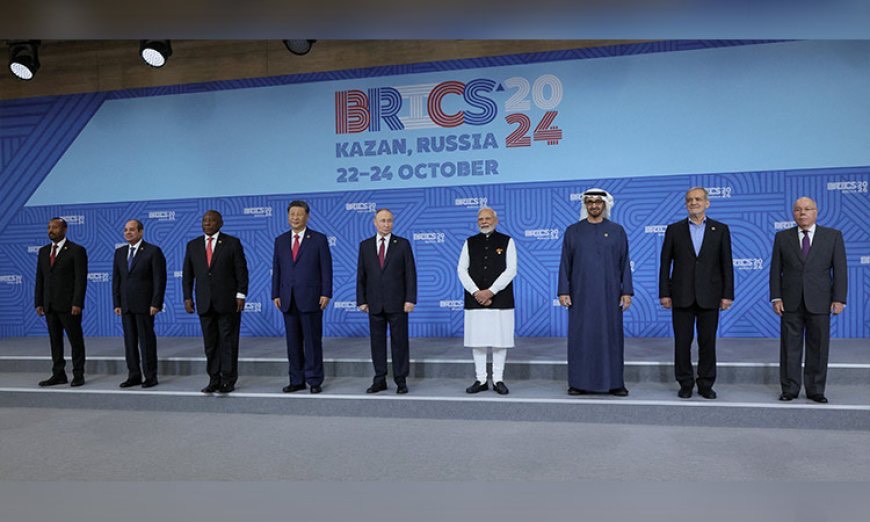
2024 BRICS Summit: Geopolitics, Geoeconomics and Supply Chains; the Group to Set New World Order

By Musanjufu Benjamin Kavubu

Many experts have reduced BRICS to a mood, Economists are even saying dollarisation is a myth for left sympathisers and a new enchantment for the global South. Those who take it seriously see it as a threat to the World Bank and the IMF, the former dealing with short-term development plans across the world and the latter dealing with long term fiscal policies, this sets the dollar as the global leading currency and a tool for Western hegemony.

The USA’s economy is based on their military might and NATO. As the world changes there have been many developments and to counter Western led multilateral groups the global South has BRICS, which as of 2023  expanded to 10 countries.

The current BRICS Summit is today 22nd to the 24th of October 2024. For starters it’s reported that 34 countries in one form or another have applied to join the group. The is being viewed as a counter to the G7 and it’s taking even a grander shape on the security front which is a key pillar of its founding.

From the 10th of September to the 12th 2024 the Russian President Vladimir Putin hosted a meeting of National Security Advisors of all the members of the BRICS and that meeting was under the organization’s Political and Security Pillar of Cooperation. There are about 53 conflicts raging in the world today, the Russia-Ukraine and the Israeli brutal occupation of Palestine are the most outstanding causing seismic Geopolitical shockwaves world over. These conflicts disrupt global supply chains that are very vital to globalization in terms of trade especially amongst BRICS and the global South.

Let’s understand what Supply Chains and Geopolitics are first. A supply chain is the network of organizations, people, activities, information, and resources involved in the creation and delivery of a product or service from the supplier of raw materials to the end customer. It encompasses all the processes involved in sourcing raw materials, manufacturing, logistics, distribution, and retail, including the management of these activities to ensure efficiency, cost-effectiveness, and customer satisfaction. Basically the definition of Supply Chains can be swapped for the essence of the Belt and Road Initiative by China that is now a decade and has facilitate development of the world in general.

On the other hand Geopolitics that refers to  how geographical factors, such as location, natural resources, and physical terrain, influence the political power, decisions, and relationships between countries basically international relations. Geopolitics is how nations use their geographical advantages and go about challenges to pursue economic, military, and strategic goals on the global stage. If you look at the foundation of BRICS, you will notice how geography affects global politics and international relations.

Security situations throughout history have proven far and wide effects across the world, effects on every aspect of life, from social to economic. And in the last about 24 months there have been military drills amongst BRICS members aimed at safe guarding trade routes and ensure smooth flow of supply chains that are vital for humans civilization. In 2023 the Russian and South African Navies got together for a drill, in the Second quarter of 2024 the Russian Navy conducted drills with Cuba a vital global South country and very recently the Chinese Navy joined Russia for the Ocean 2024 drill. These drills are aimed to prepare for eventualities that may affect sea trade routes, that’s why they were conducted in the Arctic, Mediterranean, Pacific, Caspian and Baltic water ways.

The world geography has these areas that are prone to military and naval blockages during times of conflicts. Areas like the Strait of Hormuz controlled Largely by Iran and BRICS member in the Middle East, connects the Persian Gulf to the Arabian Sea vital for global oil supply a lot of it ending China. It one the reasons China had to bring Saudi Arabia and Iran together through its Global Security Initiative GSI for normalizing diplomatic relations. The Strait of Malacca connecting the Indian Ocean to the South China Sea, essential for trade between Asia and Europe. The Suez Canal that connects the Mediterranean Sea to the Red Sea helping to bypass the longer route around Africa. The Bab el-Mandeb Strait  between Yemen and Djibouti, connects the Red Sea to the Gulf of Aden, vital for shipping between Europe and Asia, has almost all major Navies operating in the area.

The Panama Canal that Connects the Atlantic and Pacific Ocean, Bosporus and Dardanelles Straits in Turkey a member of NATO but also seeking BRICS membership bridges the Black Sea to the Mediterranean, vital for Russian and Eastern European exports. The Cape of Good Hope on the South African coast serves as an alternative route if the Suez Canal is blocked, crucial for global trade. The Lombok Strait in Indonesia which is an alternative to the Strait of Malacca. All are Geopolitical chock points that are pivotal to global supply chains.

As the new world order faces off with the Western hegemony and developments like the BRICS bank being formed to counter the Bretton Woods another aspect is brought into play. Which is Geoeconomics that is basically about how countries use economic tools, policies, and strategies to advance their geopolitical goals. These tools range from trade agreements and investments for example the $ 50 Billion announced at FOCAC 9 in Beijing, to control over vital resources, like energy or rare earth metals.

Economic strength is a powerful asset in shaping global political power and achieving strategic ambitions. Sadly the West led by the USA and the whole EU see sanctions as the best tool to further this endvour. Today USA sanctions are used to disrupt global South supply chains which hinders development. It’s through embargoes that supply chains have taken the hit affecting even the most basic of traders in your local market to all kinds of consumers.

Supply Chains controls and disruptions even take extreme measures for example the latest case of Israeli operations in Lebanon, when a whole supply chains was compromised to plant explosives across the country.

The cross roads of supply chains, geopolitics, and geoeconomics is going  to shape the Multipolar world order, and the BRICS formation as a counterbalance to Western hegemony. Its going to take everything for example naval drills and economic partnerships. Multipolarity is going to redefine everything. The current situations, mostly driven by the West, show how supply chains are no longer just about movement of goods but affect every aspect of modern human civilization.


Benjamin is a research fellow at the Development Watch Centre.


FOCAC 2024: Tracing the origins of constructive China-Africa Cooperation

By Ernest Jovan Talwana

Since 2000, the Forum on China-Africa Cooperation (FOCAC) has been a constructive multilateral platform for China and African countries to conduct symbiotic cooperation. Let us trace the origins of this forum, which is most certainly one of the most consequential summits for African states as far as addressing pertinent challenges, and opening doors to our individual and collective development is concerned.

Following centuries of mutual cooperation, FOCAC was established jointly between African nations and China as a high-level Sino-African relations mechanism at the beginning of the 21st century.  FOCAC sits on a strong foundation of organic relations, unadulterated by the imperialistic undue influence of China over Africa, unlike Western powers.

When China opened up in 1978 under Deng Xiaoping, it experienced one of the fastest levels of economic development ever registered in human history.

It was thus ripe to venture more exponentially into Africa by the early 1990s. By mid 90s the Chinese economy had sufficiently matured and could afford to extend subsidized concessional loans to enable Chinese businesses to compete in the African market. Around the same time, the Chinese leader then, Jiang Zemin visited half a dozen African countries and made a speech at the headquarters of the Organization of African Unity (OAU), articulating a five-point proposal for the development of “a 21st century-oriented long-term stable China-Africa relationship of all-round cooperation.”

Recovering from the Cold War bickering among Western powers, a number of African countries took the initiative to propose the establishment of a form of China-Africa multilateral cooperation. They had experienced cooperation with other foreign countries for long without any practical, tangible benefits, and had also grown weary of lectures on governance from their former colonial masters and oppressors.  On the other hand, African nationalists in various countries had been supported by comrade Mao Zedong and the Chinese people to fight against Western imperialism during the struggle for independence. China had also emerged as a towering example of transformative leadership which saw them beat centuries of industrial development in less than fifty years. As such, their development experience was most inspiring for poor, agrarian African economies. Many African countries therefore started looking forward to joint development with China, hoping to turn the scales at home too.

When some African countries put up a proposal to China asking for a cooperation mechanism, China responded by organising a conference that would value African countries’ wishes, consider the unique political economy in Africa, focus on practical results, and strive for joint development. It thus invited foreign ministers or ministerial officials in charge of international cooperation or economic affairs to the conference in 1999.

At the conference which was popularly attended by African leaders, the working documents agreed on reflected nuanced differences between the FOCAC and other international mechanisms for cooperation with Africa. The FOCAC document put a high premium on the opinions of African countries, for the first time respecting the kind of development support Africans deemed for themselves, unlike the previous dictates they would get from Western similar mechanisms. There was also a deliberate effort to ensure that there were realistic execution mechanisms to achieve practical results from the initiatives discussed at the conference.

This inaugural conference held in 2000 in Beijing led to the adoption of the Beijing Declaration of the Forum on China-Africa Cooperation and the Program for China-Africa Cooperation in Economic and Social Development. This was the first step on a long journey of establishing a stable partnership of equality and mutual benefits in the 21st century between the two parties.

It is now already 24 years down the road since that step was taken. Within that time, several African countries have doubled their trade volumes with China. Africans now trade more with China than all Western countries combined. A number of them have also experienced a steady growth of the economy, including Uganda which has grown at a rate of 6 per cent per annum for over a decade.

This transformation has been partly aided by initiatives agreed upon in the different FOCAC summits. For instance, China has over the years relieved the outstanding debts of African governments, and also issued interest-free loans to avail them of long-term development finance. It has also trained the African human resources, helping African countries improve their communication infrastructure by education engineers, as well as training experts in other fields such as education and health.

If there is anything to learn from the FOCAC 2024 Summit, it is that there is a deepening relationship between China and African countries. This relationship is healthy because of its unique characteristics mutual benefit, mutual respect, and a sense of shared prosperity and a common future. This has set an irrevocable trend in partnership. The practicality of results from this relationship raises the bar high for Western development partners who are constantly involved in self-righteous lectures on how Africans should govern themselves.

The writer is a research fellow at the Development Watch Center.

CCCC’s Environment, social and Governance Report; Tightening the Knot of Uganda-China Economic Cooperation

By Moshi Israel

The China Communications Construction Company officially launched its 2023-24 ESG report on October 17th 2024 at Silver Springs Hotel in Bugolobi. The event was graced by a number of key guests from the corporate world and Governments of both countries. China at the highest level was represented by his Excellency Ambassador Zhang Li Zhong while Uganda was adequately represented by the Minister of Finance, Hon. Matia Kasaija, the Hon. Mwebesa Francis, Minister of Trade, Industry and Cooperatives and the chief guest; Vice President of Uganda her Excellency Jessica Alupo represented by the Hon. Lukia Isanga Nakadama the third Prime Minister and Minister without portfolio of the Government of Uganda.

The report comes at the heel of increased cooperation between Uganda and China that has seen the latter become one of the biggest investors in Uganda’s economic development. Just recently the IMF acknowledged that Uganda’s economy will continue to grow at a high rate and in double digits. This success can be acknowledged by many Ugandans to be in no small part a spillover effect from the numerous investments from China. The CCCC is one of many such companies that have contributed to Uganda’s continued economic success.

In a more specific way, CCCC has its name chiseled in many iconic infrastructure projects in Uganda including the Express high way and its breathtaking Nambigirwa bridge, The Entebbe International Airport, The KBE project in Kampala and many other road networks around the country.

The ESG report is perhaps one of the most important yardsticks to measure a company’s true success. This is because this is where the ethics and moral standing of a company are truly weighed beyond the profit making. CCCC has effectively incorporated Environmental stewardship, Social Responsibility and Governance and ethics at the center of their operations culture. ESG ensures that a company’s activities go beyond profit making and support sustainable development that does not come at the expense of the environment and human rights.

CCCC Uganda currently has 26 ongoing and planned projects valued at $1.7billion. The company operates across numerous sectors and is involved in the construction of highways, bridges, Airports, water supply and factory construction. It has led other companies for four years straight in the Chinese Chamber of Commerce in Uganda. The company is engaged in charitable activities including contributions to SOS orphanages. Additionally, CCCC Uganda has also played a major role in the advancement of Uganda’s education sector where they have signed an MOU with Makerere University and Wuhan City Polytechnic aimed at creating a model school-enterprise cooperation. They also launched the seagull Talent Training project to cultivate ‘internationally minded professionals with specialized skills for Uganda’s future.’

To put the achievements of CCCC Uganda into perspective, one has to point out that the company has completed 16 projects, has accumulated 1000km in construction mileage, has led to an 80%+ portion of Ugandan employees participating in construction whilst creating over 10k jobs. Much has to be done but CCCC is actively on the right track and serves as an example of investment gone right. For many years, developing countries have been faced with a problem of ‘unserious’ investors who are mostly crooks looking for a quick buck. However, the tide is ever so slowly changing and the government is increasingly looking in the right places to find genuine investors with a proper international standing.

Furthermore, what CCCC is doing also reflects well on China as a country and is in line with the 10 Action points emphasized by President Xi Jinping during the Beijing Summit and Ninth Ministerial Conference of the Forum on China-Africa Cooperation (FOCAC) held in September. Some of President Xi’s points of emphasis were on Green Development and connectivity. CCCC is actively contributing to these action plans by engaging in construction that is friendly to the environment and building extensive road networks under the umbrella of the Belt and Road Initiative.

Going forward, the Government of Uganda should continue to develop a strategy that increases the trust of international investors in the profitability, stability, security and sustainability of doing business in Uganda. Once the message is out there that Uganda is safe and open for business, more companies like CCCC from all over the world will continue flocking into the country and contributing significantly to its economic growth. Just like CCCC has been a good representative for China, Ugandan citizens and Businesses can be great ambassadors for the country everywhere they go. The ESG report has shown us how much of an impact a foreign company has had on the economic and social progress of our country and now the ball is in our hands.

The Writer is a Senior Research Fellow at Development Watch Center.

China at 75: What lessons can Africa Draw from People’s Republic of China

By Musanjufu Benjamin Kavubu

On the 1st of October 2024, China celebrated its 75th independence day. Seven (7) decades back, it was Ethiopia that was never colonised and its flag inspired almost all West African flags, Liberia that was set up in 1847 by a United States Secretary of state, Egypt, Libya, and Sudan that had attained their independence. Most African countries gained their independence in the late 1950s and 1960s meaning around the same time when the China we see today started taking shape after being used as a second world war battle ground because Japan had occupied most of the country and United Kingdom had interests in its coastline.

After devastating wars to expel foreign influence and dominance and a very brutal civil between the Communist Party of China (CPC), led by Mao Zedong and Kuomintang (KMT) forces, led by Chiang Kai-shek, that ended in 1949. The CPC went a head to established the People’s Republic of China that we know today.

Today the school of thought especially in the resurgence and renaissance of Pan Africanism is that African Problems should be solved by Africans through African solutions researched by African scholars and institutions. This is true because Africa is unique and the Chinese Global Civilization Initiative Model does advocate for such a pathway to a shared future for humanity. It also explains why the Chinese model of Maoism or Communism with Maoist principles was adopted from Marxism-Leninism.

African Renaissance will mostly likely be characterised by Ubuntu and nativism, as driving values of economics, society and governance from a pragmatic point that will be driven by academia and the resultant policy. The Chinese through the 75 years of lived experience can offer Africa the blue print. There is a lot we can learn from them and through partnership instead of an alliance can have a shared future too.

From the independence decade of Africa of 1960-1970 the continent saw war after war, Civil wars, insurgencies, and interethnic violence. Africa has been plagued by a gun culture that was introduced during the 400 years of slave trade and sadly it continues up to now. Out of the about 53 major conflicts in the world by 2024 about 15 to 20 are on the African continent, for example in Sudan, Ethiopia, Democratic Republic of Congo (DRC), Mozambique among others. Of course there is hope that these will stop since most of the fighting is being fuelled by forces off Africa. As a continent we need to pause and find out how much we invest in war because our counterparts in China even with a strong military are mocked for having no battle experience simply because they don’t have the thirst for war and they have made that clear, in their Global Security Initiative (GSI) model they used to end the cold war between Iran and Saudi Arabia.

Africa is trying to build the African Continental Free Trade Area (AfCFTA) to connect the continent, promote unity, trade and alleviate poverty. China has lifted 770 million people out of poverty according to world Bank data, which is 75% of the world’s poverty reduction, this is something that as a continent we should look into because at the moment this continent is estimated to have about 1.5 billion people and about 490 million live on less than $ 2 a day. The numbers suggest we too can easily reach the Chinese mark.

China through its Belt and Road Initiative (BRI) is funding the construction of roads, railways, deep sea ports, airports and other transportation hubs across the African continent, back in China their record over the 75 years has been 5.4 million kilometers of roads, 160,000 kilometers of railways, and 38,000 kilometers of high speed rails across China, surely this is commendable and something worth copying to make Africa connectivity a thing instead of a dream.

What is the likelihood that you are reading this article from a Chinese produced device, today even European and American firms run to China for manufacturing, the blue print is in place and Beijing has availed all these through their Global Development Initiative (GDI), an opportunity for Africa to have its own industrial revolution after all we have the raw materials and the potential for support infrastructure to also be a global player in manufacturing.

China was a poor as Africa 75 years ago and it’s the second largest economy, they are leading in electric vehicles putting them at the forefront of Renewable energy technology an area that many African countries have explored already. China is leading in space technology and aeronautics and astrophysicists say the equator is important in this sector, meaning Africa can just jump into the field and thrive.

Over the past seven decades, China’s diplomatic capacity has grown through the setup of comprehensive bilateral relationships, active participation in multilateral organisations like BRICS, and initiatives like the BRI, which promote global trade and infrastructure. China’s role as a major contributor to UN peacekeeping missions even on the African continent, promotion of soft power through sports for example, the term Bird’s Nest is synonymous with the 2008 summer Olympics in Beijing and save for South Africa, Africa is yet to host a major sporting event for the last 70 decades yet the continent boasts of the talent in sports and leisure a major cultural aspect of life. China’s involvement in crisis management and international negotiations on issues like climate change further demonstrate its growing influence and commitment to global governance and stability and its this table that Africa needs a seat too.

With a young and promising academia like China was 75 years back, research should guide African policy making. African governments and the African Union can, just like the State Council of the People’s Republic of China and Politburo of the Communist Party of China and its Standing Committees be dedicated to improving the well-being of African people, invest in development instead of warfare to attain that shared future that the world deserves.

As China enjoys its 75th independence festivities Africa can look on and pick ideas to make Africa solutions by African a reality.

The writer is a research fellow at the Sino-Uganda Research Centre


Lessons for Uganda from China’s Special Economic Zones

By Nnanda Kizito Sseruwagi

The government of China established the first four “Special Economic Zones” (SEZs) in the 1980s to act as experimental laboratories for designing and testing new policies and approaches to reduce poverty and grow the economy. They are designated areas in China where economic regulations differ from those of the rest of the country so as to increase trade and investment, promote job creation, and ensure effective administration. They are government-run export enclaves offering taxation, logistical and infrastructure incentives to enterprises, especially those focused on manufacturing and shipping.

One of the most renowned reforms under Deng Xiaoping was establishing four special economic zones along the Southeastern coast of China, with Shenzhen, Shantou, and Zhuhai in Guangdong province and Xiamen in Fujian province. As of 2024, three additional special economic zones have been added. In 2009, Binhai district in Tianjin became mainland China’s seventh special economic zone. These zones are granted more free market-oriented economic policies and flexible governmental measures by the government of China, compared to the planned economy elsewhere. This allows SEZs to utilize economic management which is more attractive to foreign and domestic businesses. Trade was originally controlled by China’s centralized government. However, market-driven capitalist policies are implemented in these special zones to entice foreign investments in China.

Economic policies of SEZs included tax exemptions, reduced customs duties, reduced priced land, and increased flexibility to negotiate labour contracts and financial contracts.

SEZs became destinations for workers from across southern and southwest China, particularly younger women who could earn significantly more for factory work than they could earn in their hometowns.

SEZs were also authorized to develop their legislation. The Shenzhen Special Economic Zone was the most active SEZ for legislative experiments over the period 1979-1990 and these had a significant role in shaping national economic legislation on foreign trade and investment.

Many scholars argue that SEZs played a decisive role in the development of China. Since their adoption, have contributed 22% of China’s GDP, 45% of total national foreign direct investment, and 60% of exports. SEZs are further estimated to have created over 30 million jobs, increased the income of participating farmers by 30%, and accelerated industrialization, agricultural modernization, and urbanization.

SEZs are famed for their peculiar potential for cultivating a form of innovation that is uniquely top-down (supported by the government) and bottom-up (characterized by local problem-solving) while utilizing resources and research at every level.

China has also benefitted from SEZs through foreign enterprises bringing in expertise, technology, and equipment. Consequently, private firms have benefitted from inexpensive labour, a business-friendly environment, robust infrastructure, and China’s large domestic market.

Like China, Uganda could adopt the idea of gazetting special economic zones to attract foreign investment, boost industrialization, and enhance our export potential. We may not have to directly extrapolate the framework of China’s SEZs, but we can modify them to meet our unique socio-economic needs. Indeed, we may just have to tweak how we utilise our industrial parks which are already operational with the support of our Chinese partners.

I strongly believe that Uganda can learn from China’s experience with SEZs by adopting the key elements that made China’s SEZs successful and contextualizing them or domesticating them.

Firstly, we need to be strategic in how we geographically locate our form of SEZs. They should be established in border towns or such areas which have access to key trade routes. For example, Jinja, Mbale, Arua, Kasese, Kisoro, Masaka and other districts with commercial vitality near our borders are good examples of strategic locations for implementing SEZs. Boarder areas near Kenya and Tanzania are more strategic due to their close access to the Indian Ocean through Mombasa and Dar es Salaam ports. We must also invest in critical infrastructure, including road networks, railways, and energy supply, to ensure that these zones are well-connected and operationally efficient. Such infrastructure development would benefit both the SEZs while also contributing to economic development in surrounding regions.

Whereas we have already set up a robust policy environment for incentivising investments such as offering tax incentives, we are still short on streamlining administrative processes and regulatory frameworks that promote investors’ interests. Uganda should learn from China and establish one-stop service canters within SEZs to facilitate business operations and reduce the bureaucratic red tape at the Uganda Registration Services Bureau and URA. These policies must further be stable and consistent to build investor confidence over the long term.

We must build a skilled and adaptable workforce to attract high-value industries in technology and manufacturing. That’s how our form of SEZs can create better-paying jobs for Ugandans.

Uganda’s experimentation with SEZs should be gradual, starting with a few pilot zones in strategically important regions. By closely monitoring the performance of these pilot zones, Uganda can learn from successes and challenges to make necessary adjustments before expanding out to other parts of the country.

China’s experience with Special Economic Zones offers valuable insights for Uganda as the country aspires for socio-economic transformation through industrialization and foreign investment. Uganda can replicate the success of China’s SEZs while adapting the Chinese model to our context.

The writer is a Research Fellow at the Development Watch Center.


China-Africa Relations: An Agreement Built in Glue

By Salim Abila Asuman

Have you ever tried gluing two pieces of paper together that are reluctant to stick together, one hesitant to adhere and prefers to do lumps with the stickier paste? Welcome to the world of building agreements where it is not only about making the glue work, but it is equally important that it must last.

In this article, I explain how China builds agreements with its partners into impenetrable bonds which even the most tenacious of parties cannot tear asunder.

Irrefutably, China is the unsurpassed in international affairs when it comes to the building of agreements. In contrast, Western nations often seem to randomly slap glue on their agreements and then are shocked when their agreements fall apart.

But what is the secret of China regarding the durability of their engagements, while those of Western nations are so easily broken and dissolved?

What worked for China’s approach was applying glue to and on every edge so that each and every corner should stick before going to other pieces. Now, think of the Belt and Road Initiative; it is an all-inclusive Chinese agreement.

The BRI is much more than a high-level infrastructure development undertaking; rather, it constitutes a matrix of associations built upon strategic loans and technological handovers underpinned by long-term cooperation. Each contract in the BRI constitutes one that inscribes an exercise of patience, trenched and designed to benefit both China and its various partners. Such a tie binds them together in mutual embrace from which it is hard to break.

The looming question is why do this agreement last, while those with the West often fail? Look no farther, the answer is in the glue, on how it is applied, the intension of applying it and the strength of the connection it formulates. Agreements with China are based on mutual respect and long-term cooperation.

It is not just an effort to sign the agreements; the effort is in ensuring that it lasts. This itself explains why most of the countries that find themselves involved in the BRI often find themselves in relationships which remain intact even at the face of challenges. China does not walk away after the initial deal but always stays on, reinforcing the bond as needed.

The foundation of Uganda’s rise to progress heights is based on the Agreement on Economic and Technical Cooperation between Uganda and the People’s Republic of China, binding the affluences of Uganda and China together.

The effort is not just in signing the agreements but in the sustainability of those agreements. This perhaps explains why nations absorbed in the BRI often find themselves in ties that last longer than challenges. China does not walk away after the first contract; it stays around, reinforces, and reassures the relationship where needed I repeat.

It is on this premise, that the commitments in each agreement China reaches serve as a foothold to provide solid joint ventures, technology transfer, and capacity building. It is a result of such a setting that with each passing day, Uganda and China’s bond becomes stronger economically thus laying a sound footing for sustainable growth.

However, there is no climb without risks, hence the Uganda-China Bilateral Investment Treaty, or as it were called, the Investment Promotion and Protection Agreement serves as a join, making investments stable and secure. Like a knot tied with precision, this treaty ties the two nations into commitments for building confidence and resilience against the uncertainties of the market.

Compare this to the Western treaties, that so often feel like the equivalent of sticking two pieces of paper together with a cheap glue stick, there is a connection, sure, but it is flimsy and prone to peeling apart under pressure.

Take, for instance, the Paris Climate Agreement, hyped as some sort of grand achievement; in reality, it was not. Some Western countries, perhaps due to altered political affluences or economic compulsions, have rolled back on their commitments or fallen short of their targets. Here, the glue was too thin, put on in rapidity and without consideration for long-term implications.

So, why does this happen? It is because most of the treaties formed in the West stand based on very short-term gains or politicking rather than long-term workable partnership. They may appear firm on the surface, but often there are imbalances in conditions underneath which may favour the more powerful nation with limited regard for the lasting effect on the weaker party. These agreements, in the absence of reinforcement(s), begin to crack and fall apart when circumstances change.

Another reason is due to the absence of a follow-through. In many Western agreements the parties simply walk away once the ink is dry, assuming signing a document is enough to hold it. However, without consistent effort even the best intentions crumble.

China treats agreements as ongoing commitments. It will not refrain from applying more glue if needed; check in, adjust terms, and see that both sides are well glued, no doubt China-Africa Relations is built in glue.

The writer is a research fellow at the Development Watch Centre

Lessons for Africa from China’s development contradictions

By Ernest Jovan Talwana

China is one of the few countries which ruthlessly defined the kind of society they want to have, uninfluenced or forced by foreigners. The creation of a genuinely homegrown social system upon which to build the political economy was the foundation of China’s industrialisation.

The first lesson is that each nation needs to define its course of development, based on its own social characteristics. China chose the socialist relations of production, and they turned out better suited to spark the development of the productive forces in the country. Its experiment with socialist ideas led to an unparalleled speed of growth never known before in the old Chinese society, let alone in the world. Before the CCP assumed power and changed the course of China, the country was plagued by imperialism, feudalism and bureaucrat-capitalism. These systems of rule oversaw extremely slow production in the old China.

Chairman Mao Zedong argued that only socialism could save China. By work or luck, indeed the socialist system promoted the most rapid development of the productive forces of China, a fact undisputed even by Western countries which took hundreds of years to develop to levels that China surmounted in half a century.

Of course, China did not experience transformation as soon as they implemented socialist policies. There were several complaints faced by Mao’s government because large numbers of people led a very hard life. However, Chairman Mao always encouraged his 600 million citizens that the standard of living would improve with time, which it did. He explained that they slow growth of economy was fundamentally the imperialists and their agents had oppressed, exploited and impoverished China for over a century. He promised that China would need several decades of intensive efforts to raise the standard of living of its whole population, step by step. This explanation is relatable in Africa. Often, analysts describe African states as “failed,” forgetting that these are nations under construction, not grown states under destruction. Like China, Africa is curtailed by the enduring legacy of colonialism which still hinders its progress. Therefore, we also need strong leaders to define a new course for our states, to define our future on our own terms, and slowly lift our people out of poverty.

Mao Zedong also argued for the remoulding of Chinese business people and intellectuals, to refine their world outlook and adopt a thinking constructive for their country. This is a very significant undertaking for any country to develop. Western countries mould their elites through decades of ideological persuasion in schools and universities, to make them think in ways that serve Western interests. Unfortunately, in Africa, our elites also undertake Western education and gain the kind of epistemic instruction that inculcates into them Western biases that support Western markets at the expense of our domestic economies. This is a disease suffered by our highest-ranking leaders – presidents, ministers, permanent secretaries, central bank governors, etc. We need to inculcate ideas that promote our domestic interests, just like China did, if we are to develop.

Another front on which Mao’s ideas out performed was on education. Mao argued that China’s educational policy must enable everyone who gets an education, to develop morally, intellectually and physically and become a cultured, socialist-minded worker. He argued for spreading the idea of building China through hard work and thrift. That young Chinese people should understand that China was still a very poor country, and could not radically transform in a short time. He premised that only through the united efforts of the younger generation and all Chinese people working hard could the country be made strong and prosperous over a period of several decades.

One observes from this that Mao was a very patient man. He did not promise unrealistic dreams for his people like most African politicians do. He was a great strategist who analysed his nation’s prospects over the long term.

He observed the establishment of China’s socialist system had opened the road leading to the ideal state of the future, but warned that only through working hard, very hard indeed, would that ideal become a reality. He cautioned young people at the time to avoid thinking that everything ought to be perfect once a socialist society is established, noting that this would be unrealistic. Like Mao’s China, many African nations are burdened and stretched by the ambitions of young people who have unrealistic expectations from their governments.

Our governments lack the resource envelope to finance the aspirations of millions of youths, even if we did not suffer corruption. However, what made Mao’s China stable even under the affliction of youth aspirations was the leadership of Chairman Mao, which consistently encouraged youth to work to better their condition and not expect immediate socio-economic transformation.

The writer is a research fellow at the Development Watch Center.