China’s Wang Yi Africa Visit: 2025 Will Be A Fruitful Year For Sino-Africa Relations

By Allawi Ssemanda

Dear Editor, last week, China’s top Diplomat Wang Yi completed his week-long Africa trip having visited four different African countries of Chad, the Republic of Congo, Namibia and Nigeria.

The visit which marked 140th visit from Chinese top leadership to the continent since the year 2007. It was also 35th year in a row Chinese Foreign Minister making Africa the first destination for his foreign where traditionally the visit covers 4-5 African countries every January of the year. By all measures, the tradition confirms that China puts great importance to its cooperation with Africa. It is also a testament that China’s diplomatic ties with Africa is guided by principles of amity, sincerity, mutual benefit, inclusiveness and real results as President Xi Jinping often states.

Wang Yi’s visit came just months after China upgraded bilateral relations between African countries with China to the level of strategic relations, with president Xi Jinping during 2024 Forum on China Africa Cooperation (FOCAC) announcing that the overall characterization of Africa-China relations be elevated to all-weather China-Africa community with a shared future for the new era.

If critically analyzed, Wang Yi, who doubles as a member of the Political Bureau of the Communist Party of China Central Committee, his visit is key in deepening practical cooperation between China and Africa in different sectors and promoting an in-depth development of China-Africa cooperation with real results and win-win for both sides. Indeed, President Xi Jinping observed in his 2013 FOCAC summit key note address in Durban, South Africa that; “the development of China-Africa ties can only be in the present continuous tense and never in the present perfect tense.”  A decade plus since Xi’s remarks, China continues to stand shoulder to shoulder and work with African countries for mutual benefits – a sign that Beijing is committed to her idea of building a community of shared future and prosperity for mankind in the new era.

For decades now, the trade between two sides have been growing and are projected to further grow in 2025. For example, in addition to being Africa’s largest trading partner for the last 15 years in a row, at the end of 2023, China’s trade volume with African countries reached USD 282.1 billion. At the end of 2024, this grew to USD 296 billion representing about 5% increasement, according to data by the General Administration of Customs of China.

With China’s Belt and Road Initiative which is making significant contribution in improving the continent’s infrastructure connectivity, zero tariff policy on African goods entering Chinese markets as announced by China, the figures of trade between two sides will likely grow further. Considering multiplier effects of such which include among others contributing to improved standards of living, one can safely argue that China-Africa cooperation in all ways is contributing to building a community of shared prosperity and shared future in the new era. This goes without saying that China’s initiatives such as Global Development Initiative, Global Security Initiative and Global Civilization Initiatives are also key in building the ideal world.

In this context, Wang Yi’s visit clearly shows China’s willingness to work with African counterparts in ensuring that the 10 partnership actions President Xi announced during the 2024 FOCAC summit meant to be implemented over a period of next three years are fast tracked. The 10 Partnership Actions include among others; mutual learning among civilization which will see sharing of governance experience, establishment of 25 China-Africa studies centers; the Partnership Action for trade and prosperity; the Partnership Action for industrial chain cooperation which will see the launch of an African SMEs empowerment program and  China supporting the continent to build 20 digital demonstration projects in Africa; the Partnership Action of connectivity with aim of supporting 30 infrastructure connectivity projects in Africa; and Partnership Action on health. Under health action, China will send 2,000 medical experts in Africa, launch 20 programs of health facilities and malaria treatment and encourage Chinese companies to invest in Africa’s pharmaceutical production.

Others include Partnership Action for development cooperation which will see implementation of 1,000 small and beautiful livelihood projects; Partnership Action for agriculture and livelihoods which will see increase in Chinese funding of agriculture on the continent; Partnership Action for green development; Partnership Action for people-to-people exchanges; and Partnership Action for common security.

If critically analyzed, all the 10 Partnership Actions will help the continent to address its challenges and most of its bottlenecks to development. For example, under the Partnership Action for Agriculture and livelihoods, China promised to provide Africa with 1 billion Chinese Yuan in emergency food assistance, support in building about 6,670 hectares of standardized agricultural demonstration, send agricultural experts to train their African counterparts and establish a China-Africa agricultural science and technology innovation alliance. This is in addition to implementing 500 programs meant to support and promote community welfare. More importantly, under the Partnership Action for agriculture, China’s aim is to promote two-way investments for new business by both Chinese and African companies with aim of retaining and adding value in goods produced on the continent and create at least one million jobs for the continent.

Aware that China believes in consultations other than enforcing her own ideas on her allies, one can argue that Wang Yi’s visit at a time when the two sides are readying themselves to embark on implementation of the projects under the said Partnership Actions, the visit was crucial for consultations and understanding of priorities for African countries where the partnership projects will be implemented. It is also a testament of China’s readiness and willingness to kick-start the implementation of the 10 partnership actions.

Taking the Partnership Action for common security as an example, during his Africa trip, Minister Yi was categorical that China will “firmly support Africans in addressing African issues in the African way,” stressing that “African people are the real masters of this continent.” Yi further expressed China’s stance against interfering in the Continent’s internal affairs in any form and instead showed Beijing’s willingness and readiness to support the continent so that African countries themselves can devise ways of addressing their concerns. It’s in this visit that wang announced USD 136 million to support the continent in addressing security issues, help in training of 6000 troops and 1,000 police officers across Africa. He also pledged China’s support to the continent in its interests including at the United Nations Security Council (UNSC). “At the UNSC, China will always be in favor of Africa,” stressed wang Yi.

In conclusion, considering that China takes engagement and consultations with allies key in their development support; and, aware that China’s global initiatives such as Global Development Initiative, Global Civilization Initiative and Global Security Initiative and the Belt and Road Initiative have some convergence with African Union’s Agenda 2063, one can safely argue that 2025 will be a fruitful year for China-Africa cooperation. With Wang Yi’s just concluded visit, this assertion is arguably bankable especially that both sides are determined to strengthen their achievements and that Beijing has been clear that her relationship with Africa is guided by principles of amity, sincerity, mutual benefits and real results with aim of building a community of shared future for mankind in the new era.

The writer is a resident senior research fellow at the Development watch Centre.

Africa’s Position on China’s Global Initiative on AI Governance

By Musiime George

There is no more denying the fact that Artificial Intelligence is reshaping the world in more ways than we could have possibly imagined. For example, AI could detect cancer much earlier and with increased accuracy. Moreover, it is projected that by deploying AI, businesses will save up to $8Billion annually by 2026. Nonetheless, in the midst of these impressive achievements are concerns that Africa must take note of. As a continent that is not playing a significant role in shaping the conversation on AI, albeit the conversation being ongoing, Africa must work with partners to ensure that inclusivity and representation are prioritized as early as in the Development of AI models. Unless this happens, we might wake up one day to realize we did not do enough and by then, it will be too late-as put in 2023 by OpenAI CEO, Sam Altman “If the technology goes wrong, it can go quite wrong.”

While this conversation takes shape, there are two prominent perspectives that standout in relation to Africa; 1) how the continent might or must reposition itself to benefit from the AI revolution on one hand, and 2) the need to build effective AI governance on the other. The World Bank drills deeper, talking about fostering equitable access to AI, and aligning the discussion around AI with sustainable Development Goals. Whereas both perspectives are essential, this essay contends that Africa must also work to ensure that inclusion and representation particularly in the development stages of AI are prioritized.

As we speak, the United States and China standout as de facto leaders in the global AI revolution. However, some commentators speculate that the competition between the two could follow the same trend as the cold war era arms race between the United states and the Soviet Union. To recap, this race resulted into unprecedented proliferation of nuclear weapons with the two great powers creating ever more destructive capabilities. On the contrary, many countries did not develop nuclear capabilities at the same pace or at all which made the nuclear threat even more profound. In the same way, the current trend in AI risks creating a similar scenario, especially in the absence of effective AI governance frameworks. For example, Trump era Secretary of Defense, Mark Esper once pointed out that, “…which ever nation harnesses AI will have a decisive advantage on the battlefield for many years.”  This goes to show how nations might deploy AI in the absence of such frameworks, ways that might jaundice efforts to build a peaceful, fairer and equitable world.

Experts who have been bold to express their concerns about AI have highlighted the emphasis placed on “AI for good” Vis-a-Vis Ethics of AI in the global conversation on Artificial Intelligence. In fact, it is easy to come to the consensus that, AI might not have a problem, but rather how we use it and where we use it. Moreover, one area often cited as a source of potential risk is, that of training data. The key concern here has been, most of these models have been implemented prior to the establishment of any frameworks for AI governance. Thus the question becomes what is the quality of training data used? And how well is Africa represented in these datasets?  With almost all of the training datasets coming from the global north, there is a significant risk of reinforcing existing stereotypes, and power dynamics which have for a long time held Africa at a disadvantage. Moreover, in an age where nearly 60% of online content is produced by AI, subsequent improvement of AI capabilities could only exacerbate this dynamic since it is based on already biased input.

The risk of accelerated bias: Different Tech enthusiasts and experts have on numerous occasions highlighted the possibility of AI creating abundance on the bright side. Nonetheless, there have been warnings from others, regarding the risk of accelerated bias, particularly in cases where the initial training data was prejudiced or not representative. Thus, the Cinderella issue in the AI conversation is that of representation, and quality of training data. Indeed, algorithmic biases directly affect both fairness and trust, jeopardizing any benefits presented by AI. Given the historical injustices and cultural sensitivities on one hand, and the bulk of training data coming from the global north on the other, AI models could aid in perpetuating historical injustices, stereotypes, thus undermining uptake and subsequent access to the benefits of AI technology on the continent. This is one particular reason why Africa needs to rise to the occasion and play its due role in this conversation.

As China and Africa made renewed commitments to jointly building an all-weather China Africa Community with a shared future for the new era, both partners agreed to work together in order to seize the historic opportunity of the new round of technological revolution. This commitment made at the 2024 FoCAC summit in Beijing aligns well with the need to address the inclusion and representation in the development of AI. The effort will seek to foster an inclusive, fair, just and nondiscriminatory environment for the development of science and technology. More so, in the first steps, Africa overwhelmingly welcomed China’s Global Initiatives on; AI governance and Data security. The initiatives are a step in the right direction in as far as promoting the rights of Africa in the global governance of AI are concerned. Therefore, working with China, Africa can enhance not just its role but also representation in novel AI models; from Large Language Models to Generative AI Models and everything in between.

In conclusion, as the universal application of Artificial Intelligence is cascading around the world, Africa can position itself to reap the enormous benefits presented by this revolution. Faced with an absence of AI governance frameworks in most countries, and the risk of accelerated biases, Africa must harness positive partnerships in order to counteract the perpetuation of old stereotypes, injustices, underrepresentation while enhancing fairness and inclusion as inroads to the positive benefits of Artificial Intelligence. In addition, the partnership with  China could be a strong advocacy voice for responsible and ethical AI in order to minimize associated security threats and the concentration of power thus buttressing global order and peace in the age of AI.

The author is a research fellow at the Development Watch Centre.


China’s Wang Yi’s Africa Visit Shows Her Value

By Joshua Kingdom

“Africa should be a big stage for international cooperation, not an arena for major-force rivalry”. These were the words of then Chinese Foreign Minister (FM) Qin Gang speaking to the press in Ethiopia while on his Africa visit in January 2023. Thereafter, he would fly to Angola, Gabon, Benin, and finally Egypt. This sort of thing happens at every beginning of year in a long standing tradition of demonstrating an enduring commitment to African affairs by The Chinese Communist party (CCP). For 2025, the current FM, Wang Yi concluded the year’s version of the tour in Nigeria on Thursday last week.

There is a lot that the minister’s journey achieved on its own, including the fact that his meeting with President Denis Sassou Nguesso of the Republic of the Congo re-echoed China’s readiness to start on the implementation of her promises at last year’s Forum on China-Africa Cooperation as well as how the liaison with Chad fills a gap that the recent crisis between the country and her former colonizer had caused. For our purposes here however, we will instead focus on how it is that the custom of Chinese foreign ministers travelling to this part of the world annually is strong evidence for how much their government cherishes it.

In doing so, I hope to provide a counter-perspective to that which one often hears from the West when its media paints China’s motives in relating with Africa as opportunistic through and through. As you read on, please keep at the back of your mind the fact that these cries have somehow become louder at a time when the potential of the AU states begins to vividly show– it is estimated for instance, that we will spend as much as $16 trillion in consumption and business yearly by 2050.

The shift in partnership preference by African leaders from West to East is explainable in part by the fact that Beijing has treated them with dignity. While President Hu Jintao hosted the first China-Africa Summit in 2006 thus, it took almost a decade before the United States thought that organizing an equivalent event was worth the bother. No example brings out this point better however, than the FMs’ engagements. I mean, the practice has been going for thirty-five years now. Surely, everyone would agree that the state of geopolitics has changed so much from 1990 that China cannot have been lying low all this while waiting for when the moment is right. Add to this the fact that FMs are often high ranking state officials such that their involvement in any duty is a mark of the significance that their party attaches to it and you see where this is going. Indeed, Wang Yi presently serves on the Political Bureau of the Central Committee of the Communist Party.

Moreover, China has made gains from the China-Africa FM trips as much as Africa has. Seeing the deliberate effort that the CCP leadership has invested through this initiative, other global powers are beginning to send more of their top politicians on the continent with competing offers. In 2023 alone hence, United States Vice President Kamala Harris and Secretary of State Antony Blinken visited five African nations between themselves. And in December last year, President Biden made his way to Angola. Significantly, the latter country has a lot to thank China for since western powers had mostly abandoned it during the immediate aftermath of the disastrous war that wrecked it at the turn of the century.

Knowing that there is no place in which actions speak louder than words than in foreign relations then, the time that Chinese FMs spend on the continent every beginning of year tells us all that we need to know about their homeland’s view of Africa. Countries in the Northern hemisphere will have to up the game before earning the right to convince Africans otherwise.

The writer is a lawyer and research fellow at the Development Watch Centre.

WHERE THE WEST AND CHINA HAVE LED US: COUNTING GAINS AND LOSSES

By SALIM ABILA ASUMAN

The year 2024 has come to an end, and we find ourselves in that familiar beginning of a new year moment where we look back at the past year’s events much like flipping through an annual financial report.

But, instead of profit margins and balance sheets, we are trying to reflect on the actions, decisions, and strategies that shaped the global landscape last year.

If there is that one thing that dominated the headlines the last year, it’s the dynamic duo of the West and China.

Just like an annual report provides clarity on where an establishment stands, it is time for Uganda and Africa at large to assess where the West and China have led us and what the next chapter holds.

As Uganda and definitely much of Africa, continues to play host to foreign powers, it’s time to take stock. Who’s winning? Who’s losing? And more importantly whether there has been a move towards tangible economic progress?

This article takes a final glance at 2024 as we begin 2025, it delves into the profound impact of their co-operations and partnerships in Africa, while examining the moves that defined 2024. Buckle up as we dive into last year’s most riveting global showdown.

In the recent years the relationship between China and Africa has yielded substantial returns across key sectors transforming infrastructure, boosting trade advancing industrialization, and driving economic growth.

As we review the results, its clear that the investments and collaborations are setting Uganda and the broader continent on a path to long term prosperity. Below is the assessment of the gains in tangible terms, measuring the impact of this partnership on Uganda’s development.

Kampala-Entebbe Expressway: The completion of the USD 1.3 billion Expressway, has transformed Uganda’s transport landscape. This 51-kilometers road now connects Uganda’s capital with its international airport, reducing travel time by 30 minutes and enhancing trade and tourism.

Karuma Hydroelectric Power Plant: with an investment of USD 1.7 billion, this project is set to add 600 MW of electricity to Uganda’s grid, addressing the country’s energy deficit and supporting industrial growth.

These infrastructure projects have reduced logistical costs and improved regional connectivity, contributing to a 3.5 percent increase in GDP growth. Uganda’s ranking in the world bank’s logistics performance index has improved boosting investors’ confidence.

Uganda’s trade with China has also reached USD 2.7 billion, with exports valued at USD 800 Million. Major exports included; coffee, minerals, while imports from China included machinery and electronics, accounted for USD 1.9 billion.

About USD 120 Million has also been invested by China in Education and Skills Development. Over 2,000 Ugandans have received scholarships to study in China, with 400 students graduating in fields such as engineering, energy, and agriculture.

These educational investments have equipped Uganda’s youth with technical skills, reducing unemployment rates in several sectors and as a result there has been a reduction in national unemployment.

It would be a mischief if China’s investment in Uganda’s Oil and Gas sector is ignored. China National Offshore Oil Corporation’s (CNOOC) has so far invested about USD 1.4 billion in Uganda’s oil sector.

Uganda’s economic future, in many ways, is now paved by Chinese concrete, and while it sounds like a fairy tale of infrastructure, this is the undeniable fact.

On the other side there is a symphony of good intentions and familiar missed opportunities. Let’s talk about the west, the United States, the European Union and their assorted agencies have spent decades agitating about democracy, good governance, and human rights. They have managed to tick off a few boxes in Uganda, funding healthcare programs, agricultural initiatives, and governance reforms.

Take USAID’s efforts in Uganda, sure, there has been progress in health and food security, but what about jobs? What about the kind of industrialization that could make Uganda self-sufficient, and not just reliant on aid? The West’s model often focuses on alleviating the symptoms of poverty without addressing the root causes.

Western aid flows in like a river generous and well-meaning but its often not connected to the kind of long-term economic investment that could truly propel Uganda into the future.

In addition, while western companies have been having a foothold in Uganda and Africa, they have not been enthusiastic in investing in local enterprises to aid Uganda build its own industries.

Not only has the West ignored the real engine of economic growth, but they have also missed a vast opportunity by not embracing more directly the natural resources that Africa possesses. While China was building railways, the West was stalled in pushing environmental policies that clash with Africa’s needs to extract and exploit their resources for growth.

China, on the other hand, has no qualms: oil, coal, and gas are all part of their development strategy. To many nations on the continent with natural resources, the West’s refusal to engage with Africa’s resources sector in favor of a more ‘environmentally responsible approach’ is a luxury Africa simply cannot afford.

So, what do we have at the end of 2024? If you are Uganda, you have new roads, shiny power plants, and an expanding, if slightly precarious, economic footprint on the map.

However, the truth is that, the future of Africa will be determined by a tightrope balancing between the two forces. China offers infrastructure and trade, while the West offers ideals and humanitarian aid. But the real question is, Can Uganda-can Africa-find a way to leverage these investments for long-term, self-sustaining growth? Or will it continue to stand in the shadows of foreign powers, and always counting the gains and losses on a balance sheet that never seems to add up? Only time will tell. Though the answer is right in front of us.

The writer is a research fellow at the Sino-Uganda Research Centre

Smart Urban Planning: Benchmarking China to Solve Kampala’s Traffic Crisis

By Nnanda Kizito Sseruwagi

It is estimated that 64% of Uganda’s GDP and 75% of total national revenue collection comes from the Kampala Metropolitan area. To maintain and increase this level of productivity, Kampala needs to have a smooth flow of traffic on good roads. As factors currently stand, millions of the country’s most productive population segment lose productive hours of work seated in deadlock traffic in Kampala’s congested, pot-holed, narrow roads.  On average, about 5-6 hours are wasted daily on the road by workers who are bogged down in the morning and evening when they are going to or coming from work. This is even besides counting the physical and mental health costs urban traffic congestion has on people daily.

Some analyses have concluded that Kampala’s problem is not about a lack of financial resources to build the roads, but one of bureaucratic procurement procedures. It is established that in 2016, Uganda received $300 million from African Development Bank to repair and/or reconstruct some of the major roads in Kampala. This was followed by the award of tenders and contracts by Kampala Capital City Authority (KCCA) in 2020. Those who lost in the awarding process petitioned the PPDA and other agencies to bog down the commencement of works because of the agents involved in the bidding chain who are always calculating for cuts off of the awards. Almost five years later, no serious works have commenced. The little patchwork done to fill a few potholes and clean drainages has been done by the Special Forces Command (SFC) under the direct intervention of Gen. Muhoozi Kainerugaba. The deleterious effect of these delays is multiplied into not just productivity lost in traffic congestion but also in hefty interests that the government has to keep paying on money it has not even utilised.

My concern is not even about redoing the road network in the entire Kampala Metropolitan Area which definitely must be done at some time if Kampala is to be rescued from being a large slum. I’m concerned rather with making the city workable as is currently – to cut down the traffic on our roads at an affordable cost.

I believe this is possible because of the following reasons.

Kampala traffic does not normally involve long lines of cars congested along roads. Often, you find that the traffic is intense in an area spanning about eight kilometres. Other parts of the roads are normally freely flowing with few cars.

This implies that congestion happens at intersections or what may be called “choke points.” These are points where we have roundabouts such as Wandegeya, Jinja road traffic lights area, Mulago, Bwaise, Busega, Lubigi and other such places. Other choke points are sections where more than two roads meet.

If there was a smooth flow of traffic at these choke points, cars would never be congested for hours on most of Kampala’s roads, even if they remained in their current state of shambolic narrowness.

With a population of 1.4 billion people, and hundreds of millions of people in individual provincial cities, China is a good country to benchmark with in terms of dealing with deadly traffic. The country innovatively improved its traffic problem and now enjoys high productivity from its citizens.

Let us look at China’s most reasonable and sustainable strategies which enabled it to control traffic congestion having undertaken many ineffective measures from which it improved.

China was notorious for deadly urban traffic congestion in cities such as Beijing, Guangzhou, Shangai and Shenzen.

Like Kampala, China’s cities faced congestion especially at intersections of wider roads, causing excessively long waiting hours at red lights, and general traffic disorder at intersections. This was a major cause of inconvenience.

This, I think, is Kampala’s major traffic problem today, and China offers lessons on overcoming it affordably.

China introduced policies to improve the service level of intersections. This involved building flyovers and pedestrian overpasses, and enhancing the efficiency of road networks and places with high volumes of cars. The goal was to increase the space supply of motor vehicles and expand the capacity of road traffic at choke points to avoid standstill congestion.

Given the fact that Kampala is a small city, with few major roundabouts and intersections, it is possible to invest our meagre resources to concentrate on dissolving traffic at such critical intersections such as Wandegeya traffic lights, Mulago, Busega, Jinja road and other such areas. This would include building pedestrian overwalks like the one at the former clock tower. These would consume pedestrian traffic smoothly and safely, leaving roads for motorists.

The boda boda cyclists would also have to be given special lanes at the points of intersection or be redirected to other roads that bypass the choke point areas. With that, cars would never have to stop at traffic lights and cause hours of congestion on a daily.

Following years of research, China established that the “sparse block collocation” policy is the most sustainable and fundamental congestion control measure. This policy involved the design of walkable streets and pedestrian scale blocks to enhance pedestrian traffic; incorporating pedestrian safety and convenience requirements into architectural design; reducing the demand for motor vehicles by creating bicycle-friendly road networks; increasing the use of public transport by building public transport-oriented streets and communities; advocating mixed land-use patterns to disperse public travel destinations; and establishing public green spaces and services within walking distance of each other. The benefits of instituting this policy were several, including achieving more balanced employment and housing for citizens, shortening commuting distances, and reducing traffic demand in cities. This could be a good policy to benchmark on in future when Uganda has the resources to redesign the greater Kampala area completely, which we must do at some point!

The writer is a senior research fellow at the Development Watch Center.

By Alan Collins Mpewo

Eras come to end. Sometimes not completely, but somehow on a scale of extents, they end. History is littered with a plethora of the same. Contextualize historical Babylon, Rome, Ottoman, Zulu, even close to the great lakes region, Bunyoro Kitara empire. USSR! They surely have timelines. And there are tales to what led to the collapse in time, with ‘some’ emerging eras picking lessons. At the apex of the pile of the era’s supremacy sits pride. Not ordinarily for pride, but the never-ending pride that brings with it immense sense of immortality. And so the scribes of history keep registering new entrants as they walk on the ruins of those they take after.

The United States of America is the present era, and although many might disagree, it surely is. Until the peak of Cold War, the US made its grand entry into laying the final layer to its foundation of an era that has lived through time to this very day. But eras do not usually end on mere wishes of a day’s collapse, the events contributing a fabric to the entire veil of collapse take distinct timelines and usually a considerable time. Could it be such a point in time to witness another grand fall? China by the start of the Cold War, to many that were distracted by the unfolding of the ‘silent’ war was just like many other economies of the time ‘trying to figure it out’, even though some critics and historians safely state that the trajectory to China’s present global image had quite started a little earlier than as when the cold war started.

During President Donald Trump’s first term, the world was not surprised that the US imposed tariffs on China ranging distinctively averagely between 10% to 25%. In fact, there was a threat that with the continuous events of the day, there was possibility that the tariffs would grow to over 60% a state of affairs that China and a couple of other states vehemently disagreed with. But to the US administration of the day, it was just another typical US response to one of its present adversaries. President Joe Biden’s administration picked from what the Republicans had started and until the recent second return of President Trump into the White House for his final term as President, more escalation towards more tariffs has been intimated. What awaits is concreting of the sentiments when he is sworn in on 20th January, 2025.

But who loses? Safe it is to state that China is the most measurable fair competitor of the US on quite a number of metrics vis-à-vis the public perception of Russia as worthy enough. Of all measure points, outstanding most is the ‘economy’. China has maintained a consistent economic growth rate, inspire of the shortfalls caused by COVID-19 which disruption only slowed the country’s steady growth, but even then, the growth did not remain static.

Which its growing foreign influence and policies among others wrapped in international export of drivers of the economy, some economists and foreign relations experts predict that a clearer match of the world’s two leading economies might be realized as fast as early 2035. Not so many years from today. The US exports as much into the China market as much as the US relies on China’s labour that informed base establishments by numerous US companies on China mainland to ease its expense burdens while maximizing profits. The US export farmers for example by the end of 2024 showcased fear arising from President Trump’s statements that a projection of about 3.1$ Billion is on the verge of being lost with introduction of new tariffs.

President Xi’s government has maintained its stance on the effect of such tariffs, as undermining global commerce but President Trump maintains his confidence albeit serious warnings of the implications. Interestingly, in a bid to make America great again, America will suffer more. A sharp spike in goods costs is something that cannot be overemphasized. It is expected, interestingly at a time of growing global resentment for US foreign policy perpetuated in the past and those incoming. China is not the major US problem. US rather, is US’s major problem.

As Trump takes leadership, many members of the African Union stand on the hill that the grant of two seats (rotational) to the UN Security Council, and yet cannot vote on resolutions there, although proposal introduced by the US is not enough but an act of alleged continuous US bullying. But China that disagrees with such crumbing comes out as the ‘enemy’ to the US.

Turkey a NATO member has since showcased interest in joining BRICS. Saudi Arabia already did. And more BRICS issues. The Taiwan unsolved question and the scramble for more NATO membership and its consequences. A tale of eras. The world has over and over proved to be an undeniable global community whose dictates are fundamental mutual respect relations. It begs to witness the end to the pipeline of the tariffs confidence, but debatable, the world international commerce trends do not stand in the US interests especially when juxtaposed with US’s aspirations to continuously keep leading as the world’s biggest economy. It is a losing game.

The writer is a Senior Research Fellow at the Development Watch Center.


Analysing China-US Relations Under Trump’s Second Term

By Nnanda Kizito Sseruwagi

One of the most significant and highly complex bilateral relationships in the world today is the diplomatic relationship between the United States and China. Over the years of changing administrations and presidents, China might have come to the conclusion that US-China strategic competition is to endure, almost in similar characteristics, irrespective of who swings in the chair in the Oval Office. But certainly, Donald Trump is a president characteristically like no other. Despite the structural interests of US foreign policy that would make it predictable regardless of who the president is, there is room to analyse what Trump’s second presidency would hold out for China-US relations.

For the two countries and the entire world, cooperation between each other is paramount, lest we would have devastating implications altogether as a globe. Mismanaging China-US relations could potentially yield consequences of historically unprecedented proportions.

President Trump and President Xi Jinping’s characters are important to this analysis because of the person-centeredness of foreign policy action. Trump, and all his “isms” carries ambiguities in his foreign policy approach, and generally lacks structured placement of administrative thought to predict him as likely to hold a certain standard. His worldview is often described as transactional and business-oriented based on his entrepreneurial background. On the other hand, Xi is a man of calm, perceptive and grounded thought. He has written deeply and broadly about his world view; his commitment to a shared future for mankind, and his determination to ensure peaceful co-existence with all countries – big or small. Xi Jinping is unprejudiced by any personal political biases. His clarity of the kind of future for mankind is not selfish for China only as Trump’s is on “America First.”

In his first term, Trump pursued quite a confrontational foreign policy towards China. He rejected the Trans-Pacific Partnership, which Obama had reached with China. He waged an unprecedented tariff war against Chinese exports, negatively impacting the US’s own economy. He attempted to halt the development of Huawei’s 5G network for allegedly being a means of Chinese cyberaggression, among many other policies that caused deep friction between China-US relations.

Based on the foreign policy mistakes of the first Trump presidency, it seems he was genuinely ignorant of the reasonable fact that cooperation between the USA and China, as the world’s two largest economies, is fundamental to collective global stability.

The theory of realism is key in foreign policy analysis. It states that the state is the main unitary actor and rational actor seeking to maximize and expand its national interest and objectives, usually from the standpoint of promoting international security. The wisdom Trump requires in his second term is how to pursue the US national interests and ambitions without provoking China with the same confrontation and hostility he exhibited in his first term.

Trump and the West should make peace with a multipolar world and resist the urge to slow down the progress of countries like China and force them to respect American priorities. That world—the world where such a possibility resides—may still linger in the imagination of Western leaders, but it is now behind us.

The future of global stability is in win-win cooperation which is championed by President Xi, not President Trump’s worldview of a zero-sum approach to bilateral relations. I do not see why it should burden Western leaders to embrace Xi’s vision of the global community as sharing a common destiny where all nations benefit from cooperating instead of seeking global domination.  The ideological differences between the USA and China are becoming clearer to the world audience and more nations are starting to prefer China’s ideological policy standpoints and reading through the selfishness and unsustainability of the American self-righteous belief systems.

A state cannot have a sound foreign policy if it sits on a shaky domestic public policy. This was one of Trump’s undoings in the first term, and if he did not learn his lessons, might come to haunt him again. If his second term is also punctuated by weaknesses in domestic policy and scuffles with democrats, China is likely to enjoy more productive foreign policy. Xi Jinping is a popular leader at home and the Chinese Communist Party enjoys resounding appeal, is well-organised and disciplined. The more Trump will likely pull ropes with democrats at home, the more likely China’s Belt and Road Initiative will expand as China enjoys stability at home and respect abroad.

If Trump continues pursuing his isolationist agenda full-throttle as he did in the first term, he is likely to benefit China by driving the US’ traditional allies, especially the European Union, towards China. Many American and EU companies are already highly dependent on China’s high-scale, high-precision manufacturing prowess. In further pursuing decoupling from China, Trump will be glueing the EU economically tighter with China, because there will be less diversion of Chinese trade from the EU to the US.

So, Trump needs to understand that the EU lacks an inherent and plausible interest in geostrategically containing China. It is rather in their interest to harness a reciprocal primarily economic and technological interdependency with China based on reciprocity and jointly agreed-upon principles and rules.

Above all, as stated earlier, Trump and the Western world generally need to embrace the changes happening globally. The world is inclined towards multipolarity. The political ideologies of Western nations need to change shape, from the traditional neocolonial obsession with their own way of doing things and controlling the world to a more respectful one, like China’s commitment to peaceful co-existence and mutual respect for all the world’s nations.

The writer is a Senior Research Fellow at the Development Watch Center.

Africa’s Historic Moment at the G20 and What it Means for You

By Musanjufu Benjamin Kavubu

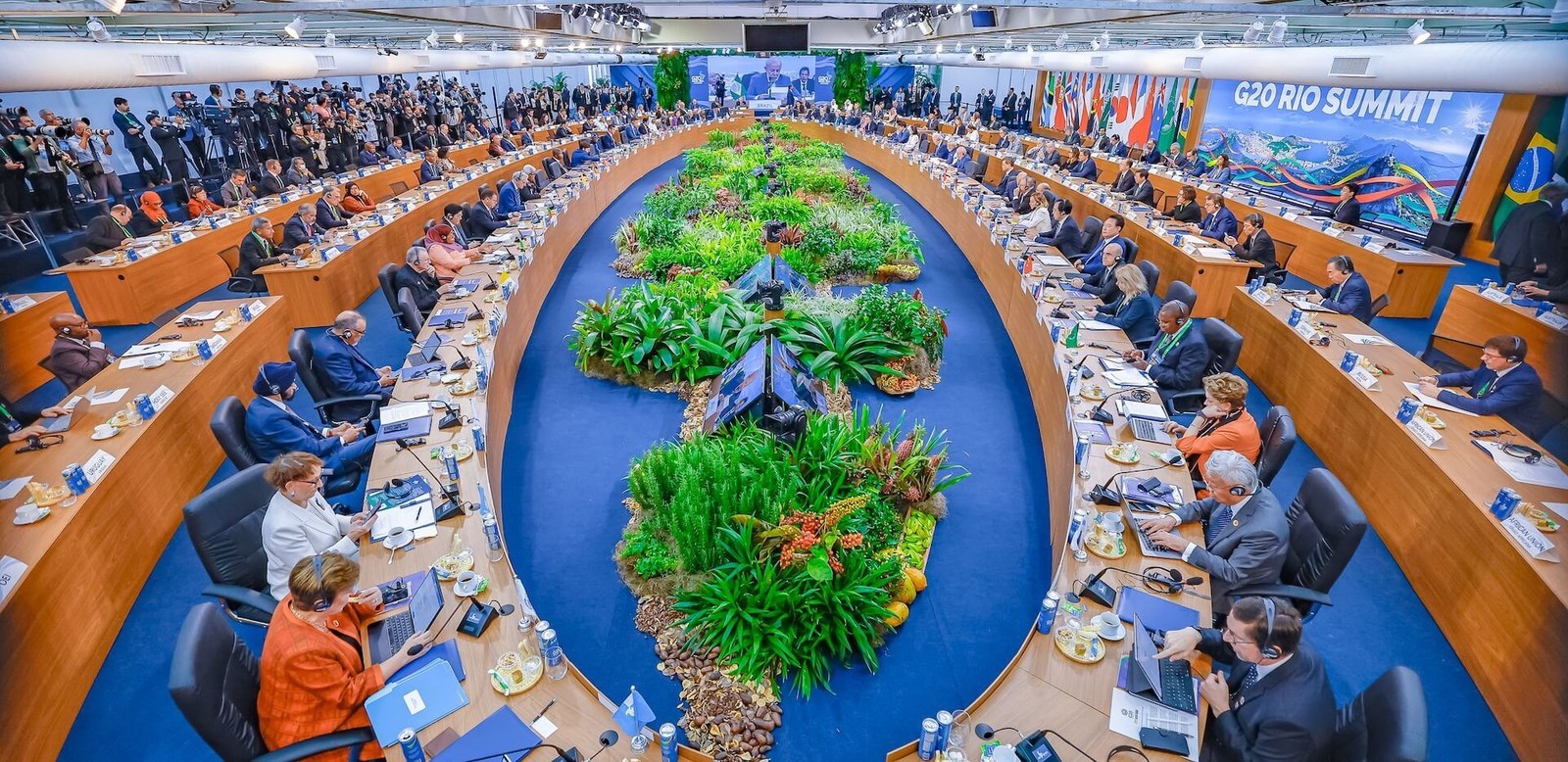
It turns out the global South was able to score big at the G20 Summit in Rio de Janeiro Brazil going by the Leaders’ Declaration at the end of the event that happened from the 18th to the 19th of November. For Africa, it was a historical summit because the African Union was attending for the first time as a permanent member after being admitted into the grouping at the 2023 G20 Summit in New Delhi, India.

For 24 years, South Africa was the sole African member of the G20, having joined at the start of the club in 1999. That meant they basically represented the rest of the continent and with the assistance of China that strongly advocated for an inclusive and effective G20. Beyond rhetoric, China was the first major power to explicitly endorse African Union’s bid for membership as from time to time President Xi Jinping and his Foreign Minister Wang Yi repeatedly voiced the importance of Africa in global governance. The BRICS Summit in Johannesburg as recent as 2023 was one such incident when Xi highlighted the need for Africa’s enhanced role in global decision making. China worked closely with Indonesia and South Africa to lobby for support for Africa Union to be admitted as they leveraged multilateral diplomacy to build consensus.

Africa now has its seat at the table represented by South Africa and the African Union. The G20 has evolved since it’s foundation in 1999 from being responsible for global financial crisis of the late 1990s to now taking on broader political, environmental and security issues that the world faces at the moment. The G20 represents about 66.6% of the world’s population and Africa Union takes 1.5 billion people to that table meaning that is about 28% of the blocks population according to population today and Worldmeters’ data. These numbers can mean markets for the rest of the 19 members of the G20 especially with the African Continental Free Trade Area (AfCFTA ) being the biggest trade area in the world.

Africa Union’s 1.5 billion people are also the least advantaged in the G20 and would benefit from the development frameworks that are being advanced within the club. Africa’s voice is guaranteed to be amplified in the G20 and all other international fora. The leaders’ declaration at the G20 2024 Brazil reiterated the formations strong support to Africa including through the Compact with Africa and the G20 initiative on supporting industrialization in Africa and LDCs, and support the African Union to realize the trade and economic integration and aspirations under its Agenda 2063 as it enters its second decade of implementation.

Africa can now take advantage of the 85% GDP of the G20 and the 75% of global trade that make up the club through the multinational avenues that are available and the myriads of working groups within the formation. It’s no secrets that despite Africa’s abundant resources be it natural or human resources the continent is still struggling with feeding itself, huge loans that have led to debt vulnerabilities, a climate crisis that the continent knows nothing about because they didn’t cause it, a failing health sector and education system that is in a state of inertia and struggling intra-African trade even with trans-African solutions like the Belt and Road Initiative (BRI) by China and the AfCFTA by African Union.

The G20 comes with avenues like the Development Working Group that focuses on implementing the sustainable development goals (SDGs) of the United Nations through sourcing finances and capacity building for infrastructure to tackle health, education and poverty eradication which are also part of the goals for the AU Agenda 2063. The G20 also has a Finance Track Working Group called the Global Partnership for Financial Inclusion (GPFI) that deal with financial literacy and access to inclusive financing. This framework is for the citizens to have access to banking and it supposed to go a long way to support small and medium businesses in the effort to boast commerce.

For the 55 countries with the African Union the International Financial Architecture Working Group can be a vital opportunity because it’s sole responsibility is to address debt sustainability and resources mobilization. It’s through this working group that better debt treatment mechanism and better access to concessional loans is lobbied for by the G20 permanent members. For the African Continental Free Trade Area (AfCFTA) the Trade and Investment working Group can be utilized to improve Africa’s Geoeconomic competitiveness as the working group aims at open trade, investment flows and global integration into supply Chains.

Africa sent some of the biggest delegations to Azerbaijan for the Conference of Parties 29 (COP29) because of the continent’s dedication to take on climate change in any means possible. G20 Summit through the Leaders’ declaration is looking forward to a successful New Collective Quantified Goal (NCQG) outcome in Baku. The formation pledged it’s support to the COP29 Presidency and committed to successful negotiations in Baku. The G20 also pledged to support the COP30 Presidency, in 2025. Further the formation committed to accelerating clean, sustainable, just, affordable and inclusive energy transitions, in line with SDG7, the Paris Agreement and the outcome of the GST-1, adopted at the UN Climate Change Conference in Dubai (COP28), that leave no one behind, especially the poor and those in vulnerable situations (like Africa), taking into account different national circumstances. It’s now up to the African Union members to take advantage of the G20 Climate Sustainability Working Group to take on the climate crisis through securing funding for climate-resilient infrastructure and environmental conservation projects especially in the renewable energy field and again the Energy Transitions Working Group comes in closely on the environmental front. If Africa goes by the energy sector and environment concerns crossroads then the continent will have figured out it’s path to industrialization.

For a while Africa’s place on the United Nations Security Council has been making headlines and some hollow offers have been made by the West. The G20 2024 did clearly outline the need to reform the UNSC and the United Nations as a whole to meet today’s problems. This was a win for the global South and now that Africa Union is a permanent member of the formation they can lobby the great powers to see this through to create global balance. Now that Africa has a seat at the table there is hope for the continent on the global stage.

The writer is a research fellow at the Development Watch Center.  

Global South & China’s interests at the G20 2024 Summit

By Nnanda Kizito Sseruwagi

On November 21st -22nd 2024, world leaders from the world’s biggest economies will convene at the 2024 G20 Summit in Rio de Janeiro, Brazil, to discuss pressing global issues. The Development Watch Center, a Uganda – based think tank focused on international relations, foreign policy and diplomacy is one of the think tanks representing at the G20’s social participation forum constituted as “Think Tanks (T20),’’ which produces, discusses, consolidates and presents ideas on how to engage contemporary challenges that may be addressed by the Group of 20 (G20). The T20 is also constituted by G20 research institutes and countries invited by the rotating presidency.

A number of six topics were provided by the T20 Brasil organizing committee to be addressed at the summit. These include: Combatting inequality, poverty and hunger; sustainable climate action and inclusive and fair energy transitions; reform of the international financial architecture; trade and investment for sustainable and inclusive growth; inclusive digital transformation; and strengthening multilateralism and global governance.

The foregoing topics are not all there is at the G20 2024 Summit. They are only part of several other dialogues that were shaped by the Brazilian presidency, of course alongside other topics that are traditionally addressed in the T20 in the successive presidencies of the G20 forum.

China and the global south share several development priorities, and have shared concerns about global economic and geopolitical issues. Some of our shared interests are well captured in the topics above provided by the T20 Brasil organizing committee.

On the issue of climate change and sustainability, I see global south countries seeking greater partnership with China in the form of climate finance and technology transfer to address the impacts of climate change. It is a common fact and common knowledge now that our countries have contributed the least to global emissions yet are the most vulnerable to climate change. Therefore, partnering with a stronger but more understanding country like China would have us in a better place to negotiate better deals for climate financing.

Additionally, China may bolster its relationship with global south countries on distributing green technology, since it is a leading global actor in the technological advancements of green energy.

Another shared interest between the global south and China is reforming global governance. It is clear to many global south nations today that international institutions, especially the International Monetary Fund and the World Bank are biased in favor of Western interests and were designed to perpetrate Western domination over the global economy and political dispensation. Through alliance with China and other countries, we can push for reforms in the organization of international organizations, or even challenge their entire legitimacy and have them replaced with a much fairer and equitable order or form of organizations that would better represent our interests and give us a better place in influencing the decision-making processes at the world level.

It is also in China’s interest as a founding member of the BRICS Block (Brazil, Russia, India, China, and South Africa) to encourage greater cooperation among BRICS countries with their wider global southern cousins to challenge the dominance of the Western powers in global governance.

The global south also stands to leverage China’s leadership in digital innovations for instance in 5G technology to help global southern countries improve their digital infrastructure and expand connectivity, which will be essential for our development and modernization efforts. We also need and indeed have a vested interest as late industrialisers, in a more equitable access to emerging technologies especially Artificial Intelligence, and China remains a global leader in this field, with the highest registered patents in Artificial Intelligence innovations. It would thus be a great partner in supporting us to bridge this digital divide between us and the developed world.

One of the most enduring phenomena in the political crises afflicting the global south has historically been Western interference in their affairs. This has been the case from slavery to colonialism, up to today under globalization and its deleterious effects on our nations. As such, the G20 Summit in Rio this year presents global southern states & China an opportunity to counterbalance the Western hegemony in global affairs. China’s non-interventionist foreign policy and emphasis on respect for sovereignty also resonates with the interests of many of our global southern states which are trying to shape their way in a world policed by Western rules.

With the recent COVID 19 pandemic experience fresh to our memory, the global south also stands interested in improving its health care infrastructure and ensuring equitable access to vaccines and medical supplies. China stands as a reliable partner on this front, having exhibited exceptional vaccine diplomacy during the recent pandemic when most Western states hoarded millions of vaccines while Africans suffered the brunt of the pandemic.

The world is changing, and also the ways in which it changes is changing. The 2024 G20 Summit in Brasil presents a number of shared interests between the global south and China and is likely to be one of the new platforms through which international change happens.

The writer is a senior research fellow at the Development Watch Center.


How China is redefining medical science and services

By Ernest Jovan Talwana

China prides as one of the most ancient medical civilisations with astonishing accomplishments in traditional herbal remedies. It is also now home to the sharpest cutting-edge biomedical research industry. China’s regular advancements in medical science discoveries are a great promise for the improvement of global health.

Chinese scientists at universities and health agencies tirelessly research the causes of illnesses, prevention measures and cures. They have even discovered efficient treatments for tropical illnesses like malaria while using traditional Chinese medicine.

Several conditions make China a conducive country for wide scientific research and innovation. Being a densely populated country, China has the opportunity of having a diversity of demographic spread across diverse terrains. This implies that its medical evolutions have to cater for a multitude of residents from several geographical spreads. As such, when they make a discovery, it can more easily correspond to the medical needs of other countries due to the inherent breadth of tests and applications (such as different disease patterns, diets and lifestyles) such medicine would have undergone before being approved.

The strides the country has made in public health have seen it nearly double its people’s life expectancy in less than fifty years, with their life expectancy now standing above 78 years. One of the major determinants of life expectancy is lower infant mortality. By 2023, China’s infant mortality rate had dropped to 4.5 per 1,000, meaning out of 1,000 children born in China, less than five are likely to die. Additionally, the mortality rate among children under five years was 6.2 per 1,000. On the other hand, the maternal mortality rate decreased to 15.1 per 100,000, meaning only 15 out of 100,000 women are likely to die while giving birth in China. In contrast, about 16 women die in Uganda per day while giving birth!

In recent years, China has produced peerless achievements in medical science and technology. This has contributed not only to the expansion of the frontiers of global scientific research but has also improved social conditions for humanity.

China has invested substantially in expanding health infrastructure. It has nearly implemented universal health insurance coverage for its huge population. The country has also promoted equal access to public health services by establishing a national essential medicine system. This has fundamentally improved the accessibility of health services.

One of the most inspiring aspects of China’s healthcare system is how it has achieved better health outcomes with less input. Few countries in the world have been able to do this, such as Cuba in South America and in Africa, only Rwanda.

However, with the Chinese population over the age of 65 at about 140 million, China has started to experience the challenges of other higher-income countries. With higher economic growth, fast changes in consumption patterns of its citizens have led to lifestyle diseases, hence demanding an increased expenditure on health care. However, regardless of these emerging needs, it cannot be forgotten that it took rich countries twice the length of time it took China to achieve the same gains in public health care.

In redefining medical science and services, China promoted a people-centred integration of care (PCIC) to ensure that the health system places more emphasis on people’s needs. It has been deliberate about its capital investment decisions by reinforcing and strengthening primary health care (PHC) so that the population can obtain access to affordable health anywhere and at anytime.

China’s health sector is one of the fastest growing globally. Chinese corporations such as Huawei are setting higher standards in digital health innovation. For instance, one of Huawei’s latest innovations is the HUAWEI TruSense System, which promises to bring accurate health tracking that has the potential to improve the health of many people across the world. It has exported over 150 million wearable devices, with over 520 million users of its Health app.

It is beyond doubt that medical science is among the highest achievements of the human race. By contributing to its advancement, China is advancing not just the treatment of disease but raising the measure of what humankind is capable of. From mastering rapid genome sequencing which saw Chinese scientists release the genetic sequence of the coronavirus in as fast as 10 days, to inventing neurosurgery robots that can fluently perform minor invasive surgeries; from building Cloud-based hospitals to ease setting appointments; obtaining referrals; and getting treatment for citizens, to performing safe surgeries using 5G-operated medical machinery, China is redefining what we think is possible in medical science and expanding the means of providing medical services. We should not just look by as Africa, but learn and catch up!

The author is a research fellow at the Development Watch Center.