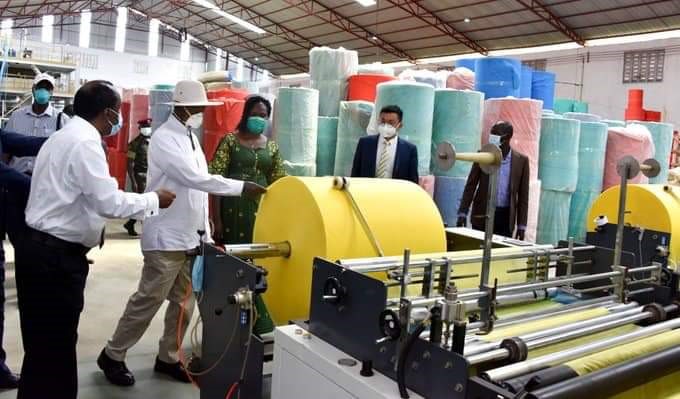
GIVING BUSINESS BUSINESS

By Salim Abila Asuman

‘’Imagine this: smooth roads and railway lines weaved through our landscapes, not just connecting places, but stitching dreams to reality. They are not just routes; they are the veins of commerce, making business not just easy, but irresistible. ‘’

Now end that imagination, and let us embark on a journey into reality, the African continent is now the host of the Chinese funded Trans-African Highway network which includes the Caira-Cape Town Highway.

Additionally, the African continent is also a home to the following China funded railway lines.

The Mombasa-Nairobi Standard Gauge Railway (SGR) in Kenya, covering roughly 480 kilometers, its construction began in 2013 and was finished in 2017.

The Addis Ababa-Djibouti Railway, connecting Ethiopia and Djibouti, is approximately 76 kilometers long and was built between 2011 to 2016.

Abuja-Kaduna Railway in Nigeria was completed in 2016, covering roughly 186 kilometers. Construction began in 2011, was completed in 2014 and officially inaugurated for commercial services in 2016.

The Lagos-Ibadan Railway in Nigeria commissioned in 2021 has three major train stations running from Lagos through Abeokuta to Ibadan.

Tanzania-Zambia Railway (TAZARA), Tanzania and Zambia: established with Chinese assistance in the 1970s, approximately 1,860 kilometers, the railway has been operational since the 1970s, with ongoing maintenance and improvements.

Another reality is that Uganda will be home to the Kenya-Uganda Standard Gauge Railway (SGR): the projected length is approximately 273 kilometers, and it is intended to facilitate the transportation of goods from the port of Mombasa to Kampala, then to Kigali, Beni in the Democratic Republic of the Congo, and finally to Nimule and Juba.

Akin to veins these roads and railways lines play a crucial role in the circulatory system of our economy, serving as tubes they pump business into the heart of the economy bringing in and taking out various businesses.

As these roads stretch and railways weave through the vast landscapes, the ripple effects are profound, especially for entrepreneurs daring to dream big, at this point, it is only proper that I delve with you how these investments are not just installing tracks and asphalt, but also paving the way for innovation and expansion.

The arteries of commerce, once clogged by inadequate infrastructure, are now flowing with vigor. Improved roads and railways are facilitating the movement of goods and services, enabling entrepreneurs to tap into previously inaccessible markets and expand their reach.

In today’s interconnected world, connectivity is key and Infrastructure is not just about physical roads and railways; its about connecting people, ideas, and opportunities. Entrepreneurs are leveraging this connectivity to access information, recourses, and markets, empowering them to turn their business ideas into reality.

The journey from idea to reality is often fraught with challenges, but Chinese-funded infrastructure projects are paving the way for innovation and collaboration. By fostering an ecosystem of connectivity and collaboration, entrepreneurs are finding new ways to innovate, collaborate, and succeed in rapidly evolving marketplace.

At the heart of Africa’s development is the prospect of economic growth and progress. These infrastructure investments not only lay the foundations for commercial success, but also for long-term economic growth that benefits every aspect of society.

Homegrown brands that drive industrial growth benefit from enhanced infrastructure, from agricultural products to renewable energy solutions, these brands are pivotal in fostering economic development and connectivity across the continent, including Uganda.

In the agricultural sector, Brands like Kuapa Kokoo in Ghana and Ethiopian Coffee Export Corporation rely on efficient transportation networks for cocoa beans and coffee production, while Uganda Coffee Development Authority, Agrisol Africa Limited and Pearl Dairy Farms Limited expand their market reach.

The textile and apparel industries represented by brands like Dupies African Clothing, ShweShwekini and Nytil Uganda are leveraging improved transport infrastructure to access raw materials and distribute finished products.

In the realm of minerals and resources, African brands like Anglo Gold Ashanti, De Beers, Nigerian National Petroleum Corporation, and Uganda’s Tullow Oil rely on well-maintained roads and railways for efficient mineral and resource transportation.

Telkom, Safaricom, MTN Uganda, and Airtel Uganda are leading providers of telecommunications services, leveraging improved infrastructure to expand networks and reach underserved communities across Africa.

Renewable energy brands like M-KOPA Solar, and GreenPower Overseas Limited capitalize on improved infrastructure to deploy solar panels and home systems in off-grid communities, driving electrification and socio-economic development. Uganda’s renewable energy sector, represented by the brands like SolarNow and Fenix international, are rapidly expanding, benefiting from upgraded infrastructure to expand access to clean energy.

A concise way to say ‘’one gives business business‘’ is that ‘’one supports businesses’’ and China giving business business is a fact that resonates with a profound truth.

China gives businesses business because through Chinese investment and skills focused at developing transportation infrastructure in Africa, one’s company idea can be transformed into a reality, therefore giving their business ideas the business.

Transforming your business idea into a thriving reality is a riveting journey, complete with unexpected twists, exhilarating highs, and yes, even a few hilarious mishaps along the way. From the initial spark of inspiration to the triumphant launch of your brainchild, each step is a chance to unleash your inner visionary and craft into a legacy that echoes far and wide.

And let’s not forget the unsung heroes in this saga – the roads and railways that crisscross the landscape, tirelessly ferrying your goods to eager markets. With these vital arteries in existence, your dreams aren’t just dreams anymore; they’re tangible possibilities waiting to be embraced.

So, as you navigate the exhilarating maze of entrepreneurship, remember to savor every moment, relish every challenge, and above all, keep your sense of humor intact. After all, in the unpredictable world of business, a hearty laugh might just be your most valuable asset. Here’s to chasing dreams, blazing trails, and turning aspirations into epic adventures!

There has never a better time to turn your business ideas into reality and ride the wave of Africa’s transformation, your business will surely get business.


The writer is a lawyer and research fellow at the Development Watch Centre.

Anti-Western Backlash and the need to rethink governance in Africa

By Nnanda Kizito Sseruwagi

USAID has one of the most appealing organisational commitments ever encapsulated in a mission statement. On behalf of the American people, they commit to promoting and demonstrating democratic values abroad and advancing a free, peaceful, and prosperous world. They are devoted to supporting America’s foreign policy by leading the U.S. Government’s international development and disaster assistance through partnerships and investments that save lives, reduce poverty, strengthen democratic governance, and help people emerge from humanitarian crises and progress beyond assistance.

USAID aims to support its partners to become self-reliant and capable of leading their development journeys. They are dedicated to fostering sustainable development and advancing human dignity globally. USAID is also keen on inclusion, supporting programs that advance equality of all people in communities regardless of their gender, sexual orientation or physical abilities.

Europe and North America pour billions into Africa to promote good governance and support the fight against poverty and corruption. Western intentions seem genuinely supportive and innocuous for Africa. So, why are African leaders and an increasing number of African elites drastically reacting negatively to Western policies? Are Western values under threat by this backlash? If so, why?

Firstly, the West needs the humility to accept that they are ignorant of how Africa (by “Africa” I mean “Sub-Saharan Africa” to be more specific) functions and how Africans’ world view & values, despite deep Western acculturation through colonialism, remain traditional in fundamental ways. The assumption that Western values are inherently right and universal is simply wrong. The West needs to first put these assumptions at bay before they profoundly engage Africa if they genuinely intend to help it.

The U.S. and Europe should support Africa based on African realities, not their Western ideas of what Africa must be like. Doing otherwise would be like medicating a dummy.

As an African, I understand fully that democracy, inclusion, human rights and governance are very necessary for my well-being. But my living conditions, economic status and cultural sensibilities are the fodder out of which these values must be manufactured, not from lectures, statutes, or sanctions from the West.

The West should be patient with us as they were with themselves while developing these aspects of governance in a manner compatible with their cultural values and living conditions. Sanctions are not going to instantly groom African homophobes to love homosexuals or respect their rights. But there are so many Africans who respect and advocate for minority rights by virtue of their humanity, who are now unfortunately opposed to the West on nationalistic grounds because Western interventions under the guise of defending minority rights undermine an even greater ideal- the sovereignty of African states.

These states, with their elderly ruling elite class, have a fresh memory of colonial occupation and barbarity. They are therefore reasonably going to be opposed to the West, erupting into the backlash we see today.

Whereas well-intentioned, Western support for Africa with its intended effect of modelling African states in the image of modern Western states, especially about governance, is misplaced.  The West views governance in Africa generally based on cliches. Cliches always have an element of truth, which overrides nuance for the analytically feeble analysts who reproduce these cliches as the full picture of Africa in scholarly work, human rights activism, and social commentary.

There is a rational explanation for how African leaders behave and how our politics organizes itself. The West should not think of this organisation as backward or irrational. Though imperfect in several ways, often the ways our politics works are not intended or designed by our leaders based on their virtues. Rather, this politics curves itself out of the realities it finds on the ground.

Western governance values evolved out of political contestations on the ground. They did not befall on them like manna from heaven.  Both the ground and the nature of political contestations in Africa are unique from those out of which the Western experience was shaped. Therefore, we cannot function the same way, even though we find certain Western values attractive and indeed, we aspire to embrace them. But we need to embrace them on our terms, not on dictates and conditionalities.

We should not and cannot de-historicize the past realities out of which our current experiences emerge. But we can work together to shape a better future for governance in Africa.

If Western powers maintain the stance that African countries are in disarray and must first conform to particular Western governance models and principles to earn their aid, they will have failed on the first step for rendering transformative support. It may be that the constitution and functionality of the state in contemporary Africa will never conform to Western notions of political modernity. Yet, the same state could evolve synonymous values as those cherished in the West. The evolution of states in Africa will not necessarily take the form of modern Western states, and that should not be the basis for punishing us with aid cuts or economic sanctions.

The writer is a Senior Research Fellow at the Development Watch Centre.

Where Will Africa’s Democratization Come From?

By Nnanda Kizito Sseruwagi

The title of this Op-ed should not mislead us into thinking that I suggest a possibility of African countries being undemocratic. All of them are aligned towards democratization and in some aspects, some are even more democratic than some Western nations.  Like any state, even the oldest democracies, African states are on the journey of becoming more democratic. Democracy is not an end or event where a given nation crosses a certain line and alas, they are happy-ever-after democratic. No. Democracy is a means. A process. This process will keep on for eternity because human beings who execute this system of political organization are inherently imperfect, and as such will always deal with internal contradictions to their governance. Therefore, by Africa’s democratization most likely coming from China, I imply that there is a high possibility of different African countries tending to democratize more and more through their partnership with China than with other global actors in Africa.

Democracy can be understood in its opposition to other forms of government such as autocracy/dictatorship/tyranny- systems of government in which absolute power is held by the ruler, known as an autocrat/dictator/tyrant, or where power is held by a few individuals. The Austrian-British philosopher Karl Popper in his work “The Open Society and Its Enemies”, contrasted democracy to tyranny, and established that unlike under dictatorship, democracy offers opportunities for people to control their rulers, to appoint and disappoint them without the need for a revolution.

For Karl Popper’s idea of democracy enabling people to control their leaders to function, another argument comes into play – that of development leading to democracy. It has also been articulated and criticized as the modernization theory. This theory holds that as societies become economically developed, wealthier and more educated, their political institutions become increasingly liberal democratic. Whereas critics have compromised the modernization theory by accentuating cases where industrialization failed to produce democratization, such as Japan, Germany, and the Soviet Union, and claiming that the theory was too general and overlooked societal differences, this has not fundamentally challenged the fact that economic development significantly predicts democratization. We should note that social science theories are never as accurate as scientific theories. Several arbitrary factors undermine a prediction because societies are very disparate, and are as fluid and changing as the weather. The preponderance of accuracy for a social theory is never better than about 75 percent.

My argument emerges from an observation of the flow of development finance from the West and China, with a focus on what that finance does in Africa. According to a 2018 report by the China-Africa Research Initiative at Johns Hopkins University’s School of Advanced International Studies (SAIS), in 2000, China’s annual development finance to Africa totalled US$121 million. It was distributed among a handful of countries. However, by 2013, it had crossed over US$16 billion and was comparable to those of the largest Western development finance providers. China’s development Finance portfolio also focused on infrastructure projects and industries. In Uganda, finance from the Belt and Road Initiative enabled us to construct two hydropower plants; the Isimba Hydro Power Plant which generates 183MW to the national grid and the Karuma Hydro Power Plant which will produce 600MW. This will definitely contribute to our country’s power supply, which is a fundamental ingredient for manufacturing economic development.

However, another revelation from the SAIS’s report was that as China’s development finance portfolio in Africa increased, Western countries focused more on the quality of governance in the developing world and how it relates to economic development. They became keen on corruption controls, democratic development, and respect for human rights and they made their perception of those attributes in Africa an integral part of their countries’ foreign policy agendas. They hypothesized that China’s growing economic and political footprint is undermining the West’s drive to promote good governance in Africa. This is my disagreement with them and the focus of the argument I make about modernization.

Whereas modernization is never linear, evidence stipulates that each stage of modernization changes people’s worldviews. Christian Welzel and Ronald Inglehart, German and American political scientists respectively, in their book “Modernization, Cultural Change, and Democracy: The Human Development Sequence” argue that Industrialization leads to one major process of change, bringing bureaucratization, hierarchy, and centralization of authority, secularization, and a shift from traditional to secular-rational values. Then the rise of postindustrial society introduces another set of cultural changes that move in a different direction: instead of bureaucratization and centralization, the new trend capitalizes on individual autonomy and self-expression values, which increasingly emancipates people from authority. Therefore, other factors being constant, high levels of economic development tend to make people more tolerant and trusting bringing more emphasis on self-expression and participation in decision-making. However, this process is never deterministic. Any forecasts can only be probabilistic since economic factors are not the only influence. They observe that a country’s leaders and nation-specific events could also shape what happens and disclaim their argument thus; modernization’s changes are not irreversible. Severe economic collapse can reverse them, as happened during the Great Depression in Germany, Italy, Japan, and Spain and during the 1990s in most of the Soviet successor states. Inglehart and Welzel further argue that modernization does not automatically bring democracy but with time it causes social and cultural changes that make democracy increasingly probable.

Suppose we are to predict which of the foreign actors between China and the West is likely to contribute to the democratization efforts among African nations. In that case, the biggest contributor to our development and modernization efforts is probably China. The West is mistaken and forgetful of their own development experience to assume that lecturing African leaders, sanctioning them and banning countries like Uganda from AGOA for passing anti-homosexuality laws will democratize Africa. It won’t. Supporting us to develop economically will.

The writer is a Lawyer and Research Fellow at the Development Watch Centre.


The World at a Stand Off

By Moshi Israel

Growing up, many of us watched American “Westerns,” most popularly known as cowboy movies. In these movies, there was always a scene where two men, usually the protagonist and the villain, stood facing each other at a distance, and the one who could draw their gun the quickest would emerge victorious. These moments were commonly referred to as “standoffs.”

In today’s world, where the stakes are far higher than a mere Hollywood script, we find ourselves in a geopolitical stand-off. Despite the alarm bells ringing loudly, attention remains scarce as decision-makers are too busy pointing guns at each other. Only China seems to care about cooperation and the need for normalizing relations among the world’s heavy weights.

In Europe, the war in Ukraine has failed to reach a compromise as numerous young people die aimlessly. The West is set on punishing Russia for its military operations in their neighbor’s territory while the latter is set on protecting itself from NATO’s endless military expansion to its borders. Guns have been drawn and pointed and no one is dropping theirs. The developments on the battle field in Ukraine have had a negative effect on the global economy and specifically on the economies in Europe and the United Kingdom. As I pen this down, the UK has entered a recession by reporting a second consecutive negative quarter of GDP. On the other hand, Russia which was expected to fold under the weight of unprecedented sanctions has defied expectations. However, it is paying the cost with the blood of its young on battlefields in Ukraine.

Furthermore, political tensions are raising between EU allies. Most of Europe has resorted to ‘allegedly ‘using under handed tactics to coerce Hungary into getting in line with the agenda. Turkey is another wild card whose foreign policy is drenched in mind games of confusion which I believe are a reflection of Recep Tayyip Erdogan’s character. No one knows what Turkey might do or better yet what Erdogan might do. Also, one cannot forget about the protests by Farmers and other workers in Poland, Germany, France and the Netherlands. The Polish in particular have problems with special treatment for Ukrainian refugees and cheap Ukrainian grain that is devaluing the efforts of the local farmers. There have been intermittent squabbles between Ukraine and Poland but relations remain largely stable, at least for now.

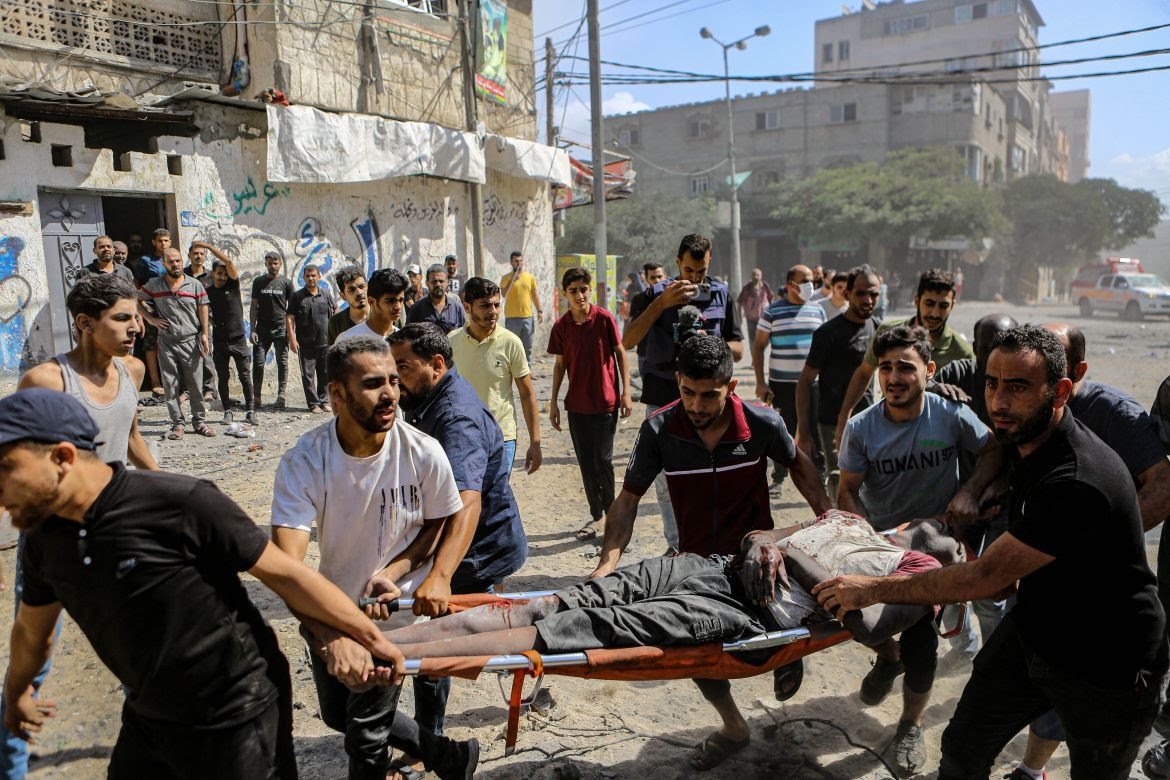
In the Middle East, the war in Gaza has become a dividing factor within the international community. Israel has used what most have deemed excessive force in response to the Hamas terror attack on October 7th. The stories and pictures from this part of the world are painful to watch. The war is being carefully managed so as not to turn into a wider war regional war. We have Israel, Palestine, Iran and its proxies in Lebanon, Iraq and Syria, the Houthis in Yemen, the United States and a few willing allies, the Arab league, and Russia all pointing guns at each other. On the other hand, China is asking everyone to calm down in the region.

Furthermore, South Africa has prominently taken Israel to the International Criminal Court (ICC) on charges of genocide, sparking a heated exchange between the two nations. As anticipated, the ICC’s response was not definitive, underscoring the complexity of these issues that often transcend legal proceedings. On a less intense note, the ICC has been commendable in its pursuit of justice, particularly in holding warlords and dictators accountable across regions such as Africa, Eastern Europe, the Middle East, and South America. It’s notable that major world powers have not ratified the court’s jurisdiction, perhaps suggesting that they consider themselves beyond its reach, reserved for ordinary individuals.

Top of Form

In Africa, everyone seems to develop sudden amnesia when its people are dying. Sudan, South Sudan, Tigray and the DRC continue to be valleys and deserts of death. Some of these conflicts are triggered by external factors and influence. The endless massacres do not serve the interests of the African continent. The continent is a constant battle ground and backyard for great power struggles. Additionally, we have the dramatic series of coups in the Sahel belt. Mali, Burkina Faso, Niger, Guinea and Gabon have had military coups. Experts say, that Tunisia, Chad and Sudan had constitutional coups. Who are we to judge, let’s leave the nuances to the experts. However, this much is clear, most of these coups are internally popular and the common theme has been kicking out neo-colonial regimes that are deemed to be serving the interests of foreigners at the expense of the citizens. France has come up several times in these accusations. No one knows where all this is headed…but the guns are pointed.

When examining the United States, we encounter a complex entity akin to the mythological Cerberus, with three distinct challenges. Firstly, there are domestic political issues, secondly, concerns arise regarding US foreign policy, and finally, there’s the matter of US relations with the world’s second-largest economy. Internally, the US grapples with significant division. The political landscape is sharply split between the left and right wings. Progressives advocate for reform, while conservatives prioritize maintaining traditional values. Yet, both sides are influenced by a neoliberal ideology at their core, with only the fringes deviating from this norm. On the left, the fringe is represented by progressive socialists, often branded as “communists” by the right. Conversely, on the right, the fringe is perceived as the “MAGA right,” which the left tends to label as “fascist racist extreme MAGA conservatives.” If tensions persist between these factions, civil unrest within the US could be imminent. However, amidst this turmoil, there exists a dominant neoliberal core that has thus far maintained stability, despite being criticized by both the extreme left and right, and often referred to as the “uni-party.”

The Uni-Party is what has kept American foreign policy consistently antithetical to world peace. This includes interventions in foreign regimes, engagement in proxy wars for dominance, financial exchanges for political allegiance in developing nations, as well as conflicts against ideologies such as Islamic extremism, communism, and fascism. Notably, domestic issues in the US frequently spill over into global affairs, with US political decisions profoundly influencing international realities. Any internal discord within the US thus inherently poses a risk to global stability.

Tensions between the US and China are rapidly becoming tensions between the collective West, G7 and BRICS+. On the economic scale, Japan entered a recession alongside the UK. Japan has lost its global economic rank to Germany. These recessions have weakened the G7 economically as compared to BRICS+ economies. Currently, BRICS+ countries have a higher GDP in terms of purchasing power parity (PPP) than the G7. And the gap keeps increasing. This means nothing but guaranteed competition that will also put the world on its toes and guns will eventually be drawn.

The pressing question at hand is the significance of these developments and where they ultimately lead. Speculation is inevitable as we navigate this complex landscape. What is clear, however, is that the world finds itself in a scenario reminiscent of a ‘Western’, where every party seems poised for a shootout. Geopolitically, we’re at a standoff, and it seems only a matter of time before tensions escalate into action.

The Writer is a Senior Research Fellow at Development Watch Centre.

When Self-defense breaches its bounds and why it will take the West to settle the Israel-Palestine Question

By George Musiime

The situation in Gaza has been progressively deteriorating since last October. Yet even after a phone conversation with president Biden, Prime minister Netanyahu went on to make a televised statement in which he asserted that Israel could not defeat Hamas without marching on Rafa, alluding to the existence of battalions of Hamas operatives “among the city’s 1.4 million residents.” The impending offensive sets a couple of challenges including; where the 1.4 million people will go having seen the destructive nature of these operations, whether they will be allowed time to get to safety,  and weather the IDF will take the imperative to avoid civilian casualties this time. It is important to note that The United States has since the Carter administration acknowledged that lasting peace in this region could only come from a two state solution. However, for some reason the United States and the West in general have not used their influence over Israel to deliver on this goal, which should, undoubtedly  be within the power of their foreign policy machinery.


The Israel-Palestine conflict is among the world’s longest running conflicts, going back to the creation of the state of Israel on May 14th 1948.  The conflict started with the Arab-Israeli war which had displaced over 700,000 Palestinians by 1949 culminating into the division of this territory into the three parts we know today as Israel, The west Bank and the Gaza Strip.

Prof. Miershimer describes this terrible situation by referring to Palestine as the world’s largest open-air prison. However, judging by what has been going on in Palestine, this may be an understatement because never before, in its 75 year history  has this conflict nor any other conflict had such levels of destruction over such a short period; with millions displaced, tens of thousands dead and entire cities razed to the ground. While this has been so, the Western stance on this conflict particularly over the past four months but also during previous episodes has been non-committal in as far as calling Israel to order; always asserting Israel’s right to self-defense, while vilifying any differing views at times. Let us not forget that the Camp David accords of 1979 delivered gains in resolving tensions between Israel and Egypt alongside Syria. Moreover, the Oslo accords were viewed with much anticipation only to collapse with the assassination of former Premier Rabin Yitzhak in 1995 by elements opposed to the signing of the accords that fronted a two-state approach to this conflict. Attempts to resurrect these efforts through the Abraham accords brokered by the US are already coming under threat with Morocco seemingly decided to pullout from whatever concessions were reached in 2021. Nevertheless, the major flaw with this approach is that it attempts to create ties between Israel and Arab nations with the implicit aim of isolating Palestine.

What the world seems to ignore in this entire melee is that the Palestinians want the same thing the Israelis want. Meanwhile, the West has overseen the growth of a Militarily powerful and technologically advanced nation of Israel next door to Palestine. Creating a very powerful state of Israel that is not willing to afford the Palestinians most of the rights and freedoms that it wants for its own people, a deviation from the position of the Universal Declaration of Human Rights, which asserts the recognition of inherent dignity and of equal and inalienable human rights as foundations of…global peace.

Regardless, the occasional rockets fired into Israel and such horrendous attacks as the one of 7 October 2023 are evidence that this has not been without consequence. Moreover, this can be argued to have fueled the rise to prominence of extremist groups such as Hamas over the rather moderate PLO and Fatah.  The Israeli run apartheid state in Gaza has provided the necessary conditions for the raise of Hamas. More so, while this went on, the United States throughout the currently raging conflict has continuously stressed through the president its alignment with Israel amidst worldwide lamentation over the worsening situation in the region. President Biden has also argued that if there had been no Israel, The United States would have had to create one to protect US interests in the Middle East.

This goes to tell how the Biden administration views the situation in Gaza as long as Israel seems to be winning. It remains unpredictable the scale of destruction the offensive on Rafa might have. However, one can argued that this conflict is at a point where people may not necessarily fall to shelling or small arms fire. As the author Allan Weiss point out, you do not have to shoot songbirds out of the sky, sometimes all it takes is destroying enough of their sustenance and they will voluntarily start to drop dead on their own. Such has been the nature of Israel’s offensive against the Gaza strip; destroying  homes, schools, cutting  power and water supply, denying  or rather complicating (through countless checkpoints and deliberate sabotage of public infrastructure) the delivery of  food and essential medical supplies or setting troves of people on an exodus amidst stampedes and bombardment.

A glimmer of hope for world peace:

Emulating Chinese leadership is not a new concept; in fact, the French enlightenment period philosopher Voltaire, in one of his letters expressed his great admiration for the Chinese culture and praised the Confucian ideas of universal morality and good governance. At a time when conflicts are sending shock waves rippling through the world in the form of economic downturns, hunger etcetera, China could still have wisdom to share with the world. China is on record for being a strong advocate of noninterference in other countries internal affairs, and finding negotiated solutions to differences and conflicts. In the face of a tumultuous global peace landscape, President Xi Jingping in his opening address at the Boao conference for Asia, 2022 proposed for the first time the Global Security Initiative (GIS) as a response to global peace challenges.  China further elaborates a road to sustainable world peace and security in six key commitments under the GIS. These commitments include; common comprehensive, cooperative and sustainable security, Respect for the sovereignty and territorial integrity of nations, Respect for the purpose and principles of the UN charter,  Taking seriously the concerns of all countries,  Peaceful resolution of differences and disputes through dialogue and consultation  and Maintaining security in all domains. As a country committed to shared global prosperity, China understands that prosperity cannot happen in the absence of peace. Moreover, with the GIS, president Xi reaffirms China’s mindfulness  of the UN charter whose overarching goal is to save future generations from the scourge of war and the resulting devastation,  which today, the world needs to work double-shift to return a lid on.

Seventy years of the Israel-Palestine conflict is proof that cease-fires are not what we need in this volatile region. Frozen conflicts are constantly at the risk of eruption and with many militant groups itching to take a reprisal jab at Israel; finding a lasting solution to this conflict would certainly be in the best interest of both the Israeli people and the world. In fact, the West may be the only party that could call Israel to order but for as long as we remain adamant to recognize Palestinians as humans deserving of the same rights and freedoms as everyone, we can continue to expect this conflict to carry on, only intermittently!

George Musiime is a research fellow at the Development Watch Centre.
 

SINO-UGANDA RELATIONS HAVE ENTERED A CRUCIAL STAGE

By Steven Akabwayi

Early Feb this year, China opened a visa center in Kampala for ordinary passport holders, aiming to reduce congestion at the main embassy. The center was launched by the Chinese Ambassador to Uganda H.E Zhang Lhizong, purposely to ease travel for Ugandan nationals traveling to China for business and other activities.

The relations between Uganda and China have been grown rapidly over the years. It should be noted that by 2023,, the trade volume between the two countries had risen by 6.6%, reaching 1.14 billions

Uganda Airlines is expected to open direct flights between Entebbe and China’s Guangzhou City which will ease trade and also strengthen people diplomacy within the two countries.

China’s direct investment in Uganda reached 131million US dollars in 2022, ranking 10th among all African countries

President Museveni has always shown optimism on Sino-Africa relations, in one of his interviews in 2022, he demystified allegations commonly peddled by Western countries that Beijing expands its influence by drawing smaller economies into a debt trap.

“Africa has been having problems for the last 600 years due to the slave trade, colonialism, neocolonialism, and none of it was from China,” he said.

China’s engagement with Uganda is rooted in a shared commitment to development and prosperity. Over the years, China has emerged as one of Uganda’s most significant partners, investing in key sectors such as infrastructure, energy, agriculture, and healthcare. These investments have played a pivotal role in driving Uganda’s economic growth, creating jobs, and improving the quality of life for millions of Ugandans.

One of the most notable examples of China’s contribution to Uganda’s development is the construction of the Kampala-Entebbe Expressway. This vital infrastructure project, funded by China Exim Bank and built by Chinese companies, has not only eased traffic congestion but also enhanced connectivity, facilitating trade and investment within the region.

Moreover, China’s support for Uganda’s agricultural sector has been instrumental in boosting food security and rural livelihoods. Through initiatives like the Uganda-China Agricultural Technology Demonstration Center, Chinese experts share their expertise in modern farming techniques, irrigation systems, and crop diversification, empowering Ugandan farmers to increase productivity and adapt to climate change.

Critics often raise concerns about China’s involvement in Africa, citing issues such as debt sustainability and environmental degradation. However, such criticisms fail to acknowledge the agency of African nations like Uganda in negotiating mutually beneficial partnerships with China. Unlike colonial powers of the past, China’s approach to engagement with Africa is based on equality, mutual respect, and non-interference in domestic affairs.

Furthermore, China’s investments in Uganda go beyond infrastructure and agriculture, extending to education, healthcare, and human resource development. Through initiatives like the China-Uganda Friendship Hospital in Naguru and scholarships for Ugandan students to study in China, bilateral cooperation in the healthcare and education sectors has strengthened people-to-people ties and fostered cultural exchange.

The significance of China-Uganda relations transcends bilateral cooperation and holds implications for regional and global dynamics. As Uganda serves as a gateway to the East African Community (EAC) and the Great Lakes region, its strategic importance cannot be overstated. China’s investments in Uganda’s infrastructure, particularly in transportation and energy, contribute to regional integration and promote economic development across East Africa.

Moreover, Uganda’s participation in China’s Belt and Road Initiative (BRI) offers opportunities for connectivity and trade along the Maritime Silk Road and the Silk Road Economic Belt. As a landlocked country, Uganda stands to benefit from enhanced infrastructure linkages and improved access to global markets, positioning it as a key player in Africa’s economic transformation.

In light of the COVID-19 pandemic, China’s support for Uganda’s healthcare system has been particularly noteworthy. From donating medical supplies and equipment to deploying medical teams, China has stood in solidarity with Uganda in the fight against the virus. This demonstration of friendship and cooperation underscores the resilience of China-Uganda relations in times of crisis.

Looking ahead, the potential for deeper cooperation between China and Uganda is immense. From harnessing renewable energy resources to promoting sustainable tourism and enhancing digital connectivity, there are numerous avenues for collaboration that can benefit both nations and contribute to shared prosperity.

In conclusion, the relationship between China and Uganda is not only critical but also holds immense potential for shaping the future of both nations and the broader African continent. Through cooperation, mutual respect, and commitment to common development goals, China and Uganda can pave the way for a brighter, more inclusive future for all.

Steven Akabwayi a Research fellow at Development Watch Centre.


THE AID TO AID US IN DOING AWAY WITH AID

By Salim Abila Asuman

The nation breathes in a symphony of fiscal toxins, with each exhale dealing a crushing blow to its fragile economy. Loans of all kinds now sit on its people’s shoulders, tasked with bearing the weight of unjustified financial obligations.

National debts, the financial chains binding governments come in various haunting forms and they are the following;

Internal Debts: This is a specter lurking within borders, internal debts arises when a government borrows from its citizens or domestic institutions. This debt, though seemingly closer to home, can still cast a long and dark shadow on the economy.

External Debt: This one is a phantom from beyond borders, external debt materializes when a nation borrows from foreign entities or international institutions. The chains of external debt can tighten as global economic tides shift, rendering nations vulnerable to external forces.

Unfunded Liabilities: These are a silent menace, unfunded liabilities represent promises made by governments for future payments, such as pensions and social security. As these promises accumulate, they form an invisible debt, haunting fiscal planners with the fear of impending obligations.

Contingent Liabilities:  Is a lurking uncertainty, contingent liabilities emerge from potential future events that may lead to financial obligations for the government. These debts, like ghost in the shadows may materialize unexpectedly, casting doubt on the nation’s financial stability.

The authority to negotiate any of the aforementioned loans is laid at the door of the government, and with it handicapped, the pendulum swings in favor of corporate lenders. The truth is plainly that governments come and go, leaving the people to bear the burden of irresponsible state actions, and this weave needlepoints of emotions that touch the very soul of an originally Ugandan that bears the burden of repaying his nations debts.

The multifaceted consequences of national debt on a nation’s economy are also explored here, this is done through investigating the intricate interplay of economic indicators, government policies, and global financial dynamics.

On interests and budget allocation, high national debt can lead to increased interest payments, limiting funds available for other budgetary priorities like infrastructure, education, and healthcare.

The crowding-out effect, is also as a result of increased government borrowing, it reduces private sector investment and borrowing, thus hindering economic growth by increasing loan costs.

Additionally, the competition for funds in the credit market can limit the resources available for private enterprises, contributing to a crowding-out effect.

High national debt also limits fiscal flexibility, and as a result limiting the government’s ability to respond to economic challenges, allocate discretionary spending, and to invest in long-term economic development.

Amidst all the above there is aid to aid us in doing away with aid; this is the concessional loans from China. Unlike commercial loans, concessional loans come with more favorable terms.

These financial aids are often extended by governments or international institutions, featuring lower interest rates, extended repayment periods, and greater flexibility. And the intention is to support the economic development of recipient nations without burdening them with stringent conditions associated with commercial borrowing.

China’s involvement in Africa particularly through concessional loans, has played a pivotal role in financing various infrastructure projects and initiatives across the African continent.

The terms of concessional loans from China are designed to be more favorable than of commercial loans, and these terms include lower interest rates, longer repayment periods, and increased flexibility.

This nature of this loan is meant to alleviate financial burdens on African nations, allowing them to focus on development without the immediate strain of high-interest payments.

In recent years, Uganda has benefited from Chinese concessional loans, to boost infrastructural development, showcasing the practical benefits of collaboration between the two nations. Here are a few examples:

Expansion of Entebbe International Airport: China Exim Bank’s concessional loans have significantly improved Uganda’s Entebbe International Airport, increasing capacity, updating facilities, and operational efficiency, thereby enhancing the country’s international stature and global connectivity.

Karuma Hydropower Project: China’s financial support significantly contributed to Uganda’s Karuma Hydropower Project, a 600-megawatt hydroelectric plant on the Nile River, promoting sustainable electricity generation and a more energy-secure future.

The Isimba Hydropower Project, funded by Chinese concessions, significantly boosts Uganda’s electricity generation capacity, providing reliable power to urban and rural areas and boosting economic activity.

The Kampala-Entebbe Expressway: Funded by China, it has significantly improved Uganda’s transportation infrastructure, alleviating traffic congestion and boosting economic activity by facilitating quick access between Kampala and Entebbe International Airport.

The Source of the Nile Bridge is another Chinese concessional loan-supported structure in Jinja, that has significantly improved regional connectivity, boosted trade and tourism, and showcased Uganda’s commitment to sustainable development.

In the complex landscape of interstate relationship, concessional loans also play an important role in strengthening interstate partnerships, establishing them as a potent tool for boosting collaboration and mutual development.

Concessional loans stimulate economic growth in recipient countries by providing financial assistance on advantageous terms to infrastructure projects, industries, and other critical sectors.

This economic boost benefits not just the recipient state, but also has a knock-on effect, encouraging regional stability and collaboration.

Negotiating and implementing concessional loans often involve mutual development goals, this motivates governments to work on long-term projects, nurturing unity and purpose, and forming links beyond economic transactions.

Infrastructure projects backed by concessional loans create job possibilities, the interchange of talents and expertise during project implementation strengthens inter-state relationships.

Loans at concessions include flexible terms that reduce financial risks and promote shared achievement to the receiving state, that in return foster confidence and collaboration which are crucial for interstate ties development.

Diplomatic cooperation is crucial for concessional loan negotiation and management, fostering discourse, compromise, and problem-solving, laying the groundwork for future diplomatic partnerships and communication channels.

Most important concessional loans are a potential antidote to corruption in nations plagued by notoriety for malfeasance. This financial instrument is accompanied by stringent conditions and transparency mandates, it brings with it a web of oversight mechanisms, audits, and accountability measures.

This heightened scrutiny creates a transparent landscape, significantly reducing the loopholes and opportunities for corruption.

These loans are inherently tied to development projects and public welfare initiatives, this strategic alignment ensures that the funds injected into the nation are directed towards projects with a tangible societal impact.

By prioritizing the common good, concessional loans minimize the risk of funds being drawn off for personal gain, nurturing a culture of responsible financial management and accountability.

In essence, these loans become not just a financial lifeline but a catalyst for transformative change, challenging the entrenched patterns of corruption that have plagued this nation for far too long.

In the inhale of an assortment of financially crippling poisons, this nation has absorbed every toxic offering, each delivering a devastating blow to the fragile economy. This relentless assault has heaped an undue burden upon the shoulders of its citizens, compelling them to bear the weight of unnecessary financial obligations. Amidst this dreadful set-up, the beacon of hope flickers in the form of concessional loans—the only aid capable of assisting us in breaking free from the chains of perpetual financial strain.

The author is a junior research fellow at the Sino-Uganda Research Centre.


Understanding the Belt and Road Initiative

By Nnanda Kizito Sseruwagi

Probably you have heard about it. Probably not. What is it? Let us first understand what it isn’t. Many initiatives from China suffer from being misunderstood, even at the highest echelons of policy experts around the world. This is due to the saturation in public media internationally by Western propaganda and culture, which has bred most of us. We are therefore predisposed to be suspicious of any agenda, idea, initiative or policy from “others” i.e. not the collective West. That’s why it’s important to begin by explaining what the Belt and Road Initiative (BRI) has been disarticulated to be.

Firstly, it isn’t about Debt Trap Diplomacy. BRI has been grossly misrepresented in the media as China’s means to propagate an empire across the globe by intentionally loaning developing countries sums of money they cannot repay. And that in default, China will turn around and attach national assets and gain strategic control of countries’ resources. Not only is this an oversimplification of the complexities involved in the financial architecture of BRI, but there is also no evidence found for a single national asset auctioned to China by any developing country that defaulted on a loan.

What is widely available is eveidence where China has written off billions of loans owed to China by African countries including forgiving interest free loans that reach maturity. For example, in 2022,  China announced debt cancellation of 23 loans for 17 African countries. Also, a study by Deborah Brautigam, the director of the China-Africa Research Initiative at Johns Hopkins University concluded that between 2000 and 2019, China restructured about $15 billion in African debt adding that to date, no evidence that China has been involoved in any asset seizures.

Secondly, some critics have expressed concerns that misunderstand the BRI as a subtle strategy that China is employing to pursue military interests. This might be more a reflection of what those critics would have done and less to do with China’s primary goal. It is in China’s interest and strategy for long-term success as a nation to maintain its founding ideals of peaceful coexistence and mutual respect for all nations. Building its military muscle would threaten a global conflict with America and it has nothing to gain from such a catastrophe, yet it has everything to gain in pursuing economic success.

Having dispelled the major misconceptions and misrepresentations of what BRI isn’t, let’s understand what it is. The Belt & Road Initiative is ironically China’s promotion of a Western-born idea and process of globalization. It is generally agreeable that globalization is synonymous with global Westernization, which might be why the West generally criticises China for BRI because it is a way of China overtaking them on their own game. The BRI is a restorartion of the ancient Silk Road Economic Belt and 21st-Century Maritime Silk Road Development Strategy.

This initiative is designed to increase global connectivity, primarily through constructing gigantic infrastructure projects. Its broader aim is to link Asia, the Middle East, Africa, and Europe via railways, highways, sea ports and other infrastructure and trade channels. By 2023, over 150 countries and about 75 percent of the global population had signed up under the initiative.

BRI’s stated objectives include; constructing a unified large market, making full use of both international and domestic markets through cultural exchange and integration, enhancing mutual understanding and trust of member nations, and creating innovative patterns of capital inflows, talent pools, and technology databases. The project also intends to fill the infrastructure gap in developing countries which promises us increased economic growth.

To become a member of BRI, countries sign a memorandum of understanding with China regarding their participation in it. The Government of China maintains a profile of all member countries and Xinhua News Agency, China’s state media house, releases a press statement whenever a memorandum of understanding related to the Belt and Road Initiative is signed with a new country.

Financing of BRI mainly comes from the Chinese government. It has injected billions of dollars into Chinese public financial institutions, such as the Chinese Development Bank (CDB), the Silk Road Fund (SRF) and the Export-Import Bank of China (EXIM). As policy banks, these enjoy low borrowing costs given that their bonds are Chinese government debt with very low interest rates.

The Central Bank of China also lends cheaply to both Chinese and foreign companies working on BRI projects. Multilateral financial institutions, such as the Asian Infrastructure and Investment Bank (AIIB) and the New Development Bank (NDB), Commercial banks, such as the Industrial and Commercial Bank of China (ICBC), China Construction Bank, and the Agricultural Bank of China also provide loans and financial services for this initiative. China has also established bilateral agreements with some member states to finance BRI projects through concessional loans (loans characterized by more generous terms than market loans e.g. below-market interest rates, long-term grace periods etc.), grants, or other financial instruments. It should be noted that BRI projects’ financing mechanisms may vary per project specification, the country involved or the type of infrastructure being developed.

Cynics have not spared critiquing the BRI. Most of its critics are policymakers from non-participant countries, especially the United States. They have called it a plan for a Chinese-centered international trade network to make it unpopular. In fact, panicking about the success of BRI, the United States, Japan, and Australia formed the Blue Dot Network (BDN) in 2019 to support infrastructure investments around the world. As though BDN wasn’t effective, in 2021, Western nations comprised under the G7 introduced another initiative called Build Back Better World (B3W). As developing countries, let us cautiously navigate how to achieve our own interests from this project finance competition among global powers.

The writer is a Lawyer and Research Fellow at the Development Watch Centre.

Four Decades and 800M People Out of Poverty: Lessons From China’s Poverty Alleviation Approach

George Musiime

At the dawn of African independence, Kwame Nkrumah is quoted to have said “Seek ye first the political Kingdom and all else shall be added unto you.” However, as reality has proved to us, whereas political freedom might have been a necessary condition for Africa’s economic freedom, some analysts contend that this was not necessarily a sufficient condition for economic freedom. Economic freedom takes rigorous and meticulous efforts and something has been lacking in the post independence-African effort. Evidence of this is the persistence of poverty as a major challenge faced by all African like many other states in the global south to date.

On the contrary, one nation that has been able to make massive progress in as far as stamping out poverty is concerned is China. The People’s Republic of China stands tall above all as a nation that has managed to lift out of extreme poverty nearly 800 Million Chinese over the past 40 years. To put this into context, this is the equivalent of 54% of Africa’s total population today or 20 Million people out of poverty each year over the past 40years. Even, the World Bank has credited China with a contribution of almost three quarters to total global poverty reduction, but how was China able to do this? A simple answer to this Question according to president Xi Jinping is;  Based on China’s unique national conditions and following the law of poverty reduction, China adopted a series of extraordinary policies and measures, and constructed a whole set of systems covering policy, work and institutions, which blazed a poverty reduction path forming an anti-poverty theory with Chinese characteristics.

Otherwise, what would the idea of shared prosperity mean on the global stage if it did not hold true at home? This is why China first sought shared prosperity for its own people.  Particularly, in the fight against poverty, the country is a beacon of hope for ending global poverty; one the rest of the world needs to emulate. According to President Xi, a key mission of the Communist Party of China is to eradicate poverty, improve people’s living standards, and gradually achieve common prosperity for all. In fact, if Africa and the rest of the world seek inspiration, there is no better or more credible source of inspiration than China when it comes to poverty eradication.

The Chinese poverty alleviation campaign employed a two-pronged approach focusing on stimulating economic growth through deliberately driving economic transformation and the creation of new opportunities especially for the poor members of society. Additionally, the government undertook direct initiatives with a bias towards disadvantaged areas with an underlying lack of access to opportunities but also focusing on poor and vulnerable households all across the board. This is a different approach to rolling out blanket-universal poverty alleviation programs without necessarily identifying the nature and context of people that need to be helped out of poverty. This coupled with well-developed infrastructure and developed human capital catapulted China to the attainment of the goal of eradicating poverty by the year 2020.

A key fundamental of this approach is realizing that national level poverty manifestation is always going to be the cumulative outcome of poverty at the individual level, household level, and community level all the way up to the national level. This is why president Xi, while speaking in the northern province of Hebei in 2012 declared the need for well-focused measures to help country-men facing difficulties out of poverty. This would follow from understanding the situation of every poor citizen, and every household in China, through a series of steps starting from Awareness campaigns, application reviews, door-to-door investigations, deliberate disclosures at the village level, examination of disclosures at the township level and eventual approval at the national level. This meticulous trickle-down procedure intended to weed out “fake beneficiaries” allowing all efforts to be directed at the most deserving members of society.

To accomplish this, the government assembled and deployed Poverty alleviation cadres all across the nation. Moreover, critical to the poverty alleviation effort was maintaining a database of all impoverished households keeping data such as; identification and evaluation data, causes of poverty, assistance plans, incomes and expenditures of impoverished households, policies and guarantees received, relevant agreements,  et cetera . This data not only helped with targeting interventions based on the unique situation of the poor households but also with both evaluation of effectiveness of the approaches as well as ensuring people do not slip back into poverty once they have been liberated through monitoring and hence sustaining the gains of the nation’s poverty alleviation efforts.

As countries looking to help our people out of poverty, we like China at the onset might have made significant gains on the fronts of investment in infrastructure and human capital, however, we are lacking when it comes to deeper understanding of our people, the causes of their poverty et cetera. The Makerere University, college of humanities and social sciences for example identifies, health challenges, unemployment, lack of access to productive resources such as land, credit and market information as the leading causes of persistent poverty. These causes are not universally crosscutting thus there is no one size-fits-all measure of poverty alleviation. To use the words of president Xi, the design of poverty alleviation programs should be based on the unique conditions of the intended beneficiaries.  For example, the development of labor-intensive industries to absorb skilled unemployed labor force, skilling campaigns for those poor due to a lack of the necessary skills for the available job market, providing market incentives to spur production hence creating competitive labor markets et cetera: an approach where we addressed each unique instance of poverty through its own unique intervention. Unless we develop a deeper understanding of the nature and context of the problem we seek to address, we may still struggle to attain economic freedom for our people.

George Musiime is a research fellow at the Sino-Uganda Research Centre.


What is the Non-Aligned Movement’s (NAM) Place in Contemporary Global Political Space?

By Moshi Israel

After Uganda hosting the 19th NAM and G77+ China Summits in Kampala, I felt it prudent that I focus my analytical scope on the relevance of NAM in the current political climate. It is my strong view that this movement’s relevance is needed today as much as it was during the time of its inception. Therefore NAM occupies an important place in contemporary Global political space.

The major reason NAM was formed back in 1955 was to create a corridor of peace in global politics of the time between the two camps of the Soviets and the Capitalist West. The USSR and the USA had created a belligerent atmosphere on the Global Political Stage. The two hegemons sucked other smaller countries into their political and economic orbits. Consequently, proxy conflicts and distant battle grounds became a favored way for the USSR and USA to intimidate and defeat each other.

The movement is one of the largest inter-governmental bodies with 120 member countries. Its members are mostly from Asian and African countries. This is significant because these two regions represent the highest percentage of the human population and interact easily under the auspices of the south-south cooperation.

Borrowing a quote from one of the prominent NAM proponents, the late Fidel Castro of Cuba in his Havana Declaration of 1979; NAM is to ensure ‘the national independence, sovereignty, territorial integrity and security of non-aligned countries’ in their ‘struggle against imperialism, colonialism, neo-colonialism, racism, and all forms of foreign aggression, occupation, domination, interference or hegemony as well as against great power and bloc politics.’

The declaration summarizes NAM’s purpose candidly and speaks to the aspirations that every NAM member ought to hold as they navigate the current global political climate.

The issues of interest for NAM are of paramount importance, given the current political atmosphere in the international arena. These issues of interest range from respect for international law, peaceful settlement of disputes and non-use of force, right to self- government and decolonization to international security, regional security, terrorism, UN reform, peacekeeping and peace building. These issues are the kryptonite to international peace and finding a solution to them is vital to change the course of world politics especially in our contemporary political climate.

Conflicts in both Gaza and Ukraine, tensions between the United States and China, the climate crisis and the recent Covid-19 Pandemic pause a real risk to long-term international security and peace. NAM members should feel empowered and emboldened to change the narrative and the power dynamics within the international Arena. Crises that are facing our world today are proof that the current international order is flailing and either needs reform or complete overhaul.

Most NAM member states may not be the richest or have the most influence individually but together they form a vital bloc that can steer international political discourse in a direction that serves everyone equally and respectfully.

Therefore, the Munyonyo NAM summit raised the stakes for Non-aligned countries and most especially the summit’s chair, Uganda. As a small developing land-locked nation, Uganda has exceeded expectations by proving to be a force that cannot be ignored in both international and regional political discourse.  The 19th NAM summit has presented an opportunity for Uganda to score vital political, social and economic points. With avid planning and strategic engagements with relevant stakeholders, Uganda has walked away a winner from this summit with a stellar international reputation.

The world is truly changing, and at a fast pace, globalization has shattered the cultural barriers and increased interdependence among different civilizations. The internet of things and the rapid development of new technologies has shrunk the space created by geographical barriers between countries and instead has brought everyone closer through the screens of personal computers. AI technology is evolving at an uncontrollable speed and has left governments grappling with its regulation. Meanwhile, Africa is still playing catch up with the digital and green economic revolutions.

Therefore, the timing of the 19th NAM summit in an African country could not have been more perfect. The NAM summit has highlighted Africa in general as respectable global political player. This has come at a time when the world seeks true multipolarity and seeks to discard the confines of great power politics. Africa through Uganda is sending out a clear message that the days of the ‘status quo’ are nearing the end and it is time for the so-called great powers to embrace a world of real equality where unilateral decision making on global issues will become a relic of the past.

President Museveni, who has been elected as the chair for NAM into another year has always championed pan Africanism and decolonization. Now he has a loud microphone to further this agenda and rally like-minded African leaders around these two concepts. The future for a multipolar world looks promising and African nations are increasingly playing a key role. This makes NAM more relevant in the contemporary global political space than ever before.

The Writer is a Senior Research Fellow at Development Watch Centre