China-Africa Relations: What to expect 2022 and beyond

The year 2021 ended on a very good note for African countries in context of Sino-Africa relations with
Beijing showing readiness and commitment to double down its development support and cooperation to
African countries.

Looking at Action Plan for the year 2022-2024 produced from November 2021 Forum on China-Africa
Co-operation (FOCAC) ministerial conference held Senegal, it is clear that China is ready to increase its
development support to African countries. One can also confidently argue that this Action Plan which
details how China and African countries will co-operate in the next three years will highly succeed
considering the fact that it was generated through consensus which reflects China’s relationship with
African countries – mutual respect and the partnership of equals!

The nine areas identified in this action plan namely; peace and security, digital innovation, promotion of
trade, people-to-people relations, promotion of investments in African countries, supporting medical and
health programs, poverty reduction, supporting agricultural programs, green development, and capacity
building are all key to African countries economic and sustainable development.

Despite striking similarities in some sections of 2018-2021 action plan, the 2022-24 action plan has
packages that if well implemented will spur economic, social and sustainable development.
For example, the 2022-2024 action plan has a package of $40 billion financial commitments of which $10
billion will be invested in specific sectors, namely; manufacturing industries, agriculture and digital
economy. Aware that the 2018-2021 action plan did not specify which sectors would benefit, this time
workplan singles out sectors to benefit from China’s partnership.

Also, in this workplan, Beijing earmarked $10 of her International Monterey Fund (IMF) drawing rights
share to assist development in African countries, $10 billion will go to supporting trade with aim of
boosting African countries exports to China a development expected to increase volume of China’s
imports from African countries to a whopping $300 billion while $10 billion has been set aside to
facilitate credit lines to African financial institutions to be accessed by several African countries.
Considering effects of covid-19 pandemic on global economy which saw major economies growth reduce
with China’s growing at 2.3% in 2020 which is the lowest since 1976, China committing $40bn to
African countries is evidence of China’s commitment to support her allies.

Fighting Covid-19 Pandemic Together.
The 2021 FOCAC ministerial came at a time when the world is battling Covid-19 – the worst
pandemic of our times which has devastated the world for two years and its defeat remains
elusive, with over 326-million people infected, and claimed lives of over 5.54 million people.
In all this uncertainty, using their financial muscle, Western Countries chose vaccine

nationalism-buying almost all produced vaccines on markets, and leaving poor and developing
countries especially in Africa with less no vaccines, putting the continent far from the needed
60% vaccination for its population needed for herd immunity. Even with Covax facility, today,
only 14% of African countries have vaccinated their citizens, 76% in Canada and the U.S.A,
66% in Europe, 72% Asian Pacific, 72% Latin America and 51% in Middle East.

However, as developed countries hoarded vaccines, working with African countries, China organized a
novel extraordinary China-Africa summit to devise means of containing the pandemic. Consequently,
China and African countries have been working together in fighting the pandemic by donating thousands
of tonnes of materials required in fighting covid-19 which include facemasks, ventilators, testing kits,
ventilators, financial assistance and sending experts to work with African counterparts among others.
China has also worked with some African countries like Morocco and Egypt to locally produce Covid-19
vaccines.
Addressing the 2021 FOCAC ministerial conference, President Xi Jinping announced China will supply
one billion vaccines to African countries of which 600 million will come as donations while 400 million
doses will be produced locally through joint vaccine production arrangement between China and African
countries. It is important to note that Morocco have already started producing vaccines with support from
a Chinse pharmaceutical firm Sinopharm. President Xi’s promised 1 billion vaccines to Africa is enough
to vaccinate 40% of continent’s population which will be a big boost. If fully implemented, this will be
the largest bilateral vaccine support to African countries if compared with U.S.A’s. 500million vaccine
pledges promised to poor and developing countries world over.

While China’s critics accuse Beijing of the so-called Vaccine Diplomacy, arguably, to compare China’s
assistance to African countries in building a functioning health system with politics is an insult to
Africans and ignorance of facts like African countries’ need in building a robust public health system that
will be able to withstand any future pandemics. This is what China is doing. The construction of the
Headquarters Building Phase I Project of the Africa Centers for Disease Control and Prevention (Africa
CDC) funded by China is ongoing in Addis Ababa, Ethiopia.

Revolutionizing digital economy and green development      
The 2022-2024 action plan for China-Africa cooperation also points at digital and green economy. To
show emphasis, digital economy is presented as an independent subsection under economic cooperation
and green development is presented in its section signifying China’s commitment to support African
countries in the two sectors.

Aware that digital revolution is the way to go, China and African countries have come up an initiative to
work together and jointly build a China-Africa Community with a shared future in Cyberspace, a
development that will see both sides working together in areas like artificial intelligence, big data internet,
mobile internet, cloud computing, among others. In Uganda for example, Huawei is already implementing
this program and hence, supporting African countries technological transfer, digital infrastructure and
digital innovation.

In green development, focus is given to ecological and climate change mitigation which can be achieved
through clean energy which China is supporting in Africa. This initiative is spot-on for one can argue that
it directly responds to China’s critics who often claim that China does not consider environmental issues
when supporting developmental projects in Africa.

All in all, China-Africa cooperation if measured from the success of FOCAC, in its 21 years, the
cooperation has achieved a lot for the African countries and much more is in pipeline! Going by
commitments released by Chinese government in its FOCAC whitepaper of November 26 th 2021, China is
ready to double down her support to African countries to realise a China-Africa Community with a shared
future. From 2022-2024, FOCAC’s focus will be on cooperation like digital economy, supporting medical
and health programs, poverty reduction, green development, capacity building, peace and security,
promotion of trade, people-to-people relations, financial assistance, supporting agriculture sector, among others. One can therefore confidently argue that China is and continue to be Africa’s desired development partner.

However, African countries should not just sit and wait to be spoon-fed, they must be pro-active and use
the opportunity of China’s willingness to work with them as “equal partners” so as to further gain from
Beijing. As of today, despite having FOCAC in place, there seems not to be a coordinated engagement
with China with no single African country having a clear “China strategy.”

As of today, China has
released comprehensive three Africa policy papers since 2006 yet, despite having many experts on China
including thousands with highest education thanks to Chinese government scholarships, there no single
policy paper on China has been developed by Africa as a continent either under the African Union or even
FOCAC.

Critics of China’s Exim Bank – Entebbe Airport Agreement and “debt trap” talk lack facts

This week, Ugandans on social media have been discussing China’s infrastructure loan terms particularly default clauses and escrow accounts with some making wrong conclusions of how Uganda “surrendered” airport to China. Of course, the claims that Uganda negotiated a bad deal lack international lending facts and so are wrong.

I will start with debt clauses. Critics argue that some provisions in financing agreement between Exim Bank of China and Uganda put our airport and other government assets at risk of being sized by China should Uganda fail to pay. Some reason that this is because, the agreement gives Chinese side advantage over the borrower and therefore should be renegotiated.

This issue of default clause is not new and should not be the basis of criticizing Uganda-Exim bank deal. It is important to note that infrastructure financing is an expansive venture which involves huge amounts of funds and hence, increased risks. Therefore, default clauses in official credit market are not new and in this particular case are not meant to leverage Chinese creditors but rather to simply safeguard creditor’s funds.

A March 2021 study by Peterson Institute for International Economics, Kiel Institute for the World Economy of Germany, Georgetown Law and AidData observed that default clauses are not only used by Chinese creditors but have also been adopted by some members of Organizations for Economic Co-operation and Development (OECD), one of major groups that extend development assistance in form of loans to developing countries.

In this debate, it is important to recall that infrastructure financing is a very expansive venture which involves huge amounts of funds and hence, increased risks. According to African Development Bank (ADB), African countries especially in Sub-Saharan Africa including Uganda, to reduce the region’s infrastructure funding gap and sustain its growing population, the region must spend $130-$170 billion annually. This is re-emphasized by World Bank’s study: “why we need to close the infrastructure gap in sub-Saharan Africa,” which underscores infrastructure funding gaps as a bottleneck to African countries’ growth.

Despite this dire need for infrastructure funding, international creditors and commercial loans meant to fund infrastructure projects in developing countries for decades has been declining. Also, the so-called traditional funders who may appear generous are not interested in Africa’s pressing needs like infrastructure financing but prefer to finance other sectors like administration and so-called democracy programmes.   Using World Bank as an example, at first 70% of its funding went to infrastructure and has been reducing to now 30%. Experts argues that the decline of western countries support to African countries infrastructure is because infrastructure financing requires significant capital input, involves high risks such as defaults and takes a long period to payback.

Despite urgently needed financing for infrastructure projects in African countries, these projects continue to attract little attention from traditional funders while very few commercial institutions are willing to take them in due to high risks involved.

But China is funding these seemingly risky projects. However, like any serious creditor, to ensure safety of their sovereign loans, Chinese creditors include commonly-accepted clauses like cross default and cross cancellation in their agreements. Key to note is that the text in these agreements is generally the same which is accepted by the market. Also, terms included in contracts offered by of Chinese creditors represent principles of fairness and balances well rights and responsibilities of involved parties. That said, China has on many occasions written off debts of several African countries and renegotiate some where the borrower finds genuinely fails to meet contract terms. Also, in Entebbe airport – Exim Bank contract for example, clause 15.5 of the contract offers solution in such scenario: “The parties hereto undertake to use their best efforts to resolve any dispute arising out of or in connection with this agreement through consultations in good faith and mutual understanding…” Therefore, the talk of Uganda surrendering airport to China are unfounded.

There has also been criticism that Uganda has no full rights for funds on escrow account Uganda Civil Aviation Authority (UCAA) agreed to open. As discussed earlier, financing infrastructure projects is an expansive venture and infrastructure loans take longer period to be paid back. Understandably, in this case, creditors try to ensure they minimise likely risks. However, escrow account is commonly acceptable practice since it helps to ensure safety of creditor’s capital. Also, setting up a revenue account based on the proceeds of the project helps both parties involved in the agreement since the practice is meant to provide additional funding for debt repayment. The borrower benefits since it relieves the pressure on the borrower or government’s budget. This practice is not only for China but other countries including OECD have it. The Peterson Institute for International Economics, Kiel Institute for the World Economy of Germany, Georgetown Law and AidData study revealed that 7% of OECD member countries have similar options which acts as their repayment security devices.

Put differently, such default clauses are not brought to leverage the debtor but rather to constrain them to fulfil their obligations and become a responsible “borrower” in this case paying your loan/debt which is the main essence of signing an agreement when one is taking loan.

China-Africa brotherhood has stood a test of time that no one should doubt the other. Arguably, inspirit of a shared future, shared prosperity and South-South cooperation heart, China has not been hesitant to take risks other lenders feared. Indeed, in the past two decades, Beijing has provided almost all African countries with concessional and bilateral loans as well as commercial funds giving these countries support needed to improve infrastructure sector, grow their economies, and create jobs through industrialisation among others.

While some claim that this is Beijing’s long-term to strategy to grow her influence over Africa, this is not the first time China is offering infrastructure and developmental assistance to African countries.

For a fact, China unequivocally supports sovereignty of developing countries that one insinuating that Beijing is interested in seizing national assets of a sovereign country is not just a joke but it is an insult to China. While under colonial bondage, many African countries received support from China thereby contributing to their struggles to snap the shackles of colonial minority humiliation. In 1960s while China’s per capita GDP was less than that of Sub-Saharan Africa, China supported and southern Africa’s infrastructure with $400 million which helped in construction of the famous Tanzania-Zambia Railway (TAZARA).

Lastly, those claiming Uganda surrendered the airport, their argument is simply pessimistic. Why would one think a country with functioning government like Uganda will default meeting her loan obligations?

 Also, critics of China’s development assistance to African countries claim that Chinese loans to African countries are not transparent due to confidentiality clauses. It is important to note that, globally, there is no standard public disclosure when it comes to bilateral official lending. This is a common practice with sovereign debtors and creditors. Indeed, 2021 March study by Peterson Institute for International Economics, Kiel Institute for the World Economy of Germany, Georgetown Law and AidData observed that “almost all OECD official creditors and non-OECD creditors have not publicly released their loan contracts.” Other official lenders that have confidential clauses include; African Development Bank, the OPEC Fund for International Development, The Arab Bank for Economic Development in Africa also known as (BADEA), the Kuwait Fund for Arab Economic Development among others.

From above, one can argue that Sino-Uganda and Sino-Africa relations in general has been tested and no side can work to injure the other’s interests! Therefore, critics of these engagements are arguably driven by West’s narrative who seem to be worried that empowered African countries will not stand their hegemonic interests and hence, framing of Sino Africa relations with claims of “debt trap.” With the current trend of giving attention to so-called China’s “debt trap” and so-called Chinese hidden interests in Africa, I am tempted to think as Africans, we are again falling in West’s old playbook – divide and rule.

The writer is Executive Development, Watch Centre; a Foreign Policy Think Tank, and author of: Global Governance and Norm Contestation: How BRICS is Reshaping World Order.


FOCAC’S 2022-24 Dakar Action Plan: Where Do the Women and Youths Lie?

It is every country’s aspiration to secure a stable, developmental, and sustainable spot on the international political and socio-economic equilibrium. Often times, the pursuit of these aspirations are hindered by usually foreseeable circumstances most of which have an imperialistic identity. In the same pursuit, a few countries manage to evade the swarm of conflict, not spontaneously but they eventually overcome. The incidental factors that spark this sort of triumph can secure a moment for discussion at a later convenient period. This moment’s topical focus is as to what happens when these countries get to the top. Rise and immerse others? Or rise and lift others? China is a focal point of choice. To immerse, or to lift!

A unifying bloc (for China and Africa relations) was formed in Beijing, and is known the Forum on China-Africa Cooperation. Following the China-Africa Consultative Forum, when it was first formed in 2000, criticism rang from all corners. The formation of this cooperation had joined the few international diplomacy blocs. It was a potential threat (as thought at the time) to the Western domination. It issued alternative policy direction to a traditional modus operandi. Like a few other attempts that had sunk miserably, this new born was to stand the proverbial test of time. As of now, it’s now 21 years and counting. The initial number of flag-off members has within that time expanded and it’s promising to add, that there are prospective members along the way.

The tradition has been holding a ministerial conference after a period of 3 years. The recent such ministerial conference was held in November, 2021, in Senegal’s capital of Dakar. Much was discussed, more was agreed upon, but there’s something worthy to note out of that ministerial conference. The needs, aspirations, and the goals have since kept alternating compared to very first ministerial conference. These needs and objectives have been inspired by the changing times. Whereas the founding principles of this diplomacy remain intact, the mode of achieving these goals and cropping of new regional and international challenges haven’t been constant. Two of the most interesting highlights of the recent FOCAC ministerial conference were the concerns on “Youth and Women,” and the “Digital Economy.”

In numerous countries, perhaps world over, women were greatly discriminated at peak levels in the recent centuries. For most African countries, sadly, this still happens on great scales, at a time where someone would think that such vices and regrettable events are only but a tale. The youth, on the other hand, are hardly supported by their respective governments in their pursuit to make the world a better place. These two interest groups are often times victims of uneven distribution of resources. The impacts are realized in the deplorable standards of living, and uneven spreading of wealth. The Forum on China-Africa Cooperation for the past 6 years has been committed to realizing the United Nations 2030 Agenda for Sustainable Development, specifically agenda 5 on realizing ‘gender equality’ and agenda 10 on ‘reducing inequalities’.

The Dakar Action Plan adopted under the ‘Culture and People-to-people’ exchanges chapter in which China and Africa FOCAC members pledged to keep strengthening the already present cooperation and future exchanges in advancing equality in gender. On the top list was empowerment of women. The two sides resolved on tenable solutions to this being through women’s dialogues by supported by all responsible bodies in these member states, exchanges especially among the women startup and seasonal entrepreneurs. Seminars both locally and internationally have been supported by China such as the ‘Happy Campus Projects’ and the Child Health and Maternal Healthcare programs to which over 25,000 women participants from the FOCAC developing countries benefitted from trainings on modern healthcare methods.

China is a serving member to the United Nations Commission on the Status of Women whose agenda is well laid out as of the sustainable development goals (SDG’s). This identity is a statement that its ideals are buried in equitable development. That China is worthy of guiding, advisory, and responsive partner state. The country’s resolve in promotion of women’s rights and elevation of their social and economic status has been on for years and it’s not surprising that in 1995, it hosted the Fourth World Conference on Women. There’s more to learn from other FOCAC member states from this resilience and the greatest expectation is policy formulation and implementation by these states.

The youth (in all forms) are equally pivotal to future success in these states. The national and international statistical analysis has showed. Authoritatively for the Republic of Uganda, China’s diplomatic relations and exchange programs have slightly been effective at addressing the unemployment problem. The Belt and Road Initiative being the greatest driver. The scholarship programs by the Chinese government to Ugandan scholars have been thus fulfilling at equipping the beneficiaries with the modern skills and knowledge of new technologies. The Chinese founded industries in Uganda’s scattered industrial parks, revolutionary agricultural methods at Kapeeka, Oil mining activities by CNOOC in the Albertine region, infrastructural construction projects, to state the least. Just last week, CNOOC announced completion of 56 modern houses which will be given to Ugandans in Albertine region as part of their compensation for land where CNOOC carrying out oil exploration. Also, the company is offering employment opportunities to Ugandan youth.

The downside is that the question of the disabled women and youth (widely) is yet to be answered. In practice, the intervention projects basically addressing this special group are more through short-term aid, than they should be permanent at securing long-term effects such as financial stability. Perhaps, the policy formulators who are able to read this should heed to the call. The bright light is that the Dakar Action Plan recognized this inequity and that’s a positive outlook. Now, than ever in the FOCAC relations, the youth and women have gained more attention. This is good progress, but more efforts by member states are still required in addressing the challenges that still linger beneath. Hopefully, the exchanges among these countries will keep yielding more and more.

Alan Collins Mpewo is a Research Fellow, Sino-Uganda Relations Research Centre 


Six Decades of China-Uganda Win-Win Partnership: What are the Benefits?

China and Uganda share a rich historical background of diplomatic and economic relations. The two countries established diplomatic relations in 1962, just 9 days after Uganda gained her independence.  Bilateral relations between the two entered a new stage of development after the National Resistance Movement of Uganda came into power in 1986 with bilateral cooperation expanding and mutual high-level exchanges increasing. In both 1996 and 1997, Uganda backed China at the UN Human rights Commission. In 2000, Uganda also supported the bill put forward by China on the maintaining and observing of the anti-Ballistic Missile treaty in the UN.

The Forum for China- Africa Cooperation (FOCAC), to which Uganda is a member, was established in 2000 following a meeting between Africa ministers and Chinese government in Beijing. The forum set up a programme of cooperation between African countries and China in various areas such as investment, financial cooperation, natural resource and energy, debt relief among others. Most recently, Uganda signed a memorandum to join the Belt and Road Initiative. This is a global infrastructure development strategy adopted by the Chinese government in 2013 to invest in nearly 70 countries and international organisations.

As of today, many African countries have benefited from this FOCAC. The most recent development support to Uganda from FOCAC arrangement is the USD20 million grant from Chinese government to support Uganda’s social and livelihoods projects which was signed in April this year by Uganda’s finance minister Matia Kasaija and Chinese ambassador to Uganda H.E Zhang Lizhong.

With the expectation of considerable revenues in the future from the exploitation of the oil reserves in Uganda’s Albertine region, there has been a growing demand for the construction of public infrastructure in Uganda which requires substantial financing. To meet her infrastructural needs, Uganda needs to invest an estimate of USD$1.4 billion annually. Public infrastructure encompasses a wide range of facilities, utilities and installations that are essential for the effective functioning of an economy and society. However, Uganda, like other resource rich and cash poor nations, lacks the financial capacity to finance these projects from her domestic revenues.

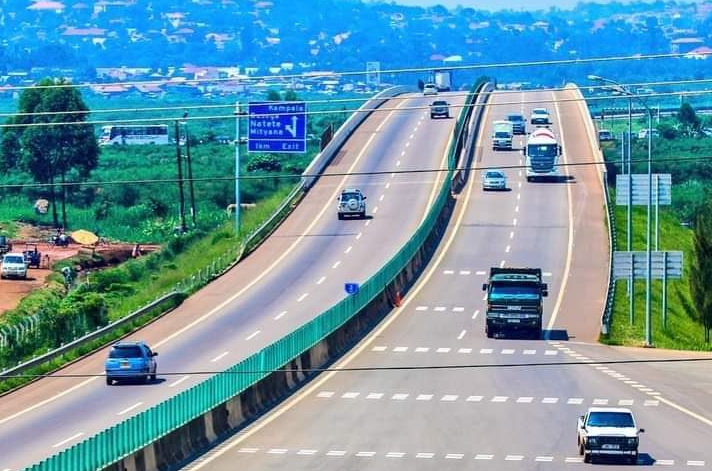
To maximise tourism revenues and facilitate business travels, Uganda embarked on a dual project to expand Entebbe international airport’s capacity and improve connectivity between Kampala and the airport to keep up with the air traffic. Uganda, as a member of the Chinese Belt and road Initiative, has benefited from the Chinese fair and conducive infrastructural financing agreements to low developed countries. China, through EXIM Bank extended a loan of up to USD 670 million which has seen the completion of the Kampala-Entebbe express highway and the ongoing expansion of Entebbe international airport which is now nearing completion. The newly built 10,000-square-meter cargo center at the airport was commissioned last April, and construction of the new terminal building covering an area of 20,000 square meters is ready to go.

Tourism remains Uganda’s highest revenue generating avenue and biggest contributor to the country’s GDP. The successful completion of these infrastructural projects eases mobility and facilitates cross-border travels of tourists and transportation of commercial goods which in turn grows the country’s revenues and accelerates economic development.

Furthermore, the Sino-Uganda relationship has equally facilitated expansion of Uganda’s electricity supply in an effort to accelerate the country’s industrialisation. China has been involved in the construction of two large dams at Karuma and Isimba. The Isimba dam, backed by China’s Exim bank with a $428.5 million loan at only 2% interest was completed in March 2019. Exim bank further financed the construction of Karuma dam with $1.4 billion, again at 2% interest. Isimba’s 183 megawatts (MW) of capacity brings Uganda’s national total to 1,167 MW. It is further estimated that prices will fall from $0.08 per MW to $0.05. Karuma dam adds a tune of 600MW to Uganda’s power sector. The increased power supply fits within Ugandan government targets that by 2040, industrialisation should contribute 31% of the GDP and employing 26% of labour force and contributing 50% of exports as manufactured goods.

Notwithstanding China’s very low interest and long-term loans extended to Uganda to boost economic growth through infrastructural development, in terms of industrialisation and Foreign Direct Investment (FDI), China is a key player in Uganda’s economic development. In the 2018/19 financial year, Uganda Investment Authority performance report ranked China a top Foreign Direct Investor in 2018 with a total investment worth $607million comprising 45.1 percent of the total investment. During the same period in which China overwhelmingly outnumbered other foreign investors, 75.4% of the jobs created were attributed to foreign owned projects. China is also Uganda’s second largest trading partner with the total exports and imports between the two countries totalling to over $940 million annually.

In 2021, bilateral trade volume between China and Uganda amounted to US$1.07 billion, registering a 28.5% increase, against the shock waves of the Covid-19 pandemic. These trade and economic relations have significantly raised domestic revenues for Uganda.

Conclusively, the above is a summary illustration of the inexhaustible and immense contribution that China continues to have on economic development in Uganda. The contribution is across a broad spectrum of sectors such as infrastructure development, manufacturing and industrialisation, Agriculture and foreign direct investments among others. The inflow of investment projects and establishments have increased Uganda’s tax base and domestic revenues and subsequently created various jobs for the locals.

Ainomugisha Barry is a research Fellow with Development Watch Centre, and a Lawyer.


Creating a functioning health system for all: Lessons from China.

A heath system comprises all organisations, institutions and resources that produce actions whose purpose is to achieve good health. It’s building blocks include; governance, human resource, health information, health finance, service delivery, medicines, vaccines and appropriate technology.

All these components work together interrelatedly with an intrinsic goal of providing good health. A breach in one of them make lead to the collapse of the whole system. Take for instance, if there is not health finance, the medicine will not be bought and the service delivery will be poor. It is therefore vital to develop the system as a whole and to do a full systems analysis if there is need to fix any problems in a health system.

Several studies have confirmed that having well-functioning health systems is a forward in eliminating unnecessary and controllable deaths.

While it is not like a picnic to build a strong and good health system, we can borrow a leaf from some of developing countries that have succeeded in this aspect.  China for example had its first health system reform in 1996. The effectiveness and efficiency of the reform was questioned after a couple of years because people still had the same problems, they had in the first place.

They still had high out of the pocket expenditure, most of them didn’t have health insurance. A large proportion of the people couldn’t afford the health that they needed. In a closer look, these are almost the same problems faced by the health system in developing countries like Uganda.

People at times have to sell off their assets just to afford medical care which pushes them right to poverty even if they had escaped the poverty line. It is important that we look not only at prescription drugs but also make sure that health care is a major focus.

Following a failure from a top research institute, the former reform of 1996 had failed. China then embarked on planning another reform in 2007 where they consulted and worked with very many of their ministries. In 2009, the central committee of the communist party of china issued a policy. Its major aim was universal health coverage by 2020 through strengthening health care delivery, health security and provision of essential medicines. This policy reform is a long-term endeavor but the returns are worth the investments. Even when it is quite challenging for the African setting, we ought to start on our own reforms. Like the Chinese say, a journey of 1000 miles starts with a single step.

In order to get the job done, the state council set up a state council health systems reform office where the activities of the reform would be coordinated. The following were the policy reforms.

Under social health security, the social health insurance package was extended, medical aid was extended to the eligible poor and those with catastrophic medical expenditure.

The payment system was also reformed. Through this, 95% of the population has been covered by health insurance schemes by the end of 2017 and catastrophic health insurance introduced in all provinces.

Such a system in Uganda would reduce the burden of out of the pocket health expenditure. Often a times I have seen families who just take their patients back home because they can’t afford any more bills.

These people die from cases that could have been well managed if they had some form of insurance. Such a policy in Uganda would thus reduce mortality.

For the essential drugs, the new policy promoted rational use of antibiotics, removing price mark ups of drug and reforming the drug procurement system. This decreased the unnecessary use of anti-biotics and also made the drugs more accessible to the public. One of the issues in Uganda is over use of antibiotics which will eventually lead to resistance.

It bothers me a lot when I see how a wonder drug like ceftriaxone is used in cases where a milder antibiotic would work just fine. Antibiotic resistance is real and a day can come when a drug that did magic can no longer do a thing. A good example is penicillin. When it was discovered in 1928, it greatly improved mortality. Right now, bugs can have it for lunch! Such a policy in Uganda would not only reduce unnecessary bills on antibiotics but also delay the incidence of resistance.

As a doctor, sometimes I have had to walk through the pharmacies in Kampala to determine their prices. This is because I know that’s the first question patients ask upon presenting to them the treatment options. And from the search, the prices are shockingly different. I then send my patients to the cheapest pharmacy for the respective drugs. If we had a policy like the one China put up where the prices are controlled, medical care would be cheaper.

People even opt for traditional medicine that ends up messing their livers and kidneys the more. This is worse if the patient presented with a liver or kidney failure and they add on herbs to the problem. The people actually don’t want the herbs, they just can’t afford the modern medicine.

On the policy for primary health care, the Chinese government increased the capacity for training and created contracting systems for general practitioners. This was able to increase the number of doctors and improve health care. One of the major challenges in the developing countries like ours is few doctors and poor recruitment by governments. Having such a policy would increase the number of training institutes and ensure more doctors while also providing new jobs to the staff in the institutes. Another reason patients avoid government hospitals in Uganda is the long waiting time. This would provide a solution to this as there would be many doctors seeing the patients.

The other policy introduced by the Chinese to strengthen its health system was basic public health package. Here the government provided subsidies and promoted programs that control the main public health concerns. This made the bills cheaper and reduced the occurrence of non-communicable diseases. As indicated earlier, high bills are still a problem for Uganda. Non-communicable diseases are also on the rise in developing countries.

The last policy was about public hospitals. Through this, they encouraged the creation of consortium or alliances of healthcare providers. They also established a tiered health system where every healthcare provider knew exactly what its functions are. They also encouraged the use of clinical guidelines. This created an organized system with a standard of care that is uniform and a regulatory body. We have a clinical guideline in Uganda but it is not yet widely used and every doctor manages patients their way.

This makes some of the patients to get substandard care. In the Ugandan system, health center IVs are supposed to carryout surgeries but there are those which don’t. such a system would make every health center offer healthcare to the best of its abilities thereby helping reduce congestion at reginal and national health facilities where many tend to run even with cases that could be managed at health centers.

Upon emulation of such policies in to our setting, Uganda shall have tremendous health benefits. More people will visit and afford hospitals, poverty levels will drop, patient waiting time will decrease etc. the end result will be a good sustainable health system for all.

The writer is a research fellow at Development Watch Centre, a Foreign Policy Think Tank, and a fourth-year medical student at Makerere University.

Heart-to-heart Cooperation: CNOOC’s housing project for residents in oil reach areas deserves Kudos

After the government of Republic of Uganda announced that the country had discovered commercially viable oil deposits in the Albertine basin, many people especially in mid-western districts of Buliisa, Hoima and Kikuube where oil deposits were discovered welcomed the news with excitement. The government of Uganda also noted that the discovery of oil was a blessing stressing that many Ugandans would directly and indirectly benefit from discovered oil projecting that Uganda will earn between $2 billion and $3 billion annually once commercial oil production begins.

Due to speculation, cases and claims of land grabbing in the region were registered with some reports alleging people were being displaced from their land to pave way for oil production as was the case in Hoima where many were displaced to construct an oil waste plant. This resulted into fears among some locals fearing they may miss out compensation in case their land was selected to be used.

Today, even before commercial oil production, residents are already enjoying fruits of oil production activities, thanks to the companies involved in oil production projects.

For example, on top of compensating locals whose land fall in areas China National Offshore Oil Corporation or CNOOC is meant to drill oil or operate from there, the company has completed more than 56 modern house units with water tanks and solar power which will be handed to locals. Also, to benefit are communities, the company has separately constructed two modern toilets for the church and a school. With no doubt, the beneficiaries of the said projects in sub counties of Kabwoya, Kyangwali and Buseruka in Kikuube and Hoima district respectively is evidence that once companies that identify with locals’ needs working heart-to-heart, challenges that come with mega developments projects, in this context so-called oil course can be avoided as both locals and the nation gain from the project.

Arguably, for developmental projects to benefit the wider community or nation in this case, such development should start by benefiting the locals. In oil exploration project from Uganda’s perspective, CNOOC has scored and should be commended for not displacing and leaving local citizens in misery promising better in the “near future.”  As many wait for benefits that will come with oil production, at least those affected by the production preparations have where to stay comfortably with their families.

In terms of employment opportunities, firms exploring Uganda’s oil are also fairly employing Ugandans. For example, in China’s CNOOC, Ugandan employees make up to 78 percent of the company’s total employees. Even in key sectors such as engineering and construction activities, the company is employing more Ugandans (581) which accounts to over 81 percent. From the above, whether CNOOC is employing more Ugandans as a way of complying with government’s policy of employing more citizens, CNOOC deserves kudos especially for putting Ugandans first in their work.

Another area that is always ignored in oil exploration activities is addressing environmental concerns. While in Kyabusambu, Kikuube district where we were collecting data for our study, we found CNOOC had mobilised their employees for a community clean up exercise and later donated cleaning equipments to residents. Beyond the usually social responsibility stunt, CNOOC involving community members in cleaning their community and collecting and removing plastic wastes from lake showers is a good gesture that should be emulated since it goes beyond social responsibility to showing concerns over our environment. Caring for environment is very key considering the fact that it helps to mitigates any environmental concern with possibility of compromising and affecting future generation needs.

Apart from direct early benefits of oil exploration to residents in Albertine region, driving through the region – from Hoima, to Buliisa and Kikuube, it is evident that Uganda is destined for big and good things. Just two months after the Final investment decision (FID) was signed which experts explain marked the unlocking a capital investment of $10b in Uganda’s oil related contracts, driving through the now famous rift valley located in Kikuube district as you head to the area with more oil fields – Kingfisher which is operated by China’s CNOOC shows how promising Uganda’s future will be.

At Kingfisher the feeling is clear and it is evident the place has changed and development is on high speed with drills and construction of mega oil well pads (a well pad is a graded area which is used in oil drilling.) One can only imagine and wait with excitement wondering how the place will look upon completion. CNOOC set 2023 as target period for completion of well pads and today, work stands at 11%.

Allawi Ssemanda and Katende Arnold Ricky are research Fellows at Development Watch Centre.


China-Uganda 60 years of Diplomatic Relations

China and Uganda have a long diplomatic history dating back to the post-independence era. China is among the few countries that recognized Uganda as sovereign country just days after independence. Since then, Beijing has been cooperating well with Uganda, offering Kampala support in different sectors that we cannot discuss the journey of Uganda’s socio-economic development without mentioning the role of China.

In education sector, China continues to do a tremendous work offering training opportunities to different Ugandans at different levels. By end of 2021, Beijing had offered Ugandans hundreds of undergraduate and postgraduate scholarships and over 5000 Ugandans benefited from China’s short course training opportunities covering different key areas such as agriculture, medical care, infrastructure, information and technology among others.  China is also collaborating with African universities funding research and other learning opportunities. Makerere University’s Confucius institute is among the many examples. Aware that human capital and well-educated and skilled people are essential to facilitate development of the country, one cannot discuss development of Uganda’s education sector and human capital development without mentioning China’s contribution.

In the field of agriculture, China has been playing a key role for more than 40 years. In 1973 and 1987, China invested and established the Kibimba Rice Scheme (Now Tilda Uganda) and Doho Rice Schemes which have increased rice production and provided employment opportunities to many Ugandans. Additionally, the South to South Co-operation has boosted agriculture in Mbarara, Kabale, Amuria, Wakiso, and Budaka. Agricultural technology demonstration hubs have been established in Kabale to boost horticulture. China has also been supporting fish farming by funding the construction of the Wakawaka fish landing site and the Kajjansi Aquaculture Training and Development Centre which is a national center for aquaculture research in Uganda. This has led to increased and sustained fish production.

In 2009 under the South-South Cooperation (SSC), in coordination with United Nation’s Food and Agriculture Organization (FAO), China launched FAO-China South-South Cooperation (FAO-China SSC) and established FAO-China Trust Fund. China invested $30 million in this program to to support agriculture in Uganda. China has since been supporting this program injecting $100 million in 2015 and 2021 for phase II and phase III respectively.

During phase II of China-FAO SSC, China sent 47 agricultural experts and technicians have to train Ugandans in the same field. During the expert’s two year stay in Uganda, they trained many Ugandans and helped to improve technologies used to in farming of various crops such as rice, foxtail millet, maize, grapes, apples and cherry tomatoes, as well as animal reproduction.

In energy sector, China’s contribution in Uganda’s energy is also visible. The Karuma dam hydropower station with capacity of 600 MW which under construction in Kiryandongo District is an example of China’s contribution in Uganda’s energy sector. The project is 85% funded by China’s Exim Bank and Uganda government is meeting the remaining 15 percent. The project is being constructed by a Chinese firm Sinohydro Corporation and is expected to be completed in June 2023. Isimba power station which became operational in 2019 was also funded by with a loan from China’s Exim Bank. Karuma and Isimba hydropower plants are identified in Uganda’s Vision 2040 as key projects to Uganda’s economic development.

In infrastructure development, China directly funded US $ 350 million for the construction of the Kampala-Entebbe express highway, which is the first express highway in Uganda. The expressway is a 51km, four-lane, dual carriage toll road linking Kampala to Entebbe airport. The stated intention of the highway was to; reduce congestion and increase the commercial viability of the Greater Kampala Metropolitan area, improve mobility and reduce travel times and vehicle operating costs, and provide better access to local facilities for communities and jobs.

The expressway has helped to improve mobility and travel times to the airport. The US $ 350 million loan will be paid in 13 years and current statistics from Uganda National Roads Authority indicate Ugandans have embraced using the road with average daily passages of 20,000 which is far higher than projected daily passage which UNRA had put at 13,000 passages.  This also means daily collections have risen which is a good sign that the road can sustain itself in terms of maintenance and paying back construction loan. Indeed, Joy Nabasa the spokesperson of Egis which was hired to maintain the road collecting the toll on behalf of UNRA recently told journalists that the number of passages is increasing daily. Last month, media reports indicated that the road toll had collected 13 billion shillings in 4 months alone.

Good road network is key in transportation of goods and services which is key for development. As two Chinese say; “Better roads lead to better life.” and “Build roads if you want to get rich” with more good road network, Uganda’s social-economic growth and match to middle-income status is a matter of time.

In health sector, China continues to play a key role in supporting Uganda’s health sector. For example, as a result of good relations between the two countries, China funded the construction of China-Uganda Friendship hospital at Naguru. The hospital offers health services to people, for instance, paediatrics, gynaecology, dental, and laboratory services.

On 10th June this year, a team of Chinese medical personnel arrived in the country and will stay in Uganda providing medical services to citizens. Since 1983, China has been sending a team of doctors and experts to help work with Ugandans in extending medical serves to Ugandans.,

In the wake of COVID-19, China has supported Uganda in the fight against the pandemic. China donated COVID-19 test kits to boost efforts against the virus. Additionally, Beijing donated up to one million doses of COVID-19 vaccines.

Considering the positive contribution, the two countries have witnessed over the last 60 years, it is a living a testimony that China and Uganda are good comrades, good equal partners and good brothers always working hand shoulder to shoulder with major aim of building a community of shared future and prosperity for mankind. Considering enormous opportunities that comes with this brotherly relation should be natured by people of both countries. This to happen, as a Chinese saying goes, “amity between the people holds the key to state-to-state relations,” with the bilateral relations between our countries were elevated to the level of Comprehensive Cooperative Partnership three years ago in late June 2019, our two peoples must guard these relations jealously.

Vianney Sebayiga is a research fellow at Sino-Uganda Relations Research Centre and a Student at the Kenya School of Law.


Sino-Uganda Relations: The Upside Story from a liberal perspective

Overtime, it’s increasingly evident that International Relations can be used for more than preserving world peace through amicable settlement of disputes or stopping international conflicts, but to also foster economic development between global states. Various states are realizing socio-economic development amongst themselves as far as trade, infrastructure is concerned by capitalizing on the favorable relations held with each other.

China and Uganda can be singled out as an example of such states. The two countries have enjoyed good diplomatic relations for close to 60 years with the first diplomatic contact being made by China shortly after Uganda attained Independence in 1962. Since then, this relationship built on mutual respect and cooperation has produced positive developments, the crux of the author’s discussion today.

Generally, while studying the relationship between China and any African country today, one may find it difficult to ignore the effect of the Belt and Road Initiative (BRI) on such a relationship. The aforementioned project was initiated in 2013 to promote infrastructure development among growing nations using funds from China.

Uganda having pre-existent relations with China and having signed an MOU to join BRI, has been one of the beneficiaries of this initiative. A peek into the UNRA national roads project status report for May 2022 indicates that funding from China has been used to complete road projects like the Munyonyo spur, Kampala-Entebbe expressway among others. It also indicates several future projects to be undertaken by secured Chinese funding.

Furthermore, these bilateral relations have realized significant development in Uganda’s energy sector. For instance, the twin Hydro Power Plant projects on river Nile, namely Karuma and Isimba, generating a combined 800MW of electricity were funded and built by funding secured from the Chinese government in addition to local revenue. Electricity is a major factor of production and industrialization, two sectors that can propel developing countries into economic stability. Additionally Chinese companies have undertaken major investments to develop the mining sector in Uganda, an example being the planned establishment of a $200 million gold refinery in Busia district. Such projects and investments increase employment opportunities for Ugandans as well as sourcing revenue for the country in form of taxes.

The continued good relations between China and Uganda have seen the latter nation record developments in its health sector. The earliest notable Chinese health aid to Uganda was through the establishment of the Development Aid for Health from China to Uganda (DAHCU) in the 80’s where Chinese medical teams were sent to the African nation to assist in the country’s ailing health sector. The China-Uganda Friendship Hospital Naguru, a modern health facility built by the Chinese government as a gift to Uganda, is one of the new health projects realized as a result of the good long-standing relations between the two countries. Mahatma Gandhi once opined that health, and not pieces of gold and silver is the real wealth.

Industrialization is argued to be one of the most viable routes toward economic development and transformation and is believed to be the spur behind China’s rise to an economic powerhouse in the last 35 years. Perhaps, in light of that transformation, China’s spirit of good will towards Uganda’s development has driven it to taking center in what one would describe as the African nation’s modern industrial revolution. This is evidenced by the establishment of Industrial parks such as Kapeeka in Central Uganda as well as the Sino-Uganda Mbale Industrial Park in the Eastern region, both funded by Chinese investment groups. Such establishments not only encourage and promote a shift towards a goods production-based economy but also create employment for citizens. With more planned similar parks in Uganda, it is evident that Kampala stands to further benefit more from its good relations with China.

Over 65% of Ugandans, as per a 2017 study by the Uganda National Household Survey, are engaged in agriculture making it the major source of livelihood in Uganda. The relations between China and Uganda have seen the former nation invest to modernize and improve the agricultural sector in the latter to enhance the livelihood of the locals. The Kajjansi Aquaculture Research and Development Centre is a project funded and established with support from the Chinese government as a specialized research center for fish species and modern fish farming methods. Famous for its fresh water lakes, Uganda is a major fish exporter hence such projects improve the country’s export earnings. Additionally, the two countries have significantly promoted trade amongst each other as result of their relations. Although Uganda currently imports more than it exports to China, the significant increase in the volume of exports is a positive indicator of the continuous growth and expansion of the African nation’s economy.

Additionally, the gains of Uganda from relations with China can be noted in the education sector. Annually, China has been offering education opportunities to Ugandans offering higher education scholarships and exchange programs to Ugandan students and hence, boosting the country’s human capital. China has some of the world’s leading institutions in fields like health, engineering and technology hence such an arrangement ensures Uganda’s acquisition of highly trained nationals that can return and contribute to the socio-economic development.

The Sino-Uganda relations have also resulted into developments and transformation of Uganda’s Information Technology sector. In 2006, Uganda secured funding from Exim Bank of China for establishment of the country’s data transmission infrastructure. This included installation of optical fiber cables around the country. As a major techno- innovative country, China has sought to inspire and challenge Ugandan youth to become technological innovators through the Huawei ICT Global Competition. Given the immense role played by technology in development today, Uganda stands to benefit from such an initiative.

In conclusion, the relations between Uganda and China can be described as mostly beneficial to the former as far as socio-economic development is concerned. The existing developmental projects, in addition to future projects have the potential, if well managed to significantly transform and empower Uganda’s economy. Concerns over claims of the socalled national debt burden that may be incurred through loan facilities to develop the country do not necessarily water down the benefits Uganda stands to enjoy if such borrowed money is put to effective use. In sprit of win-win cooperation, terms included in contracts of Chinese loans represent principles of fairness and balances well rights and responsibilities of involved parties. China has on many occasions written off debts of several African countries and renegotiated some where the borrower genuinely fail to pay. Chinese president Xi Jinping, defines the relations between Africa and China as a ‘distinctive path of win-win cooperation’. It is such development partners, keen on upholding values of mutual respect and co-operation that Africa needs.

Marvin H Kalema is a research Fellow at Sino-Uganda Relations Research Centre, and a law student at University of Johannesburg, South Africa.