China-Africa Relations: What to expect in 2022 and beyond

The year 2021 ended on a very good note for African countries in context of Sino-Africa relations with Beijing showing readiness and commitment to double down its development support and cooperation to African countries.

Looking at Action Plan for the year 2022-2024 produced from November 2021 Forum on China-Africa Co-operation (FOCAC) ministerial conference held Senegal, it is clear that China is ready to increase its development support to African countries. One can also confidently argue that this Action Plan which details how China and African countries will co-operate in the next three years will highly succeed considering the fact that it was generated through consensus which reflects China’s relationship with African countries – mutual respect and the partnership of equals!

The nine areas identified in this action plan namely; peace and security, digital innovation, promotion of trade, people-to-people relations, promotion of investments in African countries, supporting medical and health programs, poverty reduction, supporting agricultural programs, green development, and capacity building are all key to African countries economic and sustainable development.

Despite striking similarities in some sections of 2018-2021 action plan, the 2022-24 action plan has packages that if well implemented will spur economic, social and sustainable development.

For example, the 2022-2024 action plan has a package of $40 billion financial commitments of which $10 billion will be invested in specific sectors, namely; manufacturing industries, agriculture and digital economy. Aware that the 2018-2021 action plan did not specify which sectors would benefit, this time workplan singles out sectors to benefit from China’s partnership.

Also, in this workplan, Beijing earmarked $10 of her International Monterey Fund (IMF) drawing rights share to assist development in African countries, $10 billion will go to supporting trade with aim of boosting African countries exports to China a development expected to increase volume of China’s imports from African countries to a whopping $300 billion while $10 billion has been set aside to facilitate credit lines to African financial institutions to be accessed by several African countries.

Considering effects of covid-19 pandemic on global economy which saw major economies growth reduce with China’s growing at 2.3% in 2020 which is the lowest since 1976, China committing $40bn to African countries is evidence of China’s commitment to support her allies.

Fighting Covid-19 Pandemic Together.

The 2021 FOCAC ministerial came at a time when the world is battling Covid-19 – the worst pandemic of our times which has devastated the world for two years and its defeat remains elusive, with over 326-million people infected, and claimed lives of over 5.54 million people.

In all this uncertainty, using their financial muscle, Western Countries chose vaccine nationalism-buying almost all produced vaccines on markets, and leaving poor and developing countries especially in Africa with less no vaccines, putting the continent far from the needed 60% vaccination for its population needed for herd immunity. Even with Covax facility, today, only 14% of African countries have vaccinated their citizens, 76% in Canada and the U.S.A, 66% in Europe, 72% Asian Pacific, 72% Latin America and 51% in Middle East.

However, as developed countries hoarded vaccines, working with African countries, China organized a novel extraordinary China-Africa summit to devise means of containing the pandemic. Consequently, China and African countries have been working together in fighting the pandemic by donating thousands of tonnes of materials required in fighting covid-19 which include facemasks, ventilators, testing kits, ventilators, financial assistance and sending experts to work with African counterparts among others. China has also worked with some African countries like Morocco and Egypt to locally produce Covid-19 vaccines.

Addressing the 2021 FOCAC ministerial conference, President Xi Jinping announced China will supply one billion vaccines to African countries of which 600 million will come as donations while 400 million doses will be produced locally through joint vaccine production arrangement between China and African countries. It is important to note that Morocco have already started producing vaccines with support from a Chinse pharmaceutical firm Sinopharm. President Xi’s promised 1 billion vaccines to Africa is enough to vaccinate 40% of continent’s population which will be a big boost. If fully implemented, this will be the largest bilateral vaccine support to African countries if compared with U.S.A’s. 500million vaccine pledges promised to poor and developing countries world over.

While China’s critics accuse Beijing of the so-called Vaccine Diplomacy, arguably, to compare China’s assistance to African countries in building a functioning health system with politics is an insult to Africans and ignorance of facts like African countries’ need in building a robust public health system that will be able to withstand any future pandemics. This is what China is doing. The construction of the Headquarters Building Phase I Project of the Africa Centers for Disease Control and Prevention (Africa CDC) funded by China is ongoing in Addis Ababa, Ethiopia.

Revolutionizing digital economy and green development

The 2022-2024 action plan for China-Africa cooperation also points at digital and green economy. To show emphasis, digital economy is presented as an independent subsection under economic cooperation and green development is presented in its section signifying China’s commitment to support African countries in the two sectors.

Aware that digital revolution is the way to go, China and African countries have come up an initiative to work together and jointly build a China-Africa Community with a shared future in Cyberspace, a development that will see both sides working together in areas like artificial intelligence, big data internet, mobile internet, cloud computing, among others. In Uganda for example, Huawei is already implementing this program and hence, supporting African countries technological transfer, digital infrastructure and digital innovation.

In green development, focus is given to ecological and climate change mitigation which can be achieved through clean energy which China is supporting in Africa. This initiative is spot-on for one can argue that it directly responds to China’s critics who often claim that China does not consider environmental issues when supporting developmental projects in Africa.

All in all, China-Africa cooperation if measured from the success of FOCAC, in its 21 years, the cooperation has achieved a lot for the African countries and much more is in pipeline! Going by commitments released by Chinese government in its FOCAC whitepaper of November 26th 2021, China is ready to double down her support to African countries to realise a China-Africa Community with a shared future. From 2022-2024, FOCAC’s focus will be on cooperation like digital economy, supporting medical and health programs, poverty reduction, green development, capacity building, peace and security, promotion of trade, people-to-people relations, financial assistance, supporting agriculture sector, among others. One can therefore confidently argue that China is and continue to be Africa’s desired development partner.

However, African countries should not just sit and wait to be spoon-fed, they must be pro-active and use the opportunity of China’s willingness to work with them as “equal partners” so as to further gain from Beijing. As of today, despite having FOCAC in place, there seems not to be a coordinated engagement with China with no single African country having a clear “China strategy.”  As of today, China has released comprehensive three Africa policy papers since 2006 yet, despite having many experts on China including thousands with highest education thanks to Chinese government scholarships, there no single policy paper on China has been developed by Africa as a continent either under the African Union or even FOCAC.

Allawi Ssemanda is Research Fellow Sino-Uganda Relations Research Centre

tank.

Creating a functioning health system for all: Lessons from China.

A heath system comprises all organisations, institutions and resources that produce actions whose purpose is to achieve good health. It’s building blocks include; governance, human resource, health information, health finance, service delivery, medicines, vaccines and appropriate technology.

All these components work together interrelatedly with an intrinsic goal of providing good health. A breach in one of them make lead to the collapse of the whole system. Take for instance, if there is not health finance, the medicine will not be bought and the service delivery will be poor. It is therefore vital to develop the system as a whole and to do a full systems analysis if there is need to fix any problems in a health system.

Several studies have confirmed that having well-functioning health systems is a forward in eliminating unnecessary and controllable deaths.

While it is not like a picnic to build a strong and good health system, we can borrow a leaf from some of developing countries that have succeeded in this aspect.  China for example had its first health system reform in 1996. The effectiveness and efficiency of the reform was questioned after a couple of years because people still had the same problems, they had in the first place.

They still had high out of the pocket expenditure, most of them didn’t have health insurance. A large proportion of the people couldn’t afford the health that they needed. In a closer look, these are almost the same problems faced by the health system in developing countries like Uganda.

People at times have to sell off their assets just to afford medical care which pushes them right to poverty even if they had escaped the poverty line. It is important that we look not only at prescription drugs but also make sure that health care is a major focus.

Following a failure from a top research institute, the former reform of 1996 had failed. China then embarked on planning another reform in 2007 where they consulted and worked with very many of their ministries. In 2009, the central committee of the communist party of china issued a policy. Its major aim was universal health coverage by 2020 through strengthening health care delivery, health security and provision of essential medicines. This policy reform is a long-term endeavor but the returns are worth the investments. Even when it is quite challenging for the African setting, we ought to start on our own reforms. Like the Chinese say, a journey of 1000 miles starts with a single step.

In order to get the job done, the state council set up a state council health systems reform office where the activities of the reform would be coordinated. The following were the policy reforms.

Under social health security, the social health insurance package was extended, medical aid was extended to the eligible poor and those with catastrophic medical expenditure.

The payment system was also reformed. Through this, 95% of the population has been covered by health insurance schemes by the end of 2017 and catastrophic health insurance introduced in all provinces.

Such a system in Uganda would reduce the burden of out of the pocket health expenditure. Often a times I have seen families who just take their patients back home because they can’t afford any more bills.

These people die from cases that could have been well managed if they had some form of insurance. Such a policy in Uganda would thus reduce mortality.

For the essential drugs, the new policy promoted rational use of antibiotics, removing price mark ups of drug and reforming the drug procurement system. This decreased the unnecessary use of anti-biotics and also made the drugs more accessible to the public. One of the issues in Uganda is over use of antibiotics which will eventually lead to resistance.

It bothers me a lot when I see how a wonder drug like ceftriaxone is used in cases where a milder antibiotic would work just fine. Antibiotic resistance is real and a day can come when a drug that did magic can no longer do a thing. A good example is penicillin. When it was discovered in 1928, it greatly improved mortality. Right now, bugs can have it for lunch! Such a policy in Uganda would not only reduce unnecessary bills on antibiotics but also delay the incidence of resistance.

As a doctor, sometimes I have had to walk through the pharmacies in Kampala to determine their prices. This is because I know that’s the first question patients ask upon presenting to them the treatment options. And from the search, the prices are shockingly different. I then send my patients to the cheapest pharmacy for the respective drugs. If we had a policy like the one China put up where the prices are controlled, medical care would be cheaper.

People even opt for traditional medicine that ends up messing their livers and kidneys the more. This is worse if the patient presented with a liver or kidney failure and they add on herbs to the problem. The people actually don’t want the herbs, they just can’t afford the modern medicine.

On the policy for primary health care, the Chinese government increased the capacity for training and created contracting systems for general practitioners. This was able to increase the number of doctors and improve health care. One of the major challenges in the developing countries like ours is few doctors and poor recruitment by governments. Having such a policy would increase the number of training institutes and ensure more doctors while also providing new jobs to the staff in the institutes. Another reason patients avoid government hospitals in Uganda is the long waiting time. This would provide a solution to this as there would be many doctors seeing the patients.

The other policy introduced by the Chinese to strengthen its health system was basic public health package. Here the government provided subsidies and promoted programs that control the main public health concerns. This made the bills cheaper and reduced the occurrence of non-communicable diseases. As indicated earlier, high bills are still a problem for Uganda. Non-communicable diseases are also on the rise in developing countries.

The last policy was about public hospitals. Through this, they encouraged the creation of consortium or alliances of healthcare providers. They also established a tiered health system where every healthcare provider knew exactly what its functions are. They also encouraged the use of clinical guidelines. This created an organized system with a standard of care that is uniform and a regulatory body. We have a clinical guideline in Uganda but it is not yet widely used and every doctor manages patients their way.

This makes some of the patients to get substandard care. In the Ugandan system, health center IVs are supposed to carryout surgeries but there are those which don’t. such a system would make every health center offer healthcare to the best of its abilities thereby helping reduce congestion at reginal and national health facilities where many tend to run even with cases that could be managed at health centers.

Upon emulation of such policies in to our setting, Uganda shall have tremendous health benefits. More people will visit and afford hospitals, poverty levels will drop, patient waiting time will decrease etc. the end result will be a good sustainable health system for all.

The writer is a research fellow at Development Watch Centre, a Foreign Policy Think Tank, and a fourth-year medical student at Makerere University.

Beijing World Youth Development Forum Should Inspire Africa and its Young Population

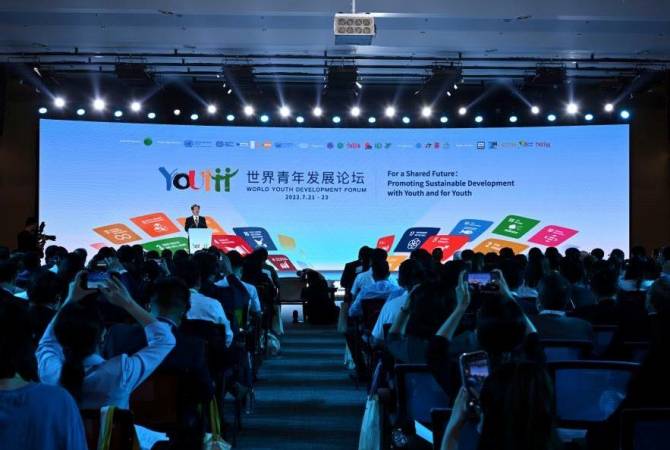
The world commemorated this year’s World Youth Development Forum (WYDF). The event featured many ambitious, motivated and skilled youth vying for the opportunity to discuss our planet’s future and offer up solutions to global issues. The forum took place in Beijing, China against a backdrop of crises of Covid-19, climate change, large scale military conflict, inflation and the threat of a global recession which all pose a direct threat to youths’ future.

WYDF main goal is to achieve a shared future through promoting Sustainable Development with youth and for youth. The event featured thematic forums for climate action and green development, employment and entrepreneurship, digital economy, inclusive and equitable quality education. Initiated by the All-China Youth Federation, the event attracted nearly 2000 youth representatives from over 100 countries.

The WYDF is especially relevant today for countries like Uganda and the African continent as a whole. Globally, United Nations statistics indicate that the biggest concentration of youth is on the African continent and particularly in Sub-Saharan Africa with 70% of the region’s population under the age of 30.

Behind Niger, Uganda is the world’s second country with the youngest population with the countries’ 56.9% and 55% respectively made up of 18-year-olds or younger. Chad, Angola, Mali, Somalia, Gambia and Zambia also host a large majority of young people.

Having a lot of young people is good for any country because it implies a vast potential for growth and this dynamic should favor Africa in the long run only if the young generation are fully empowered to realize their full potential. Therefore, the bell rings loud for Uganda and the African continent, leaders must step up and engage in initiatives that focus on empowering youth on a global stage to meet the challenges of the day and be active stewards in saving the planet, after all it is their future inheritance when the old inevitably fade away.

China, one of Uganda’s and Africa’s leading development partners is taking the issue of her youth seriously and is actively spearheading youth initiatives both locally within China and at the global stage within the United Nations (UN). During the WYDF, Wang Xiqin, President of Tsinghua University called upon the youth to be guided to form a sense of contributing to the building of a community of the Chinese nation, a community with a shared future for humanity, and a community of life for humans and nature. Wang’s call should be echoed by every leader on the African continent, which possesses a valuable resource of young people, voices of change ready to be guided in creating a just world for tomorrow.

One of the themes of the forum was employment and entrepreneurship.  This theme is a challenge to the African continent where a majority of youth are unemployed and many business projects started by young people do not reach maturity. The youth have limited access to public funds to sponsor their ventures mainly due to corruption and government bureaucracy. The skills needed by young people in most of Africa to start up competitive ventures on the global market are largely lacking. This is due to limited government investment in such projects and a scarcity of institutions with the technical know how and technological prowess to impart such knowledge on the youth.

The world is headed steadfast to a global digital economy, a world that operates on technology. Many African youth understand this reality because they exist in an information age. However, there is still a large group of people on the continent and particularly in Uganda that have no or limited access to the benefits of technology especially in rural areas where 74.8% of the population lives. Technology has affected many youths in Uganda but it has benefited very few. According to DataReportal, the number of internet users in Uganda increased by 1.5million (14%) between 2020 and 2021, also the number of mobile connections increased by 1.1million (+4.0%) people in the same period. Total number of mobile connections is over 28million people in January 2021, an equivalent of 60.3% of the population.

However, most businesses in Uganda operated by the youth are Small, medium and Micro enterprises (SMMEs) and on the continent, youth led SMMEs make up almost 99% of business firms and generate 60% of the jobs. If critically analyzed, they do not require sophisticated technology to operate. In developing countries, most youth lack the education and skills-based training necessary to enable them operate complex digital tools. Many use technology as a means of communication and socialization through the various social media sites and a few are capable of employing technology in creating sustainable business ventures.

Therefore, the World Youth Development Forum should serve as a strong catalyst for African leaders to recognize the potential of their majority populations and base their public policy and a big part of foreign policy establishing a gateway through which the youths are provided with the necessary tools to be capable and innovative leaders of tomorrow. The new Pan-Africanism should be young, creative and bold. It should aim at reforming Africa to meet the standards of the rest of the world through increasing the value and potential of the youths. African youth must not merely copy and paste development models that have worked for other countries, they should not stop at building upon innovations made by others, instead they must come up with unique ideas and solutions that work for the continent and offer a shared prosperity to the rest of the globe. Asia and the west have proven to be ahead of the curve in shaping their youth into global leaders for sustainable development, it is high time Africa took the proverbial bull by the horns and invested massively into the biggest chunk of the continent’s population because the future depends on it.

Moshi Israel is a Research Fellow at Development Watch Center.

Building a Community With a Shared Future: A Liberal view of Sino-Uganda Relations

To understand Sino-Uganda relations and Sino-Africa relations in general, the role of China to the economic development of Uganda can be best understood by evoking liberalism as a profound theory in understanding mainstream international relations. Today, mutual benefit philosophy and common prosperity are central in when describing the relations between Kampala and Beijing and broadly, Sino-Africa cooperation. It should be noted that the two countries have enjoyed fruitful relations that have fostered economic development in Uganda. Sadly, and arguably due global politics, some Sino-Africa skepticist especially in Global north often view Sino-Uganda and broadly Sino-Africa relations in colonial motifs which definitely is wrong and miss presentation of historical facts since China has never colonized any country!

While it is true, that the end game of international relations is fostering selfish interests, it is now common knowledge that with China’s philosophy of common prosperity, China’s relations with other countries like Uganda is purely not selfish but a win-win cooperation which Beijing firmly believe is key in ensuring and building a community with shared prosperity for mankind.

China’s Belt and Road Initiative (BRI) is a vivid example show casing the win-win nature of relations Uganda and Africa in general are enjoying with China. It should be noted that BRI mothers lots of projects aiming at mutual benefit of the two sides. Through infrastructure development, BRI is connecting Asia with Africa, Middle East, Europe and the Americas. This in many ways will and in some countries is already facilitating transportation of goods and services. With expansion of Entebbe international airport near complete, Uganda is one of many countries already enjoying fruits of BRI. Also, a recent report by the Africa Policy Institute noted that since the BRI was initiated proposed in 2013, China has boasted African countries’ infrastructure by funding modern infrastructure projects such as railways, roads, ports, dams, industries, and digital connectivity, injecting vitality in the region. These projects also left thousands of Africans getting employment opportunities, sparking economic growth in the long run.

Giving example of Kenya, Africa Policy Institute report pointed at several multiplier effects of Kenya’s China funded and constructed 670-kilometer modern Standard Gauge Railway (SGR) connecting the port of Mombasa and the inland port of Naivasha. The Ethiopia-Djibouti’s standard gauge railway which connects landlocked Ethiopia to Djibouti port also constructed under BRI also improved transport in the region. The Chinese-built 752.7-km line recorded about 86.13 million U.S. dollars in revenue in 2021, which is up 37.5% compared to 2020 revenue collections.

In production and industry sector, Chinese investments in Uganda have greatly boasted Uganda’s capacity. For example, today Uganda boasts of a number of industrial parks that are contributing to the country’s economic growth and development. Industrial parks such as in Namanve, Kapeeka, and Mbale have liberated Uganda from losing foreign exchange in purchasing commodities that were not produced in Uganda. These parks have also contributed to skill enrichment of Ugandans who are employed there! The goods being products of high tech ensuring good quality, Uganda can also favorably compete at the regional market brining more foreign exchange to the country

Cooperation being at the core of China-Uganda relations, it has been evident in the construction of infra-structures for example the hospitals like the China-Uganda friendship hospital in Naguru.

Liberalism understood as cooperation in this case is evident in the education and cultural exchange program as part of relations. Education and culture being at the core of negotiations at the Beijing summit in 2020 it’s absolutely evident that the matter is centric of China-Uganda relations. Through the Confucius Institute at Makerere university, it should be noted that the institute has a memorandum of understanding between Xiangtan university, an institution in Hunan province in China which offers 30 scholarships annually to Ugandan students.

In terms of Trade, the good cooperation between China and Uganda has seen Uganda gain from trading with China. In his book: Introducing Liberalism in International Relations Theory, Jeffrey W Meiser emphasizes the role of good relations between countries if favorable trading conditions are to be realized. It is not a surprise that China has been working to increase trade quotas to Uganda and entire African continent as a way of ensuring both sides benefit from their cooperation. Also, for over a decade, China has always been one of not only Uganda’s but many of African countries’ foreign direct investments. A report by the United Nations COMTRADE database on international trade that analyzed trade between the states with statistics in the year 2020 shows that Uganda exports quiet a number of products to the Chinese market that include oilseed, oleagic fruits, grain seed, fruits, plastic, wood products, gums and so many others that totally amounted to US$39.61million. Therefore, with this important aspect in economic growth, Uganda’s economic growth has been greatly fueled by diverse trade the two countries guided by China’s philosophy of win-win cooperation as Beijing works with other countries to build a community with shared prosperity for mankind as well as common development.

By Balongoofu Daniel is a Junior Research Fellow with Development Watch Centre, a Foreign Policy Think Tank.

Heart-to-heart Cooperation: CNOOC’s housing project for residents in oil reach areas deserves Kudos

After the government of Republic of Uganda announced that the country had discovered commercially viable oil deposits in the Albertine basin, many people especially in mid-western districts of Buliisa, Hoima and Kikuube where oil deposits were discovered welcomed the news with excitement. The government of Uganda also noted that the discovery of oil was a blessing stressing that many Ugandans would directly and indirectly benefit from discovered oil projecting that Uganda will earn between $2 billion and $3 billion annually once commercial oil production begins.

Due to speculation, cases and claims of land grabbing in the region were registered with some reports alleging people were being displaced from their land to pave way for oil production as was the case in Hoima where many were displaced to construct an oil waste plant. This resulted into fears among some locals fearing they may miss out compensation in case their land was selected to be used.

Today, even before commercial oil production, residents are already enjoying fruits of oil production activities, thanks to the companies involved in oil production projects.

For example, on top of compensating locals whose land fall in areas China National Offshore Oil Corporation or CNOOC is meant to drill oil or operate from there, the company has completed more than 56 modern house units with water tanks and solar power which will be handed to locals. Also, to benefit are communities, the company has separately constructed two modern toilets for the church and a school. With no doubt, the beneficiaries of the said projects in sub counties of Kabwoya, Kyangwali and Buseruka in Kikuube and Hoima district respectively is evidence that once companies that identify with locals’ needs working heart-to-heart, challenges that come with mega developments projects, in this context so-called oil course can be avoided as both locals and the nation gain from the project.

Arguably, for developmental projects to benefit the wider community or nation in this case, such development should start by benefiting the locals. In oil exploration project from Uganda’s perspective, CNOOC has scored and should be commended for not displacing and leaving local citizens in misery promising better in the “near future.”  As many wait for benefits that will come with oil production, at least those affected by the production preparations have where to stay comfortably with their families.

In terms of employment opportunities, firms exploring Uganda’s oil are also fairly employing Ugandans. For example, in China’s CNOOC, Ugandan employees make up to 78 percent of the company’s total employees. Even in key sectors such as engineering and construction activities, the company is employing more Ugandans (581) which accounts to over 81 percent. From the above, whether CNOOC is employing more Ugandans as a way of complying with government’s policy of employing more citizens, CNOOC deserves kudos especially for putting Ugandans first in their work.

Another area that is always ignored in oil exploration activities is addressing environmental concerns. While in Kyabusambu, Kikuube district where we were collecting data for our study, we found CNOOC had mobilised their employees for a community clean up exercise and later donated cleaning equipments to residents. Beyond the usually social responsibility stunt, CNOOC involving community members in cleaning their community and collecting and removing plastic wastes from lake showers is a good gesture that should be emulated since it goes beyond social responsibility to showing concerns over our environment. Caring for environment is very key considering the fact that it helps to mitigates any environmental concern with possibility of compromising and affecting future generation needs.

Apart from direct early benefits of oil exploration to residents in Albertine region, driving through the region – from Hoima, to Buliisa and Kikuube, it is evident that Uganda is destined for big and good things. Just two months after the Final investment decision (FID) was signed which experts explain marked the unlocking a capital investment of $10b in Uganda’s oil related contracts, driving through the now famous rift valley located in Kikuube district as you head to the area with more oil fields – Kingfisher which is operated by China’s CNOOC shows how promising Uganda’s future will be.

At Kingfisher the feeling is clear and it is evident the place has changed and development is on high speed with drills and construction of mega oil well pads (a well pad is a graded area which is used in oil drilling.) One can only imagine and wait with excitement wondering how the place will look upon completion. CNOOC set 2023 as target period for completion of well pads and today, work stands at 11%.

Allawi Ssemanda and Katende Arnold Ricky are research Fellows at Development Watch Centre.


China-Uganda 60 years of Diplomatic Relations

China and Uganda have a long diplomatic history dating back to the post-independence era. China is among the few countries that recognized Uganda as sovereign country just days after independence. Since then, Beijing has been cooperating well with Uganda, offering Kampala support in different sectors that we cannot discuss the journey of Uganda’s socio-economic development without mentioning the role of China.

In education sector, China continues to do a tremendous work offering training opportunities to different Ugandans at different levels. By end of 2021, Beijing had offered Ugandans hundreds of undergraduate and postgraduate scholarships and over 5000 Ugandans benefited from China’s short course training opportunities covering different key areas such as agriculture, medical care, infrastructure, information and technology among others.  China is also collaborating with African universities funding research and other learning opportunities. Makerere University’s Confucius institute is among the many examples. Aware that human capital and well-educated and skilled people are essential to facilitate development of the country, one cannot discuss development of Uganda’s education sector and human capital development without mentioning China’s contribution.

In the field of agriculture, China has been playing a key role for more than 40 years. In 1973 and 1987, China invested and established the Kibimba Rice Scheme (Now Tilda Uganda) and Doho Rice Schemes which have increased rice production and provided employment opportunities to many Ugandans. Additionally, the South to South Co-operation has boosted agriculture in Mbarara, Kabale, Amuria, Wakiso, and Budaka. Agricultural technology demonstration hubs have been established in Kabale to boost horticulture. China has also been supporting fish farming by funding the construction of the Wakawaka fish landing site and the Kajjansi Aquaculture Training and Development Centre which is a national center for aquaculture research in Uganda. This has led to increased and sustained fish production.

In 2009 under the South-South Cooperation (SSC), in coordination with United Nation’s Food and Agriculture Organization (FAO), China launched FAO-China South-South Cooperation (FAO-China SSC) and established FAO-China Trust Fund. China invested $30 million in this program to to support agriculture in Uganda. China has since been supporting this program injecting $100 million in 2015 and 2021 for phase II and phase III respectively.

During phase II of China-FAO SSC, China sent 47 agricultural experts and technicians have to train Ugandans in the same field. During the expert’s two year stay in Uganda, they trained many Ugandans and helped to improve technologies used to in farming of various crops such as rice, foxtail millet, maize, grapes, apples and cherry tomatoes, as well as animal reproduction.

In energy sector, China’s contribution in Uganda’s energy is also visible. The Karuma dam hydropower station with capacity of 600 MW which under construction in Kiryandongo District is an example of China’s contribution in Uganda’s energy sector. The project is 85% funded by China’s Exim Bank and Uganda government is meeting the remaining 15 percent. The project is being constructed by a Chinese firm Sinohydro Corporation and is expected to be completed in June 2023. Isimba power station which became operational in 2019 was also funded by with a loan from China’s Exim Bank. Karuma and Isimba hydropower plants are identified in Uganda’s Vision 2040 as key projects to Uganda’s economic development.

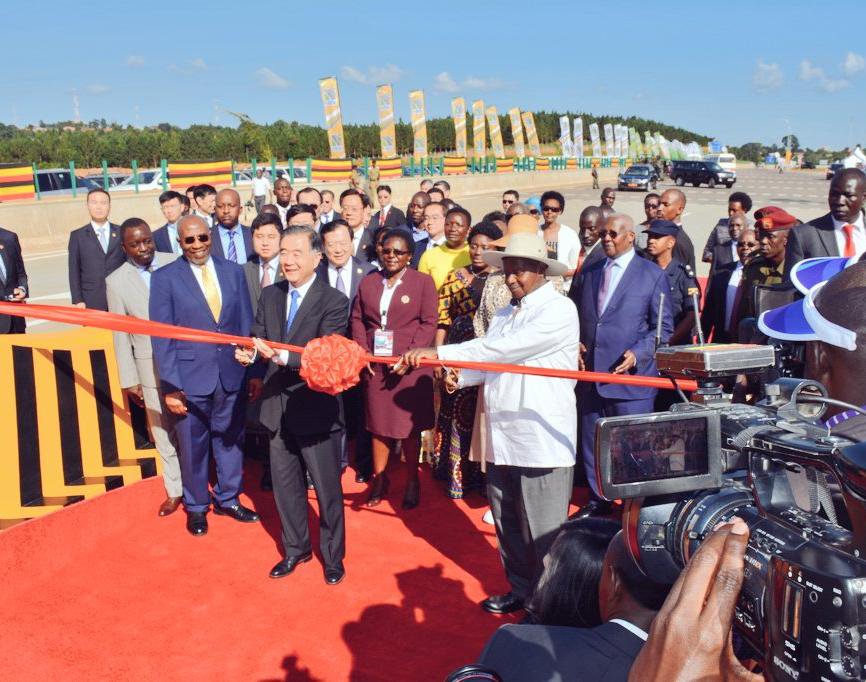
In infrastructure development, China directly funded US $ 350 million for the construction of the Kampala-Entebbe express highway, which is the first express highway in Uganda. The expressway is a 51km, four-lane, dual carriage toll road linking Kampala to Entebbe airport. The stated intention of the highway was to; reduce congestion and increase the commercial viability of the Greater Kampala Metropolitan area, improve mobility and reduce travel times and vehicle operating costs, and provide better access to local facilities for communities and jobs.

The expressway has helped to improve mobility and travel times to the airport. The US $ 350 million loan will be paid in 13 years and current statistics from Uganda National Roads Authority indicate Ugandans have embraced using the road with average daily passages of 20,000 which is far higher than projected daily passage which UNRA had put at 13,000 passages.  This also means daily collections have risen which is a good sign that the road can sustain itself in terms of maintenance and paying back construction loan. Indeed, Joy Nabasa the spokesperson of Egis which was hired to maintain the road collecting the toll on behalf of UNRA recently told journalists that the number of passages is increasing daily. Last month, media reports indicated that the road toll had collected 13 billion shillings in 4 months alone.

Good road network is key in transportation of goods and services which is key for development. As two Chinese say; “Better roads lead to better life.” and “Build roads if you want to get rich” with more good road network, Uganda’s social-economic growth and match to middle-income status is a matter of time.

In health sector, China continues to play a key role in supporting Uganda’s health sector. For example, as a result of good relations between the two countries, China funded the construction of China-Uganda Friendship hospital at Naguru. The hospital offers health services to people, for instance, paediatrics, gynaecology, dental, and laboratory services.

On 10th June this year, a team of Chinese medical personnel arrived in the country and will stay in Uganda providing medical services to citizens. Since 1983, China has been sending a team of doctors and experts to help work with Ugandans in extending medical serves to Ugandans.,

In the wake of COVID-19, China has supported Uganda in the fight against the pandemic. China donated COVID-19 test kits to boost efforts against the virus. Additionally, Beijing donated up to one million doses of COVID-19 vaccines.

Considering the positive contribution, the two countries have witnessed over the last 60 years, it is a living a testimony that China and Uganda are good comrades, good equal partners and good brothers always working hand shoulder to shoulder with major aim of building a community of shared future and prosperity for mankind. Considering enormous opportunities that comes with this brotherly relation should be natured by people of both countries. This to happen, as a Chinese saying goes, “amity between the people holds the key to state-to-state relations,” with the bilateral relations between our countries were elevated to the level of Comprehensive Cooperative Partnership three years ago in late June 2019, our two peoples must guard these relations jealously.

Vianney Sebayiga is a research fellow at Sino-Uganda Relations Research Centre and a Student at the Kenya School of Law.