Heart-to-heart Cooperation: CNOOC’s housing project for residents in oil reach areas deserves Kudos

After the government of Republic of Uganda announced that the country had discovered commercially viable oil deposits in the Albertine basin, many people especially in mid-western districts of Buliisa, Hoima and Kikuube where oil deposits were discovered welcomed the news with excitement. The government of Uganda also noted that the discovery of oil was a blessing stressing that many Ugandans would directly and indirectly benefit from discovered oil projecting that Uganda will earn between $2 billion and $3 billion annually once commercial oil production begins.

Due to speculation, cases and claims of land grabbing in the region were registered with some reports alleging people were being displaced from their land to pave way for oil production as was the case in Hoima where many were displaced to construct an oil waste plant. This resulted into fears among some locals fearing they may miss out compensation in case their land was selected to be used.

Today, even before commercial oil production, residents are already enjoying fruits of oil production activities, thanks to the companies involved in oil production projects.

For example, on top of compensating locals whose land fall in areas China National Offshore Oil Corporation or CNOOC is meant to drill oil or operate from there, the company has completed more than 56 modern house units with water tanks and solar power which will be handed to locals. Also, to benefit are communities, the company has separately constructed two modern toilets for the church and a school. With no doubt, the beneficiaries of the said projects in sub counties of Kabwoya, Kyangwali and Buseruka in Kikuube and Hoima district respectively is evidence that once companies that identify with locals’ needs working heart-to-heart, challenges that come with mega developments projects, in this context so-called oil course can be avoided as both locals and the nation gain from the project.

Arguably, for developmental projects to benefit the wider community or nation in this case, such development should start by benefiting the locals. In oil exploration project from Uganda’s perspective, CNOOC has scored and should be commended for not displacing and leaving local citizens in misery promising better in the “near future.”  As many wait for benefits that will come with oil production, at least those affected by the production preparations have where to stay comfortably with their families.

In terms of employment opportunities, firms exploring Uganda’s oil are also fairly employing Ugandans. For example, in China’s CNOOC, Ugandan employees make up to 78 percent of the company’s total employees. Even in key sectors such as engineering and construction activities, the company is employing more Ugandans (581) which accounts to over 81 percent. From the above, whether CNOOC is employing more Ugandans as a way of complying with government’s policy of employing more citizens, CNOOC deserves kudos especially for putting Ugandans first in their work.

Another area that is always ignored in oil exploration activities is addressing environmental concerns. While in Kyabusambu, Kikuube district where we were collecting data for our study, we found CNOOC had mobilised their employees for a community clean up exercise and later donated cleaning equipments to residents. Beyond the usually social responsibility stunt, CNOOC involving community members in cleaning their community and collecting and removing plastic wastes from lake showers is a good gesture that should be emulated since it goes beyond social responsibility to showing concerns over our environment. Caring for environment is very key considering the fact that it helps to mitigates any environmental concern with possibility of compromising and affecting future generation needs.

Apart from direct early benefits of oil exploration to residents in Albertine region, driving through the region – from Hoima, to Buliisa and Kikuube, it is evident that Uganda is destined for big and good things. Just two months after the Final investment decision (FID) was signed which experts explain marked the unlocking a capital investment of $10b in Uganda’s oil related contracts, driving through the now famous rift valley located in Kikuube district as you head to the area with more oil fields – Kingfisher which is operated by China’s CNOOC shows how promising Uganda’s future will be.

At Kingfisher the feeling is clear and it is evident the place has changed and development is on high speed with drills and construction of mega oil well pads (a well pad is a graded area which is used in oil drilling.) One can only imagine and wait with excitement wondering how the place will look upon completion. CNOOC set 2023 as target period for completion of well pads and today, work stands at 11%.

Allawi Ssemanda and Katende Arnold Ricky are research Fellows at Development Watch Centre.
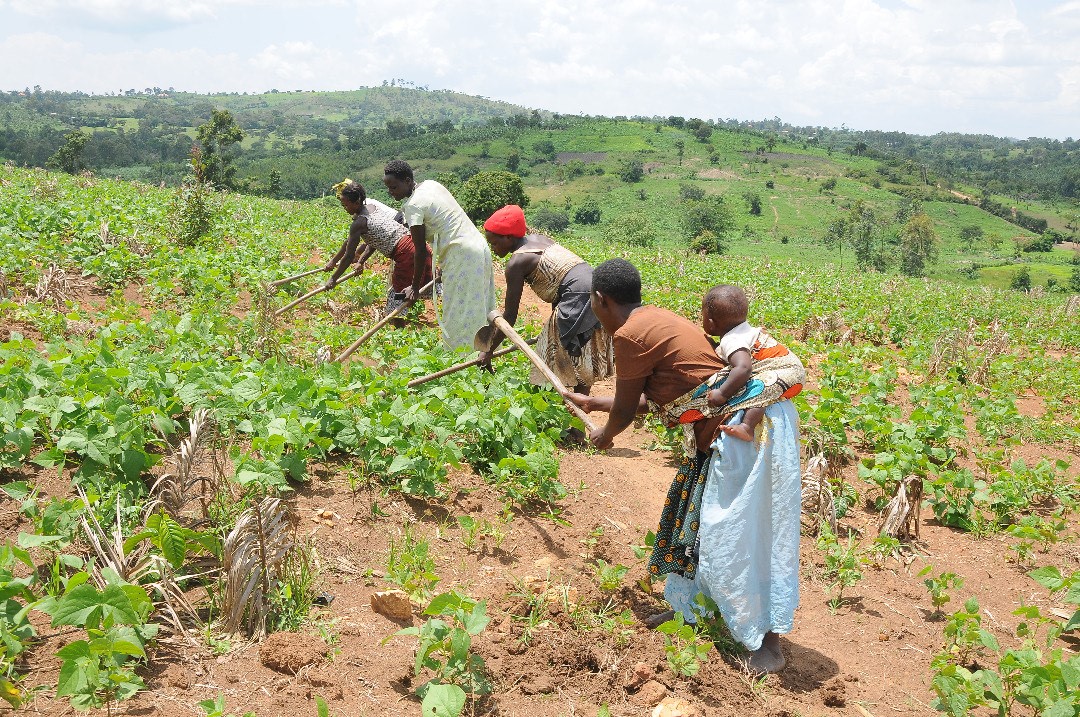


A Review of China’s Support to Uganda’s Agriculture Sector

“Only when the granary is full will people learn etiquette; only when people are well-fed will they know honor and shame,” says an ancient Chinese adage. One can argue that China put this saying in practice while nurturing her Sino-Africa relations by supporting agriculture sector.

In Uganda’s context, China has been playing a key role for almost 50 years. Indeed, in 1973 and 1987, China invested and supported establishment of Kibimba (Now Tilda Uganda) and Doho Rice Schemes. This increased Uganda’s rice production capacity on top of creating employment opportunities for the many people.

Through the South-to-South Co-operation, China has invested heavily and supported the Uganda’s agriculture sector. In 2009, working with United Nations’ Food and Agriculture Organization (FAO), China introduced a new programme FAO-China South-South Cooperation (SSC). Beijing backed this program and created a FAO-China Trust Fund with $30 million to support agriculture in Uganda.

In 2015, China launched Uganda’s FAO-China South-South Cooperation (SSC) phase II and injected $50million further supporting the country’s agriculture sector. This program received another $50million boost in phase III which was launched in 2021.

During the first two China-FAO SSC phases, China sent 47 Chinese agricultural experts and technicians on a two years mission. The experts are credited to have helped in skills development and exchanges. In particular, they helped to improve technologies used in production of rice, grapes, cherry tomatoes, foxtail millet, and apples. Also, the experts exchanged skills with Ugandan farmers in animal reproduction such as goats, pigs, and in fisheries. This project focused on exchanging mechanization, agro-processing and value-addition.

A June 2020 study entitled “Access and Adoption of Hybrid Seeds: Evidence from Uganda” published in Journal of African Economies credited Chinese agriculture support to Uganda that it has improved innovated agricultural practices. The study further reveals this has helped in addressing poverty challenges in Uganda’s rural areas.  

In October this year, working with Ugandan authorities, China will be Launching phase III of China-FAO SSC. This time, China will inject 2.39 million U.S. dollars in the program. Under phase III, China will send to Uganda 18 Chinese agricultural experts and technicians to agriculture sector. This project seeks to advance and support appropriate and effective technologies with aim of boosting the countries food security. More than 9,600 farmers of whom at least 30 percent will be women are expected to benefit during this phase while more than 200 Ugandan agricultural personnel will receive technical training.

From grassroots, several Ugandan farmers have already benefited from China funded Phase I and II of China-FAO SSC. Under the said two phases, farmers in districts such as Amuriat, Budaka, Kabale, Mbarara, and Wakiso among others. In Kabale, agricultural technology demonstration hubs have been established there which is boosting horticulture. China has also been supporting fish farming in the country. For example, China funded the construction of Kajjansi Aquaculture Training and Development Centre which is key in aquaculture research in Uganda.

Also, China funded construction of Wakawaka fish landing site. All this has seen increase and sustained fish production in Uganda. Uganda’s Fisheries sector is one of Uganda’s leading foreign exchange earners. The sector accounts for about US$200 million annually. The sector is also employing estimated 1.5 million people such as fishermen, boat owners, fish mongers, transporters and processors among others.

On Continental level, China’s support to African countries agriculture sector is also visible. During the 8th Ministerial Conference of the Forum on China-Africa Cooperation (FOCAC) held on 29th November 2021 in Senegal, supporting African countries agriculture was among the nine key areas Chinese president Xi Jinping pointed at where China would cooperate with African countries. The other eight areas are health, poverty reduction and trade promotion, investment promotion, digital innovation, green development, capacity building, cultural and people-to-people exchange, and peace and security.

Globally, China’s voice in promoting and advancing programs meant to fight famine has been loud. While attending this year’s G20 summit in Bali, Indonesia, China’s State Councillor and Foreign Minister Wang Yi made a plea calling for a strong cooperation to ensure a successful global food security agenda and reduce suffering of many due to hunger. Today, many countries are struggling with hunger. Recently, United Nations Secretary General Antonio Guteres expressed concern stressing that global hunger levels are at a new high. Guteres observed that in two years, the number of severely food insecure people has doubled from 135m to 276m today.

Also, among others, China’s Global Development Initiative seeks to address challenges like famine to ensure continuous development, with the aim of helping all people realize their dreams. The discussion above is a pointer that food security is key for national and global security and development. Aware that we can only attain food security by supporting and improving agriculture sector, recognising China’s contribution in supporting Uganda’s and Africa’s agriculture sector is prudent.

Ssemanda Abdurahim is a Research Fellow at Sino-Uganda Relations Research Centre.