Let’s not diminish Uganda’s G77 & China leadership

By Nnanda Kizito Sseruwagi

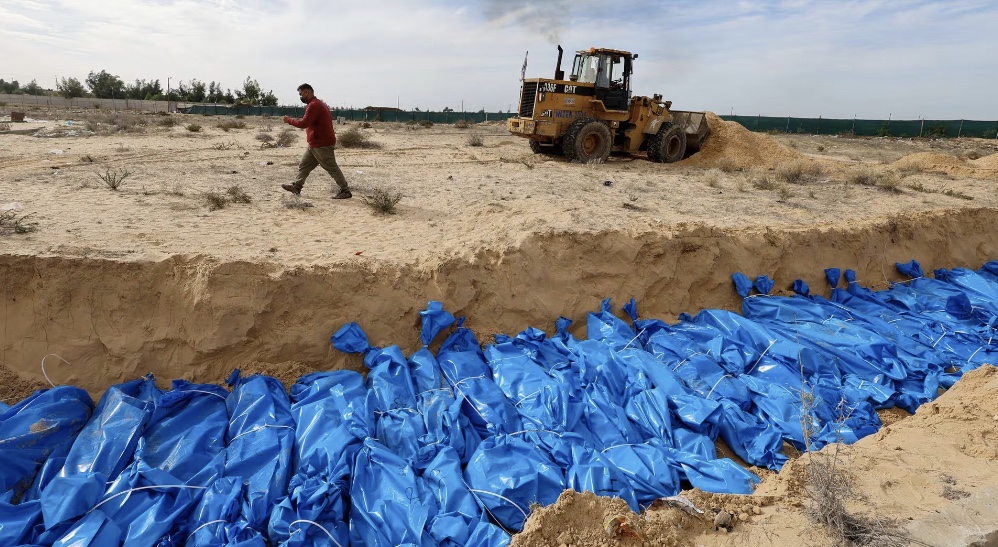
On 21st January 2024, Uganda assumed chairmanship of the Group of 77 (G77) and China during the official opening of the Third South Summit at Speke Resort Munyonyo. The G77 is a coalition of over 130 developing countries founded to promote shared economic interests and to amplify their negotiation voice at the United Nations. The South Summit is the supreme decision-making body of the G77. It was called the Third South Summit because it was the third time such a conference was held, the First and the Second Summits having happened in Havana, Cuba (2000) and Doha, Qatar (2005) respectively. China is named on official statements of G77 members because of its consistent support and partnership with the group since 1994.

The Non-Aligned Movement (NAM) and Third South Summits happened back-to-back, with the G77’s following NAM. However, national attention and discussion seem to have spotlighted NAM at the expense of the G77 meeting. Whereas the two are complimentary organisations, they are distinct in form and substance, which invites us to attend to both equally, focusing on what they mean to Uganda and how we can harness all the opportunities they present.

Firstly, the G77 is numerically bigger than NAM (120 countries) in membership of states. Besides that, with the end of the Cold War between the United States and the Soviet Union, NAM’s purpose was rendered strategically irrelevant due to the demise of a second power which had influenced the idea of non-alignment. Nevertheless, NAM’s goal of advancing the interests of developing countries and non-confrontation survived the end of Cold War politics.

More valid, however, remains the G77’s founding ideal of achieving an equitable international economic order. The theme of “Leaving No One Behind” under which the Third South Summit was organized sounds simplistic, and yet it holds profound meaning for what G77 members represent in a world of extremely disproportionate development between the North-South divides.

The aims articulated by President Museveni as the guiding pavements his leadership will follow for the next year are also easier to list than execute. Uganda now shoulders the unenviable task of boosting South-South cooperation in trade, investment, sustainable development, climate change, poverty eradication, and digital economy. These are big responsibilities we have toward 134 counties for a year. And it’s not Mr. Museveni to do all this work, especially since he is sufficiently overwhelmed by micromanaging Uganda.

In the realm of international relations, business is conducted through collective bargaining and lobbying. With such global leadership positions as we have now as leaders of both NAM and the G77+ China, Ugandan graduates of international relations studies should not be unemployed. We need to have already searched for our best and employed them in diplomatic positions to negotiate for what the two summits resolved as their aims on the international topography. Uganda has spent 47 million dollars on construction of the conference facility where both events were hosted at Munyonyo, besides other logistical expenses undertaken for conducting the two global events. Surely, there must be a means for us to recoup that investment. This makes the economic aims propounded in the Third South Summit more relevant for us to pursue.

And yet there are even bigger goals to contribute our efforts to as a chairing country of the G77 and China. Everyone agrees that the global financial system tailored around Bretton Woods institutions has failed to aid the transformation of developing countries. In more ways than one, they have been accomplices in our financial distress. Therefore, Uganda should be at the forefront of championing overhauling that financial architecture.

In a world that has commercialised climate change, Uganda should also lead the G77 in indicting developed countries to pay for their unfair share and historical responsibility for greenhouse gas emissions, water pollution and environmental degradation. We should further amplify the call for poverty alleviation because poverty is one of the main causes of abusing the environment in poor countries.

The global governance system has also been historically tilted to inordinately favour the West, leaving developing countries as weak appendages to the system. Uganda therefore should be key in representing the G77 by calling for reforming the structure of the United Nations Security Council.

The list of responsibilities and the enormity of the task awaiting Uganda cannot be thoroughly encapsulated in this article. It is now up to those lucky enough to have a platform for representing Uganda on the global stage in its unusual international duties to act for us all well.

The writer is a Lawyer and Research Fellow at the Development Watch Centre. 

Navigating the minefield of negative media punchlines on China-Africa relations will take forming our own opinions

By George Musiime

As Africans, we cannot continue to be a people that turn on our own because we have outsiders urging us on to do so. We are as human, as the next human trying to help us determine our destiny. Unfortunately, to use the words of one notable Son of Africa Dr. Kaihura Nkuba, the biggest obstacle to Africa’s progress is “the riddle of who we truly are” and to some this, all we need is to build our people’s confidence in being African and taking pride in it. Only then shall we be able to think for ourselves and to trust our choices; that we are able to make the right choices for our people and ourselves. As sociologists argue, he who controls your langauge of discourse your reality! History has it that we have already lost to the ploys of divide and conquer in the past. Moreover, albeit being able to lift the heavy boot of colonialism from our neck at independence, we were not able to totally free ourselves, as many of us remain prone to being turned into marionettes; our opinions swayed easily by manipulating a few strings by some who relentlessly attempts to influence the course of our future.

When it comes to Sino-Africa relations, it is no doubt that China presents Africa with a uniquely suitable development partner who understands the distinctive problems of the continent and its people given our shared history. Yet commentary originating from without is often times punctuated by denunciations that echo notions such as resource exploitation, developmental debt-trap diplomacy, corruption, dictatorship and neo-colonialism etcetera. What is more is that, unless we take the initiative to rationalize the spirit underpinning the conception of such opinions, we are likely to be misled and consequently pitted against arguably, Africa’s best bet when it comes to development partnerships and all that  to our own detriment.

One such opinion is the negative impact of Confucius institutes (CIs) across Africa, which critics associate with a tactful push of Chinese soft power and influence over Africa. Since the establishment of the first CI in Kenya in 2005, many more have followed with the aim providing an understanding of the Chinese culture and language to many Africans. This has in turn laid the necessary groundwork for the growing cultural interaction between the African continent and China. For example, by 2018, during the FOCAC conference in Beijing, China committed to making available 50,000 government scholarships to African students as well as 50,000 opportunities for seminars and workshops to train more professionals in a diversity of fields. All this serve to strengthen one of the key pillars of China-Africa relations, which is the people-to-people exchange. Therefore, CIs do not act as a tool for imposing Chinese culture in the old assimilation fashion as critics baselessly claim; but rather serve to build a bridge for the exchange of knowledge, culture and expertise between China and Africa.

This is in line with the Chinese diplomacy principle of bolstering people-to-people exchange between China and rest of the world focusing on relations that are not prejudiced or relations  where one-entity projects its superiority over the other. Conversely, these are relations built on mutual understanding and camaraderie.  Such should be the basis upon which Africa relations must be built especially at a time when we are looking to take a step into the future; away from the mound of bottlenecks, the continent has faced against a backdrop of unfair dealings where Africa has engaged as the lesser party. Of course, China understands this as a fundamental cornerstone to progressive diplomatic relations with Africa as emphasized in their foreign policy. The Chinese approach is from a position of awareness that not only Africa needs China but China needs Africa as well if we are both to achieve our development goals. As such, China relations with Africa are hinged on the understanding that both parties are Partners of equal significance and nothing but a win-win cooperation. Moreover, as we move towards improved diplomatic collaboration aided in part by the work of the Confucius institutes, we realize an increased potential for extending the chain of linked benefits. As diplomatic collaboration avenues are expanded, so are development partnerships both in the public private sectors for both parties. This in turn forms a sound basis for a surge in trade and investments, the one thing that Africa needs more than anything at the moment.

Therefore, to emphasize cultural and language exchange as a tool for galvanizing Chinese soft power over Africa while ignoring the role of language as a cornerstone of human interaction and communication as emphasized by a 2023 publitard article titled “The Role of Language in Global Collaboration” and a key part in the broader jigsaw puzzle that is global cooperation is to say the least intellectual dishonesty. Even more important is the emphasis on mutually beneficial China-Africa relations stressed in a document titled “China’s African Policy” which also highlights actionable steps to this end.  According to this policy paper, the five key aspects of the China-Africa relations are Sincerity, Equality, Mutual benefit, Solidarity, and common development focusing on the fundamental benefits of both the African and Chinese people.

Certainly, this is not to say that this is exactly how things are going to happen in principle but the language and cultural exchange being built under the flagship of the Confucius Institutes is a key ingredient in putting in place an integral element on the soft infrastructure such as the people-to-people exchange necessary for China-Africa relation. And it should be the work of all; governments, Independent thinkers and every forward-thinking African to debunk the punchy news headlines and social media bites aimed at painting the negative image of China-Africa Relations and the future for Africa.

George Musiime is a research fellow at the Sino-Uganda Research Centre.

Examining ideological foundations informing China & the West’s relations with Africa

By Nnanda Kizito Sseruwagi

As a continent that is unfortunately suffering late development, Africa is a highly engaged region of the globe with interventions in trade, politics, and culture from the different global powers. We can taxonomize the divide of global powers intervening in Africa today under two categories; the West and China (East). How Africa benefits or loses and sometimes even suffers from its relations with these players, fundamentally depends on the ideological persuasions or prejudices which inform the policy makers designing each block’s foreign policy in Africa. These foundations of ideology are age-old in some instances. Over time, they have even been watered down and bastardized into “neo-isms” that are a vulgarized form of the original ideologies. Let us examine them.

The West’s ideological system can be described as liberal democratic capitalism. It has been over time been characterized by self-righteousness and religious universalism. Western elites who propagate this ideology sincerely believe that it is not just the best system of political-economic organisation in their countries but that it is really universal and can be transplanted onto any part of the world and superimposed on any society or culture. These elites/policymakers and implementers do not consider the importance of the differences and uniqueness of any country or society from theirs. They blindly believe that their systems of governance are the best across history, time and geography. This is not to say that there is overarching evidence that liberal democracy did not protect native Americans from genocide, black Americans from slavery or blacks across the West from racism. In fact, liberal democracy did not impede colonialism and apartheid.

These Western foreign policy elites perceive their ideology and intentions as benign. Like their colonialist great-grandparents, they see themselves as good people on a civilization mission trying to save Africa from poverty and bad governance.  They are very honestly deluded that no amount of criticism even from academics and philosophers in their own countries can impact their ideological views about Africa and how to deal with it. They are therefore unable to see Africa in the eyes of Africans and think about themselves in ways Africans would perceive them. Their self-righteousness only responds to the opinions of African elites who regurgitate their internal biases about Africa. Those are the Africans they award for championing change on the continent, offer sponsorships and provide funding.

On the other hand, China’s relationship with Africa is different from the West’s because they are informed by a different ideology. But there are commonalities which I want to address first.

Both the West and China’s foreign policies in Africa are fundamentally meant to promote their interests as well. As the saying goes, there is no free lunch in the world. China’s aid to Africa, just like the West’s are partly an economic instrument to support their national firms’ exports. Both their development finance to African countries also comes with expectations of some political alignment with them. This means that both their aid and loans are not only a tool to promote trade and development, but also a means to support their foreign policies. What should be emphasized is that while interests play a major eole on how the two sides conduct their international relations, for China, there is overwhelming evidence their relations with Africa are guided by the principle of win-win cooperation with emphasis on sincerity, real results, cooperation, amity and good faith.

However, unlike the West, China stands in the shoes of other countries and tries to see things from their vantage point. That is why China faces much less friction while dealing with Africa. China has diplomatic relations with 179 United Nations member states and maintains embassies in 174 of those countries. It also has the largest diplomatic network of any country in the world. This global reach and appeal has been streamlined because of their ideological position on international relations which is based on win-win cooperation, mutual respect and equality. The Chinese government’s foreign policy is informed by the five principles of peaceful coexistence. These include; mutual respect for each other’s territorial integrity and sovereignty, mutual non-aggression, mutual non-interference in each other’s internal affairs, equality and cooperation for mutual benefit, and peaceful co-existence. These principles are a strict interpretation of the Westphalian norms of state sovereignty. China’s relations with Africa are also driven by the concept of “harmony without uniformity”, which encourages diplomatic relations between states despite ideological differences.

This difference in ideology between the two competing global powers in Africa has left a practical footprint on how we respond to each of them, i.e. we are growing more aligned with China than the West. To avoid the dangers of political conflicts on the continent with foreign intervention, it is important for the West to also make policies that anticipate the perceptions of African leaders when dealing with foreign governments. Our leaders govern small countries but they are nevertheless sovereign. So, our leaders deserve to be respected when dealing with any global power’s leader. Our countries have contradictions and challenges but we want to deal with them organically and internally without taking contemptuous lectures from self-assuming paragons of virtuous governance.

The writer is a Lawyer and Research Fellow at the Development Watch Center.  


Myths & Misconceptions: How the West biases our perception of China

By Nnanda Kizito Sseruwagi

We are interesting animals, humans. Interesting! Nobel Laurette and profound cognitive psychologist Daniel Kahneman, author of “Thinking, Fast and Slow”, has argued that our brains are predisposed to give priority to bad news. That negative perceptions stick to our psyche faster than positive perceptions. If true, nowhere has this attribute of human psychology been more manipulated and caused gross danger than in Africa. Not only has the West captured the intellect of our elite class and used it against us as a people, but it has also prejudiced our understanding, perception and relation with our more developmental partner, China.

As of 2023, China’s investment portfolio in infrastructure projects in sub-Saharan Africa totalled $155 billion over the past two decades. Whereas the West is an equally important partner for Africa, granting us diffrent aid packages into diffrent sectors including pumping money into our Non-Government Organisations where our middle-class elites find easy sustenance, regurgitate Western biases against Africa and forget about our structural-developmental needs, China comes different.

Unlike the West, China has a fresh memory of underdevelopment and knows what it takes to transform from a backward agrarian society to a modern, industrial powerhouse. It shares in Africa’s painful experience of political and economic domination by foreign countries. Therefore, where the West arrogantly lectures us on how to govern ourselves having supported our national budgets with a few dollars, China concentrates on investing immensely in more transformative projects in energy, infrastructure, communication, and others.  China’s relationship with us is more sincere because, unlike the West, they practice in Africa exactly what they practice at home. Their infrastructure spending as a share of the country’s GDP in 2021 was nearly 10 times higher than that of the United States and significantly higher than anywhere else in the world. So, we can trust their intentions in Africa when they equally spend more on our infrastructure projects. In 2022, America spent $877 billion on their military, constituting nearly 40 percent of the total military spending worldwide. However, they would conceive any other global power’s increased military spending as an act of aggression. Therefore, they do not practice what they preach and their intentions cannot be trusted.

And yet America, as the archetype of the West, still controls the global narrative of them as the good guys, and China as the bad guys. Perhaps nowhere has the West’s lies against China been more devastating than with the so-called ‘debt-trap diplomacy’ claims. One of the world’s leading experts on China-Africa relations, Professor Deborah Brautigam of Johns Hopkins University defines debt trap diplomacy as the narrative that China deliberately seeks to entrap developing countries in a web of debt to secure some kind of strategic advantage or grab our national assets.

Uganda has not been insulated from this myth. In November 2021, one of local dailies published a false story, “Uganda surrenders key assets for China’s cash” where it claimed that Entebbe International Airport and other national government assets were exposed to potential takeover by China. Elsewhere, similar allegations have been peddled by Western media. Sri Lanka has been one of the most highlighted victims of these false media stories.

Why is it easy for us to believe lies told to us about ourselves and our Chinese allies by the West? Answers might be found in “Orientalism”, a work of the great Palestinian-American academic, literary critic, political activist, and musician Edward Said. Edward articulates the practical and cultural discrimination that was applied to non-European societies and peoples in the establishment of European imperial domination. He argues that in justification of imperialism, the West claims to know more “essential and definitive knowledge” about the rest of us than we know about ourselves. They have cultural representations derived from fictional Western perceptions of us. Through the history of colonial rule and political domination, they distorted our intellectual objectivity and skewed us to be culturally sympathetic to them. To aggravate Edward Said’s observations, the British post-colonial theorist, cultural critic, and historian Robert Young questions the very concept of history and the West. In “White Mythologies: Writing History and the West”, he argues that it is difficult to write history that avoids the trap of Eurocentrism and that our history could simply be a Western myth. If unchecked, today’s prejudices against Africa and China by the West will condense into tomorrow’s history.

We therefore need to decolonize our intellects collectively as Africans. China also needs to invest more in African Think Tanks and Organisations to support the global narrative that counters Western prejudices against them. According to the World Bank, China has funded the easement of African countries’ debt burden and actively implemented the G20 Debt Service Suspension Initiative for Poorest Countries and has the highest deferral amount among G20 members. They have also not confiscated a single project in Africa because of failing to pay loans. Yet, with all these facts in their favour, Western myths and misconceptions seem to prevail.

The writer is a Lawyer and Research Fellow at the Development Watch Centre.
Restructuring the AGOA Partnership: Lessons from China

By Shemei Ndawula

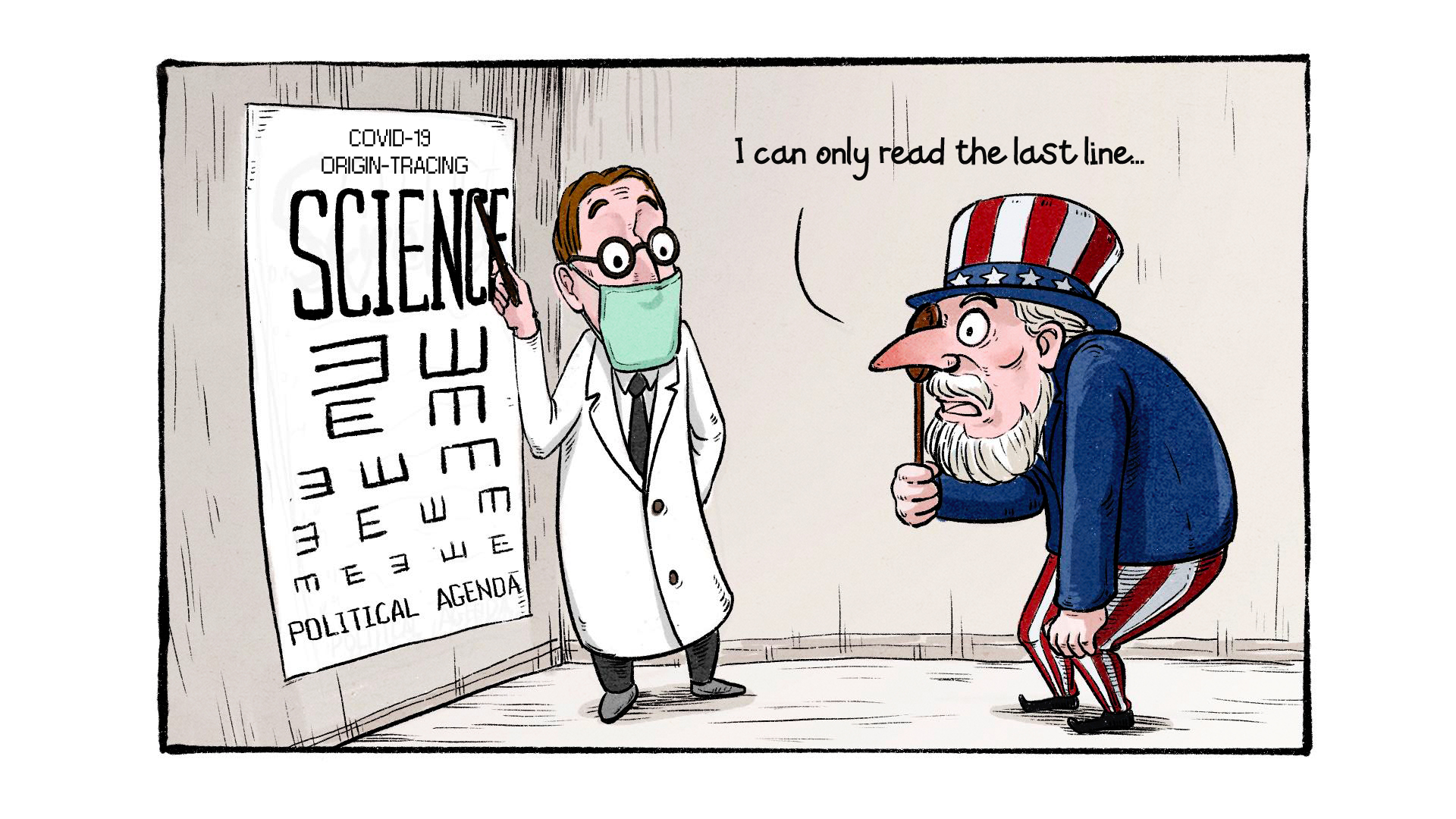
I’m I a little late to the party? It seems all the experts have already weighed in on the recent move by the Biden administration to exclude Uganda from the African Growth Opportunities Act (AGOA) platform. Just last week the inevitable happened with Uganda being struck of the list of AGOA participating nations. AGOA  is a trade preference program that grants duty-free access to the US market for eligible sub-Saharan African countries. It was enacted in 2000 and has been extended several times, most recently until 2025.

This platform is supposed to promote economic growth, development, and integration in Africa by encouraging exports, investment, and good governance. However, after more than two decades of implementation, AGOA has in many ways failed to deliver on its promises and becomes increasingly irrelevant and ineffective in the face of new global challenges and opportunities.

I believe AGOA, like most United States backed interventions in the region often marketed as “silver bullets to Africa’s problems” has always had its limitations. Like most of these projects it often comes down to taking money from the poor people of a rich country and giving it to the rich people of a poor country. On top of which there’s often so many explicit and implicit strings attached that sometimes the line between diplomatic aid and diplomatic coercion become a little blurred.

Despite Uganda getting large sums of foreign aid from the United States every year, there’s little that the ordinary Ugandan can show of the impact. Uganda is or has been one of the biggest beneficiaries of United States aid programs being the 13th largest “earner” of US foreign aid on the continent. However, a casual walk through Kampala will show a glaring disparity between these figures and the reality of an average Ugandan. It is high time that the Biden administration rethinks its aid policy especially within the region.

I really wonder why more development partners are not looking into adopting a more Chinese-like approach to bilateral aid which could offer greater incentives and support for African countries to engage in trade and investment.

It has been argued by several international observers that AGOA has failed to properly utilize investments, with only 18 of the participant countries developing national strategies on how to benefit from the program. This disparity reflects the complacency most countries have cultivated white such programs.

Meanwhile the Chinese approach to foreign trade especially with Uganda focuses on targeted investments and infrastructure development to drive economic growth. These aid projects, specifically in the infrastructure sector have got a much wider trickle down effect in the national economy.

I dare say that in the slightly over two years, the Chinese constructed Entebbe Expressway has been open to the public has directly benefited more Ugandans than the over two decades of the AGOA initiative.

The Chinese-like approach to foreign aid also focuses on fostering economic growth and development without imposing strict governance requirements. It seems counterintuitive to use an economic platform to address governance disparities between two countries.

There is need to  focus on strengthening regional institutions and promoting cooperation among African nations to create a more integrated and prosperous continent which is a vine of great opportunity the AGOA partnership should have tapped in.

To restructure the AGOA partnership along the lines of the effective Chinese foreign policy model, the United States should consider the following steps:

Reevaluate the current AGOA criteria and reduce the emphasis on frivolous governance requirements allowing African countries to focus on economic growth and development. Certainly as a diverse continent, each country has a rich history of governance modules which are better suited for our governance than anything else that’s being imported.

It would also be ideal to make investments in value-added manufacturing and industrialization to help African countries diversify their economies and create more sustainable jobs.This way, we will certainly have more to bring to the table when it comes to trade. The Chinese are already doing this with early success in the industrial parks of Kapeeka and Mbale where they have set up  and operate.

Promote regional integration and strengthen regional institutions to foster cooperation and development among African nations. The AGOA  platform should also explore  targeted incentives and support to encourage African countries to effectively utilize the benefits of the AGOA partnership and develop national strategies for economic growth.

Our generation is fortunate enough to stand as witnesses to the crumbling of the old world order, The People’s Republic of China has been ahead of this curve with the Belt and Road Initiative as well as the South-South Cooperation and if other nations and economic aid platforms would like to have a similar impact on Africa, they may have to study and integrate these strategies within their own development strategies to achieve better results.

The writer is a research fellow at Sino-Uganda Research Centre.

Non-Aligned Movement Offers us Hopes for a Multipolar World

By Nnanda Kizito Sseruwagi.

The world’s bipolar power structure which had determined the security policies of the two global powers, the USA and USSR, collapsed with the disintegration of the Soviet Union in 1991. This left America as the sole power with global dominance. I think that the inherent structure of unipolarity and the U.S.’s strategic position as the unipolar moral whip of Western neo-liberal democratic principles threatens any prospects for world peace and makes conflict likely. However, I also observe that the Non-Aligned Movement (NAM) is steadily pushing against the U.S.’s unipolarity, and promises to collapse it without dissenting into war as is normally feared by hegemonic stability theorists.

Unipolarity is where a single state exerts military and economic power, and social and cultural influence over other states and eradicates competition on the landscape of international relations. The prevailing global geopolitical dispensation rests on the United States’ institutional and ideological dominance, with an international order expediently designed after the Second World War to sustain America’s primacy in great power politics. But that privilege is about to change with the collaboration of NAM’s 120 member states with China and Russia.

Whereas the American hegemonic order seems secure against would-be hegemonic challengers like China and Russia, NAM seems to perennially and steadily resist and challenge the liberal basis of U.S. hegemony, which is presented as a transparent, democratic political system. Supported by but not absorbed by China and Russia, members of NAM are making it harder for America to enjoy its cherished post-war world order.

I am inclined to agree with one of the world’s leading experts in the field of security studies, Prof. Barry Possen, who argues that unipolarity is in decline and that the world is shifting towards multipolarity. Multipolarity is where power is distributed among several states with similar amounts of power/influence. A great political scientist and international relations scholar of global repute, John Mearsheimer, shares a more controversial view, arguing that America’s liberal international order was flawed from its inception and thus destined to collapse.

America designed a world order where world states had to yield their decision-making authority to American-controlled international institutions. However, since the majority of states organized under NAM now greatly care about their sovereignty, autonomy and national identity, they have rebelled against and outgrown the US’s policing. America’s self-righteous hubris as the world’s policeman, and the hypocrisy with which it preaches and enforces Western liberal-democratic values ostracized it from the global south, hence indirectly propping up its nemesis, China. However, China has not yet marshalled sufficient power to contend with America to the point of toppling it from unipolarity to bipolarity. And for China’s strategic stability as an influential world power, it might never push the U.S. to that tipping point.

As the largest grouping of states worldwide after the American-dominated United Nations, and with its hallowed principles of mutual non-aggression, mutual non-interference in domestic affairs, equality and mutual benefit, and peaceful co-existence, and with China closely tied to supporting these principles, the Non-Aligned Moved seems to pose a serious challenge to the Hegemonic Stability Theory (HST). Therefore, it is no longer persuasive for proponents of the US’s unipolarity to claim that the international system will be destabilized to a clashing point of war (Thucydides trap) if America ceases to enjoy the place of a single hegemon.

Proponents of the HST usually rely on the Pax Britannica (the period of relative peace between great powers when the British Empire enjoyed global hegemonic dominance) and Pax Americana (where relative peace was experienced in the world after the end of World War II when the United States became the world’s dominant economic, cultural, and military power) as evidence for the stability of hegemony. However, they forget that the central mechanism in hegemonic stability theory which revolves around the provision of public goods by a powerful actor has been disproved by China, which has extended public goods to the majority of global southern countries without exercising hegemony, and most importantly, while supporting the principles of non-alignment.


Members of NAM are most likely to further dilute the U.S.’s influence as a sole global power by endorsing, supporting and even joining multipolar institutions and initiatives like BRICS (Brazil, Russia, India, South Africa and other countries), and the Belt and Road Initiative (BRI)- a global infrastructure development strategy adopted by the Chinese government in 2013 to invest in more than 150 countries and international organizations. The highlight and promise of BRICS is its attempt to redesign the global financial architecture and liberate it from the tyranny of America’s Bretton Woods institutions. It is unimaginable for the U.S. to retain its unipolarity if its financial web is torn apart with the support of NAM for BRICS and other like institutions.

For all the criticisms that might be levelled against the NAM, it has stood the test of time. Its member states are loosely and flexibly bound together by enduring principles that seem simple but whose strength lies in their simplicity. By declining to take positions with any power bloc, NAM members might be the biggest architects of global peace since the Second World War. They have pursued and promoted amicable coexistence on the international stage, exposing Western moral hubris in the ongoing genocide against Palestinians by Israel, and many other conflicts. This stance has challenged the unipolar posture of America in the world and demonstrated a desire and possibility for a more multipolar international system.

The writer is a lawyer and Research Fellow at the Development Watch Centre.


They Came, They Saw, They Joined: China’S Association With G77 

By Steven Akabwayi

While at Kigezi High School Kabale, we had a teacher who was fond of making fun of students but we could find it hard to hate him because of his great sense of humor and storytelling skills that made us fall in love with history.

One of the remarkable phrases I remember from one of his stories was Julius Caesar’s Latin statement “Veni,vidi, vici” loosely translated as “I came, I saw, conquered.”

Ceaser made this statement while writing to one of his friends Amantius who also served in a Roman Senate around 47 BC informing him about the quick victory in a short war against Pharnaces II of Pontus at the battle of Zela in modern-day Turkey.

Unlike most students, I never used to view history as just a subject, to me it was a shared adventure a journey through time of not just reciting dates and names but also drawing moral lessons from historical stories.

It’s upon Caesar’s statement “ I came, I saw, I conquered” a phrase that I base China’s association with the G77 countries informing my article’s title “They came, they saw, though they never Conquered but instead they joined”. Just like Uganda’s Permanent Representative to the UN Ambassador Adonia Ayebare who is also coordinating both NAM and G77 summits mentioned while appearing on one of the national TVs, in international relations, numbers do matter a big deal.

China’s association with the G77 countries offered it an opportunity to collaborate with over 134 countries in terms of collective bargaining and negations with the dominant Western countries mostly on multilateral agreements at the UN level.

It’s not a secret that China, just like the rest of other developing countries, continues to face unfairness and marginalization by imperialist countries in today’s world order where the West collectvely advoacte for the so-called rules-based order which sadly the West especially the U.S and allies again cherry-pick which rule to follow but call out others in event of slight deviation which today, arguably is a new normal especially the way the U.S treates those countries Washington sees as small states especially in the global south.

From January 15th -22nd of this year, all roads will lead to Kampala Munyonyo where Uganda will be hosting two big international conferences back to back (Nonaligned Movement and G77+China). Regarding these two summits that will put Uganda in the spot giving it visibility both diplomatically and politically, China has chosen not to act as a usual guest in both summits, through their embassy in Uganda, China has taken part in major backstage preparations to ensure the smooth running of the two summits.


As a gesture of brotherhood it attaches to its relations with Uganda and indeed the rest of Africa and global south in general, the Chinese government donated over 70 SUV vehicles to be used in transporting delegates and other government officials who will participate in the two summits.

Speaking about the importance of Uganda’s Chairmanship of NAM and G77 Ambassadors Adonia Ayebare noted that the global South countries have woken up to the fact that they need to express solidarity through helping each other by sharing technology through the South-South Corporation. It should be noted that China attaches much value to the South-South Corporation this has been exemplified through various development assistance such as grants and direct aid, the South-South Cooperation Fund, Belt and Road Initiative among others.

In recent trends, Western countries have been making what analysts regard as kicks of a dying horse in their attempt to deny China the status of a developing country. By doing so Western countries hoped to suppress China’s contribution and significance towards the developing world. However, unlike in the colonial era, it’s not by surprise that the Western move of divide and conquer has been a miscalculation this time given the strong solidarity among global southern countries.

The G77+China has achieved remarkable milestones, it should be noted that in 2010, the G77 group appealed for a political will from developed countries to resist all protectionist measures and tendencies, particularly on the agricultural subsidies and non-tariff barriers on trade. This was two years after the 2008 financial crisis Whose effects badly hit developing countries. It was against this backdrop that the G77 attained what’s regarded as one of the major victories commonly known as the Bali package.

The Bali package emphasized trade facilitation by resolving a series of decisions aimed at streamlining trade allowing developing countries more options for addressing food security and boosting trade amongst themselves.

China being part of the G77 has been mutually beneficial offering tangible benefits to both China and the other global South countries. China has managed to leverage its association with the G77 by increasing its global influence giving it a platform to voice its interests as a developing country in terms of trade, climate change, and sustainable development.

Economically, within the past two decades, China has emerged as the largest trading partner among the G77 countries due to the enhanced market access and economic opportunities that come along with its association with the G77.

The writer is a Research Fellow at Sino-Uganda Research Centre.


China’s Example for Uganda’s Development Dilemmas

By Nnanda Kizito Sseruwagi

If you are to read only one line in this article, and merely for motivational value, it is that China reassures us of the possibility of changing the course of history. It did so. I don’t suggest we should copy and paste the Chinese model. I call that we learn from the wealth of Chinese experiences to answer our development dilemmas. Those experiences are so voluminous that a library of books wouldn’t consume their totality. So, I’m aware of the vanity espoused in attempting to express a substantial amount of them in this short Op-Ed.

China has continuously exceeded the 10 percent annual GDP growth ever since Deng Xiaoping instituted market reforms in the late 1970s, marking a substantial increase in living standards and a decline in poverty. World Bank data shows more than 850 million Chinese have overcome extreme poverty. Their poverty rate declined from 88 percent in 1981 to 0.7 percent in 2015 as measured by the percentage of people living on the equivalent of US$1.90 or less per day in 2011 purchasing power parity (PPP) terms, which still applies. Note that PPP is the ratio of the price of a basket of goods at one location divided by the price of a basket of goods at a different location.

The first illustration China’s model reveals to Uganda is the centrality of the ruling party in the economic development of the state.  The Chinese Communist Party’s (CCP) leadership is a major feature in China’s economic system. The underdevelopment of a poor country like Uganda leaves us no choice but to have the government, as the biggest employer and consumer in a sea of small, rising, and often failing businesses, and a brittle market, to take serious interest in our economy. Like the CCP, NRM shouldn’t forsake our economy totally for the free market. The reality we have witnessed for decades now is that neoliberal globalization develops one part of the world at the expense of other parts. If the government maintains its apathy about business, Uganda will continue to be sacrificed on the altar of the global free market since globalization engenders poverty and inequality in developing countries due to our uneven incorporation into the world capitalist economy where we can’t compete.

Like China, the Ugandan state should maintain ownership of critical sectors of the economy such as energy, communications, and finance, to do the work of capitalism in developing the productive forces. If we leave these key industries to the magic of the free market for whatever excuses Western brainwashed economists might give, those magic tricks will only entertain multinational capital and consequently enrich their already developed parent countries at our expense. Our economy cannot work without state influence since markets are neither sufficiently nor fairly self-regulating.

China’s development was also driven by local governments (LGs) with strong incentives to pursue investment and growth. We can reshape Uganda’s LGs from merely assisting the NRM to mint votes as they are currently expediently gerrymandered, to pursuing its historical mission of the economic transformation of Uganda.

Uganda should also emulate some features of the developmental state that China was, marked by a late industrializer’s sense of urgency to catch up and prioritize economic growth through industrial policy. We need to get millions of Ugandans from subsistence farming and petty trading into serious manufacturing and value addition. The industries that do this should also be owned largely by Ugandans or must contract to train Ugandans and share technology to indigenize the skills and technology. I believe that if our political parties were obsessed about how to industrialize Uganda, and marched the streets demonstrating against NRM’s auctioning of our country’s development and future to Foreign Direct Investment and Multinational Capital, which have neither history of nor interest in developing us, we would be far. The obsession with grabbing power from one group to another will only change individuals who cream off the icing sugar of the national cake that is Uganda, while foreign businesses slice and dice the cake and shop it back home. The condition of the NRM/NUP supporter will not improve substantially without a paradigm shift in these macro factors determining the collective fate of our well-being as a country.

The political structure difference between China and Uganda further tells something about our development dilemma. China’s economic miracle partly emanates from its way of democracy – whole-process people’s democracy and governmental structure. As for Uganda, just like many African states, we followed and measured ourselves against the Western model, with its marked ignorance of problems cut genetically to the African experience. China’s political system is based on its history and tradition whereas we reject our workable systems as corrupt and just copy and paste the Western models. Consequently, we waste much developmental time fighting ourselves about the ideological wars of Bazungu.

Uganda’s unique experience means there is no example or theory we can copy and paste in totality. But in the wisdom of Chinese people, we could only “cross the river by touching the stones under water”. The incompatibility of political and economic policy adopted in Uganda has been and if not changed will continue to be a defining factor of our poverty and underdevelopment. We have the idea of what is wrong, let those responsible summon the political will to take action about it.

The writer is a lawyer and Research Fellow at the Development Watch Centre.


Israel at the International Court of Justice: A Stern Test for the United Nations and its Institutions

By Marvin Hannington Kalema

The year 2024 promises to be yet another interesting one if the events that transpired at the close of the past year are anything to go by.

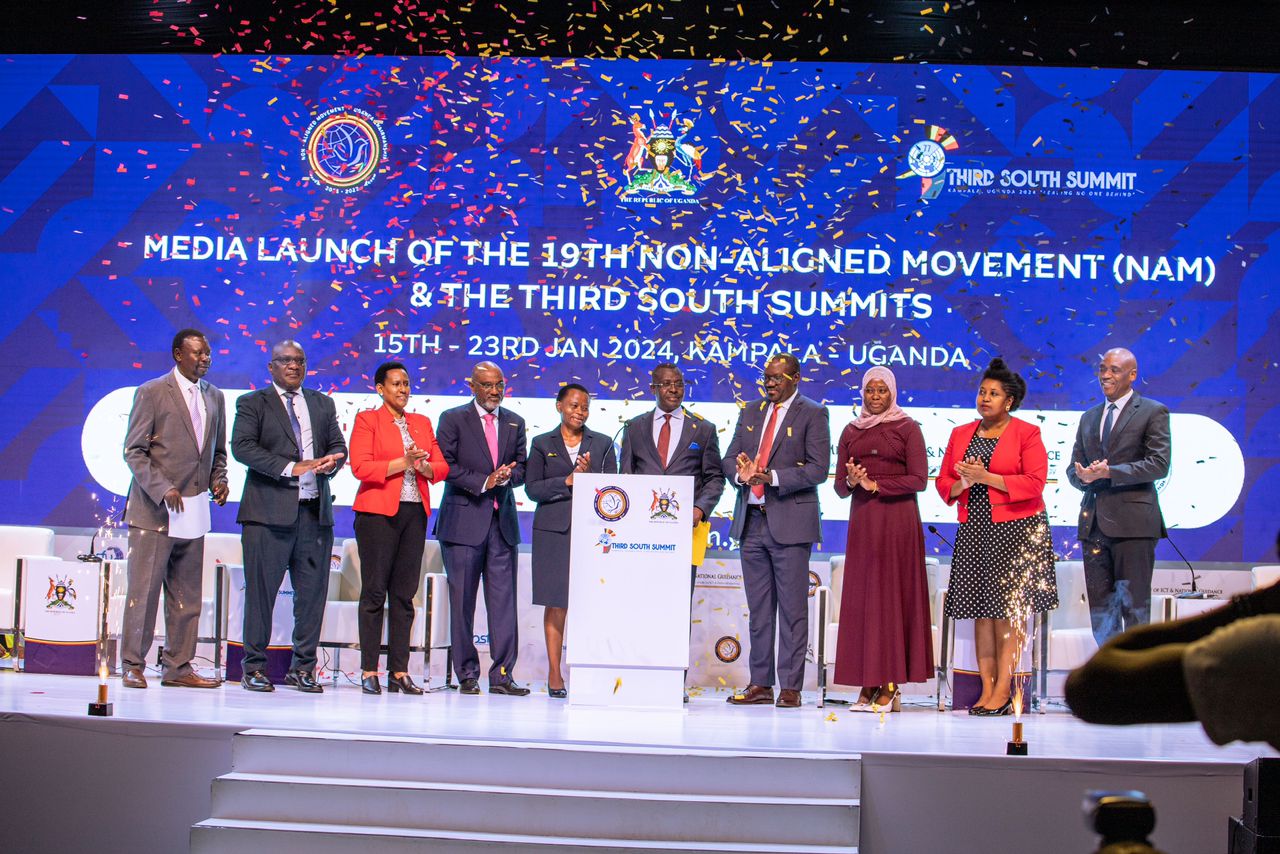
On the 29th of December 2023, the government of the Republic of South Africa formally filed a case against the state of Israel with the Hague based International Court of Justice, (ICJ) where renowned Ugandan legal brain, Mrs. Jalia Ssebutinde, sits as a judge. The application to institute proceedings, is in relation to the Israel’s conduct in its ongoing war against Palestine.

The eighty-four paged application filed in court lists a number of grounds for their complaint but perhaps the flesh to their application is their reference to the acts performed, condoned and threatened by the state of Israel to the Palestinian people as genocidal in nature – essentially contravening the principle of self-determination.

South Africa argues that such acts are genocidal as they are intended to bring about substantial destruction of the Palestinian national and ethnic community in the Gaza strip. The African nation points out further that such acts are in direct contravention of various provisions in the 1948 Convention on the Prevention and Punishment of the Crime of Genocide (Genocide Convention). South Africa further prays that the ICJ outlines provisional measures to be adhered to by Israel to stop the continued abuse of human rights in its ongoing war on Palestine before the situation becomes irreparable.

To scholars of international law, relations and diplomacy – and perhaps all objective peace-loving global citizens, this new development could be a major test of the objectiveness, impartiality and independence of the UN and its institutions in particular the ICJ.

I therefore highlight why it is important, in light of the current global reputation of the UN, for the court as scheduled between the days of 11-12th January, to swiftly and justly handle the application, if the global peace-keeping organisation is intent on achieving its major aim and preserving its significantly damaged credibility.

It is additionally important to also note that much as the decisions of the ICJ are not binding and are more like advisory opinions, their relevance in influencing a global push to take further action against Israel in more appropriate forums like  the ICC must not be wholly dismissed like many already are.

Speaking plainly, the credibility of the UN has long suffered significant damage over the years and one may perhaps rightfully argue that confidence in the capability of the organisation to execute the given mandate as established in its founding charter is waning fast.

Research into public confidence of the UN has produced statistics that do provide some insight. The World Value & European Value Survey (WVS/EVS) conducted between 2017-2022 in over 90 countries representing all geographical regions, indicated only about half of these countries maintain confidence in the organisation.

Furthermore, more intriguing revelations from the WVS/EVS data indicate that confidence in the UN has been on a consistent decline since the 1990s in the Middle East, Northern Africa, Eastern Europe and Latin American regions. To anyone with keen interest in global events, it is quickly ascertainable that these are particularly the conflict-stricken areas, hence their low confidence in the global peace-maker is damning, if anything.  Obviously, this has not occurred in a vacuum as justifiable reasons do exist.

The peace-keeping body has generally failed to remain impartial and independent in its application and implementation of international law principles.

If anything has significantly contributed to the organisation’s declining popularity of late, this has to be top of the list. Overtime, the world has witnessed major global superpowers especially and quite ironically, members of the Security Council influence the organisation to condone or refrain from taking action on their abrasive and wanton abuse of said principles.

The organisation has repeatedly appeared to have its hands tied as superpowers go about antagonising world peace through various wars that align with their own selfish interests and not world peace.

Additionally, the organisation has been ambiguous and unclear in its response to various conflicts all over the world that have drastically claimed civilian lives. There has generally been strong criticism and punishment for African war lords by the UN but often times, it has remained shockingly complicit when Western led actors such as the U.S and allies with their so-called anti-terrorism campaigns in the Middle East kill millions of innocent civilians due to reckless actions that are in their entirety, gross violations of international laws of war.

In essence, such tactics of selective application of the law, similar to the setting in George Orwell’s classic the Animal Farm, do not inspire much confidence in a body charged with promoting equality in the quest for world peace.

In the case at hand, the ICJ ought to decisively and objectively assess the case before it, and pronounce itself accordingly. It is in the interest of the court to ensure that its decision is as rational and just as it can be, free from any overt or covert influence. The court must strive to steer away from the precarious position, its sister institution, the International Criminal Court finds itself. The court’s independence and credibility are increasingly questioned yet it is supposed to play a major role in promoting world peace.

Comments from then National Security Advisor John Bolton in 2018 to the effect that the White House would no longer cooperate with the ICC, and would block any efforts to pursue U.S. or Israeli citizens, must only drive the ICJ to remain objective and not bow to any external pressure in the instant case.

The massacre of over 22,000 people including women and over 7,000 children in the Gaza should be reason enough for a swift and unequivocal response to the situation. It regrettably took weeks of back-and-forth discussions at the UN, just to secure a humanitarian ceasefire to ensure delivery of food and medical supplies to the Gaza population. The ICJ is hereby tasked with remaining extremely objective and delivering justice, restore confidence in the public as well as offering the much-needed relief to the Gazans.

It is important that the court duly assesses the overwhelming evidence of mass human rights violations as laid out in the application and take a step to address this. The applicants rightly note in their application that there is no attack on a state’s sovereignty, no matter how drastic, can be used to justify and defend breach of the Genocide convention. There is absolutely no moral or legal ground upon which the state of Israel can rely on to justify the massacre of children and families or razing down of homes, schools and hospitals.

At the 78th UN general assembly last year, part of the event’s theme reiterated the need to rebuild trust and reignite global solidarity. Before global states can trust each other, their unwavering trust in the UN as the body uniting them must be assured and confirmed. Additionally, in his 2022 address to the UN general assembly, the organisation’s chief Antonio Guterres rightly cited geopolitical tension and lack of trust as the factors that poison the dream of international co-operation. He must have borne it in mind that recent developments have plunged public trust in his institution, hence action must be taken by its institutions to counter that.

On the other hand, as a permanent member of the UNSC, the U.S must act responsibly and support upholding international laws. For this to happen, U.S officials like White House National Security Council spokesman John Kirby who told press that South-Africa’s suit against Israel is “meritless, counterproductive, and completely without any baisis,” must be called to order to let ICJ determine the case without such prejudice.

Also, there is need for all UN member states especially the Permanent Security Council Members (P5) to strongly advocate and support dialogue and diplomacy as a way of ensuring peace and tranquility globally. On this note, one can argue that today, more than ever, China’s proposed Global Security Initiative which seeks to address global security through dialogue, diplomacy, consultation and respect of international laws is relevant and should be embraced by the entire world.

In conclusion, the UN and the ICJ, if desirous to further exert global influence, may borrow from the words of former US secretary of state and diplomat, Colin Powell that; credibility is built upon trust, integrity and consistency, as it goes about its business of hearing the application and pronouncing itself on the matter. It should be in the minds of all the judges that the world is watching with keen interest, how the court will conduct itself in the grand scheme of global peace and protection of human rights.

The writer is a Law scholar at Johannesburg University and a research fellow with Development Watch Centre.