The third phase of the South-South Cooperation: A new chapter of partnership between China, Uganda and FAO

By Shemei Ndawula

The people of the People’s Republic of China as well as the people of Uganda have got a striking similarity which; as I have come to notice, has been largely under looked in most Sino-Ugandan (African) studies. We as Africans call it Ubuntu; the belief that the individual is an inherent part of the whole community and the intrinsic desire to look out for one another. This has never been so prominently displayed as with the tripartite South-South collaboration between China and Uganda.

I have witnessed the challenges and opportunities that Uganda faces in its quest to achieve food security, poverty reduction, and environmental sustainability. I have also seen the potential and promise that Uganda has to become a regional and continental leader in agriculture and agribusiness.

That is why I am exceptionally thrilled to witness the third phase of the South-South Cooperation (SSC) project between China, Uganda and the Food and Agriculture Organization of the United Nations (FAO) rollout. The SSC is a mutual sharing mechanism that allows for the exchange of development solutions between and among countries in the global South. The SSC aims to enhance the capacities of developing countries to achieve their development goals through knowledge, experience, technology, and resource sharing.

This collaboration between China, Uganda and FAO was launched in 2012 with an initial funding of $3 million from China. The project was focused on improving crop production and productivity, especially for rice and maize, through the introduction of improved seeds, fertilizers, irrigation systems, and mechanization. It also sought to support the development of aquaculture and livestock sectors, as well as the establishment of demonstration farms and training centers.

The project achieved remarkable results in its first phase (2012-2015), such as increasing rice yields by 150%, maize yields by 50%, fish production by 30%, and milk production by 20%. The project also created more than 10,000 jobs and benefited more than 100,000 farmers.

Based on the success of the first phase, the project was extended for a second phase (2016-2019) with an additional funding of $5 million from China. The second phase expanded the scope of the project to include more crops, such as cassava, banana, soybean, and vegetables. This investment also went a long way in strengthening the capacity building of farmers, extension workers, researchers, and policy makers through facilitating training courses, study tours, workshops, and seminars. This partnership has also enhanced the collaboration between the National Agricultural Research Organization (NARO) of Uganda and the Chinese Academy of Agricultural Sciences (CAAS) for joint research and innovation.

As would be expected, the second phase of the project also delivered outstanding results, such as increasing cassava yields by 100%, banana yields by 50%, soybean yields by 40%, and vegetable yields by 30%. The project also improved the quality and safety of agricultural products through the adoption of good agricultural practices (GAP) and standards. This has gone a long way in increasing the income and food security of farmers through creating better market linkages and value addition.

In January 2023, the project entered its third phase (2023-2026) with a funding of $12.6 million, out of which $10 million is committed by Uganda and $3 million by China. This ($10 million) is one of the most significant contributions by a Least Developed Country as a beneficiary nation for a SSC project. The third phase aims to scale up the achievements of the previous phases and consolidate the sustainability of the project.

The third phase will focus on four key areas: crop production and productivity; agro-processing and value addition; agribusiness development and market access; and policy support and institutional strengthening.

This phase will also align its activities with Uganda’s national development plans and strategies, such as Vision 2040, National Development Plan III, Agriculture Sector Strategic Plan, Parish Development Model, among others. The third phase looks at integrating cross cutting issues such as gender equality, youth empowerment, climate change adaptation and mitigation, and digital transformation into the joint effort by the tripartite

The third phase will also involve more stakeholders from both public and private sectors, such as local governments, civil society organizations, farmer associations, cooperatives, agro-industries, financial institutions, and media.

The third phase will also leverage more resources from other development partners and donors, such as the African Development Bank, the World Bank, the European Union, the United States Agency for International Development, and others. The third phase will; basing on lessons learned in the previous rollouts showcase more effective practices and success stories from both China and Uganda to inspire other countries and regions to join or replicate the SSC model.

The third phase thus marks a new chapter of partnership between China, Uganda and FAO. A partnership that is based on mutual respect, mutual benefit, and mutual learning. A partnership that is driven by innovation, collaboration, and transformation. A partnership that is aimed at achieving the Sustainable Development Goals and the Agenda 2063 for a better future for Africa and the world. A partnership that highlights out what we’ve learned to expect from all Sino-Ugandan partnerships, effective, efficient and timely delivery.

Shemei Ndawula is a research fellow Sino-Uganda Research Centre
Xi’s Third Belt & Road Forum Speech Re-affirms China’s Commitment to Building a Community of Shared Prosperity

By Allawi Ssemanda

Last week, the world leaders gathered in Chinese capital Beijing as leaders from over 150 countries, and representatives of international organisations met in Beijing for the Third Belt and Road Forum for International Cooperation. The event also marked 10 years of the Belt and Road Initiative (BRI). Jointly implemented by participating partners, BRI which was initiated by China in 2013 is a high quality public good whose benefits are shared by the world. The project delivers high-standard, sustainable and livelihood-enhancing outcomes globally appreciated.

The project is highly commended for its contribution towards global infrastructure development which has greatly contributed to global connection and easing of trade and the movement of goods and services which has contributed to uplifting of 40 million people out of extreme poverty across BRI economies. This makes the initiative a textbook example of win-win cooperation and shared prosperity which China has always advocated for.

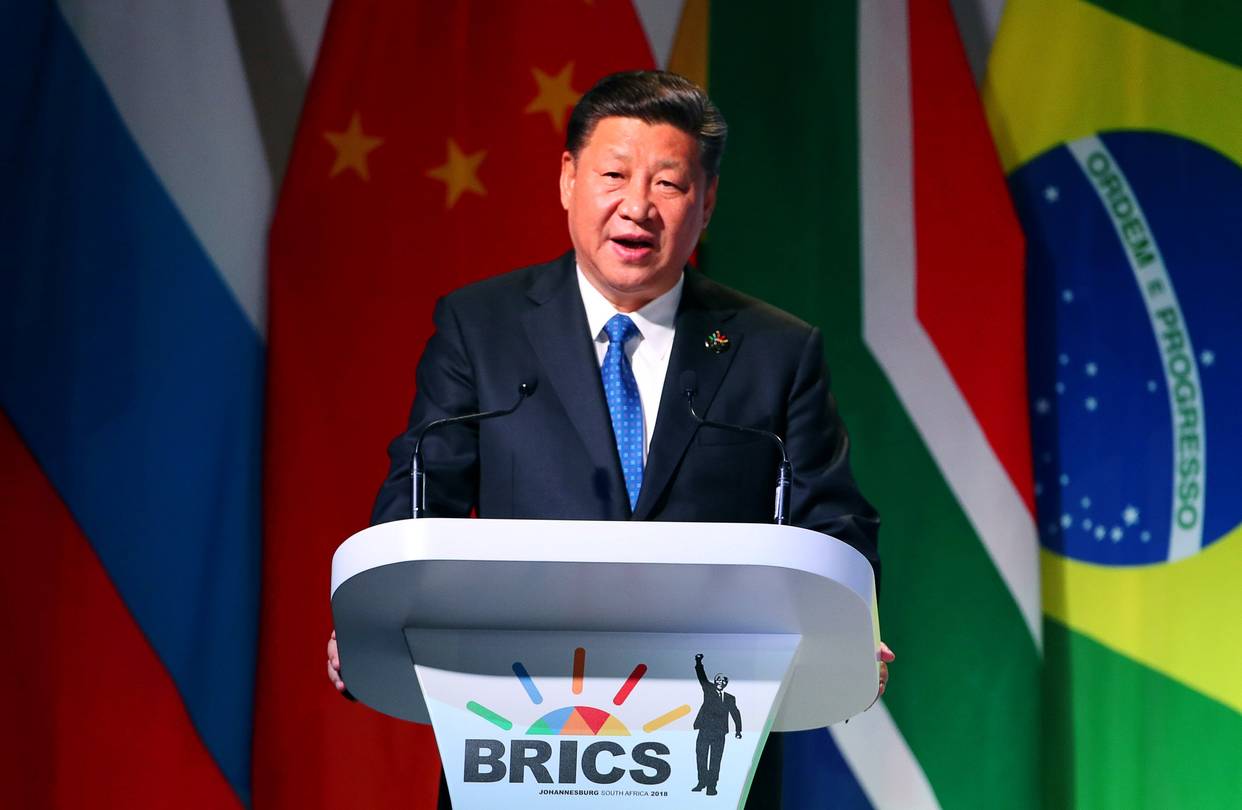
Stressing that the Belt and Road cooperation is based on the principles of “planning together, building together, and benefiting together,” President Xi explained that the BRI “transcends differences between civilizations, cultures, social systems, and stages of development,” adding that “it has opened up a new path for exchanges among countries, and established a new framework for international cooperation.”  “The BRI represents humanity’s joint pursuit of development for all,” observed President Xi.

With this, one can argue that President Xi was spot-on considering study reports about BRI conducted by different independent organisations including major think tanks and the World Bank (WB) whose conclusions contend that BRI is contributing to global development.

The other key area President Xi noted in his speech is the progress the BRI has achieved in green and low-carbon development and addressing climate change challenges. He revealed that this huge public good initiative does not only look at addressing today’s needs by improving connectivity through infrastructure development but it is also keen to addressing environmental concerns as a way of addressing climate change which is key for sustainable development as China continues her efforts of ensuring shared prosperity for mankind. “China has issued documents such as the Guidance on Promoting Green Belt and Road and the Guidelines on Jointly Promoting Green Development of the Belt and Road, and set itself the ambitious goal of forming a basic framework of green development through BRI cooperation by 2030,” Xi announced.  While critics of the BRI have always wrongfully claimed that the initiative is silent about environment, President Xi revealed; “China has also signed an MoU with the United Nations Environment Programme on building a green Belt and Road, reached environmental cooperation agreements with more than 30 countries and international organizations, launched the Initiative for Belt and Road Partnership on Green Development together with 31 countries, formed the Belt and Road Initiative International Green Development Coalition with more than 150 partners from 40-plus countries, and established the Belt and Road Energy Partnership with 32 countries.

Further, President Xi also talked about debt sustainability among BRI economies (countries that signed up for the BRI). He explained different ways China has put in place through consultations with partner countries as a way of managing debts so that the project supports wholesomely partner countries without causing economic stress. He stressed that basing “on the principle of equal participation and benefit and risk sharing, China and 28 countries approved the Guiding Principles on Financing the Development of the Belt and Road, encouraging the governments, financial institutions and enterprises of participating countries to attach importance to debt sustainability and improve their debt management capability.”

With aim of avoiding debt burden to BRI economies, China came up with debt sustainability framework for low-income countries. This framework which is endorsed by the World Bank and International Monetary Fund when extending funding and loan facilities looks at among others actual conditions of individual countries. Additionally, while implementing BRI projects, “China has prioritized economic and social benefits and provided loans for project construction based on local needs and conditions. The key areas of investment are infrastructure projects designed to increase connectivity, and projects for public wellbeing urgently needed in participating countries. These have brought effective investment, increased high-quality assets, and boosted development momentum,” Xi stressed.

It is not a surprise that several studies continue to credit BRI projects as catalysts for social-economic development of not just BRI economies but also countries that did not sign up for it but are in corridors of the BRI.  For example, a study by WB conducted in 191 countries, titled “How Much Will the Belt and Road Initiative Reduce Trade Costs?concluded that the Belt and Road Initiative projects have made trade easier in BRI participating countries by “reducing shipment times and trade costs at country-sector level.”

Examining trade figures from 191 BRI economies and those in BRI corridors and 1,818 cities in BRI economies only, the study concluded that “for Belt and Road economies, the change in shipment times and trade costs will range between 1.7 and 3.2 percent and 1.5 and 2.8 percent, respectively.” Further, the study found that non BRI economies or countries that did not sign up for the BRI are equally benefiting from the initiative stressing that it has led to “reduction in shipment time ranging between 1.2 and 2.5%,” and reduced “trade costs of up to 2.2%.” Also observed by the study was that BRI economies and those countries where BRI projects go through or BRI corridors benefited the most with “shipment times along these corridors decline by up to 11.9% and trade gains by 10.2%,” noted the WB study.

Generally, there is a consensus that the BRI is a public good whose benefits are being enjoyed by a great percentage of mankind irrespective of our respective countries. For example, between 2013 and 2022, the cumulative value of imports and exports between China and BRI economies reached US $19.1 trillion which translates to 6.4% average annual growth, according to a white paper (WT), “The Belt and Road Initiative: A Key Pillar of the Global Community of Shared Future” released by China’s State Council Information Office this month. In this WT, figures indicate steady growth in two-way investments between BRI economies and China which reached USD $280 billion. As of 2022, the value of both imports and exports between BRI economies and China reached USD 2.9 trillion translating to 45.4% of China’s overall foreign trade which represents 6.2% increase if compared with 2013; while the overall value of imports and exports of Chinese private enterprises to BRI economies grew past USD 1.5 trillion which translates to 53.7% of trade between China and BRI economies for the said period.

From her successful experience, China understands the role infrastructure plays while pursuing sustainable development. As two Chinese adage contend; “要想富” , “先修路”; “Better roads lead to better life.” and “Build roads if you want to get rich,” it is clear that it is China’s thirst to contribute in building a community of shared future for mankind in the new era, that with hope of mutual benefits, Beijing embarked on funding this huge public good project  the Belt and Road Initiative to fasten efforts of achieving shared prosperity for mankind in the new era.

Allawi Ssemanda, PhD is Executive Director Sino-Uganda Research Centre and a Senior Research Fellow at the Development Watch Centre.

A Decade of Lighting Nations Through Energy Infrastructure Development: Recounting Fruits of the Belt and Road Initiative

By Allawi Ssemanda

On average, an African woman spend up to 5 hours per day collecting firewood. A study funded by Finnish ministry of foreign affairs on Modern Cooking Facility for Africa (MCFA) contends this prevents women and young girls from engaging in productive economic activities, school and at times exposes them to physical violence. MCFA attributes this challenge to lack of access to affordable and clean cooking facilities which can largely be explained by lack of electricity on the continent especially in rural areas.

Relatedly, the Word Bank (WB) indicates that approximately, one billion people from Sub-Saharan Africa and South Asia have no access to electricity. This indicates a huge barrier to socio-economic transformation of world’s significant population portion and has both direct and indirect effects on development efforts like hindering or slowing expansion of development indicators such as health, poverty reduction programs, education, food security among others.

However, infrastructure financing including energy infrastructure is a very expansive venture which involves huge amounts of funds. A study by the WB titled “why we need to close the infrastructure gap in sub-Saharan Africa,” underscores this stressing that infrastructure funding gaps are bottlenecks to Africa’s economic take-off. The African Development Bank (ADB) also stresses the need to reduce the region’s infrastructure funding gaps for the continent to achieve its development goals putting needed budget to $130-$170 billion annually.

Despite this, international creditors and commercial loans meant to fund such projects in developing countries have significantly reduced over a period. Other funders especially from the Western world are largely interested in funding areas like administration and so-called democracy programmes, leaving out key sectors like energy and transport infrastructures which are key for social economic development to be achieved. For example, World Bank which used to spend 70% of its funding in infrastructure significantly reduced this to about 30%.

In Uganda, the government has been working hard to increase electricity production capacity as a sure way to increase its accessibility countrywide and China has been a reliable partner in this endeavour with Beijing funding the country’s two major hydropower projects under the Belt and Road Initiative (BRI). Also, under the same arrangement, China is funding Uganda’s rural electrification program.

Through EXIM bank of China, Chinese government offered concessional loan to fund 85% cost of the Karuma Hydropower project, while Uganda government is meeting the remaining 15%.  A Chinese firm SinoHydro Cooperation is undertaking the project which is Uganda’s biggest hydropower plant and possibly, the 14th largest hydropower dam in the world. Upon completion, the project which is now 99.45% complete will produce 600MW which will push the country’s hydropower generation to 1,868 MW. The government hopes this will help the country to increase power accessibility countrywide reduce power tariffs in the long run.

Currently, 200 megawatts have been connected to the national grid. Upon completion, it will add 44.6% to Uganda’s increased power supply effectively helping more Ugandans to get connected and lowering power tariffs and advance the country’s goal of industrialization drive.

Isimba hydropower dam is another project funded and constructed by Chinese government still under BRI arrangement.  The dam which started its commercial operation in 2019 was formally handed to the Uganda government on 31st March 2019. As of May 2023, it had produced about 3.98 billion KWH generating approximately 165 million USD revenue to Uganda government. Today, Isimba power tariffs is at 4.16 cents per kilowatt hour (KWH).

Also, Uganda’s Rural Electrification program which aims at increasing the country’s access to electricity to is 90% on course. The program which is funded by Chinese government as a concessional loan is being implemented by a Chinese firm TEBA has already connected over 170,000 Ugandans in rural areas to national grid.  It is also under the BRI arrangement.

From Chinese experience, we learn that infrastructure development is key for any country to achieve its development goals. As Asia Development Bank chief, Jin Liqun once noted; “The Chinese experience illustrates that infrastructure investment paves the way for broad-based economic social development, and poverty alleviation comes as a natural consequence of that.” There is no doubt that China gives us a perfect case of what investing in infrastructure can do for countries seeking socio-economic development.  The good news is that as Beijing pursues building a community of shared future, it has been willing to share and support willing countries by investing in their infrastructure development as a way of backing their economic take off. BRI has been vital in this journey.

Uganda’s vision 2040 statement which seeks to see “a Transformed Ugandan Society from a Peasant to a Modern and Prosperous Country within 30 years” lists increased generation of affordable power as a magic bullet for the country’s socio-economic take off. To achieve this, Uganda must increase its electricity per capita consumption from the current 215 kWh to at least 3,668 kWh. This to happen, we must raise our power generation capacity to at least 41,738MW and increase access to national grid to at least 80%.

Considering figures and reality in the country, it is arguably incorrect one to talk about Uganda’s electrification program without mentioning China’s contribution. Through concessional loans under the Belt and Road Initiative, China has supported Uganda’s energy infrastructure sector right from Isimba to Karuma hydropower project and to Uganda’s rural electrification program. Given importance of this sector, by all means, China’s contribution to Uganda’s socio and economic development cannot be underestimated. As we mark 10 years of Belt and Road Initiative, as a Ugandan and African, I cannot shy to say China-Africa relations have produced real results and the cooperation is a textbook example of win-win cooperation and a positive effort towards building a community of a shared future for mankind in the new era.

Allawi Ssemanda is a Senior Research Fellow at the Development Watch Centre


The Belt and Road Initiative Celebrates 10 Years: The Journey of China and Uganda Cooperation in Summary

By Alan Collins Mpewo

Looking to the earlier years before 2023 looks nearer, like yesterday, and yet when the Belt and Road Initiative (BRI) was launched in 2013, making it thus far would seem unachievable. It is 10 years now that the initiative has endured. It has withstood all possible forms of hurdles along the way, especially from the foreign antagonism towards China. The outright goal of BRI remains connecting the world and easing trade and movement of goods and services. Akin to the silk route that connected the major parts of Euro-Asia, the BRI has done much in bringing various countries together, with a record connection of more than150 countries and over 30 international organizations have signed up for the project. It also covers a third of the world’s GDP and more than three-fourths of the countries in the world.

To date, BRI has worked on more than 3000 cooperation projects among BRI economies, which has resulted into easing of trade and movement of goods and services resulting into investments of close to one trillion USD which has helped in job creation among participating countries and also by extension helped in reducing poverty.

Infrastructure development with focus on roads, railways, ports, airports and energy infrastructure are some of major projects the BRI has supported over the past 10 years.

The infrastructural set-up in Africa by China speaks for itself. It’s from that point of line that Uganda, just like other few countries, can now be certain that the oil dream is yet to be achieved. Chinese capital has been a go by, and what is most interesting, is that China levels granting access to their manpower and technology. This has been done with Uganda following the principle of mutual benefits and respect. China understands the fact that you can’t have sustainable development without proper infrastructure. Indeed, Chinese people have two common saying that; “要想富” , “先修路” loosely translated; “Better roads lead to better life.” and “Build roads if you want to get rich.” I am convinced right understanding explains China’s historic success story and as a way of building a community of shared future for mankind in the new era, China is sharing their experience supporting willing partners through especially through the Belt and Road Initiative which has made infrastructure development a priority.

It should be understood that Uganda being one of the first African countries to establish relations with China, has benefited more than most of her counterparts. Though it is still work in progress, with Chinese hand, today, Uganda has descent road networks spread almost in all parts of the country from the North to south, East to West and Central. China’s financing to Uganda has not only been in the road infrastructure, but also other projects such as in energy and gas. Karuma and Isimba hydropower dams are part of the major successes under this initiative. For a country like Uganda that has seen a great shift in its economic priorities, industrialization has always been a major factor to consider. Because of this, electricity supply needed to be increased across all parts of the country. After the commissioning of the Isimba dams, Uganda’s electricity capacity has grown and it is expected the country will have more especially after commissioning the nearly complete Karuma dam.

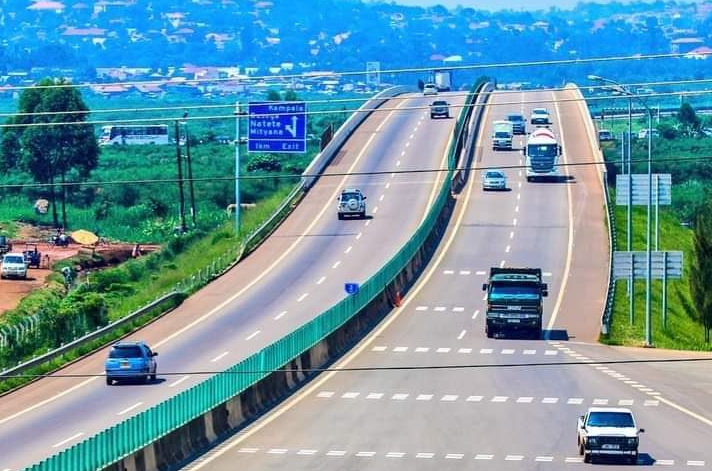
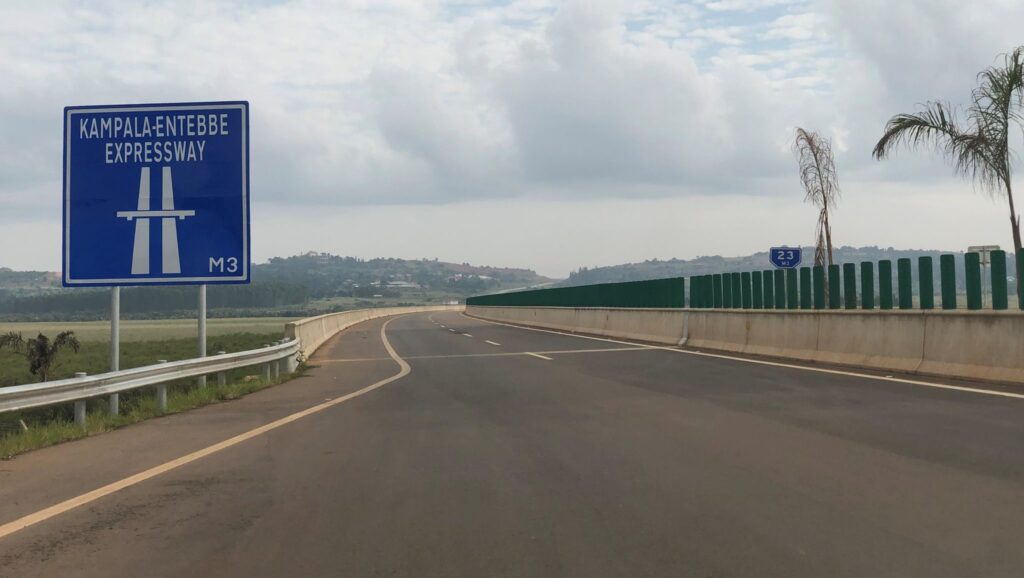
Before the Kampala-Entebbe express way was completed, transportation to and from Entebbe which doubles as Uganda’s aerial entry point was filled with much time spent on road. This equally had an effect on those who would later choose to access further areas via Lake Victoria, accounting for the much time spent on road. The story has changed in great measures. The new express way was financed by China with the understanding that time spent would be less, in order to expedite transportation of services and goods to the Airport so that they would see their export to the international market. With completion of Entebbe expressway, the time spent on the road is now about 30 minutes down from about 2 hours during heavy traffic jam.

Industrialization is not known anymore for what it was in Uganda, many years ago. Uganda had for a long time felt comfortable dealing with foreign made products than its locally made. This obviously is accounted for by many factors such as less expertise, technological challenges, and finances, and yet, Uganda’s potential to produce raw materials is unquestionable. China’s belt and road initiative has greatly changed that status quo. Organization is now a virtue, and this is seen from the scattered industrial parks by Chinese investors. This was long overdue because there needed to be a formal set-up for the industries and their professionals to converge together and carry out business while enjoying benefits granted to them in a centralized environment.

It goes without saying therefore, that while all the above are often cited, that the oil dream is yet to become the greatest success story of the two countries. The Albertine region of Uganda will soon be the hub that supplies oil, joining other global players. It cannot be said enough, of what the proceeds of the oil exportation can do for Uganda. Education, medical access, industrialization, energy and gas, and much more, if the finances are well used. The bottom line is the reduction in the unemployment rate of Uganda. Uganda’s unemployment rate stands almost equal to the employment rate, which leaves questions as to what exact extent can it be tackled. Since the growth of Chinese projects, unemployment has greatly reduced and more success is yet to be realized with the coming up of more projects under the initiative.

Much can be said about the Belt and Road Initiative and its impact to Uganda but what stands out presently is the fact that it has withstood for 10 years while positively impacting not just Uganda but over 150 Countries. It is with sincerity that the key players keep the pace for more years to come, because there is more to gain, than losing.

Alan Collins Mpewo is a Senior Research Fellow, Development Watch Center

Palestine-Israel Conflict: U.S & the EU are Hypocrites; They Should Learn from China

By Allawi Ssemanda

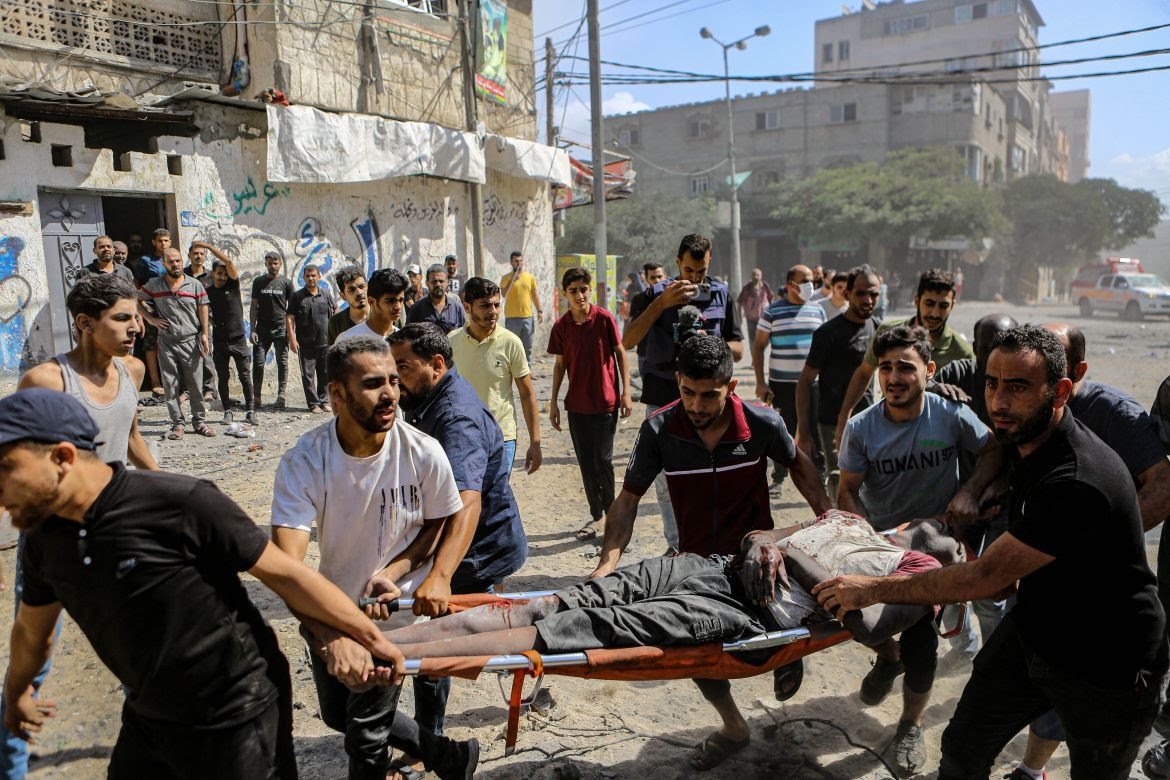
There are growing fears of unprecedented humanitarian crisis as a result of Israeli indiscriminate bombing and blockade of Gaza strip. This follows widely expected Israeli ground invasion as the fanatical far-right government vows to turn Gaza into what Prime Minister Benjamin Netanyahu called a “desert island” as a response to what Israelis see as humiliating attack by Hamas.

This is after Hamas fighters breached Israel’s assumed tight security and killed at least 1,200 people before retreating with captured soldiers and civilians as hostages. Israelis responded with a disproportional force; bombing Gaza with thousands of bombs and killed over 2,400 Palestinians including children, women and elderly. As indiscriminate bombing is ongoing, Israel has ordered more than 1.1 million people in Gaza to move to South but later targeted and killed 70 civilians as they fled the area. UN strongly opposed the order saying it is ‘impossible for such a movement to take place without devastating humanitarian consequences’.

Hamas argues; their offensive was in response to desecration of the Al Aqsa Mosque and endless Israeli atrocities against Palestinians over the decades listing 17-year blockade, Israeli raids inside West Bank cities, increasing attacks by settlers on Palestinians and growing expansion of illegal settlements in occupied territories.

Even before Netanyahu declared a “state of war” against Gaza, U.S ruler, Joe Biden responded equating Hamas’ incursion to America’s 9/11 before he repeated unsubstantiated Israel’s allegations that Hamas fighters “raped women” and “beheaded babies”. In what appeared like a well-rehearsed orchestra, from Washington to London, Paris to EU headquarters, they voiced their unconditional support for apartheid Israel and condemned “unprovoked attacks against Israel” and repeated Washington’s lines calling Hamas terrorists.

If critically analysed, as constructivists and poststructuralists would argue, terrorism is a result of stereotypes and a misconception politically and socially constructed to describe some groups with primary purpose of discrediting actors involved and portray them as violent so that they are rejected by right thinking members of community.

Just hours after Western leader’s similar wording of solid support for Israel, Israel’s far-right defense minister Yoav Gallant declared a “complete siege” Gaza’s about 365 square km, with its 2.36 million Palestinians, which has been under an Israel’s blockade for 17 years.

Describing Palestinians as “human animals” Gallant announced; “a complete siege on the Gaza Strip. There will be no electricity, no food, no fuel, everything is closed.

As Netanyahu posted videos of civilians’ buildings being bombed, EU President Ursula von der Leyen who on October 19th 2022 told EU parliament; “Russia’s attacks against civilian infrastructure, especially electricity, are war crimes. Cutting off men, women, children of water, electricity and heating with winter coming- these are acts of pure terror” did not criticise Israel’s decision to cut off same supplies to Palestinians.

The above shows double standards and hypocrisy of leaders of the E.U and their American allies. Rightly so, Clare Daly, the Irish Member of Parliament to the EU told off Ursula for being a hypocrite; “the double standards of Ursula and EU leaders are laid bare. They back Israel to hilt, even as it engages in state terror against innocent people. All wars are evil, and all victims deserve support, and until you get on that page, you have no credibility whatever.”

Sadly, Israel backers seem not bothered or are not doing much as civilians’ death from Israel’s collective punishment skyrockets. Hopefully, they are not waiting for the wishes of former U.S’ ambassador to the UN Nikki Haley who told Netanyahu to “finish them.” Put differently, the U.S and the EU are fully backing what radical theorists Noam Chomsky calls “wholesale state terrorism” against Palestinians.

Of the major powers, it is only China and Russia that have called for de-escalation, exercising restraint, respecting of international laws and ending hostilities to protect civilians. In a statement, China pointed at the root cause of Palestine-Israel conflict and suggested how to address it; “The fundamental way out of the conflict lies in implementing the two-state solution and establishing an independent State of Palestine. The international community needs to act with greater urgency, step up input into the Palestinian question, facilitate the early resumption of peace talks between Palestine and Israel, and find a way to bring about enduring peace,” read the stamen.

China’s response is not only peace cantered. It is in line with UN recommendations. Strangely, the U.S criticised China claiming it leaned more on Palestine’s side with U.S Senate Majority Chuck Schumer telling China’s top diplomat Wang Yi that China should stand with Israel.

It should be recalled; on 29th November 2012, after 65 years of the approval of the partition plan for Palestine, UN General Assembly overwhelmingly voted to recognise Palestine as approved by UN within the 1967 borders as a non-member state with observer status. 138 countries voted in favour, 41 abstained and only 9 voting against it. Therefore, as one of the five UNSC permanent members, China’s stand should be lauded by the peace-loving countries including hypocrites in Washington and Brussels who have made it a tradition to cherry-pick when to call for observance and respecting of international laws.

Otherwise, it is despicable to see the Biden administration and allies unbothered by the racist and genocidal language calling Palestinians “human animals.” It is sickening seeing U.S which normally presents itself as a defender of international laws and playing by rules being the same country arming Israel with bombs aiding Netannyahu’s crimes against humanity in Gaza.

In equal measures, seeing EU’s Ursula von der Leyen issuing Israel a blanket cheque that she and the EU are behind what she called self defense which Israel is using including their complete siege and blockading of electricity, food, fuel, which while referring to Russia-Ukraine crisis called “war crimes” begs us to ask and doubt claims of values they have always claimed to have.

From above, Israel’s war against Palestine and Russia-Ukraine crisis have exposed the West and their lies. Their claims of being pro-democracy or having values is fake news as we have seen their media promote largely propaganda during the said two conflicts.

Like old brats, seeing Biden and Ursula von der Leyen, Rishi Sunak and Macron almost parroting Netanya’s speeches makes one thing clear. Geopolitics of self-claimed democracies and the so-called free world has never been about creating a peaceful and free world.  The logic that guides these reckless powerful countries is not human rights or democracy, neither is it about respecting sovereignty of other countries or upholding international law. It is just power and their selfish interest. They are hypocrites and the world should despise them for insulting international collective intelligence.

While I agree that targeting civilians by any side is unacceptable, we must have historical facts right! It’s wrong to compare Hamas with ISIS as the U.S and Israel would want. Hamas has never staged any attack outside historical Palestine. Their attacks are always in historical Palestine and the illegally occupied Palestine areas. The logic way to end this Israeli made and America backed crisis is to address the root cause. Implement the two-state solution!

Allawi Ssemanda is Senior Research Fellow at the Development Watch Centre.


Belt And Road Initiative at 10: A Decade of Connectivity and Shared Prosperity

By Dr. Allawi Ssemanda

This month marks 10 years since Chinese President, Xi Jinping put forward the idea of the Belt and Road Initiative (BRI). In October 2013, President Xi who doubles as the Secretary General of Chinese Community Party (CPC) explained that the initiative then seen as restoration of the ancient maritime silk road would help in facilitating trade by easing movement of goods and services, and connecting the world through infrastructure development.

Today, from Latin America to Caribbean, Middle East to Asia, Africa to Europe, more than 150 countries and over 30 international organizations have signed up for the project. This means, more than a third of the world’s GDP and more than three-fourths of the countries in the world are part of the BRI. Such support is not a surprise; extensive consultation, joint contribution and emphasis on shared benefits are key principles of the BRI.

It is now clearer that BRI is a high-quality public good initiated by China, and jointly built by all participating partners. Its wide reception is a testimony; it is delivering high standard, sustainable and livelihood-enhancing projects to all people; treating all participating countries as equal partners, promoting economic integration and connection.

BRI has become a household name due to its contribution of connecting the world and easing trade and movement of goods and service resulting into investments of nearly one trillion USD, brought over 3000 cooperation projects, and created over 420,000 jobs in countries along the routes of the project with multiplier effect helping lift 40 million people out of absolute poverty.

Driving on the five Connectivities or “five Cs”; policy connectivity, infrastructure connectivity, trade connectivity, financial connectivity, and people-to-people connectivity, BRI has positively contributed to the well-being of humanity world-over. Recent empirical study shows that the BRI has significantly improved global trade and reduced costs involved. A World Bank (WB) study conducted in 191 countries, entitled “How Much Will the Belt and Road Initiative Reduce Trade Costs?concluded that BRI projects have made trade easier in BRI participating countries by “reducing shipment times and trade costs at country-sector level.”

Analysing trade figures from 191 countries (those that signed up for BRI and those in corridors of BRI projects), 1,818 cities for BRI economies only (cities from countries that signed up for BRI), the WB concluded that “for Belt and Road economies, the change in shipment times and trade costs will range between 1.7 and 3.2 percent and 1.5 and 2.8 percent, respectively.” Interestingly, the same study observed that even countries which did not sign up for BRI are benefiting. BRI projects world-over have seen “reduction in shipment time ranging between 1.2 and 2.5%,” and reduced “trade costs of up to 2.2%.” The study observed that in countries where BRI projects are located and or along the corridors, those countries gained the most with “shipment times along these corridors decline by up to 11.9% and trade gains by 10.2%”. While it notes that positive results of BRI projects “are magnified by policy reforms that reduce border delays and improve corridor management,” all is possible because BRI exist.

From Africa to Asia, to Europe, Middle East and Americas, under the Belt and Road Initiative, the economic cooperation between China and the rest of the world has by and large withstood the test of uncertain factors against the backdrop of the pandemic time and by all standards, it is safe to say BRI is still enjoying a good momentum of steady progress of enabling factors that are key for the world to enjoy shared prosperity.

Despite all the positive contribution of BRI, the project has been a target of the West especially the U.S. Strangely, without facts, Washington has consistently tried to promote narrative of the so-called debt trap and claims of lack of transparency from Chinese side on financing of BRI projects. However, critics claims remain baseless as different studies from independent bodies and researchers continue to rate the project positively. For example, while critics accused BRI of carrying risks, a World Bank study entitled; “Belt and Road Economics: Opportunities and Risks of Transport Corridors” concluded that there are more benefits for BRI participating countries and the entire world and that risks involved were minimal compared to benefits.

In Africa for example, projects under the BRI have greatly contributed to both social and economic growth of a number of countries. A study by the Africa Policy Institute found that, under BRI, a number of modern infrastructure projects in the Horn of Africa (HoA) and other parts of the continent increased, contributing to thousands of employment opportunities and other multiplier effects. The study also highlights Kenya’s modern Standard Gauge Railway (SGR) connecting Mombasa and inland port of Naivasha funded under BRI. Ethiopia-Djibouti standard gauge railway which connects the landlocked Ethiopia to Djibouti port is also credited for improving transport in the region. The project is already showing greater signs of sustainability with the 752.7-km railway line credited for contributing over 86.13 million U.S. dollars in revenue in 2021, which was up by 37.5% if compared to 2020 revenue collections.

In Uganda, infrastructure connectivity is visible with Kampala-Entebbe Expressway, (KEE) the country’s gateway to the rest of the world being operational. the completion of KEE cut commuting route between the country’s capital, Kampala and Entebbe international airport from a two-hour long drive within long queues of traffic jam to just 30 minutes. This is not to mention other projects funded under the same arrangements such as expansion of Entebbe International Airport, two hydropower mega projects; Isimba and Karuma among others.

Aside, critics of BRI on account of what they call putting more funds into infrastructure project should recognise that developing countries are faced with challenges of infrastructure funding. According to the African Development Bank (ADB), to meet her infrastructure funding deficits which is key for the continent to plan for its growing population and replace their ageing infrastructure, annually, the continent needs between $130-170 billion. This means; countries need allies willing to help in funding their infrastructure projects which BRI is exactly doing.

WB study “Why We Need to Close the Infrastructure Funding Pag in Sib-Saharan Africa” contends; if the region shrinks its infrastructure funding gaps, the region’s GDP per capital will grow by 1.7%. In otherwards, by implementing BRI in the region, China is already supporting Sub-Saharan African countries GDP growth by 1.7%. Should we castigate China or BRI for such because the U.S or a few politicians in Western capitals are “worried” or because they have refused to understand that BRI is a global public good? My answer is a resounding No.

As Bent Flyvbjerg, a Danish professor taught us; “Infrastructure is the great space shrinker, and power, wealth and status increasingly belong to those who know how to shrink space.” Now that BRI is with here, we should embrace it to improve infrastructure in our respective countries as we strive with allies like China to build a community of shared future for mankind in the new era of win-win cooperation.

Allawi Ssemanda, PhD is Executive Director the Development Watch Centre and Senior Research Fellow at Sino-Uganda Research Centre

Belt & Road Initiative at 10: International Relations Through the Lens of Economic Development

By Marvin Hannington Kalema

Often times, many people’s answers to a question on the purpose or importance of International Relations in the global scene would be primarily along the lines of maintenance of global peace by fostering mutual respect and goodwill among global states. This despite being somewhat an incomplete answer is not wrong at all upon a perusal of the prime article in the charter of the United Nations (UN), the globally recognized institution charged with the responsibility of fostering and promoting peaceful international relations.

However, article 3 of the abovementioned charter espouses, as one of the aims of the UN, a desire to achieve international co-operation in the solving of global problems of economic, cultural or humanitarian nature. In essence, the article outlines an additional role or purpose played by international relations aside from promoting global peace and that is addressing global economic challenges.

It can be argued that, the founders of the UN believed that countries relating peacefully with one another could easily work together to counter their common challenges, one of the most notorious being poverty and economic inequality among global states. The World Inequality Report as of 2022 portrayed a disparity in that the richest 10% of the global population owns over 76% of global wealth and the poorest half of the global population owns a meagre 2% of the global wealth cake. Staggering revelations at that.

In light of the figures above, it is clear that global states need to participate more in a unified effort of economic development. Some countries like the People’s Republic of China have through projects like the Belt and Road Initiative (BRI) undertaken efforts to give effect to, and realize article 3 of the UN charter. This year, as the initiative celebrates a decade of existence, it is imperative that an assessment of its achievements is briefly established.

The BRI, initiated in 2013 is a development initiative developed by China but belonging to the rest of the world as the white paper on the project released by Beijing’s State Council Information Office opines. It is actually believed to carry on the spirit of dynasty era China where maritime silk routes were developed opening up the East and West to each other under the guidance of Chinese Emperors.

As the maritime silk routes increased trade at the time, the BRI project was also expected and organized to facilitate trade, communication, culture among member countries with the hope of realizing global economic growth.

The BRI is founded on the principles of extensive consultation, joint contribution, and shared benefits. It advocates win-win cooperation in pursuit of the greater good and shared interests. It emphasizes that all countries are equal participants, contributors and beneficiaries, and encourages economic integration, interconnected development, and the sharing of achievements.

The principle of extensive consultation implies that countries from across the economic development scale (low, high, middle) could all get an opportunity to participate in economization of the global community through bilateral or multilateral communication forums where all ideas of economic development are to be raised, debated upon and implemented where viable.

The principle of shared benefits underscores the importance of win-win cooperation. It aims to identify common interests and grounds for cooperation, meet the development needs of all parties, and address the real concerns of the people. This principle emphasizes sharing development opportunities and outcomes among all participating countries, ensuring that none of them is left behind.

As of today, the initiative comprised of more than 150 participant member countries from a number of global regions including Latin America, Caribbean, Sub-Saharan Africa (Uganda joining in 2018), Middle and Eastern Africa and with over 30 in Europe.

Beijing maintains that in pursuit of global economic development, the BRI theoretically operates through a triad of concepts namely the open, green, and clean co-operation concepts in that the openness refers to the initiative welcoming any global states interested in joint efforts to eradicate common problems, the green concept opining that development projects under the BRI are designed with a respect of the nature and environment through prioritizing low-carbon emitting development projects the clean co-operation concept outlining non-toleration of corruption from any member in respect of the project.

In a brief analysis of the achievements, the BRI prioritizes infrastructure development with a view to establish routes that connect members states as this is believed to facilitate trade, transportation thus boosting member state economies. In Africa, railways such as the Mombasa-Nairobi Railway and the Addis Ababa-Djibouti Railway are now operational and have become important drivers of in-depth development not only in East Africa but across the entire continent.

The Mombasa-Nairobi railway, the nation’s largest infrastructure project since Independence is as of 2023 reported to have transported a total of 28 million tonnes of goods since its opening in 2017, reportedly contributing a 2% growth to Kenya’s economy.

In Uganda, the country has successfully completed Entebbe Express which is under BRI projects. Other undertaken under BRI include the 99.8% complete Karuma Hydropower project and the nearly complete Entebbe international airport expansion.

In Western Africa, Nigeria’s maritime sector has also benefited from the BRI project due to the completed Lekki Deep-sea port that has since become a major and modern deep-water port not only for Nigeria but Central Africa as well.

Furthermore, trade between BRI member states is steadily on the rise in that between 2013-2022 the annual growth rate of such trade is recorded at 6.4% with the total value of exports and exports between China and other BRI for that period standing at 19.1 trillion.

Notable in this period is also the fact that the BRI project has facilitated educational co-operation among members states. For instance, China has opened over 300 Confucius Institutes in 132 member states, in addition to the Chinese Government Scholarship scheme through which over 200 Masters and Doctoral students from BRI partner states have been educated in the peaceful use of nuclear energy through the Atomic Energy Scholarship of China.

In conclusion, the BRI project despite repeated criticisms from majorly western powers as a new form of debt-trap for developing economies continues to be one of the most viable avenues through which intentional and systematic global economic development may be achieved and also prove that aside from maintaining global peace, solid international relations between global states can be a tool through which the common problem of economic inequality is addressed. At the turn of the project’s decade, the burden falls on Beijing to ensure continued mutual respect, communication and transparency among members states if the true goals and aims of the initiative are to be realized

Marvin Hannington Kalema is a Senior Research Fellow at the Development Watch Centre and a Law Student at University of Johannesburg, South Africa.


The 74th Anniversary of the Founding of the People’s Republic of China: Celebrations are in Order

By Moshi Israel

In 1949, then Chinese leader Mao Zedong declared the creation of the People’s Republic of China. A new era in China’s history begun under the stewardship of the Communist Party of China (CPC). A new kind of socialism with Chinese Characteristics took root. A new vision for a better China was still in its infancy and the building blocks were placed on top of one another, one by one. Fast forward, seventy-four years later, and the Peoples Republic of China is an entirely new country, with unprecedented development and a lot of potential for even more growth. The CPC revolutionized the thinking of the Chinese people, and placed them on a path of modernisation, that has been dubbed a miracle by many.

Several factors have contributed to China’s development, prominent among them being strategic government planning, service to the common people and rapid industrialization driven by a unique brand of political organization and mobilisation by the CPC. Opening up of China to the rest of the world put the Country on a healthy development path and by and large the CPC has managed to rid most Chinese of the colonial mindset that has held many developing countries back.

China today is a world giant that has put the rest of the world on a new agenda that emphasizes win-win partnerships, mutual benefits and peaceful development, with the aim of achieving a truly multipolar world. China has created the Belt and Road Initiative (BRI) that has taken the world by storm by increasing connectedness of the global trade routes with the aim of doing mutually beneficial business. Furthermore, the country has published several white papers laying out China’s vision on the Global Security Initiative (GSI), Global Development Initiative (GDI) and the Global Civilization Initiative (GCI). These initiatives, are China’s vision for a better world of today and tomorrow. They aim to achieve the ultimate Chinese ideals of cooperation and peaceful development.

During the celebrations of the 74th anniversary of the founding of China, organised by the Embassy of China in Uganda at Sheraton Hotel, I witnessed a profound display of China’s good will and respectful cooperation with our country – Uganda. There was a marvellous display of cultural fusion and a profound display of how Chinese people have adapted to the Ugandan scene. Both Chinese and Ugandans performed together cultural dances and songs that revealed to me how far our relations with China have come.

The speeches by China and Uganda’s government officials reflected on the already existing cooperation between the two countries and the potential for future engagements. China has proved to be a reliable partner to Uganda especially at a time when the latter is facing an impasse with western governments and their institutions. The issues of same sex relations and the construction of the EACOP pipeline has put Uganda at odds with western powers with the small African country courting the ire of powerful western regimes on grounds of ideological differences.

On a more positive note, the 74th celebrations of the founding of the PRC should serve to remind us of only the good times and encourage us to look further into the future when it comes to Uganda’s relations with China. Through trade and cultural cooperation, Uganda is already an established friend of China. The latter has taken steps to educate all developing countries on what it has been doing that has set it apart from other developing nations without following western models of development.

China is now among the leading countries in sustainable development issues, infrastructure development, trade and digital development. It is the duty of all countries seeking true independence and sustainable development to probe the ‘how and why?’. This is a point the deputy Ambassador, His Excellency Fan Xuencheng emphasized during his speech; China’s development under the Chinese context. That’s the mantra the Ugandan people should accommodate and practice.

As an African, I think there’s much we can learn from China’s development path and apply what we think can work for us. Perhaps, one can only hope that during the next anniversary of the founding of the PRC, that by that time, most of African countries will have taken the necessary steps to put their respective countries on a unique development path with African characteristics. Our Achilles heel lies is rampant corruption, a vice that our partners in China have fought vehemently and defeated.

The African mantra should be the undisputed theme of Adopting, Improvising and overcoming especially under current tensions with the west. Thank goodness, we have an ally like China to learn from.

Moshi Israel is a senior research fellow at the Development Watch Centre.


CELEBRATING CHINA-AFRICA’s WIN-WIN RELATIONS AS PRC TURNS 74

By Steven Akabwayi

On Friday the 29th September, China started a week-long celebration dubbed the golden week. It is marked the 74th anniversary since Mao Zedong the chairman of the Communist Party of China (CPC) formally proclaimed the founding of the People’s Republic of China (PRC) in 1949.

Since then, relations between China and Africa have evolved considerably amidst the ideological struggle that culminated in the 1960s between the US, Russia, and China.

Though not strong ties as it is now, starting from the early 1980s, China has always placed great importance to relations with African countries. Arguably, at the start of the start of the millennia China’s relations with Africa and the rest of global south started growing at a speed never seen before.

China is currently Africa’s largest trading partner, experts observe that trade between the US and Africa has been declining over the past years, this has been largely attributed to China’s warm approach to Africa over the years.

The Sino-Africa relations were established based on a win-win philosophy, under this philosophy, China vowed to treat Africa with the spirit of sincerity, genuine cooperation, and mutual respect which has been a thread linking China and Africa for more than the past seven decades.

Western countries on the other hand have failed to recognize Africa as their equal resulting in unfair treatment and lack of mutual respect, the West still views Africa as a place of humanitarian crisis and a battleground for ideological competition between global powers. It is not a surprise that in May 2000, United Kingdom’s Magazine the Economist described Africa as a “Hopeless Continent.” Today, one can safely argue that with China’s win-win cooperation philosophy guided by President Xi Jinping’s promoted principles of sincerity, real results, amity and good faith and the principles of pursuing the greater good and shared interests, China-Africa relations have seen the continent become the centre of attraction and that some western countries see it as a battle ground for the west and China.

Just like a famous internet meme reads, “When China is in Africa, it’s talking about trade but when the US is in Africa, it’s talking about China”.

Since its founding in 1949, the PRC’s role in Africa has defied and continued to expose Western-engineered stereotypes and fallacies that intend to blackmail China-Africa relations as a one-sided favor for China.

Beijing has continued to express itself as a long-established diplomatic partner and key investor in the African continent for the past 74 years.

In one of his interviews in 2022, Uganda’s president Kaguta Museveni demystified allegations commonly peddled by Western countries that Beijing expands its influence by drawing smaller economies into a debt trap.

“Africa has been having problems for the last 600 years due to the slave trade, colonialism, neocolonialism, and none of it was from China,” he said.

Since the 1960s, Uganda and China have enjoyed deep and sound diplomatic relations, the two countries are glued together by strong economic relations which have been significantly bolstered by the Belt and Road Initiative in the past decade increasing trade between the two countries to about a billion USD.

President Museveni further hailed China for having maintained tight coordination and collaboration with Uganda for over 60 years through numerous joint projects.

China has invested in all major sectors that are critical for Africa’s economic transformation and integration drive.

Chinese investments in Africa encompass infrastructure development such as roads notably the Entebbe- Kampala express highway in Uganda, the Railway line connecting Adis Ababa and Djibouti, the Mombasa -Nairobi standard gauge railway, Karuma dam in Uganda, telecommunication networks among other infrastructures.

These projects have paved the way for years of commercial and economic engagements throughout the continent.

Chinese state-owned agencies and financing institutions have always acted as a friend in need for African countries by supplying soft loans to African countries on critical projects that require heavy funding that cannot not contained in most African countries’ national budgets.

After most Western financing institutions recently pulling out from funding the East Africa Crude Oil Pipeline (EACOP) whose plan is to transport crude oil from the Albertine region to the Indian Ocean, a Chinese company stepped in to save the project.

Mrs Irene Bateebe permanent secretary under the Ministry of Energy and Mineral Development in Uganda confirmed that Sinosure, the Chinese state-owned provider of export credit insurance is working with Exim Bank to provide the largest funding for the pipeline.

As one way of ensuring food security in Uganda, China has supported agricultural projects geared towards agricultural modernization. Under the FOA-China Uganda South-South Corporation Project, Uganda’s agriculture ministry has been supported in quality seed breeding and cultivation of a variety of quality seeds such as rice, sorghum, maize among others. These have been availed to various districts to support smallholder farmers.

As China aims at a multipolar world and reform of global governance as opposed to America’s hegemony, Beijing has found it necessary to maintain developing countries as a bedrock and strategic focus of its foreign policy until the existing capability gap between third-world and developed nations is narrowed.

China has recently also shown unrivaled support for the African Continental Free Trade Area and AU’s accession to the G20 by pressuring Western countries that dominated the club.

China’s foreign policy to Africa has won the hearts of many African leaders given its nonexpansionist and conflict-averse approach. This has enabled it to foster a community based on cooperative security, common development, and political inclusiveness for the past decades since its founding.

For years, China has developed solid ties with African governments, this is demonstrated by the quality and number of high-level exchange visits, and support China receives from African countries at the United Nations and other international forums.

Steven Akabwayi is a Research Fellow at the Development Watch Centre.


The 74 Anniversary of The Founding of People’s Republic of China: What It Means to Africa

By Alan Collins Mpewo

The 74th anniversary of the founding of the Peoples Republic of China is a significant date for both China and Africa. It was on October 1st 1949 when then Chinese Communist leader Mao Zedong announced the creation of People’s Republic of China (PRC). This big announcement which in many ways resulted into the birth of Today’s modern China came as a result of the Chinese Communist Party defeating the Nationalists in the civil war, a development that saw the Communist Party of China (CPC) control over China the country fully recognized as nationalists surrendered and a few others fled. While the announcement was seen as China’s, if critically analyzed, it was also significant for Africa, as it signaled the beginning of a new era of Chinese history and Africa’s relations with China. Since that time, the Peoples Republic of China has become one of Africa’s most important partners, providing much-needed economic and political support. The relationship between China and Africa has grown steadily over the past few decades, and today the two sides enjoy close cooperation on a range of issues.

The 74th day of the founding of the Peoples Republic of China thus holds great significance for both China and Africa. It is a day to celebrate the strong ties between our two countries and to look forward to even closer cooperation in the future. But 74 years is not a disposable feat. Since the 1’st of October in the not so past 74 years, the major message that has been sang by the People’s Republic of China has been independence for its partners – Africa states and otherwise.

For African communities, the 74th day of the founding of China marks not only a celebration of Chinese culture, but also provides a glimpse into what the future of African-Chinese exchanges and collaborations could achieve. Through the continued development of enriching bilateral ties, both sides stand to benefit greatly as the years go by. It can not be said in tire that the under the belt and road initiative, China has made an incredible impact on infrastructure in many African countries, with Shanghai based construction engineering firm China State Construction Engineering Corporation building many new rail networks, roads, schools, and hospitals across the continent. This has no doubt had profound impacts on local communities, who now have access to regular healthcare, education, and transportation that wouldn’t have been so easily available without China’s intervention.

The People’s Republic of China has also been an important trading partner for many African countries, particularly those in Southern and Eastern Africa. China’s entrance into the African market has made it a valuable trading partner, with Chinese goods being shipped in to supplement the continent’s domestic markets, creating much-needed jobs and revenues for producers, the distributors, and sellers alike.

For much of the past century, China and its people have made a concerted effort to strengthen relations with African countries, providing aid, opportunities for investment and mutual growth, and trade agreements. This relationship has only grown over time, with officials from both sides recognizing the importance of bolstering cooperation between African and Chinese communities. As such, the founding of the People’s Republic of China represents a landmark moment for Africans, providing hope that the future will bring great economic, political, and social progress.

Besides all the outstanding achievements reached thus far by the two bloc partners, the caution of consciousness has to be elevated past lands and generations ahead. The human race is much more than the political baits that present themselves. Colonialism didn’t end in the final period of the 1900’s. The phenomenon is multifaceted, and presently comes in large scale neocolonialism. The origin of the celebration by the PRC is based on the yearn for independence, and ultimately no other. Independence is not one to be achieved without much effort, and so while it is understandable that there has been much complacency by those supposed to propel the fight, there should be no compromise to achieving the ultimate goals. BRICS has taken out a line of agreement against the leading imperialism and double standards, an initiative that includes a push from China.

Therefore, with the birth of the FOCAC was a clear indication of respect to each State’s sovereignty through partnerships and mutual benefits, it is of no doubt that the relations have attracted more new entrants each year that succeeds another. Uganda has been one of the greatest beneficiaries, and one of the oldest to relate with PRC diplomatically having passed the 60 years mark of diplomacy not so long ago. There is therefore no need to overemphasize what the two blocs have achieved and what stands as an open door yet to be used. But along the way, still stands obstacles of imperialism and self-seeking to navigate past. So, while this period is to be hoisted with significance on the past, it can sincerely be hoped that it will shape the future for the two blocs to more successes.

Alan Collins Mpewo, Senior Research Fellow, Development Watch Centre.