A New Era in China- Africa Relations: What’s in it for Uganda?

By Moshi Israel

Yesterday, on the 27th of this month, Sino-Uganda Research Center (SURC), the lead Think Tank on China-Uganda relations, and Development Watch Center, Uganda’s leading Think Tank on foreign policy analysis hosted a symposium at fairway hotel in Kampala. The theme of the symposium was to have an in-depth look at a new era of China-Africa relations and what Uganda in particular could gain from it.

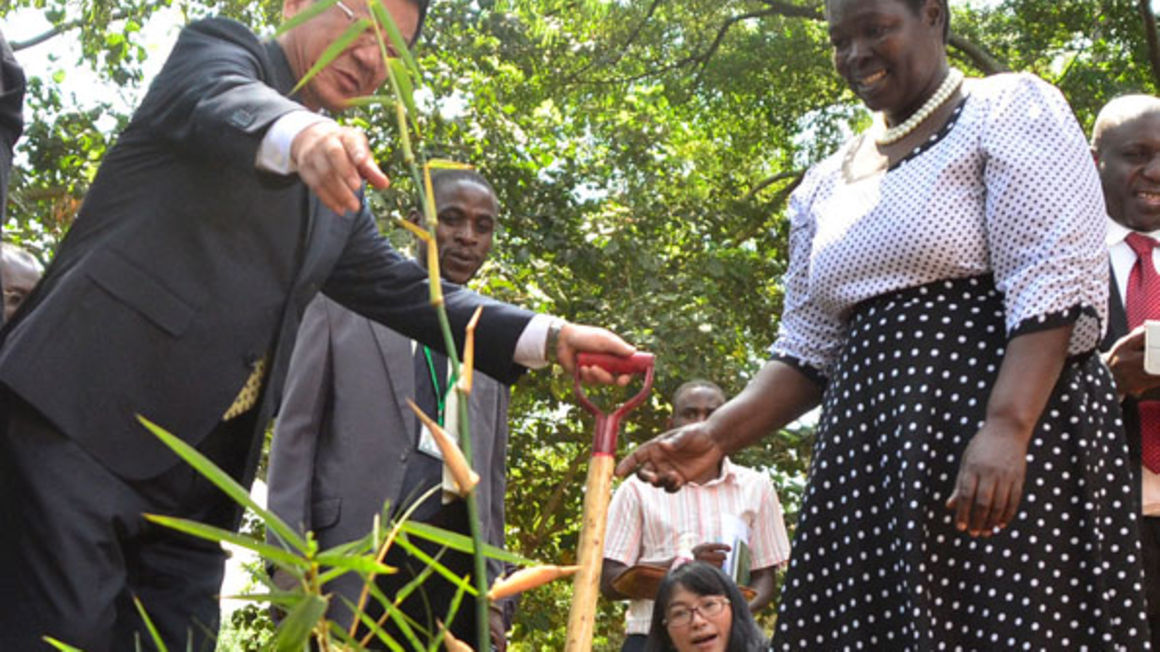
Several experts, dignitaries, members of the media fraternity, and Politicians from Uganda and China attended the symposium. The Guest of Honour was Her Excellency the Vice President of Uganda, Jessica Alupo, represented by the Right Honourable Rebecca Kadaga the 1st Deputy Prime Minister and Minister for East African Affairs. H.E. the ambassador of China to Uganda, Zhang Lizhong also graced the event with his presence. Also, delegates from major Chinese companies in Uganda such as CNOOC, Sinohydro, and China Communications Construction Company were present and were given the opportunity to discuss their work and challenges in Uganda.

In her speech, the chief guest acknowledged the vital role of think tanks in guiding policy formulation and implementation and recognized the key role SURC could play in making this a reality in Uganda. She pointed to the importance of independence in research exhibited by the research centre and noted its importance for the benefit of Uganda, China, and the world.  Furthermore, her speech emphasised the need to discuss China-Uganda relations candidly. In one of her key points, the guest of honor pointed to the need for Africans, in general, to control the narrative of cooperation with China without leaving room for distortions from cynics. This is an important point because for the most part relations between China and Africa are distorted by Western media and often painted in a negative light. Therefore, think tanks have an urgent role of setting the record straight through unbiased research that seeks to find the truth. The new era of China-Africa relations should be one in which the two parties control the narrative and avoid the use of Western frames to approach and debate issues.

The speech also, called upon governments in Africa and Uganda in particular to engage more with think tanks in setting national agendas. For the SURC to be the only think tank in the whole country to study and drive debate on the relationship between Uganda and one of her biggest trade partners shows that there is a gap between academia and government that needs to be covered. The chief guest was jubilant in pointing out the milestones China and Uganda have achieved since the bilateral talks in Beijing on 25th June 2019, between Presidents Xi and Museveni where they agreed to lift the two country’s relations to a comprehensive cooperative partnership. This set the stage for the betterment of China and Uganda relations which have hit a peak in recent years.

The vice president appreciated the fact that China does not seek to interfere in Uganda’s internal matters and assured the Chinese that Uganda is open and safe for China. She hinted at the fact that Uganda as a developing country has a lot to learn from China. The vice president understands that whereas China achieved modernization and poverty alleviation through adhering to the principles of a socialist economy with Chinese characteristics, Uganda as well as Africa can create a development path with Ugandan and African characteristics.

Another important area that Her Excellency touched on was trade and investment. Uganda’s trade with China keeps growing and bilateral trade between the two states grew by 28.8% in the first quarter of this year. However, Uganda’s market in China is still low and has room for improvement as long as “Ugandan farmers produce high-quality products with value addition.” In a world facing a resurgence of nationalism that has left more countries hostile to anything foreign; for example, the countries that engaged in vaccine nationalism, the Vice president through her representative the Right Hon, Rebecca Kadaga thanked China for standing with Africa in supplying free vaccinations in a show of true friendship and win-win partnership.

H.E. the Ambassador, Zhang Lizhong also addressed the symposium and strongly condemned all efforts to undermine the relationship between China and Africa. He commented on the various projects that Chinese companies have accomplished and are on the verge of completing with Uganda. The ambassador also lauded his tours around Uganda and his most recent visits to western Uganda. Uganda has great tourist potential and beautiful scenery which the ambassador noted could play a significant role in Uganda’s economic development. The ambassador noted that China has extended a tax-free incentive to Ugandan exports. Furthermore, China will continue to expand its assistance to Uganda in the health sector, infrastructure, energy sector, Agriculture, and all other potential areas of cooperation.

The ambassador shared his perspectives on the role of government strategic planning in China that led to the elimination of absolute poverty and the modernization of China. The emphasis was also placed on China’s development path which seeks to cooperate with the rest of the world through the concept of mutual benefit. Projects such as the Belt and Road are landmarks of China’s commitment to the development of African nations. He noted that the CPC (Communist Party of China) will always champion international cooperation instead of confrontation and that China-Africa, and in particular China-Uganda relations can only go higher in this new era.

The symposium also held a panel discussion where Ugandan experts and delegates from Sinohydro, CNOOC, and other Chinese companies shared thoughts on China’s projects in Uganda, challenges, and potential solutions. The representative from CNOOC shared the progress of the Tilenga oil project at King Fisher in Hoima. CNOOC has been instrumental in improving the lives of people in local communities surrounding the project and all Ugandans generally. CNOOC has employed thousands of local workers in both skilled and unskilled, provided scholarships for numerous Ugandan engineers who have subsequently been employed by the company, and just recently CNOOC has announced another round of scholarships for talented students. The company has built health centers in the local areas of Kikuube and eased access to water by constructing the Buhuka Gravity Scheme that supplies safe and clean water to over 1300 local residents. CNOOC has also engaged in environmental protection in collaboration with the National Forestry Authority by aiding and providing tools to ease law enforcement in the Bugoma forest reserve. This also aims to reduce the negative impacts of climate change in the Albertine region.

The symposium has been a milestone and is a potential trendsetter in the think tank domain within Uganda. Through the activities of SURC and Development Watch Center, the debate for a better, more knowledgeable, and progressive Uganda has been given a vital push forward. The Executive Director and founder of both think tanks, Dr, Allawi Ssemmanda noted that it is high time think tanks got the recognition they so deserve in Uganda as stakeholders in policy formulation and implementation. He emphasized that think tanks and academicians can play a crucial role in propelling a country like Uganda forward by leading the debate on issues that matter by analyzing and providing a nuanced understanding of complex global and domestic issues for all citizens.

Moshi Israel is a Researcher with Development Watch Center.


Uganda-China Relations: Partnership of Equals and Win-Win Cooperation

By Ndunaka Godswill Chikamso

Like many other countries, Uganda has been seeking foreign investment and partnerships to drive economic development and the country has made significant strides towards economic development in recent years, thanks to the support of various international partners. One such partnership that has been growing in significance is China-Uganda Relations.

China and Uganda have a longstanding relationship dating back to the early 1960s when Uganda gained independence. The relationship has been characterized by cooperation in various areas, including trade, infrastructure development, and education. Over the years, China has provided significant assistance to Uganda in the form of aid, loans, and investments opportunities. In 2018, China was Uganda’s largest trading partner, with bilateral trade worth over $1.2 billion. Since then, Beijing remains one of Uganda’s leading trade partners and major source of foreign direct investments (FDI).

With China introducing zero tariff to Ugandan goods which will see Ninety-eight percent of Ugandan goods accessing Chinese market tariff free, trade between the two countries is expected to grow further. Last year, Chinese Ambassador to Uganda, Zhang Lizhong announced the Special Preferential Tariff Treatment of Ugandan Exports to China, explaining that this was in line with commitments made by China at the Eighth Ministerial Conference of the Forum on China Africa Cooperation (FOCAC) held in Senegal last year.

Even before the said Special Preferential Tariff Treatment, China has been investing heavily in Uganda, particularly in infrastructure development projects such as roads, bridges, and power plants. The most notable project is the 51 kilometers Kampala-Entebbe Expressway, which was constructed with a loan from China’s Exim Bank and has greatly improved the country’s transportation sector. Additionally, China has financed the construction of the Karuma and Isimba hydroelectric power plants, which will increase Uganda’s energy capacity and reduce its dependence on fossil fuels. The entry of Chinese construction firms into Ugandan market is always cited as the reason for reducing billing prices for road construction in Uganda. Indeed, at the time when European companies were dominating road construction business, the construction of one kilometer took about 3.1 billion shillings compared to current rate of about 2.1 billion shillings per kilometer.

China has also invested in Uganda’s telecommunications sector, with Chinese companies such as Huawei and ZTE playing a significant role in the country’s development of 4G networks and fibre optic cables. This has greatly improved internet connectivity in Uganda and provided opportunities for innovation and entrepreneurship.

Another sector that China has played a significant role in Uganda’s economic development is supporting the country’s infrastructure especially road and energy sectors which has in turn helped easing transportation of goods and services and also helped in addressing unemployment challenge. In 2014, while closing a two-day Pan African Youth Conference at Serena International Hotel Conference in Kigali Rwanda, President Yoweri Museveni explained that “infrastructure development such as Roads, Electricity and Railway in any country is of importance as it attracts investments and creates jobs for the youths.”

In 2017, while on a visit to Uganda, Christine Lagarde, then Managing Director of the International Monetary Fund (IMF) credited Uganda for what she described as “Uganda has appropriately embarked on a strategy of scaled-up infrastructure investment in the energy and transport sectors to relieve key growth bottlenecks and enhance regional linkages.” Lagarde argued that “focusing on overcoming implementation challenges, including through strengthening public investment management, should help ensure that these investments yield the desired outcomes in terms of higher growth and job creation.”  If critically analysed, the improvement and development of Uganda’s energy and infrastructure sector became possible largely because of China’s assistance.

Today, Africa’s biggest challenge, especially Sub-Saharan region, is poor and aging infrastructure.  A 2022 study by McKinsey and Company concluded that unless addressed, infrastructure deficits in key sectors such as roads and energy will continue to hinder African countries’ economic growth and development especially in Sub-Saharan Africa. The study concluded that while the region is faced with high demand of infrastructure development, there are few partners or investors willing to provided huge amounts needed for such projects. Therefore, China’s readiness to back such projects in Uganda and Africa in general cannot be underestimated.

However, while China’s hand in supporting African countries infrastructure is a big boost, Uganda and other African countries must should only borrow and invest in projects that can easily spur economic development as a way of ensuring easy servicing of loan facilities extended while undertaking such infrastructure projects so that issues such as rising debts critics often point at are avoided.

That said, there are multitudes of opportunities that comes with steady and good relations between China and African countries. The other area with huge potential for cooperation is in the field of agriculture. While China is already working with Uganda in this area especially through FAO-China South-South Cooperation (SSC) in which China has since 2015 been supporting agriculture initiatives in Uganda, if projects under SSC especially its phase III are spread throughout the country, more fruits will be realized in a short period. SSC has potential to spark Uganda’s economic development especially if they work together with Uganda government’s introduced Parish Development Model (PDM).  Uganda is an agricultural country, and there is a need to enhance agricultural productivity and value addition. With her rich experience in modern agriculture, China can provide technical support, expertise, and investment towards Uganda’s agricultural sector.

In conclusion, China has played a significant role in Uganda’s economic development, providing funding and investment for critical infrastructure projects. China’s engagement with Uganda has brought many benefits, including employment opportunities, enhanced energy capacity, and improved connectivity. While this has brought several benefits to the country, including job creation and economic diversification, there are also concerns about debt sustainability, environmental impact, and the impact on local industries and businesses. As Uganda continues to seek foreign investment and partnerships, it will be important to carefully consider the benefits and drawbacks of these relationships and ensure that they are sustainable and equitable.

Ndunaka Godswill Chikamso is a junior research fellow at Sino-Uganda Research Centre and a Medical student Niger Delta University, Nigeria.

Authorized Economic Operator (AEO) Arrangement Between China and Uganda Will Improve Trade and Help URA in Revenue Collections

By Alan Collins Mpewo

 Technology has been prioritised by many countries allover the world because of the advantages and potential hacks that can be exploited. Often times the exploitation has been used to wage war, spying and propaganda. Other nations to the contrary have taken a distant trajectory from the usual, and used technology to outlive the blocks that avail themselves. Much as technology keeps improving and it still gets so much threat from people’s perception, it should be underscored that technology is the future.

Recently, China together with the Uganda Revenue Authority, a public body in charge of Revenue collection in Uganda, had a commemoration of a memorandum of understanding, that the two parties entered into in 2021. The spirit of the memorandum of understanding was the Authorised Economic Operator (AEO) Mutual recognition arrangement and this was signed at the 5th AEO Global Conference that was held in Dubai.

Uganda would be able to benefit from the arrangement in terms of streamlining trade finance and revenue collection which is aligned to China’s Revenue collection practices and enhancement of trade framework. If critically analysed, the main informing aspect for Uganda to enter this mutual arrangement was on a basis of China’s stand on the global floor of trade. The arrangement was also meant to further the corporation between Uganda and China on the basis of the Forum on China-Africa Cooperation (FOCAC). This way, Preferential treatment will be accorded to the goods coming from China to Uganda and vice versa. Therefore, this will be a wake-up call for companies that engaged in supply of goods, works, and services to and from Uganda and this can be confirmed to thus far have been achieved on great strides.

Numerous companies have taken part in registration and confirming participation in this great initiative and it can safely be said that there have been more than 5,000 Chinese companies and over 150 from Uganda adapting to this new trade arrangement. The good news with this is that over 230 companies from both countries have since engaged and participated in trade together using the arrangement and about 130 billion have been collected by the Uganda Revenue Authority for the trading done by those companies along the border and within the boundaries of Uganda. The value of the trade between the companies in both countries has also increased in the recent financial year to over 750 billion Ugandan shillings. This goes back to the objectives set out in the various Corporation agreements that two countries have been engaged in, in the recent years.

The most known modern way the countries worldwide are able to facilitate state activities and governments is through revenue collection and this is the main basis for engaging into this kind of arrangement by the two players. Therefore, each country twice as much to simplify not only ways of generating more revenue but also without inconveniencing the taxpayer while maintaining stable means of putting such finances to productive use. As far as application of the revenue is concerned, Uganda still grapples with all possible forms of corruption and should therefore seek as much of lessons from China to make sure that their education of the vice is also a major objective if it wants to make proper realisation of the revenue’s benefits.

The two countries also realised the adverse effects of delay in transportation of goods and services across boundaries and therefore since data is one of the most important resources in a government can have grip on, since this arrangement is also meant to enable easy data sharing on various cargo that would be transported to and from the two countries.

However, with multi border trade comes risks and therefore imperative to come up with risk assessment to measures. In this case, the arrangement was also meant to provide for better grip on the control of the Trade Practices between all key players during transportation and find a delivery of the goods to the consumers. On another bright side, the arrangement has since helped to increase competitiveness among the companies involved in the platform in as far as manufacturing, packaging, delivery, and response to consumer feedback. With clearance now eased, goods and services will be able to reach their final destination in the shortest possible time and also enable the companies involved to compete and set up themselves for better and bigger deals in the trade sector. Presently, more than 20% is being benefited from only the companies that are participating in this arrangement which is a great side and commendable initiative by the two countries. The figures from China are equally promising and therefore an indicator of why good international relations is important and a stable means of achieving much of the goals amongst various nations.

Tax evasion is a crime that many countries grew up with fighting to the nail to make sure that its effects are greatly eradicated. Otherwise, failure to combat such vices undermines efforts that would have been invested. Therefore, this calls for possible forms of compliance with the day’s tax laws, regulations, and practices. The benefits of this arrangement can not be overemphasized, but ultimately, with furthered sensitization, there will be more players joining along the way.

Alan Collins Mpewo, is a Senior Research Fellow, Development Watch Centre.

Diplomacy and Development: A Citizen’s Perspective on China’s Role in Uganda’s Economic Development

By Busulwa John Ivan

Diplomacy, international relations, and foreign policy play crucial roles in shaping nations’ economic development. China, a country known for its rich history and economic prowess, has significantly contributed to Uganda’s economic growth over the years. This essay explores the historical context of Uganda’s friendship with China and the role it has played in fostering economic development in Uganda.

The diplomatic relations between China and Uganda began in 1962 when Uganda gained independence. Nine days after Uganda gained her independence on October 9, 1962, China established diplomatic ties by opening its embassy within the country. Since then, both countries fostered a friendship based on mutual respect and non-interference in each other’s internal affairs. This approach laid a strong foundation for sustained cooperation and shared development objectives.

China has emerged as one of Uganda’s most important trading partners. Over the years, bilateral trade has grown significantly, reaching approximately $1.13 billion in 2022. This accounts to 6.6% growth! In a bid to improve and boost trade between the two countries, China granted zero-tariff to 98% of taxable items to Uganda. China has also become a key importer of Ugandan agricultural produce, including coffee, tea, and other agricultural products which stood at $36.19M in 2022. These exports have contributed to Uganda’s economic growth and provided income opportunities for local farmers.

Another key area where China has and continues to play a significant role in Uganda’s economic development is infrastructure.  Chinese companies have participated in various projects, including the construction of roads, bridges, stadiums, and hydroelectric power plants. Notably, the Kampala-Entebbe Expressway which cost USD 479M with the Chinese government funding 74% of that cost, the ongoing Entebbe Airport Expansion and Upgrading Project which is a US$200 million preferential loan project financed by the Export-Import Bank of China, the Karuma Hydroelectric Power Station, and the Isimba Hydroelectric Power Station which both combined added a significant 783 megawatts of electricity to Uganda’s national grid are some of other examples of successful collaborations. These infrastructure projects have improved transportation networks, boosted tourism, and enhanced Uganda’s overall competitiveness.

The Chinese commitment to helping Uganda construct and develop world class infrastructure isn’t a recent phenomenon but one that has been existing for decades. A case in point is the Mandela National Stadium that was constructed by the Chinese way back in April 1993 and handed over to the Ugandan Government in February 1997. The stadium, 30 years after its construction still remains Uganda’s biggest with 40000 seats with accessory constructions including a hotel of 120 beds, 2 outdoor tennis courts, 2 volleyball training grounds, 2 basketball training grounds and one football training ground.

In health sector, China contribution cannot be underestimated. For the past four decades, China has been sending medical teams to Uganda to provide support, share expertise, and offer training programs. Up to now, 11 teams and about 128 doctors have been sent to work in Uganda mainly in Jinja and Naguru Hospitals at the Chinese Government’s own expenses.

In response to the COVID-19 pandemic, China provided medical supplies, including personal protective equipment (PPE), testing kits, and vaccines to Uganda. The Chinese government has donated 1 million doses of Covid vaccines and thousands of units of testing kits to Uganda. These contributions have been crucial in strengthening Uganda’s healthcare capacity and addressing public health challenges at a time when other developed countries chose vaccine nationalism. As other countries opted to consider vaccines for their citizens first, China declared covid-19 vaccines a public good!

One of the crown jewels of the strong Chinese support of Uganda’s health sector is the $8M Uganda-China Friendship hospital in Naguru. Completed in December 2011, the hospital consists of seven buildings, four operating rooms, a maternity ward, a pediatric unit, a teenage center (adolescent health unit), a blood bank, radiology department (including a CT scanner) and housing for medical staff. Earlier this month, Chinese Ambassador to Uganda, Zhang Lizhong told Ugandan media and think tanks that currently, “Chinese experts are conducting a feasibility study on the renovation and expansion project of the China-Uganda friendship Hospital.”

In the education sector, China has offered scholarships to Ugandan students, enabling them to pursue quality higher education in China. These educational opportunities have empowered young Ugandans with knowledge and skills that contribute to Uganda’s human capital development. Additionally, the Chinese embassy established the Confucius Institute at Makerere University, which has fostered people-to-people cultural exchange between the two friendly countries.  The Chinese government has also offered scholarships locally to help students who are economically underprivileged students. Since 2016, over 6000 Ugandans have attended China-aided training courses and seminars in different sectors such as agriculture, medical care, public administration, infrastructure among others.

It shouldn’t be left unnoticed that the 61-year-old longstanding bond between Uganda and China encompasses more than just economic transactions but one that serves as a testament to the profound influence of diplomacy and international relations in shaping the destinies of nations. China has played a vital role in supporting Uganda’s security efforts. Both countries have engaged in military exchanges and training programs, promoting capacity-building and knowledge sharing. China has provided military equipment and technology to enhance Uganda’s defense capabilities. This cooperation has bolstered regional stability and contributed to peacekeeping efforts in Africa. Early 2021, Chinese appointed special envoy for the Horn of Africa (HA) who among other countries visited Uganda and through diplomatic channels continue to engage countries in HA with aim of ensuring stability which is key for both social and economic development.

China’s involvement in Uganda’s economic development through diplomacy, international relations, and foreign policy has been significant. The history of friendship between China and Uganda has laid the groundwork for extensive cooperation. China’s contributions to Uganda’s health, education, agriculture, trade, and infrastructure development have positively impacted the country’s economic growth and improved the livelihoods of its citizens.

While acknowledging China’s positive contributions, it is important to recognize that international relations are complex and involve diverse perspectives. By harnessing the synergies between the countries’ respective strengths, China and Uganda can embark on a journey that not only enriches their bilateral ties but also sets an exemplary model for international collaboration. In light of this, I urge Uganda’s leaders, businesses, and citizens to actively engage with China, explore new avenues of collaboration, and capitalize on the immense promise that our relationship holds so as to build a community of shared future and prosperity for mankind in the new era.

Busulwa John Ivan is a Law student at Makerere University and a research Fellow at the Sino-Uganda Research Centre

Ugandans Increasingly Benefitting from China’s Agricultural Initiatives

By Moshi Israel

Development assistance comes in many forms and at various levels. It can be extended to governments and its institutions, to private institutions and to local communities. China has been involved in all forms of development assistance to Uganda.

It is important for local communities to benefit from development aid because they are at the center of national development strategies. The local communities in Uganda largely depend on Agriculture to make ends meet. It is the reason why Agriculture is the backbone of Uganda’s economy. Agriculture is a lucrative venture in Uganda despite obvious obstacles. The sector employs 70% of the population, contributes half of Uganda’s export earnings and a quarter of its gross domestic product (GDP).  Therefore, investment in local communities and in Agriculture is paramount to shaping Uganda’s economic development.

The Chinese government and private sector are having a profound imprint on Uganda’s progress to a middle-income country. China’s extended hand of friendship has touched the very core of Ugandan society and testimonies from the beneficiaries are everywhere for all to see.

China has strengthened its already cordial relationship with Uganda by increasing its presence in the country and injecting much needed aid into the very backbone which keeps Uganda’s economy standing straight. Uganda has received project aid in form of interest free loans and grants from her Chinese friends.  Projects like Kibimba and Doho rice schemes, are one of many initiatives that validate Uganda-China Partnership.

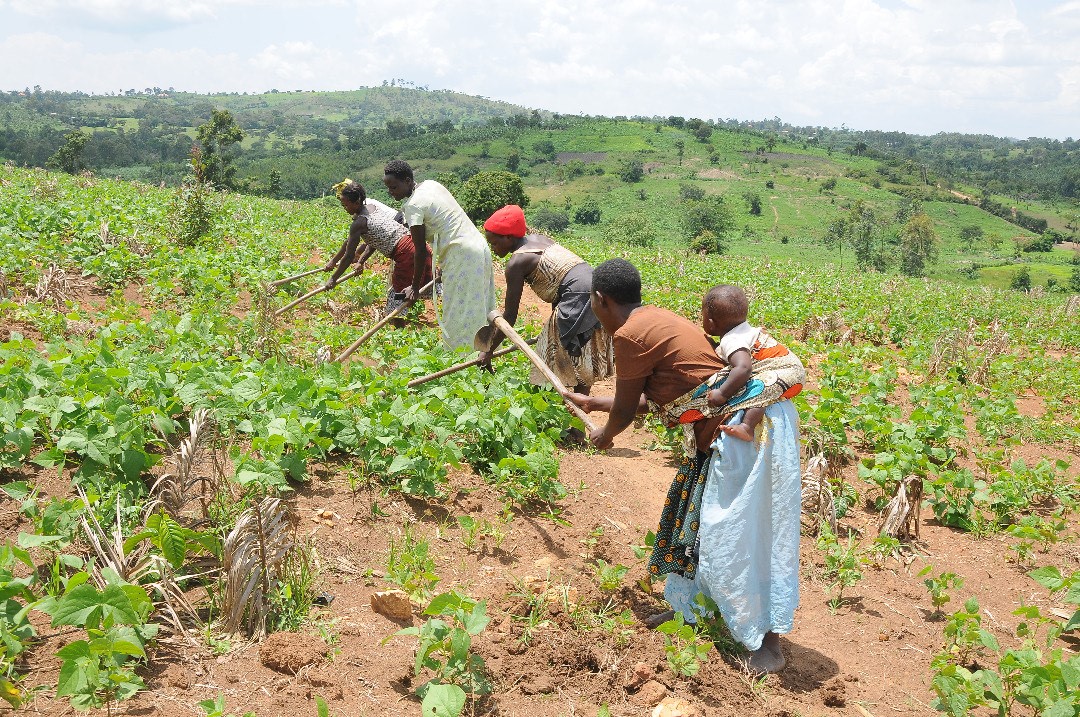
Rice farming has been a leading project of interest by china in Butaleja district in Uganda. Here, the local communities attest to milestones achieved due to direct collaboration with China.  A number of local farmers have benefited from hybrid rice farming in the district. Rice farming has radically shifted the fortunes of local farmers and enriched the community. Locals have attested to being elevated from absolute poverty. Some have been able to build homes, educate their children and purchase previously unaffordable luxuries. Women are also increasingly contributing to household incomes by participating in rice farming. China has also purchased state of the art machinery to further modernize farming in the area. This machinery is set to arrive in Butaleja district anytime. Farmers are also supplementing rice farming with the growing of fruits such as mangoes and water melons for commercial purposes. Butaleja has become a reputable hub for rice and is supplying their products to other regions.

Additionally, as they say, one good turn deserves another. The best practices of rice farming in Butaleja have the potential to be replicated in other regions of Uganda which would boost the Agricultural sector nationally. Besides, some farmers in Butaleja already export their products to neighbouring Kenya.

Then there is the tripartite partnership Uganda has with China and FAO. The three partners plan to implement phase three of the FAO China-Uganda South-South Cooperation (SSC).This three-year $12m (Shs44b) project would benefit over 9000 farmers. The project aims at improving crop, livestock and fish production. Consequently, 3000 women, 1,000 livestock farmers and 100 fish farmers in 30 districts are set to gain from technical instruction and knowledge-sharing with Chinese experts. According to the project head, Mr. Zhang Xiaoqiang, the beneficiaries will be selected in collaboration with the Ministry of Agriculture, Animal Industry and Fisheries and district agriculture officials. Furthermore, during the event at the Kajjansi Aquaculture Research and Development Center, H.E the Ambassador, Zhang Lizhong, assured Ugandans that the project is one of many vital collaborations between Uganda and China, and the latter will continue to support Uganda by sending experts to share knowledge with local farmers.

In the long term, thousands of youths and women will have improved livelihoods by earning an income without overcrowding the already bloated formal job market that has left many Ugandans frustrated.

China has also aided in the setup of Wakawaka fish landing site and] Kajjansi Aquaculture Training Center. Coffee, fish, cotton, tea and various food products are among Uganda’s major exports. The country is a food basket in the region.

China has a very good eye for opportunities and identifying the agriculture sector of Uganda as a major recipient of development assistance is a wonderful exhibition of their mature diplomacy and tact. This is how local communities tell the difference between serious allies and opportunists. A true friend seeks to improve those areas about you that are vital for your progress. This is what the agriculture partnership between Uganda and China is yielding.

Once, every local farmer can access modern ways of farming and implement them to their logical end, then Uganda is on its merry way to unprecedented economic development. Uganda’s tax base is limited due to rampant poverty. However, if the common people can utilise their naturally endowed land and earn a living with a decent income, then the tax base dramatically changes for the best and the country at large benefits.

The partnership between Uganda and China underlines one important tenet; there is no national development without uplifting local communities. It is good news that China understands and appreciates this fact.

The Writer is a Research Fellow with Development Watch Centre


Diplomacy and Economic Development: Taking Stock of China-Uganda Relations

By Nanziri Christine

The world today considers diplomacy vital in shaping and developing countries’ economies. As a landlocked country in East Africa, establishing diplomatic relations with various countries is considered one of the ways to boost Uganda’s economy. Through economic diplomacy from both sides, to a greater extent, Uganda continues to attract Chinese investments in different sectors a trend that started 60 years ago and improved from strength to strength in the last two decades that today, for consecutive years, China tops Uganda’s source of foreign direct investments!

China’s role in Uganda’s economic development is evident in various forms, including infrastructure development, education, health, agriculture, and trade. Last year, the two countries celebrated 60 years of diplomatic relations. China was one of the first nations to recognize the newly independent nation, Uganda, and the relationship between the two has been strengthened by China’s policy of non-interference in internal affairs of others.

China has been involved in Uganda’s infrastructural development, positively impacting the economy of Uganda as a whole and neighboring countries. Examples include the construction of Uganda’s largest hydropower dams, Karuma and Isimba power dams, which have increased Uganda’s electricity generation capacity. Other China supported infrastructure projects include roads, with China funding the glamorous Entebbe express highway.

China has equally positively impacted Uganda’s healthcare sector. China has so far sent 21 medical teams to Uganda to support its medical healthcare services plus building a 100-bed – China-Uganda friendship hospital (Naguru hospital) to boost Uganda’s health. When the Covid 19 pandemic broke out, as the rest of major economies of the world embraced vaccine nationalism, China religiously amplified her support donating the much-needed medical supplies to Uganda.

The Agriculture, fishing and trade sectors have also been developed through China’s training programs and the provision of equipment. For example, the Aquaculture Research and Development Centre Kajjansi also known as China-Uganda Friendship Agricultural Technological Demonstration Centre is one of many vivid examples in this sector.

Relatedly, working with the United Nations’ Food and Agriculture Organization (FAO), in 2009 China introduced a new programme dubbed FAO-China South-South Cooperation (SSC) and created a FAO-China Trust Fund with $30 million to specifically support Uganda’s agriculture sector. In 2015, China launched the second phase of SSC and injected $50million before adding another $50million in phase III which was launched in 2021. During implementation of SSC’s phase II, China funded and sent 47 Chinese agricultural experts and technicians on a two years mission to train Ugandans to improve technologies used in production of rice, grapes, cherry tomatoes, foxtail millet, and apples among others. The project focused on exchanging mechanization, agro-processing and value-addition expertise. Considering the multiplier effects that comes with such projects, the role of China in Uganda’s agriculture sector cannot be ignored.

In trade, last year China announced a preferential trade arrangement for Ugandan goods granting zero-tariff treatment to 98% of imports from Uganda – a development that in many ways will widen the market for Uganda’s agricultural produce. Agriculture sector is the backbone of Uganda’s economy, with over 70% of the country’s population deriving their livelihood from it.

China has also invested in Uganda’s mining sector, majorly in the exploration of oil and gas. Uganda and Tanzania are seeking funding from China to develop an export pipeline before 2025. China’s willingness to fund Uganda’s oil sector leaves us in a privileged position to have China as a creditable development and business partner are evident. Future plans for the oil industry and exploration by the Chinese North Offshore Oil Company (CNOOC) by 2025 will boost Uganda’s economy, transforming the standard of living of the majority of Ugandans through job creation for both skilled and unskilled citizens in the oil and gas sector.

In human capital capacity development, China’s hand is visible. As of today, China has provided thousands of scholarship opportunities to Ugandans, including both short and long courses.

Generally, talking about Uganda’s economic development journey without mentioning China’s role makes the analysis incomplete. The unique part is that unlike other cooperation between Uganda and other traditional development partners, China-Uganda cooperation is partnership of equals, mutual trust and is based on win-win cooperation.

However, Sino-African critics have always claimed that Chinese development assistance especially infrastructure funding is leaving Uganda and some other African countries heavily indebted with the so-called debt trap. However, while we cannot completely dismiss voices against over borrowing, such sweeping statements should be cautiously listened too. Today, as a result of global politics and changing global order, it is clear that there is a calculated move meant to discredit Sino-Africa relations which has seen many of critics cherry-picking facts when it comes to critiquing China’s development assistance to developing world. However, to allay fears of critics, Uganda and in general all developing countries should aim to remain responsible borrowers and only go for loans when very necessary. Otherwise, it is unfair to carry on sweeping statements of the so-called debt diplomacy and misinterpret China’s good will of offering development assistance that China is hiding what critics claim to be ulterior motives.

In conclusion, it is indisputable that China plays a major role in Uganda’s economic development. The relationship between the two countries is characterized by mutual benefit and cooperation, with both countries working together to promote economic development and improve the wellbeing of their people and build a community of shared prosperity for mankind. Its pertinent therefore for countries around the world to continue cooperating in order to ensure that economic development is experienced by all nations and build a world of shared future with shared prosperity.

Nanziri Christine is a law student at UCU and a Junior Research Fellow at Sino-Uganda Research Centre.

China-Uganda Relations: As it Was During Colonial Rule, China Remains a Reliable Development Partner!

By Musanjufu Benjamin Kavubu

China and many African countries have shared a history regarding the sense of imperialism and colonialism. China was not so long ago under the colonial rule of Japan and some of its territories like Hong Kong under Britain. China’s Communist Party set an example and also went ahead to support African independence struggles. Even with its rich history, China can be credited with the front of economic growth that has a basis on the political will of CPC and its leaders from the days of Chairman Mao to to-date where CPC Secretary General and President of China Xi Jinping advocates for building a community with shared prosperity for mankind.

Like every global player for China Africa is part of its economic playground and places like Uganda are both its geopolitical and geo-economic outposts. One may then wonder if Uganda is just a pony on a grander chessboard. It depends on how you watch events and the perceived results. What makes news is Beijing’s economic strategy and it’s in a few cases in the past decades save for its ambitions unify its claimed territory of Taiwan when China’s military strategy has come under the world’s microscope. Even with the military bases in the South China Sea and some off the African coast, the answer is supply chain interests that facilitate its trade with the world. Put differently, China has never been a coloniser and to date, if critically analysed, Beijing bears no such ambitions but rather win-win cooperation where countries world over benefit from a win-win cooperation under world order where each country’s sovereignty is respected!

Unlike the British Empire that is only visible today through a shadow of Common Wealth nations that kicked off with military expeditions and remained in place with the power of the gun and the United States hegemony that has a thirst for energy resources also backed with senseless wars, China has had this supposed strong foothold on the world and places like Uganda with no boots on the ground in terms of soldiers or even private contractors. China chooses economic diplomacy and it has run lately on projects like the famous Belt and Road Initiative (BRI) and Maltiplarism through BRICS a block made up of Brazil, Russia, India China and South Africa which unlike the G7, BRICS advocates for equality of all countries as well as respect for all irrespective of their size or military might.

Nothing has brought criticism to Beijing like the true intentions of the Belt and Road Initiative a project that has seen China seriously considering and supporting developing countries’ infrastructure development loans to among others construct, sea ports, airports, rail line networks and roads from Africa to Americas, from Asia to Europe all aimed to facilitating trade. This development has arguably revolutionized developing countries’ infrastructure development which organisations like world bank have continuously said they receive very low funding despite being key in social-economic development aspect.

Sadly, some people claim BRI is about China taking out raw materials and bringing back low-quality products through its massive web of the supply chain, with other critics of China especially from the West who often cherry-pick and ignore reality and brand China’s generous infrastructure development assistance as “debt trap.”

For a moment picture this China through EXIM bank provides a loan to Uganda to construct a hydropower dam on the Nile River, in the process technology is imported and at the end of it, all rural electrification is achieved which will facilitate industrialisation leading to employment, in turn creating a population with disposable income that is used to develop microeconomics of households that bring further education and research in the academia field. It’s from such initiatives that a real middle class is a bred that will in the end consume quality Chinese products because of the disposable income. The question is who wins? A real middle class that pays taxes will in the long run offset the loan for the dam, a real middle class will trade and create a functional society. A functional society has no appetite for civil war or trade in arms and that will ensure civility and a level of peacetime. That sounds like true economic development!

In the past two decades, Ugandans that speak Mandarin have increased and it’s not because it’s part of the school syllabus even if they are few language schools in Kampala that offer to teach it. The main reason for Mandarin in Africa is the increased scholarships that Beijing is offering. There is a likelihood that every Uganda knows someone close who has travelled to China for education on a fully Chinese government funded scholarship. When these people return after studying, they have contributed to the local academia and thus bettering the educational sector that is very fundamental in economic development. Whatever China’s foreign agenda policy is behind shipping Ugandans to China educating them and sending them back it’s to our society’s advantage in the long run.

China has a thirst and also a shortage for oil in its massive industrialization scheme and on that note, it’s watched carefully through its activities on the energy market. CNOC is one of the partners of Uganda in the oil sector and the company’s efforts can’t be downplayed in the facilitation of black gold’s take-off in the country. It’s a writing on the wall that if the oil sector is handled well by the state and its full potential is realised, then it will overturn the economic prospects of the nation. Today, many Ugandans in Albertine region have already seen fruits from oil sector especially through CNOC’s cooperate social responsibility where social services for communities are looked at as well as employment opportunities! The other most striking example are modern houses CNOC constructed for people affected by oil project in Kingfisher oil field.

Uganda like most African countries will seem like small pieces in China’s economic strategy but the reality these tiny pieces are useful and all need to work. China at some point will even go beyond its comfort zone to ensure these pieces function as expected beyond United Nations Security Council speeches where it’s a permanent member. It is important that the war in Ukraine and the new world order on the horizon led by players like China Kampala maintain a strong relationship with Beijing to realise further economic development.

While China’s critics and Sino-Africa skepticists especially in the West claim that China’s engagement with African countries is guided by what they claim to be Beijing’s “selfish interests” at times with absurd claims that most African countries have received fewer tangible benefits from China relations the reality is that where greatly or otherwise, tangible or otherwise, China-Africa relations are working and wonders are being created! The fact that China respects African countries sovereignty and that these relations are based on equality not the West’s assumed big brother role, African countries should jealously guard these relations! As African countries demand for equality and permanent representation at the UN security Council, it is clear that China at some point will ensure this dream becomes a reality by supporting Africans as they did while Africans fought against brutal colonial rulers.

Musanjufu Benjamin Kavubu is a Junior Research Fellow at Sino-Uganda Research Centre.


Parish Development Model: Lessons from China’s Poverty Alleviation initiatives

By Alan Collins Mpewo


Poverty is a concept not alien to any human that has graced the communities that have since covered the globe. From many corners of earth, in the days of the past, and some (corners of earth) presently, resources were owned and controlled communally. This gave off the position that everyone that stood as a beneficiary for any of the subject resource(s) would stand at an equal footing in the sense of ownership and control, without anyone exceeding the set confines. Transition saw the birth of barter trade, as a mode of exchange, dispose of, and acquisition. Better means (as some will argue) later got introduced. Cowrie shells, beads, iron pellets, carefully cut fabric, and more, as the medium of trade. Finally, the currency as we know it came about – paper money. It has been projected to be the longest standing medium of exchange and trade that may have to be used for a few generations ahead, compared to those it replaced. In the same context, organization systems (notwithstanding their pros and cons) have been picked out for each separate societies, with capitalism being the most widespread. Incidentally, the control of equity and wealth are in a circle of a few individuals, and majority taste the bite of poverty at different levels.

Consequently, the various governments globally always come up with initiatives to reduce the poverty levels whose understanding has been tied around a metric system that determines the poverty line, depending on the changes of economies. Uganda has (and had) various programs established for that cause. Some notable ones have been the “Bona bagagawale, Entandikwa, NAADS, Operation Wealth Creation, Emyooga” and now “Parish Development Model.” However, the challenges and consequential failures for all the programs have similar traits. But are lessons ever picked? Dangers of face-lifting a project on the cosmetic outlook can only do so much in a short time. Underlying factors therefore don’t merely come as of lack of the will for a general change in mechanisms, but remains a mystery for political capital only aimed at a specific point of time. The parish development model for example was unveiled with a fairly switched modus operandi, but the results don’t lie. As time has sailed away, the problems that in many ways led to the demise of its predecessors, may if not remedied, write a similar story for it in time not so far away.

Countries globally have had similar initiatives to lower poverty levels, although sometimes it’s merely a showcase for political capital. The major focus of this opinion is focused on similar policies by China. It’s only fair to determine how China’s initiatives have scored, and being categorized as one of the fastest growing economies of this century, vis-à-vis Uganda’s. About 40 years ago, China had one of the highest poverty levels per aggregate population having millions of its citizens surviving on as low as $1.9 per day. How the script got a parallel chapter spares many lessons for willing countries to choose. The opening of extensive economic transformation and targeted support were the two game changers. For obvious reasons, the will against the fight against corruption and the sociopolitical system also played great roles. It realized the urgency of minimizing economic gaps between various regions in order to have a supportive economic balance before embarking on radical changes. Average economies saw their uplift through systemic tracking of development and accountability. Sustainability was foundational. Building infrastructure on all levels of community organization to withstand changes in the economy and political environment.

Uganda just like many other African countries have mastered the art of short time achievements. Empowerment isn’t considered as the political ideologies are mainly built around dependency on those in higher positions of society, than empowerment. China understood that concept and the results speak for themselves. There are uncountable local entrepreneurs that not only have dealings within China, but also across the globe. For a country with the world’s greatest population, pulling off such an achievement isn’t a small feat. Uganda needs to first set its governance priorities straight on all levels of administration. Key indicators have it that even the distributed finances for the various projects barely meet their target recipients. Such administration gaps are one of the greatest setbacks. Just like China, poverty alleviation should be on an equal from of all sectors, because the intersection among them is interdependence. Without proper infrastructure, trade is slower. Without proper governance, economic transformation is a myth. Without proper healthcare, labor productivity is lowest. Without improved ICT, industrialization is minimal. Without government support of local entrepreneurship, traditional commercialization becomes riskier to invest in. A broken education system will have society at great loses in all sectors.

The bare minimum should then be in strategizing as China and other fast-growing economies did, and establishing new and focused priorities of transformation. Otherwise, the statistics on poverty levels in Uganda haven’t been shining any bright light in the past two decades, to date.

Alan Collins Mpewo is a Senior Research Fellow, Development Watch Centre

From Mityana to Guangzhou; The incredible story of Mr. Mugerwa

By Shemei Ndawula

Mugerwa Joseph is a natural born story teller, perched on his wooden stool, his hand nestled absentmindedly in his prickly black beard stubble, one would be forgiven if they wouldn’t believe he’s one of the most influential personalities in Uganda’s flower industry, running two successful flower shops and wholesale flower depots as well as an accomplished events planner.

But once you hear him speak, you catch a glimpse of a savvy business man whose vision and ambition led him, with little formal education and financial grounding from the dusty backroads in rural Mityana, Uganda to what he describes as “the world’s largest floristry market” in Guangzhou, China.

His colleagues jokingly refer to him as a Ugandan-Chinese because his TV set in the florist is always tuned into Chinese news station CGTN and he’s always quick to offer insight on the news stories relying heavily on his experiences in China, he often has a rapt audience listening to his stories as he extrapolates, in a deep sagely voice, his Chinese experience.

When I first met him, he was emphatically detailing the meals he used to have while on the Asian continent, he was saying (the following words are translated and paraphrased from Luganda which is his main language of communication) “as a Ugandan in China, the easiest meal to get is chicken, we ate so much chicken we almost got tired of it, I see you people excited by these restaurants like KFC but in China, these are very normal things, in fact, we would have to take a train from our area in Guangzhou to go have Ugandan food like Matooke” he exclaimed to  his enrapt audience.

Mr Mugerwa’s first trip to China was a decade ago. This was after close to eight years working as an apprentice florist in Kampala for one of the earliest commercial flower companies in the country and deciding he wanted more.

During his early days in Guangzhou, Mr Mugerwa was fascinated by the technological and artistic innovations he came across. He marveled at the efficient and fast transportation systems, the modern buildings, and the use of digital technology in almost everything and most importantly the advanced manufacturing capabilities of the Chinese synthetic flower industries which could make high quality artificial flowers with the appearance and texture of natural flowers.

Inspired by this, he would take long walks around Guangzou flower market in the evenings trying to learn and soak in everything he could about the industry, which would later prove to be a game-changer for his florist business in Kampala.

He was mind blown by the abundance of affordable high-quality flower accessories that he’d possibly never have imagined while in Uganda. This sparked a new idea in him. He was quick to establish contacts in Guangzou despite the language barrier (he is still predominantly a Luganda speaker) and because of the amazing business acumen that has come to define the Chinese bilateral trade, he had access to many high-quality goods at heavily discounted prices many of the sellers even offering the enthusiastic fast talking Ugandan businessman credit facilities.

Using his contacts in Guangzhou, he imported his first shipment; a great haul with floral wrappers, ornamental vases, decorative linens and realistic artificial flowers many of which were novel to the country which sparked a revolutionary ripple in the local Ugandan floristry industry.

With his new-found business knowledge and a steady supply of affordable high-quality flower accessories, Mr Mugerwa’s florist business in Kampala has been on the up and up since his first trip to China. Because of the great bilateral friendship between Uganda and China, Mr Mugerwa is able to import high quality goods from factories in China at low costs and resale them at affordable prices in Kampala, a win-win partnership with his Chinese suppliers which has turned the ambitious Mityana youth into an astute businessman expanding his first florist with a second flower shop which deals exclusively in events management and decoration as well as a second wholesale flower depot. Additionally, the floristry ideas and techniques he picked up from China have also made him one of the best creative florists in Kampala and doubtless an unassailable force in the industry.

The story of Mr Mugerwa is no strange outlier. Countless Ugandan lives have been positively impacted by the great Sino-Ugandan partnership over the last six decades. From business men like Mr Ntumwa Birimumaso of Ubuntu Cafe, to scientists like Engineer Rita Nasaazi a petroleum expert, and agricultural and bamboo enthusiast Mr Andrew Ndawula Kalema of Talent orchards.

Often when we discuss diplomacy, bilateral trade and foreign policy, it is easy to get lost in the statistics and figures as well as heavy sounding diplomatic diction that we may at times forget the faces behind the statistics and the voices behind the economic trends. Every unique story like Mr Mugerwa’s is a vote of confidence in the special bilateral friendship that Uganda and China share and a promise of what we can achieve by working together, the promise of the CCP leadership in China and the people of Uganda, a friendship of mutual benefit, cooperation and development that’s echoed in the China’s infrastructure support in Africa especially under the Belt and Road Initiative  and the established preferential trade agreement between China and African countries.

It is said that one of the greatest achievements of the ancient Chinese was to build The Great Wall of China; I believe, in retrospect, the future may perceive the greatest achievement of modern-day China as The Great Bridge of China; the great bilateral friendship that connects so many countries to the People’s Republic of China bridging the gap between dreamers and opportunity, a win-win partnership.

Shemei Ndawula is a senior Research Fellow, Sino-Uganda Research Centre

Heart-to-heart Cooperation: Chinese Medical Team Contribution Saving Lives

An old Chinese adage says; “if you want happiness for an hour, take a nap. If you want happiness for a day, go fishing. If you want happiness for a year, inherit a fortune. If you want happiness for a life time, “help somebody.” Like the old English saying; “a friend in need is a friend indeed,” if put in context of China-Uganda relations, this narrative is a perfect match and best describes the relationship between two sides. It pictures a cooperation that supports mutual benefit and brotherhood on both sides.

For the last plus sixty years, the relationship between China and Uganda and generally, China-Africa relations has been growing from strength to strength. From social to economic and political context, China’s contribution in Uganda and generally Africa is spread like an open book and almost all citizens have either benefited individually or their relatives have gained from Chinese contribution which is often done through cooperate social responsibilities.  Also, important to note is that such contribution is also extended to African countries through bilateral relations between the two countries. One of such is China’s medical diplomacy.

In Uganda for example, the Naguru-China Uganda friendship hospital is a face of China-Uganda medical cooperation. The hospital which was constructed by China and gifted to Uganda has been at the center of deepening medical diplomacy between the two countries and arguably, thousands of Ugandans have benefited from Chinese services at the Hospital. Indeed, since 1983, China has been religiously supporting Uganda’s medical sector-annually, sending a team of medical experts in the country to work and share their experiences with their Ugandan counterparts while extending services to a number of Ugandans.

Among other services offered by Chinese medical team include minor and major surgeries. For example, on the January 31st, led by Dr. Zhang Hui, a Chinese surgeon at Naguru-China Uganda friendship hospital with colleagues conducted a successful surgery that lasted over 3 hours to remove an enlarged thyroid gland from a 38-year-old woman who was diagnosed with hyperthyroidism 15 years ago. Of course, there are other hundreds of Ugandans that have benefited from Chinese medical teams in Uganda since they started their medical exportation to Uganda in 1983.

Currently, the team of Chinese medical experts at China-Uganda friendship hospital Naguru is comprised of 22 members offering services among others, gastroenterology, thyroid and breast surgery, otolaryngology, urology, infectious diseases, and traditional Chinese medicine and acupuncture, offering survives daily to over 130 outpatients weekly.

One can argue that almost in the entire global south, almost all countries have benefited from China’s medical diplomacy. From Americas to Middle East and the wider Asia and then to African, people continue to get specialised medical services as a result of Beijing’s good cooperation in medical sector.

As developed countries practiced vaccine nationalism which resulted into hoarding of much needed vaccines at the height of Covid-19 pandemic, China stood taller and shoulder to shoulder working with developing countries especially in Africa to ensure many people got vaccinated against covid-19 by donating billions of Covid-19 vaccine doses to African countries. This was in addition to sharing its technology and jointly producing Covid-19 vaccines with African countries such as Egypt, Algeria and Morocco.

Indeed, at the early stage of the outbreak of the pandemic, Chinese president Xi Jinping warned against vaccine nationalism and proposed that COVID-19 vaccines should be made a global public good and benefit, in particular, developing countries with low or no capacity to produce own vaccines. Consequently, China provided over over 2 billion doses of vaccines to more than 120 countries and international organisations, of which over a billion were provided to Africa.

This is on top of China funding the construction of the new headquarters of the Africa Centre for Disease Control and Prevention (Africa CDC) which Beijing argued will help the continent in response to the Covid-19 pandemic and also help the continent better coordinate its approach to future pandemics. If critically analysed, a conclusion can be made that Beijing’s relations with African capitals is in all ways anchored on concrete and not just high-sounding empty words and hence, a confirmation of President Xi’s vision of building a community of shared future for mankind.

Allawi Ssemanda is a research fellow at the Development Watch Centre.