Restructuring the AGOA Partnership: Lessons from China

By Shemei Ndawula

I’m I a little late to the party? It seems all the experts have already weighed in on the recent move by the Biden administration to exclude Uganda from the African Growth Opportunities Act (AGOA) platform. Just last week the inevitable happened with Uganda being struck of the list of AGOA participating nations. AGOA  is a trade preference program that grants duty-free access to the US market for eligible sub-Saharan African countries. It was enacted in 2000 and has been extended several times, most recently until 2025.

This platform is supposed to promote economic growth, development, and integration in Africa by encouraging exports, investment, and good governance. However, after more than two decades of implementation, AGOA has in many ways failed to deliver on its promises and becomes increasingly irrelevant and ineffective in the face of new global challenges and opportunities.

I believe AGOA, like most United States backed interventions in the region often marketed as “silver bullets to Africa’s problems” has always had its limitations. Like most of these projects it often comes down to taking money from the poor people of a rich country and giving it to the rich people of a poor country. On top of which there’s often so many explicit and implicit strings attached that sometimes the line between diplomatic aid and diplomatic coercion become a little blurred.

Despite Uganda getting large sums of foreign aid from the United States every year, there’s little that the ordinary Ugandan can show of the impact. Uganda is or has been one of the biggest beneficiaries of United States aid programs being the 13th largest “earner” of US foreign aid on the continent. However, a casual walk through Kampala will show a glaring disparity between these figures and the reality of an average Ugandan. It is high time that the Biden administration rethinks its aid policy especially within the region.

I really wonder why more development partners are not looking into adopting a more Chinese-like approach to bilateral aid which could offer greater incentives and support for African countries to engage in trade and investment.

It has been argued by several international observers that AGOA has failed to properly utilize investments, with only 18 of the participant countries developing national strategies on how to benefit from the program. This disparity reflects the complacency most countries have cultivated white such programs.

Meanwhile the Chinese approach to foreign trade especially with Uganda focuses on targeted investments and infrastructure development to drive economic growth. These aid projects, specifically in the infrastructure sector have got a much wider trickle down effect in the national economy.

I dare say that in the slightly over two years, the Chinese constructed Entebbe Expressway has been open to the public has directly benefited more Ugandans than the over two decades of the AGOA initiative.

The Chinese-like approach to foreign aid also focuses on fostering economic growth and development without imposing strict governance requirements. It seems counterintuitive to use an economic platform to address governance disparities between two countries.

There is need to  focus on strengthening regional institutions and promoting cooperation among African nations to create a more integrated and prosperous continent which is a vine of great opportunity the AGOA partnership should have tapped in.

To restructure the AGOA partnership along the lines of the effective Chinese foreign policy model, the United States should consider the following steps:

Reevaluate the current AGOA criteria and reduce the emphasis on frivolous governance requirements allowing African countries to focus on economic growth and development. Certainly as a diverse continent, each country has a rich history of governance modules which are better suited for our governance than anything else that’s being imported.

It would also be ideal to make investments in value-added manufacturing and industrialization to help African countries diversify their economies and create more sustainable jobs.This way, we will certainly have more to bring to the table when it comes to trade. The Chinese are already doing this with early success in the industrial parks of Kapeeka and Mbale where they have set up  and operate.

Promote regional integration and strengthen regional institutions to foster cooperation and development among African nations. The AGOA  platform should also explore  targeted incentives and support to encourage African countries to effectively utilize the benefits of the AGOA partnership and develop national strategies for economic growth.

Our generation is fortunate enough to stand as witnesses to the crumbling of the old world order, The People’s Republic of China has been ahead of this curve with the Belt and Road Initiative as well as the South-South Cooperation and if other nations and economic aid platforms would like to have a similar impact on Africa, they may have to study and integrate these strategies within their own development strategies to achieve better results.

The writer is a research fellow at Sino-Uganda Research Centre.

SQUEEZE OR SYMBIOSIS? WEST’S BAD BET ON CHINA-AFRICA RELATIONS

By Steven Akabwayi

During my high school years, music wasn’t just an entertainment to me ,it was the air I breathed, I had a taste for different music genres but more remarkably, I held Bob Marley’s Reggae  and Pharrell William’s RnB so dearly.

Bob and Pharell’s hits were not just a mere sound to me but a gateway to my discovery and a  map to the world, one of the music lyrics that got ingrained in my mind were from Pharrell Williams an American award-winning singer,  songwriter, and producer with his hit song titled” get lucky” .

It appears to me China and Africa are dancing to my favorite song’s rhythm  “Get Lucky” given their current state relations commonly referred to as “win-win relations”.

In his “Get Lucky” song Pharrell sings “We have come so far, to give up who we are so let’s raise the bar and our cups to the sky”.

Indeed China and Africa have come so far to give up their relations and like the song lyrics further go, I feel like this is the time for the two of them to raise their bar and cups to the skies given their significant achievements through the reciprocated relations they have had.

The two civilizations ( China and Africa)  have a long-standing history that cannot be easily undermined despite the attempts by external forces.  contrary to what many assume that China and Africa relations date only a few decades ago, there is supporting evidence that suggests contact between the two dates back to 202 BC to 220AD Han dynasty.

During the Han dynasty, this was the period when trade flourished between China and Africa along the Silk Road through the exchange of Chinese ceramics, textiles, and spices among others with Africa offering ivory, rhinoceros horn, and precious metals. This trade continued to flourish even in the era when China got caught up in its internal conflicts whereas  Africa was limited by its internal political landscape.

Despite this upheaval, the interaction between the two civilizations was being conducted indirectly through Arabs and Indians that mostly resided at the coastal towns of East Africa.

In the 20th century as President Museveni often reminds the “the Bazzukulu” the acronym for the young generation, China actively supported Africa’s struggle for independence strengthening their ties against Western imperialism which explains their inherent unity against Western imperialists.

This also signifies that the relations between the two are highly solidified and hard to undermine, this can be observed r through the mutual support China and Africa have ascribed to each other, especially on a global stage such as the UN.

It should be noted that Chinese ascendancy to the UN was due to Africa’s backup and the two have cooperated on peacekeeping missions and initiatives aimed at promoting stability and security on the continent.

One of the arguments fronted by the Western scholars which I consider unfounded is that China is self-centered and inconsiderate citing that China wins all major contracts in Africa Outcompeting African domestic engineering firms. In  my counterargument I always remind them that “ as the West is sending troops in Africa, China is sending engineers”.

Among the major reasons Chinese engineering firms are awarded contracts in Africa is due to China’s long history of civilisation and the top-notch expert evidenced in building long-lasting infrastructure such as the Great Wall of China built from 3rd BC to 17th century AD, Canton Tower 604 m tall multipurpose tower in Guangzhou province, Macau bridge among others.

On the other hand, Africa has a vast infrastructure deficit requiring extensive construction Chinese companies come in to fill the gap with low-cost alternatives to European companies and higher quality work than most African-owned companies.

While speaking at the Sino-Uganda cooperation symposium themed “The Harmony of Civilization and Responsibilities for a Better World”,  Timothy Kersewell a professor at the Chinese University of Hong Kong Shenzhen referred to the recent sanctions by the Biden administration on Uganda as abnormal further questioning the western regard of what  constitute a sovereign state.

Much as I sympathise with every marginalised individual or group in whichever part of the world he or she inhabits, I also strongly agree with Professor Timothy as it has always left me with so many questions answered on the procedures and mechanisms the US follows when it decides to play the sanction card.

Theoretically, the West regards itself as a custodian of international law yet these unlawful sanctions undermine its credibility in that regard.

International law upholds the principle of sovereignty without any classification of teacher-student kind of relationship which hegemonic countries want to impose when they interfere in other sovereign country’s internal affairs.

Over time US has been using sanctions as a tool Of punishment with whoever violates their ideals although the effectiveness of the sanctions towards achieving their intended goals can be debated.

Steven Akabwayi is a Research fellow at Sino-Uganda research centre.

Navigating the Trade Imbalance: Increased Cooperation with China Benefits Uganda and Africa

By Shemei Ndawula

Recently, the European Union(EU) Parliament issued a formal complaint against the Chinese People’s Republic regarding its trade deficit with China. This complaint has sparked global debate about the nature and impact of China’s economic engagement with the world especially with  developing nations. While the EU’s concerns are not without merit, in the new multipolar world, the continental body seems to often fallen short of the economic flexibility that previously made it an economic powerhouse.

In this Uganda presents a contrasting perspective; a nation often lauded as the most entrepreneurial in the world,  the potential of China’s unique approach to development in bridging Africa’s infrastructure gap and fostering inclusive economic growth could be the defining factor for our nation’s economic prosperity for the coming decades.

Trade Deficit: A Stepping Stone, Not a Stumbling Block

Uganda’s trade deficit with China is undeniable, with imports significantly exceeding exports. However, unlike the European Union, Uganda’s situation presents a unique opportunity where we can leverage China’s infrastructure development focus to accelerate our  own economic progress.

The Eurocentric model of development aid, often plagued by bureaucratic hurdles and limited tangible outcomes has proven largely ineffective in addressing Africa’s critical needs. In contrast, China’s investment in infrastructure projects like the Kampala-Entebbe Expressway and the Karuma Hydropower Plant directly improve Uganda’s transportation network, energy security, and overall economic activity. These investments create skilled jobs, stimulate local businesses, and lay the foundation for long-term economic growth.

To maximize the benefits of our relationship with China while minimizing the trade deficit, Uganda should adopt a multi-pronged approach by making strategic investments especially in these key areas;

We should further explore our economic diversification by moving beyond the current dependence on exporting raw agricultural commodities and minerals. This can involve processing agricultural goods locally, focusing on value-added products, and exploring latent potential in sectors like tourism in which we are abundantly gifted. With China’s success at poverty alleviation, it provides a potential tourism market of more than a billion people.

Additionally, we should comprehensively develop our national industrial capacity. China owes it’s rise to prowess in manufacturing and industrial development. This prowess through technology sharing can be leveraged to build Uganda’s own industrial capacity.Attracting Chinese companies to establish production facilities in Uganda can also create jobs, facilitate knowledge transfer,and reduce reliance on imported goods.

We will also need to strengthen trade facilitation which is the backbone of bilateral trade.The custom procedural process in the country needs to be streamlined with our foreign embassies and ambassadors. There’s hundreds of Ugandan importers in China facilitating the export of tons of Chinese made goods to the continent every day. The reason this is not two way traffic is because of the bureaucratic and expensive export process within the country. We will certainly need to streamline the export process if we ever hope for our goods to reach the Chinese markets.

The win-win approach which defines China’s foreign policy methods has already seen several Chinese companies setup shop in Uganda an outstanding example being the Chinese industrial hubs in Kapeeka and Mbale catalysing joint ventures between Ugandan and Chinese businesses can unlock new opportunities for both sides. Sharing expertise, resources, and market access would lead to innovative products, improved services, and increased trade flows.

A Balanced Approach: The Key to Success 

While Uganda and other African nations must capitalize on the benefits of their relationships with China, adopting a balanced approach is crucial. Diversifying partnerships beyond China, ensuring fair and transparent trade practices, and promoting responsible investment are essential to safeguarding Africa’s long-term economic interests.

The debate surrounding China’s economic engagement with developing nations is complex and multifaceted. While concerns about trade imbalances tend to look at the traditional indicators imports and exports, Uganda’s experience demonstrates the potential of China’s unique approach to development. By strategically leveraging this partnership, Uganda and other African countries can accelerate their economic growth, bridge their infrastructure gap, and create a more prosperous future for their citizens. Ultimately, the key to success lies in a balanced approach that acknowledges both the benefits and challenges of China’s economic presence while ensuring that Africa’s long-term economic interests are protected and advanced.

Shemei Ndawula is a Research Fellow at the Development Watch Centre.


What is Good Governance? The Case of China

By Moshi Israel

China’s governance system has long been a source of contention among Western political leaders. This microscopic focus on China has been fuelled by Washington’s excessive fear of everything communist. Many in the West believe that in a world dominated by capitalism and neoliberalism, a so-called communist or socialist country cannot and should not succeed. Capitalism’s entire existence as an infallible economic system is dependent on the public shaming and failure of other alternative economic systems. Furthermore, the West sees itself as having been the most successful democratic experiment since the inception of the democratic idea in Ancient Greece. As a result, unless it is an exact replica of Western conceptions of democracy, any other political system is a sham.

Under the leadership of the Communist Party of China (CPC), the People’s Republic of China (PRC) unexpectedly emerged as the exception to the norm, challenging existing conventional wisdom about how a country should develop and be governed. China’s success lies at the heart of its uniqueness, and it would not have been on the radar of the West if it had failed, as most other countries that have experimented with alternate forms of governance have.

However, China has arrived, demonstrating unequivocally that capitalism and Westernization are not the only roads to prosperity, nor is Western democracy the only good system of governance. There is nothing wrong with Western democracy; the fault is with the Western political class, which believes that their form of government is the only correct one.

To resolve this dispute, people must first ask themselves, “What is governance?” What, more specifically, is good governance?  If, as many in the West believe, China’s system of governance is flawed, we should apply the good governance test to it. To do so, we must first define what good governance is, what it includes, and how China measures up to it. The purpose of this article is to demonstrate that China is a democratic and well-governed country; this is not to imply that China’s style of government is flawless, just as it is absurd for the West to argue that their system is the only right one.

Most rational individuals and groups would like to live in a society that is well-governed. Good governance is a continuous process that needs to be pursued consistently. Therefore, no country is perfect because good governance requires constant improvement which adapts to contemporary realities and anticipates future challenges. We can all agree that a well-governed country should be developed or developing, its citizens should be fairly prosperous and well-provided for in most aspects of their lives, its institutions should be efficient, the country’s administration should be inclusive and participatory, the country should be stable and governed by the rule of law, development should be sustainable and environmentally friendly, and the government should have a strategic vision for the future and must be able to build consensus.

China has been governed by a single party, the CPC, since the revolution. The CPC’s manner of governance combines Marxist concepts, traditional Chinese customs, and elements of Western systems to establish a socialist government with Chinese characteristics. The CPC has presided over China’s remarkable economic progress, and one of its major successes has been the emancipation of nearly a billion people from absolute poverty. The CPC has succeeded in establishing political consensus in China, with its policies widely supported and the majority of its inhabitants satisfied with the country’s course. The party is a coherent body that is led from the top but has a strong grassroots core. Every decision is decided by the party, with other democratic parties serving as consultants.

China considers itself a developing country, even though it is the second largest economy in the world, it is a global manufacturing hub with about 28% of global output and is largely known as the world’s factory. This has enabled the country to be relatively rich.

China’s whole process people’s democracy is an effective system of governance that ensures everyone is included and participates in the administration of the country. Cities in China, for example, have suggestion boxes where residents can leave their concerns and recommendations for public officials. These issues are frequently resolved in a timely manner. Within 48 hours after expressing their concerns, the complainant is contacted, and a further 48 hours are employed to examine the issue and uncover viable remedies. Few other governments, if any, can do this, demonstrating the effectiveness of Chinese public institutions and the effective responsiveness of public officials. Public authorities may be promoted or recognized for each problem satisfactorily resolved.

Furthermore, China is a technology powerhouse, with 5G and significant expenditures in renewable energy technologies. The country has committed to reaching carbon neutrality and peaking by 2030, and it is continually cleaning up its air. Chinese society is increasingly being constructed for long-term green growth. China leads in the adoption of EVs, accounting for about 60% of all newly registered electric vehicles in 2022. Moreover, China is very competitive when it comes to the development of AI technology, second only to the United States. Recent US sanctions against China over chip-making technology have mostly backfired, and China is now becoming self-sufficient in the chip-making market. The CPC’s emphasis on green development is the essence of good governance since it shows that the government prioritizes the long-term safety and well-being of its citizens. Because the climate change threat is existential, it demands dedicated political will to address and alleviate and China has shown exceptional readiness.

China is a politically stable country that is secure both internally and externally. Every citizen wishes to live in a mostly crime-free society regulated by the rule of law, which is equitably applied. China’s crime rate is quite low, and I don’t think anyone will feel comfortable invading China very soon. The infrastructure is first-rate and modern, effectively serving the people and contributing to economic development. In comparison to the United States and other European countries, China’s subway system is cutting-edge. It also has well-built, clean roads, airports, and bridges that have boosted connection throughout the country.

China’s population is properly educated, with the government providing 9 years of free education to all Chinese children. Its higher education is centered on graduating as many students as possible in STEM topics, ensuring that the next generation leads the country in science, technical innovation, and mathematics. This exemplifies the CPC’s long-term strategic strategy for its young people.

Overall, China checks the majority of the boxes for excellent governance. As the government’s leader, the CPC qualifies as a legitimate party with the people’s mandate. The right to a dignified life is the most important human right. It makes no sense to be allowed to vote but never receive the services for which you vote. What good is a democracy if it cannot meet the demands of its citizens?  The ultimate purpose of any democratic society is to ensure that its people are prosperous and happy and that they can look forward to the future with hope, assurance, and security. China performs quite well on this parameter, and hence, to any sensible person, the CPC runs a well-governed democratic country, the Chinese way.

The Writer is a Senior Research Fellow with the Development Watch Centre


China-Uganda’s Win-Win Cooperation is Bearing Fruits

By Akech Sarah Elias

In international relations and foreign policy, diplomacy is considered to be a major catalyst for good relations of countries and a step-in introduction and implementation of social-economic development projects of a country. Like in human beings, good cooperation and relations among countries which is always characterized by effective diplomacy, international relations and foreign policy aid in promoting development of countries; because, in most cases, it is diplomacy that influence countries where to invest or which country to cooperate with. In that process, a country with good relations with neighbors and beyond is most likely to attract investments and developmental cooperation from such countries as opposed to those without or with shaky relations. Also, diplomacy and good relations of countries especially among neighbors and arguably beyond are key when it comes to promotion of stability which is very key in economic development.

Talking about foreign policy and diplomacy, whereas it is true that foreign policy is a guiding framework for national interests, and that it facilitates countries in determining their goals, values and national interests which results into formation of alliances and treaties, formed alliances and treaties at times are meant to strengthen one country against the other or indirectly promote hegemony. This explains why some countries especially from the west often impose conditions for their relations with other countries acting as superior other than equal partners as United Nations charter dictates that all independent countries are equal!

However, when it comes to China-Uganda relations and broadly, China-Africa cooperation, the two sides cooperation are a text book example of partnership of equals and win-win cooperation. For several decades, China has always based its relations with African countries guided by principles of sincerity, real results, win-win cooperation, amity and good faith while dealing with African countries! It is these principles today, that guide Sino-Uganda relations and in many ways, both sides are benefiting from this this brotherly cooperation.

In economic engagement, China’s engagement with Uganda has been characterized by substantial investments and collaborative projects. A 2021 report by the UN Conference on Trade and Development revealed that China had become one of Uganda’s largest trading partners and a major source of foreign direct investment.

Further, a 2019 report by the famous Brookings Institution, observed that China has also been actively involved in infrastructural development in Uganda with the main focus on transportation oil and energy and the report argued that such investments are key for Uganda’s social-economic development explaining that China is doubling down investments in Uganda and generally African countries key sectors at a time when fewer funders are willing to support infrastructure projects. One prominent example is the Kampala-Entebbe Express highway which was constructed with the help of Chinese funding. This project has enhanced connectivity, reduced transportation costs, and boosted trade within the country registering thousands of users daily.

China’s economic engagement with Uganda has been boosted by bilateral trade and investment agreements and treaties. A case in point follows the signing of the Free Trade Agreement in 2018 by the two nations which have fostered trade expansion. With China granting up to 98% of Uganda’s taxable items zero-tariff into their market, one can safely argue that trade between the two countries will grow further with Uganda’s agriculture sector benefiting more.

Still on economic benefit of a flourishing Sino-Uganda relations, the May 2021 China-Uganda Authorized Economic Operator (AEO) which came into force on 1st June 2023 will see the two friendly countries enjoy preferential policies in terms of document review and goods inspection. This will definitely facilitate the customs clearances of goods between the two countries thereby facilitating trade and by extension easing the work of Uganda Revenue Authority.

With AEO, Uganda will benefit from this arrangement in terms of streamlining trade finance and

revenue collection which is aligned to China’s Revenue collection practices and enhancement of

trade framework. If critically analyzed, the main informing aspect for Uganda to enter this mutual arrangement was on a basis of China’s stand on the global floor of trade. The arrangement was also meant to further the corporation between Uganda and China on the basis of the Forum on China-Africa Cooperation (FOCAC). This way, Preferential treatment will be accorded to the goods coming from China to Uganda and vice versa thereby strengthening trade between the two countries.

As a result of the good relations between the two countries and enabling environment, as of 2022, China’s direct investments in Uganda reached 131 billion US dollars. And, since the start of this year, Chinese enterprises in different fields such as food processing, mobile home appliances and textile industries have entered into Liao Shen Industrial Park and China-Uganda Mbale industrial parks injecting over 84 million USD in Uganda’s economy. Also, over 2200 jobs for locals have been created as a result of the said investments.

In conclusion, as a result of China-Uganda relations, the benefits coming from the said relations have been key in Uganda’s economic development process and hence. Therefore, despite some challenges and criticism especially from Sino-Africa skepticists, China’s significant role towards Uganda’s economic development cannot be ignored and the two sides as the two countries embark on building a community of shared future and prosperity in the new era.

Akech Sarah Elias is a junior researcher at Sino-Uganda Research Centre and a law student.


Huawei’s Global Partnerships can be Replicated in Uganda

By Ernest Jovan Talwana

On, 21st November, 2023, Huawei Technologies held its Huawei Sustainability Forum in which they showcased their global developments over the past two years as well their future developments and partnerships. This event marked an inflection point as it showcased the growing influence of Huawei in sustainable growth and development in the fields of healthcare, tourism, education, sustainable infrastructure and 5G coverage in the promotion of the development of the aforementioned sectors.

This is not the first time Huawei technologies is extending and sharing their technology experience with the world. In November 2022, the company signed a global international telecommunication union agreement to provide technological services to rural areas in 80 countries covering 120 million people.

South Africa and Nigeria are one of the major beneficiaries of this agreement which aims to provide internet connectivity to rural areas in an effort to fast-track health service provision and education via Huawei’s networks. This is part of Huawei’s agenda to promote digital integration and sustainable development as well as cultivating digital talent and enabling economies sophisticate in line with the desire to meet Sustainable Development Goals (SDGs) and expand the middle class in various economies through digital inclusion.

This provides a ripe opportunity for Uganda to harness such digital technology and AI to promote innovation and sustainable development through digital inclusion by partaking in digitization to sophisticate her young population in a rapidly industrializing world that needs a highly trained working class who can meet the demands of today. Equally, with Huawei’s technology innovations, health care diagnostics can be availed in real time which can sharply reduce the infant mortality rate as well as fast tracking problem solving within shorter time frames. It should be acknowledged that Uganda and China have strong bilateral relations. Uganda cannot afford to be left behind in the digital revolution. This means that we should leverage our relationships to aide our growth and interaction with the wider world for the benefit of a younger, thirsty population who are eager to utilize the opportunities that are out there.

Digital technology can also rapidly boost productivity and efficiency. Huawei can aide this through partnerships which can rapidly increase our output. Huawei aims to promote digital inclusion through education which can increase the skillset of the youth in vulnerable and remote societies. In 2020, Huawei and UNICEF promoted Education for all in Ethiopia, Ethiopia and Ghana which aims to increase the skillset of students and teachers in remote areas. Huawei equally set up solar projects in these countries which aims to maintain connectivity in hard to reach areas. This helps to better serve humanity and maintain consistent supply of the internet for digital inclusion and education.

In the Yucatan Peninsula, Huawei uses technology to protect diversity and track rare species using AI and digital technology that carries out 24/7 tracking. This aims to protect such endangered species as well replicating such innovation in other countries to promote conservation efforts.

Huawei seeks to use her technology to promote “tech for good” to promote sustainable development across the globe.

A case study of Huawei’s work is in Heshun Town, Yunnan Province, China.  Huawei has managed to digitize the tourism, education and healthcare experience by providing consistent Wi-Fi network and charging stations which keeps the whole are connected to the internet. As announced during Huawei’s Sustainability Forum, 2023. It should be noted that all of this is achieved in harmony in nature by avoidance of harming the environment and promotion of eco-tourism and sustainable technology use by promoting smart travel and using transportation that does not increase the carbon footprint.

It should be noted that Uganda is seeking to promote sustainability through the Climate Change Act and reduce liability on imported electric vehicles.  Huawei is at the forefront of promoting rural development through smart infrastructure that has a limited impact on the environment. As stated in their 2023 Sustainability Forum. This can be reflected in Uganda where we seek to modernize without harming our flora and fauna.

Equally, companies like Huawei can increase our broadband services by widening our technological infrastructure so that internet reach in rural areas is as competent as that in urban areas. Or, in our instance, 5G infrastructure in regional cities is as competent as that in the capital, Kampala.

Huawei is equally at the forefront of technology that promotes the study of diversity. Huawei has partnered with the World Wildlife Fund in Italy to study rare species and foster research and education. This has been fostered through the provision of Huawei cutting edge hardware which makes research work seamless. As stated during the Huawei 2023 Sustainability Forum. This can equally be replicated in Uganda through partnerships with Huawei and the Ministry of Tourism, Wildlife and Antiquities and her subsidiary agencies like Uganda Wildlife Authority, and Uganda Wildlife Education Centre (UWEC) to study biodiversity and wildlife unique to Uganda.

Another case study of Huawei partnering in healthcare is through its partnerships in Pakistan (as stated during the Huawei Sustainability Forum, 2023) to promote digitalization in remote areas to fast-track diagnostics and providing storage for patient records and system information which aims to promote efficiency in health care provision as well as providing a database which can act as an inventory for medical records that are otherwise degradable in hard copy format.

It is should also be acknowledged that paper waste has a large harmful effect on the environment. This is because the process of creating paper demands cutting down of trees as a raw material for this paper. Digital storage therefore helps to reduce such storage by providing digital copies which help mitigate this waste.

In conclusion, Huawei Technologies’ recent forum provides an opportunity for African governments and Uganda in particular to partner with the tech firm to leverage the company’s know how to promote the country’s development in line with Vision 2040. However, it should go without saying that private actors can equally take this as an opportunity to court the Chinese tech firm to create partnerships for the benefit of their business as well as increasing their global footprint in line with their goals to promote rural development, interconnectivity and business across the globe.

Ernest Jovan Talwana is a Lawyer and Technology Research Fellow at Sino-Uganda Research Centre.
 

Revolutionizing Cancer Diagnostics with Urine and Blood: China’s Story

By Dr. Ham Wasswa M.

The world of cancer diagnosis has witnessed a paradigm shift in the way cancer is detected and diagnosed. Traditional methods such as biopsy of tissue and costly imaging have dominated the medical world for a longtime.

However, the emergence of innovative techniques and the integration of cutting-edge technology have redefined the field. One such game changer is Targene Biotech Company in Huangpu district, Guangzhou, China which I and a team of the Development Watch Centre researchers visited during a seminar on Chinese Modernization and China-Africa Joint Development which was organized by China-Africa Institute (CAI). Targene Biotech, a pioneering and budding Chinese company is at the forefront of cancer diagnosis using urine and blood.

Cancer is a global health concern ravaging millions of lives every year especially in Africa. According to the World Health Organization (WHO), cancer is the second leading cause of death globally killing nearly 1 in 6 persons and approximately 70% of these deaths are from low- and middle-income countries.  The early detection therefore is very vital for successful treatment and outcome of the affected. The approach used by Targene is poised to transform the landscape of cancer diagnosis to make it more accessible, non-invasive and economical. Targene’s work holds a promise for the future where early cancer diagnosis is within reach for all. The incredible work at Targene Biotech is in tandem with WHO’s two components of early detection that is; early diagnosis and screening.

Targene Biotech Ltd., is the brainchild of Mr. Shao Jian Yong who is the current President and Chief Scientist of the company. He recognized the need for less invasive methods and cost-effective means of diagnosing cancer. He therefore set out with a team of researchers to explore the power of liquid biopsy especially urine and blood to detect cancer in its early stages. The concept of this biotech company is ingenious: cancer cells shed DNA fragments into bodily fluids carrying with them genetic information about the tumor. By analyzing these DNA fragments, scientists at Targene are able to identify specific cancer mutations and alterations associated with different cancer types including urinary bladder cancer, colorectal, cervical, liver, prostate and esophageal cancers. All that is needed is circa forty milliliters of urine sample to detect one of these cancers.

The advantages of targene’s approach includes but not limited to; First, non-invasive; traditionally, biopsies have been done and they are very painful. For example, the bone marrow biopsy. Targene’s method being entirely non-invasive, patient is free of pain requiring only a blood and or a urine sample. This without doubt, reduces patient discomfort and associated complications.

Secondly, early detection; targene’s tech is highly sensitive, capable of detecting cancer at its earliest stage when treatment can be most effective and survival rates higher. A 95% survival rate has been reported if detection is done early among the cancers mentioned.

Thirdly, by identifying specific genetic alterations, this allows for treatment to be tailored individually to their unique cancer profile; and the fifth is that the method being used by Targene is cost effective compared to the costly traditional imaging and invasive biopsy picking.

The clinical impact of Targene’s approach cannot be underestimated as the ability to diagnose cancer at an early stage is crucial since this often times leads to better treatment outcomes and for the most part, complete remission of the cancer. This minimally invasive approach makes it easily acceptable and accessible to a larger population. Early diagnosis is relevant in all settings and in its absence, patients are diagnosed late when curative options may not hold much water.

Targene’s technology has showed significant promise in detecting a wide range of cancers including breast cancer, cervical cancer, esophageal cancer, prostate cancer and liver cancer which are very common in our Motherland-Uganda. Cervical cancer is the leading cause of cancer in the African region accounting for 22% of all female cancers and 12% of all newly diagnosed cancers. This method is especially suitable for such cancers that are notorious and often asymptomatic in their early stages.

It goes without saying that Targene’s future is a bright one as well as other partners that will get on board to explore this game changer in the field of cancer diagnosis. Despite this, there are some hurdles that Targene has to jump to be able to achieve successful outcomes. As with any emerging technology, standardization and validation are crucial ensuring that the method is consistent and delivers accurate results. Technology must undergo rigorous regulatory approval processes in areas where it will be embraced and considered. Collaboration with health authorities comes in handy in this case. Affordability and accessibility for a wide range of patients remains a valid concern especially in Africa where economies are just developing. Achieving the highest level of sensitivity and specificity is essential to minimize false positives and false negatives. Amazingly, the chief researcher at Targene, Mr. Binjie Xu, reported that the sensitivity of this cancer diagnosis method is at 95% while the specificity at 89%. Despite these challenges, the future prospects are promising with potential for early diagnosis to become a standard of care in our oncological practice so as to have better outcomes. Since 2012, China set up policies on early cancer diagnosis and the goal was to reach about 60% early screening rate amongst its population. This was only slowed down by the COVID-19 pandemic. However, there is no turning back and Targene reports show that there is steady progress to achieve this target by 2035.

The clinical impact of Targene’s cutting edge technology is very vital for cancers like liver cancer, bladder cancer that are often diagnosed late and hence poorer outcomes. However, the field of cancer detection using non-invasive methods faces challenges as mentioned above. Nonetheless, Targene’s future is bright and will even be brighter if African nations partnered with her so as to have better clinical outcomes for its people. For Uganda, the journey could start with the Uganda Cancer Institute benchmarking at Targene Biotech in China so that together, we continue efforts of building a community of shared prosperity for future of mankind in the new era of cancer diagnostics.

Dr. Ham Wasswa M. is a medical doctor and a Research Fellow at the Development Watch Centre.

Email: hammatovu@hotmail.com


By Allawi Ssemanda.

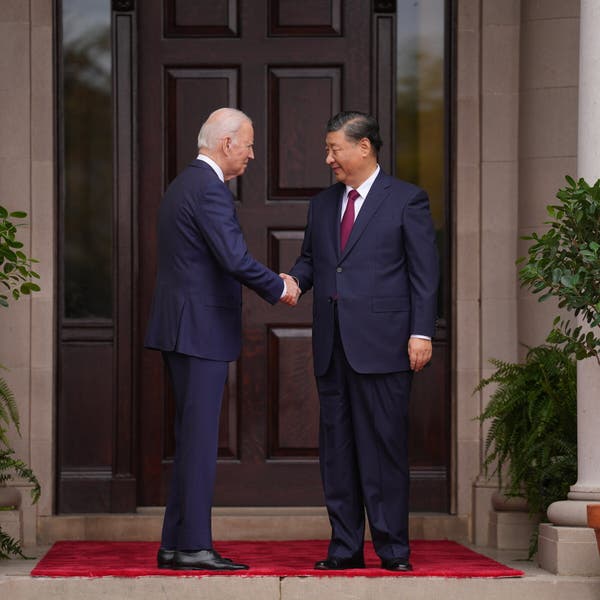
Last week, just hours after the U.S President Joe Biden met with his Chinese counterpart, President Xi Jinping in San Francisco. Biden described this meeting as “some of the most productive” talks before he announced on his X account resumption of military-to-military communications. However, while responding to a question from a CNN journalist, president Biden then called Chinese President Xi Jinping a dictator.

How do we explain this rapid transition from ‘productive talks’ to ‘dictator’? Typical of American leaders, this looks like a case of libidodominandi – a Latin phrase for desire to dominate others, Biden premised his wrong conclusion that Xi is a dictator simply because he is “a guy who runs a country that is a communist country that’s based on a form of government totally different than ours.” Of course, his reasoning is laughable. It is not a surprise that it left America’s top diplomat Anthony Blinken visibly incredulous.

Biden wrongfully assumes that he and the U.S alone have exclusive rights to define what democracy is. Accordingly, whoever challenges their hegemony and imperialistic ambitions in favour of a fair and world where all countries are equal as UN charter demands is undemocratic.

This wrong assumption has seen the U.S over the years present itself as the beacon of “democracy” and on different occasions, Washington has gone extra mile to coerce and impose its so-called values on other sovereign countries, a practice that has caused untold suffering and left millions of people dead, displaced others on top causing anarchy as we saw in Iraq, Libya among others.

That said, Biden’s basis of branding Xi a dictator simply because President Xi is a leader of a country “based on a form of government totally different than ours” reminded me of King Louis XIV’s infamous; “it is legal because I wish it.” Of course, this is big brother mentality is a thing of past and shows how selfish U.S politicians can be.

My concern with Biden’s wrong view of Chinese leadership is not just that his top diplomat Blinken was visibly not happy with it; my concern is that Biden’s reason is an insult to collective intelligence of scholars and those who follow current affairs. It is an insult because Biden assumes that our collective intelligence is blind to the fact that U.S’ endgame has never and is not about to be creating conditions for a fair world which is peaceful, free from America’s hegemony, cold war mentality, power politics and block confrontations.

It is not about democracy as Biden claimed, and it is not about human rights or respecting international law or sovereignty of other countries. For the U.S, all that matter is their libidodominand! On the other hand, China is arguably the world’s champion when it comes to observance of international law. Indeed, unlike the U.S, China has never invaded any country; has never started a war against other country; has never imposed leadership on any country against the wish of citizens which all shows characteristics of bad and dictatorial leadership.

Put differently, the U.S desire has never been good governance or democracy as Biden claimed. Going by assertions of U.S’ founding father, George Washington; “No nation is to be trusted farther than it is bound by interest; and no prudent statesman or politician will venture to depart from it…unless both [nations’] interests happen to be assimilated.

That said, it is also disrespectful of Biden to assume he or the U.S alone have exclusive patent when it comes to deciding which country is democratic or otherwise. America’s colonial and hegemonic mentality has always created disastrous effects. We have seen in all the countries the U.S. has gone to spread its so-called democracy and values. But who chose Biden or the U.S. to judge which country is democratic?

Biden should be reminded of Abraham Lincoln’s definition of democracy; ‘government of the people, by the people and for the people.’ With this, if people of China are comfortable with their government, where does Biden get the audacity to brand the Country’s leadership ‘dictatorial’? Is Biden implying anything not American is wrong even when citizens of that country approve it? If that is his reasoning, in real sense, save that being illusional, then Biden is the world’s chief dictator for lack of better description of his disrespect of other countries’ values.

Poll after poll in the U.S indicates that American population do not believe in their country’s much praised democracy. For example, 2021 Pew Research Centre found that just “17% of Americans” believe democracy in the U.S. is a good example for others to follow, … while 23% do not believe it has ever been a good example.”

Also, a 2022 January NPR/Ipsos Poll found that “64% of Americans believe U.S. democracy is “in crisis and at risk of failing.” Similarly, in October 2022, a Quinnipiac University poll concluded that “69% of Democrats and 69% of Republicans think the nation’s democracy is on the brink of collapse.” Interestingly, the same study found that even among the so-called independents, 66%, had similar view of America’s democracy!

China under the ‘undemocratic’ President Xi Jinping and Communist Party of China (CPC) has surging support back home! For example, York University (Canada) study found that 98% of Chinese believe in their government. With such facts at hand, one wonders where Biden basses his unsubstantiated claims and the cause of such? Put differently, isn’t his baseless claim an insult to majority of Chinese people who approve President Xi’s governance and therefore a sign of intolerance which is a typical character of dictatorship Biden claims to be against? Also, Biden’s claim that President Xi is a dictator simply because China is a communist country shows how the U.S’ view of a world is very narrow which disregards diversity of civilizations and humanity which itself is a sign of being a dictator.

It is high time president Biden realised the need for countries to work together while upholding key principles of equality, mutual learning, and inclusiveness among civilizations, and let cultural exchanges transcend estrangement, mutual learning transcends clashes, and inclusiveness transcend any sense of superiority. He should interest himself in Global Civilization Initiative (GCI) which President Xi introduced in March this year as another important public good in the new era. The GCI which has so far received a warm welcome in the international community, advocates the respect for the diversity of civilizations, the common values of humanity, the importance of inheritance and innovation of civilizations, and robust international people-to-people exchanges and cooperation.

Allawi Ssemanda is a Senior Research Fellow at the Development Watch Centre.


China is Shifting To A Green Belt And Road Initiative In Africa

By Steven Akabwayi

When I was researching China’s policy on climate, a friend of mine recommended to me a book titled “China Urban Evolution by Austin Williams”, in the book, Austin writes about the mythological China character known as “Yu the Great”, Yu was a founder of the Zia dynasty between 2100 to 1600 BC, in the book, William narrates how Yu was faced with a dangerous environment catastrophe during his time, amidst this potential devastation, Yu built flood defenses, rerouted rivers, dredged channels, constructed canals and contained those forces that threatened his community.

In doing so not only did Yu manage to contain the floods, but also the ranging waters were channeled towards irrigating the fields leading to agricultural plenty. This is what most scholars compare to what modern-day China under President Xi Jinping is doing towards addressing the climate change problem.

When President Deng Xiaoping took over power in China during the 1970s, as a reformist leader, he implemented a series of economic policies that transformed China’s economy, his revolutionary policies often referred to as “Deng Xiaoping theory or Dengism” aimed to transform China from a centrally planned economy to a market-oriented socialist system.

Under these reforms, China had a great hunger for development it was willing to undertake whatever means possible to achieve economic prosperity.

One of the guiding diplomatic philosophies of President Deng Xiaoping was “It doesn’t matter whether the cat is black or white for as long as it catches the mice”.

This simple yet deep premise helps to explain the Chinese modus operandi in all spheres of its diplomacy including the environment during the economic revolutionary years.

China topped the charts of top emitters in the 2000s surpassing the United States, as a result of liberalizing her economy, China experienced a boom of industrialization and economic growth which led to the expansion of the industrial sector and construction that required large quantities of energy to operate leading to an increase in emission of Greenhouse gases.

During this era, China relied heavily on coal due to its abundance coupled with its affordability which made the CPC party pay less attention to coal’s impact on the environment.

Due to its newly established economic policies that favor development, China also experienced rapid urbanization and a strong middle class that led to an increase in energy demand, by the time President Xi Jinping took over power, China was already heavily Industrialized banning fossil fuels in large quantities which resulted in significant environmental changes, having achieved economic stability and drastically reducing absolute poverty, China had to consider a transition. It was no longer necessary to just chase the GDP growth rate; under President Xi Jinping era quality now mattered over speed and President Xi has consistently noted that China is now concerned with sustainable development where green development is at the centre of all.

In October this year, President Xi Jinping met world leaders and representatives from over 130 countries in Beijing to mark the 10th anniversary of the Belt and Road Initiative. The forum was held against a global backdrop of the pandemic’s lingering impacts, increasing effects of climate crises and environmental degradation, and an economic slowdown. These factors have contributed to rising debt in countries where BRI projects are implemented, constraining their ambitions for greater infrastructure connectivity and agency in their own development and green transitions.

Just like it has been in the previous forums, Africa was well represented with over 5 heads of state including Kenya, Ethiopia, the Republic of Congo, Mozambique, and Egypt presidents attending in person and top of the agenda was climate.

In his opening remarks, President Xi Jinping pledged to finance and roll out more signature projects with more priority appropriated to lower risk and more socially and environmentally impactful projects announcing over U.S. dollar 100 billion in new funding for Belt and Road Initiative cooperation projects

Among the smart projects to be Funded in Africa under the Belt and Road initiative include a 25 MW photovoltaic solar power plant in Burkina Faso, a 10,000 MW solar power plant in Ethiopia, 50 MW wind farm in Lumu area Kenya among others. Investing in these considerably small yet smarter projects signifies the importance China attaches to green development among African countries especially those that are signatories to the Belt and Road Initiative

Steven Akabwayi is a Research Fellow at the Sino-Uganda Research Centre.


Global Civilization Initiative: Debunking its Critics

By Moshi Israel

President Xi Jinping introduced the GCI in his March 15 Keynote speech to the CPC High-Level Dialogue with World Political Parties. The GCI completes a tri-set of three initiatives including the Global Development Initiative (GDI) and the Global Security Initiative (GSI). These initiatives, it should be noted, represent China’s vision for the world of tomorrow. China attempts to approach problems differently, veering away from what is seen as the failures of the current ‘rules-based international order’ headed by the United States and its allies, commonly referred to as ‘the collective West.’

The GCI, in a sense, refutes the idea of “my way or the high way” and advocates for respecting the diversity of civilizations while opposing the imposition of certain values and models on others by a select few. It advocates for a drive toward realizing the common aspirations of peace, development, equity, justice, democracy, and freedom. It rejects the notion that only a few civilizations hold a monopoly over what is considered ‘right or the way.’

Critics of the GCI assert that, when combined with the GDI and GSI, these programs represent only China’s substitute for the LIO (Liberal International Order), which is dominated by the West. One viewpoint is that China just wants to take the place of the West and establish its own power globally. Opponents argue that while the current international rules-based order may not be flawless, it has primarily contributed to unparalleled wealth and world peace, especially for China, which has benefited from the order to get to where it is now. Furthermore, critics pile upon China, accusations of not respecting its own proposals of peaceful development and non-interference by pointing to the skirmishes in the South-China Sea and tensions with Taiwan.

However, all this criticism from mostly Western ideologues, politicians, scholars, pundits, and political commentators is far-fetched and always reaching. It is mostly verbal posturing backed by as much information as one can find in a newspaper headline. Most of the criticism is a repetition of tired tropes against China bought and paid for by anti-China political establishments in Western capitals. It is telling that most critics of China fail to establish the difference between ‘hate of the West’ and disdain for a rules-based order that is drenched in a hypocritical game of ‘rules for thee and not for me.’ It is not hate when one challenges your ideals.

China like many other countries has had squabbles and skirmishes with its neighbors. But to point to this and claim it as evidence of Chinese aggression and therefore dismiss any proposals from the country as mere propaganda is intellectual dishonesty. Considering, especially, the crimes and atrocities committed by Western countries in the Middle East, Africa, and Latin America under the guise of the rules-based international order. To the critics of China, it is fair game to often bring u the country’s (often exaggerated or non-existent) shortcomings when comparing it with the West but it is considered ‘whataboutism’ when Western hypocrisy is pointed out in political discourse.

It, therefore, skips the minds of Western political thinkers that it is this clear understanding of their hypocrisy and intellectual dishonesty in defending, dismissing, ignoring, and at times advocating for all the ills of Western hegemony that inspires the creation of such concepts as the GCI, GDI, and GSI. This is not to say, that there is no criticism of the Western disastrous foreign policy from Western citizens and elites, it exists and it is loud, however, it often has no significant impact and often fades into the background.

The GCI is China’s way of encouraging global south modernization without the need for Westernization. Indeed, the GCI is largely aspirational and would require enormous political will to put into practice, however, this in no way makes it obsolete or irrelevant. Today’s leading global institutions were all once an idea on paper, a concept and ideal to aspire to, and with grinding effort, they have been established and can function as practical entities tackling world problems, despite all their shortcomings. The next important step for China and the willing coalition of Global South countries is to rapidly institutionalize these concepts to test out their practicability on the international stage.

Furthermore, GCI encourages mutual learning and inter-civilizational exchanges, which is a welcome idea at a time when the world is increasingly disintegrating along religious, ideological, and civilizational lines. There is an obvious divide in political thought between the West and the East, with Western views of democracy working for many but not all, and Eastern views of democracy working for some but not all. The idea behind GCI is for the world to strike a balance and seek compromise under these circumstances. ‘Diversity is our strength’ is a common slogan in Washington, London, Brussels, and other Western capitals during domestic political discourse. However, this notion flies out the window when it comes to the international stage, the reason being the West prefers to practice realpolitik outside its borders. China through the GCI is standing up for itself and the entire global south and asking for a modicum of respect for their culture and values, which is bizarrely looked at by the West as a rebellion against the rules-based international order.

One of the most prevalent criticisms of China’s GCI, GSI, and GDI is the one directed at the ambiguity of the idea of non-interference. Understandably, China does not seek to be the world’s policeman, but at what point does China draw the line when another country blatantly violates international law and the rights of its citizens? China has attempted to address this issue by engaging in relentless diplomacy to broker peace and ensure stability. The recent Iran-Saudi peace deal is one example that shows the incredible results diplomacy can achieve.

However, going forward, China has to figure out a sustainable solution for crimes committed by leaders against their own people. Many Citizens in the Global South continue to suffer under the oppressive regimes of ruthless and unpatriotic leaders and would look to China to address this issue. Therefore, Beijing has to come up with practical solutions to tackling these geo-political headaches without resorting to Western methods of operation. Otherwise, many citizens from the Global South will always turn to the West in search of rescue from despots.

Overall, the GCI is a necessary concept that can lead to a better world full of mutual learning, trust, and understanding. This can be achieved through inter-civilizational exchanges and people-to-people diplomacy. The Global South has largely welcomed China’s ideas for a multi-polar world of tomorrow and believes in the aspirations put forward by the CPC. Currently, only China seems to be looking forward as most other powerful countries look and cling to the past for answers.

The Writer is a Senior Research Fellow with Sino-Uganda Research Centre (SURC).