An African Perspective on the CPC’s Concept of Whole Process People’s Democracy

By Moshi Israel

The Communist Party of China (CPC) has served the people of China for several decades with utmost effectiveness that should be admired everywhere. The success of the CPC is not a mere fluke, considering the complexity of China’s history and national realities. China with more than a millennium of history has had to endure civil wars and power struggles from different dynasties that exposed the common people to untold suffering. The opium wars and Western colonialism also left the once-great civilization of China on the brink of collapse. The CPC pulled China from the jaws of destruction and put the country on a path to unprecedented prosperity and success.

The People’s Republic of China is a vast country with a huge population and a diversity of cultures and ethnicities. To govern such a country, a certain political acumen and tact is required and the CPC under the leadership of President Xi has proved itself a very capable candidate to map China’s development well into the future.

President Xi introduced the concept of whole process people’s democracy back in 2012 and elaborated it as true democracy that addresses the people’s concerns and is characterised by the people’s participation in all state’s social, cultural, and economic affairs. This type of democracy is ‘whole process’ because the people engage in democratic elections, consultations, management, decision-making, and oversight in accordance with the constitution. On the other hand, it is the people’s democracy because China’s constitution labels the people as masters of the country.

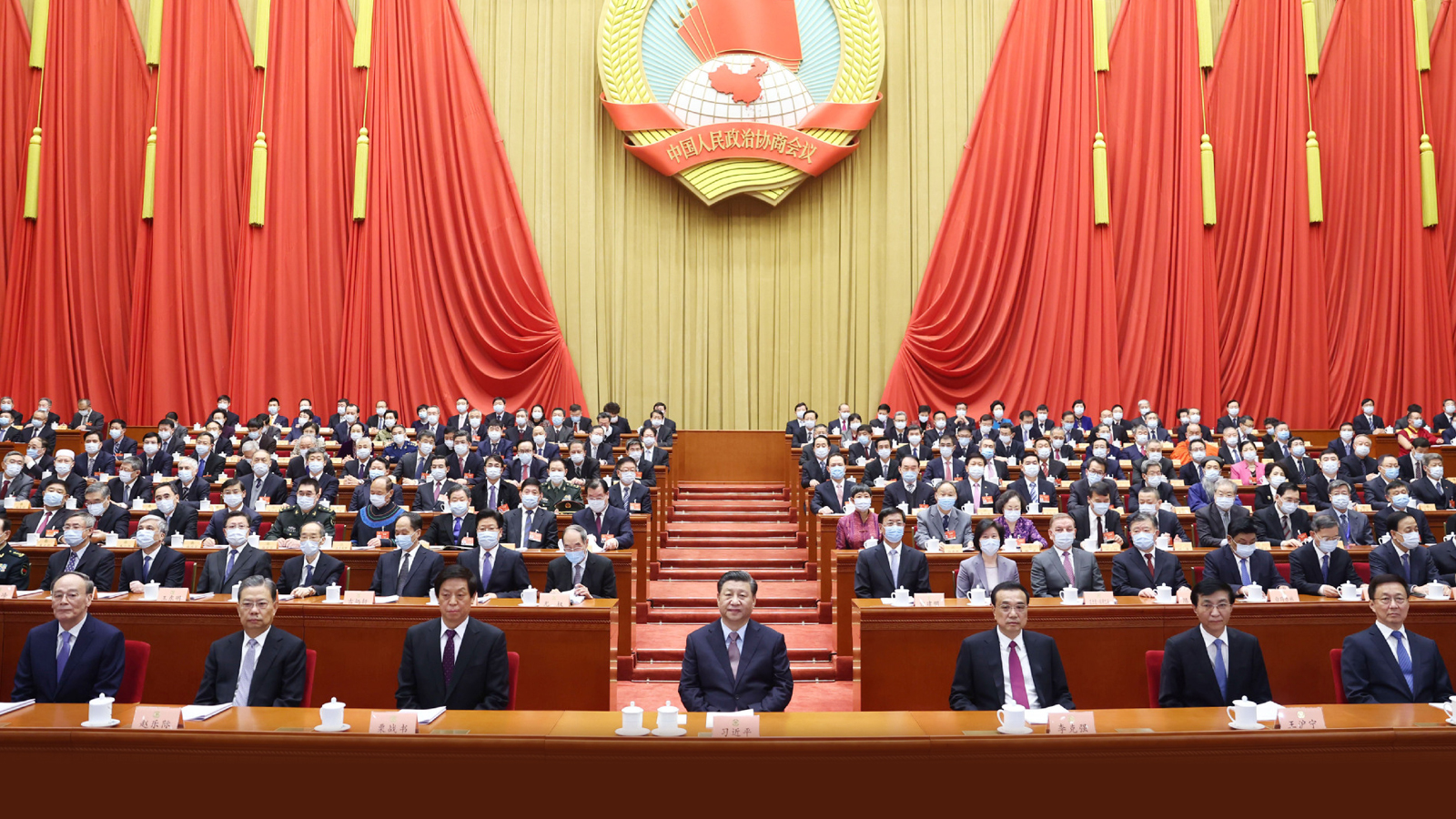
The National People’s Congress (NPC) and the National Committee of the Chinese People’s Political Consultative Conference (CPPCC) work closely with and hold two sessions in which they deliberate on the governance of the state with the people’s interests in consideration. These national bodies collaborate closely with elected grassroots officials to address issues of concern for every citizen. These grassroots committees run from the village, town, and city to the provincial level. Through them, the common person’s concerns are able to reach the highest level of the Chinese government. Moreover, the CPC despite being the dominant party of choice for most Chinese people, still works closely with a number of other political parties in China.

China has demonstrated that whereas every country should aspire to be democratic, the concept of democracy varies from one country to the next depending on their national context. Not every country is suited to the Western style of democracy. Aspects of culture, geography, history, demographics, and economics play a vital role in determining what sort of democracy a country will be. Centuries of the forced and failed Western way of democracy across the world indicate that perhaps everyone cannot be the same and being different is okay. From ancient Greece; the bedrock of democracy to Britain and the United States, democracy has come in different forms for all of these countries.

China, under the CPC, has clearly shown that democracy is not a mere jargon to be thrown around aimlessly, rather, democracy should be practiced and its results seen. China has achieved this by elevating over half of a billion people out of absolute poverty and putting China on a modernization path so effective, it has been dubbed a ‘miracle.’ Furthermore, China’s concept of democracy extends across two fronts; the domestic and the international arenas. Domestically, China has grown exponentially. On the international stage, China has spread the gospel of whole process people’s democracy with a unique Chinese socialism.

China, unlike the West, believes in and practices the concepts of mutual benefit, shared prosperity, and win-win partnerships with its international partners. Through the Belt and Road Initiative, the country has established good relations with others across the world.

African countries, as beneficiaries of China’s growth through the latter’s application of its democratic concepts on the international stage, should proactively seek to develop their own people-centered and development-oriented democratic structures. This should be based on each country’s national realities. Besides, China has always learned from other developed countries and altered these lessons to fit its national context.

Otherwise, the CPC with President Xi Jinping at the helm has produced amazing results by strategically choosing to put the development of Chinese people at the forefront. Rightly so, democracy should indeed be structured around people’s happiness. Elections and a thousand political parties do not mean much if the people are starving and underdeveloped.

Therefore, every Ugandan and every African should be asking their leaders, what sort of democracy they think they are engaging in if the people’s happiness is not a core priority. With China, we can see that political theory should be backed by strategic and patriotic practices centered on common prosperity and the right to development.

The Writer is a Senior Research Fellow at Development Watch Center.


The African Union in the G20 is a Good Omen for the Global South

By Moshi Israel

During the recently concluded G20 summit, the African Union (AU) earned permanent member status among the world’s top 20 economies. For the hosts, India or Bharat, and even more specifically, Prime Minister Nerandra Modi, the acceptance of the AU into the G20 is symbolic of his continuous fight to give a voice to the global south in an international system increasingly dominated by great power politics.

This decision has been long overdue given the enormous size of the African continent and the diversity of people and economies it represents. Combined, African countries are as good as any other, and perhaps a future ambition for the AU should be the integration of all the region’s economies into one with a common trade policy. This would prove instrumental in dealing with countries that created the current international trade system and constantly break the rules that limit their ambitions. The AU’s elevation to permanent member status just like the European Union is a chance for countries at the periphery of international relations to be represented in the group.

The presence of the African Union as a permanent member in the G20 also serves to extend the often-elusive microphone to the bloc. For so long, African countries have had to stand outside the halls of power as others debated problems and deliberated solutions concerning the continent. Many of the region’s leaders tuned in to cable television to receive breaking news about what the major powers had decided would be Africa’s future. Moreover, the African continent has no control over the narratives concerning its past. This opportunity is, therefore, a significant step for developing countries in Africa to represent themselves and offer up ideas that align with the African context. The AU right now has a podium to prove naysayers wrong.

India is following in the footsteps of its BRICS partners, China and Russia in championing the platforming of the global south on the international stage. In this aspect, China has been ahead of the curve and has behaved in a foresighted manner. Indeed, for long, China and entire BRICS family have for long shown their support for Africa to be admitted into the grouping as a Permanent member. Foresight often eludes most great powers. The west seems to be playing catch up when it comes to updating and revising relations with the global south.

The current global order is in crisis and many international state actors are turning to the global south as the foundation for a new more inclusive and equitable global order. The addition of the AU as a permanent member into the G0 ranks is yet another step in the direction of achieving a truly multipolar world.

The crises facing the world today range from the recent COVID-19 pandemic, the Ukraine war, and climate change to food insecurity and inflation. Fittingly, the summit in India had an agenda that focused on the issues affecting developing countries the most. Some of these issues include; finding alternatives to fossil fuels, food security, a common framework for digital public infrastructure, and resource efficiency. Reforming the major mainstream lending institutions like the World Bank and International Monetary Fund was also key on the agenda. This would help developing countries have quick access to development-related funds. Moreover, the growing popularity and strength of the BRICS bank should be a signal to the World Bank and IMF that change is inevitable and reform is a necessity.

The AU will be a key figure in the global fight against climate change. Its permanent presence in the G20 will help to expand the voice of the global south, especially on issues of climate financing and a just transition to the green economy.

The growing relevance of the global south in the international arena should not be underestimated. Countries like China have picked up on this trajectory and invested heavily in developing countries all around the world. The goal is to obtain a mutually beneficial partnership through south-south cooperation.

The West has largely treated the global south as its backyard and often dealt with it through handouts and dictates. Blocs like BRICS helped change this narrative and engaged the global south on equal terms. And now, the G20 has also awakened to the reality that the world’s nations need each other and the global south has a vital role to play. For instance, the conflict in Ukraine and the subsequently failed sanctions on Russia have shown that having the global south on your side is important and necessary for key geopolitical maneuvers.

Additionally, as part of the G20, the AU should seek to lead Africa on a new path that is strategically beneficial for all its members. The first step in this process is to get rid of the destructive colonial mindset that has held the AU members back.

The Writer is a Research Fellow with Development Watch Center.


Medical Diplomacy: China is Building a Community of Shared Prosperity for Mankind

By Dr. Ham Wasswa Matovu

Last week, a team of Ugandan medical experts from district hospitals arrived in Beijing China. Funded by the Chinese government, the team will spend three weeks in China at one of the country’s top Universities, Tsinghua University to attend a Seminar on Health Care and Public Health.  This will boost their public health knowledge and health systems management so as to be able to make a tangible contribution when they return home.

Aware that China is one of few developing countries with a robust and well-functioning health system in the world, there is no doubt that the seminar will equip of medical team with the much-needed expertise and experience which will in turn help contribute in strengthening Uganda’s health sector. Through on his X account (formerly twitter,) Chinese Ambassador to Uganda His Excellency Zhang Lizhong explained that Uganda’s team in Beijing for the seminar under the arrangement of medical cooperation adding that; “delighted to see China-Uganda health communication & cooperation deepening through closer people-to-people exchanges.”

Studies indicate that despite some progress in addressing health sector challenges, African countries still face challenges among others limited training. A 2022 study published in the British Medical Journal Global Health which surveyed 47 African countries stressed the lack of refresher courses as a major challenge facing the health sector in the region. The study entitled “the health workforce status in the WHO African Region: findings of a cross-sectional study,” revealed that the region’s ratio of well-trained health workers is 1.55 per 1000 people which is below the World Health Organisation’s (WHO) recommended 4.45 health personnel per 10000 people.

The continent’s health sector challenges are a result of many factors among others inadequate or no training capacity, rapid population growth, weak governance of the health workforce, career changes and poor retention of health worker. In 2022, the WHO projected that the shortage of well-trained health personnel in Africa will grow to 6,100,000 by the year 2030 which is increment of about 45% if compared with figures of 2013 when the last projections were made.

The study; “the health workforce status in the WHO African Region: findings of a cross-sectional study,” recommended that to address these challenges, African countries must put up measures meant to boost training and recruitment of health workers, improve their deployment and retention and increase investments for building respective country’s health workforce to meet their current and future needs.

Reflecting on the above, one can only conclude that such trainings are needed our health sector to grow. China has a rich experience in this field. The country has had several reforms in their medical sector which has seen them become one of few countries with a robust functioning healthcare system and consequently significantly increased their life expectancy which is expected to even get better by the year 2035.

In 2007 for example, China embarked on planning another reform. In 2009, in consultation with the Central Committee of the Communist Party of China, on 6th April 2009, China’s State Council passed China’s Health Care Reform Plan promising to provide a universal primary health service to then country’s 1.3 billion people with the main being “everyone to enjoy basic health care services. Under this health care reform plan, it is the Government’s responsibility to build a safe, effective, convenient and inexpensive health care system covering both urban and rural residents.

Its major aim was universal health coverage by 2020 through strengthening health care delivery, health security and provision of essential medicines. This policy reform is a long-term endeavor but the returns are worth the investments. In 2022, China listed other key tasks for healthcare reforms major among them being the development of a multi-tiered insurance system.

In order to get the job done, the state council set up a state council health systems reform office where the activities of the reform would be coordinated. The following were the policy reforms.

Under social health security, the social health insurance package was extended, medical aid was extended to the eligible poor and those with catastrophic medical expenditure. The payment system was also reformed. Through this, 95% of the population has been covered by health insurance schemes by the end of 2017 and the so-called catastrophic health insurance introduced in all provinces.

Such a system in Uganda would reduce the burden of out of the pocket health expenditure and reduce suffering of many that find it hard to meet medical bills.

Today, China is implementing Healthy China 2030. The “Healthy China 2030” blueprint, was introduced by the Communist Party of China (CPC) Central Committee and the State Council, and it includes 29 chapters that cover key areas that focus on areas like public health services, environment management, the medical industry, and food and drug safety. The Primary goal of “healthy China 2030 is ‘all for Health” while its long-term goal is a universal health security system for China.

Important to note is that “Healthy China 2030” emphases disease prevention and encouraging people to adopt healthy lifestyles, improving the public health service system with aim of ensuring that ordinary residents will have their medical problems diagnosed earlier and so get timely treatment. Lastly, China wants to increase its citizens’ average life expectancy up from 76.34 recorded for 2015, to 77.3 by 2020 and 81 by 2035.

Aware that China is a developing country but has managed to achieve that much, even when it is quite challenging for the African setting, we ought to start on our own reforms. Like the Chinese say, a journey of 1000 miles starts with a single step. For Uganda, the journey should start with these training opportunities China is extending to Ugandan health workers through China-Uganda health communication & cooperation so that together, we continue efforts of building a community of shared for future for mankind in the new era of win-win cooperation.

Ham Wasswa Matovu is a medical doctor and research fellow at the Development Watch Centre.

Applause to China; They Are Truly Africa’s Key Ally on Mitigating Climate

By Steven Akabwayi

On 4th-6th September this year, the  Kenyan government with AU co-hosted the inaugural Africa climate summit in Nairobi. The three-day summit brought together leaders and investors from Africa and beyond to share experiences and solutions for a  sustainable, resilient Africa.

The event focused on Adaptation and resilience, renewable energy, sustainable development, and financing for climate action.

China’s efforts towards clean energy and sustainable development in Africa have not been sufficiently covered by most Western mainstream media who aim at cherry-picked stories and character assassination.

This is done to influence the masses into a coherent narrative of China being a bad character in regard to climate issues on the African continent yet on the actual ground Africa and China are key allies on climate.

China and Africa hold the same view that cooperation and investment in environment-friendly initiatives is a critical part of their practical relations.

Unlike most Western civil groups that dictate what Africa should do, China has collaborated with Africa on developing both adaptation and mitigation plans holding a view that African countries should have legitimate rights to Pursue independent and sustainable development in relative areas.

Despite China being the world’s largest emitter of greenhouse emissions currently producing about 12.7 billion metric tons of emissions annually dwarfing the US which is at 5.9 billion tonnes, the discrepancy in the above figures doesn’t tell the whole story.

China’s high number of greenhouse gas emissions can be attributed to the fact that it is a highly populous country that is still developing with a hunger for heavy industrialization.

Since 1850 China has emitted 284 billion tons of carbon dioxide but the US which industrialized far earlier has raised almost twice as much with 509 billion tons of emissions making it the highest emitter of all time.

Additionally, in terms of per capita emission, China lags behind most developed nations with an average person in China emitting 10.1 tons of carbon annually compared to 17.6 tons of that in the US according to the Rhodium group report.

China has also taken stringent measures to address climate apocalypse not only at home but also overseas. The country stands as the leading global investor in greenfield energy and infrastructure systems across the developing world, the same climate-friendly developments have also been intensified under the Belt and Road Initiative.

Since 2017, there has been a shift in the forces regarding the policy framework of the Belt and Road Initiative in Africa, The initiative which started as a massive infrastructure project, is now focused on green sustainable development.

In 2021, China and 53 African states signed a joint declaration that pointed out that climate change and its negative impacts are an urgent problem facing humanity.

The joint declaration added that that climate change should be tackled by speeding up affordable green and low carbon transition, promoting sustainable development, and jointly fostering a community of life for man and nature.

Another noteworthy point from the China-Africa joint declaration on climate was for both parties to speed up the implementation of South-South trilateral cooperation projects on climate change, and promote the building of low carbon and low greenhouse gas demonstration zones.

China also pledged to support Africa in training professional personnel for climate response and facilitate the delivery of climate technologies and services in Africa.

In terms of renewable capacity, China is the leading producer of solar energy and manufacturer of solar equipment.

In 2022, China’s President Xi Jinping announced that they are targeting to develop 1200 GW of solar and wind energy by 2030.

The China-Africa joint declaration on climate change further reveals that China has launched over 100 clean energy and green development projects under the framework  Forum on China-Africa cooperation, this is to support African countries in better utilizing solar hydropower, wind, and other renewable energy sources.

As one way of improving the energy structure of Africa’s countries, China has upgraded its industrial structure and built smart cities with advanced urban planning and waste management.

Inthe last 45 years in what Is often referred to as China’s economic miracle, China has been able to industrialize, transform villages into smart cities, and lift billions of people out of poverty.

On the other hand, Western countries have continued to preach water as they make wine.

Despite discouraging African governments from investing in the much-required energy that will lift millions out of poverty, Western governments are on the other hand in a rush to secure energy for their citizens.

The world has seen coal mines being opened up in Germany and the UK, new drilling and production in Norway, and funding of undersea pipelines by European governments.

China being the largest developing economy, it’s aware that for any country to develop and lift its citizens out of poverty, it needs not just energy but funding and investing in green energy.

Looking at the declaration of the 8th Ministerial Conference of the Forum on China-Africa Cooperation (FOCAC) held in Senegal’s capital, Dakar, 29-30 November 2021, China committed to work with African countries to ensure the continent tackles climate Change in all ways and more importantly meet their climate change mitigation targets. Indeed, African countries applauded China noting that they “fully leverage the China-Africa Environmental Cooperation Center to advance  policy dialogue, exchanges and cooperation on environmental protection. We  welcome the positive role of the China-African Union Energy Partnership to  increase the share of clean energy and promote sustainable energy development of  both sides.”

In his Congress speech in 2022, China’s President Xi Jinping stated in a report that China must also develop petroleum and natural gas more cleanly and efficiently, explore untapped resources, increase production, and develop systems for new energy sources.

In his keynote address during Africa Energy Week in South Africa, Uganda’s president Yoweri Kaguta Museveni emphasized that Uganda will proceed with its oil and gas developments as the oil commercialization will lift millions of people out of poverty and provide them the luxury to invest in renewable energies.

China’s state-owned company the China National Offshore Oil Company (CNOOC) has been a key partner in designing and investing in the East Africa Crude Oil Pipeline Project (EACOP) with an emphasis on ensuring a lower carbon footprint compared to other gas projects.

Steven Akabwayi is a research fellow at the Sino-Uganda Research Centre

How U.S Tech Sanctions on China Present an opportunity for Africa

By Tarwana Ernest

As far back as 2019, the US placed sanctions on Chinese Tech Company, Huawei alleging spying and industrial espionage against US Tech companies. This led the Americans to place sanctions on Chinese Tech firms which subsequently led to subsequent Huawei mobile devices starting from their flagship P and Mate series being disabled from Google Android infrastructure. These events could be construed as a product of the US China Trade War.

Among others, the U.S has claims that the decision to sanction Chinese tech giant – Huawei is a result of the company’s tight collaboration with Chinese government and therefore cannot trust them in terms of security. Huawei strongly denies U.S’ accusation arguing that they are victims of America’s tech-nationalism which is meant to shield U.S tech firms from stiff competition Huawei is putting up using security concerns as a cover up. Beijing also accuses Washington of launching what they call unfair attacks against Chinese tech firms in what China sees as America’s efforts to contain China’s technology growth.

The U.S has also succeeded in convincing allies to isolate Huawei with the United Kingdom (UK) government blocking the tech giant from its G5 network rollout. While the U.S explicitly mentioned national security concerns as a reason for banning Huawei, in 2020, the UK’s security agencies concluded that any risk posed by Huawei was manageable. Indeed, while announcing the decision to side-line Huawei, then UK’s Secretary of State for Digital, Culture, Media and Sport, Oliver Dowden explained that London decided to lockout Huawei out of its market as a result of U.S’ sanctions against the firm which meant that Huawei could no longer use American chips in their kits.

However, China’s growth in the tech sector has hardly been impeded. Over the past few years, China has worked quietly to build internal capacity and wean itself off dependence to US firms. Huawei has been at the forefront of this progress.

Equally, Huawei infrastructure has aided most European countries in building their 5G networks. Some of these include Ireland, Portugal, Spain and Switzerland.

Due to the reputable nature of the Chinese firm and its infrastructure, this presents an opportunity for African nations to look aggressively towards China in building their data infrastructure and connectivity.

South Africa has been at that forefront after the recent BRICS Africa Summit, 2023. This including signing bilateral agreements with Huawei to build South Africa’s data infrastructure. If all goes according to plan, South Africa will be one of the few African nations with the most robust 5G networks on the continent.

The Chinese firm also partnered with Saudi Arabia to build cloud data centres serving the Middle East, Central Asia and North Africa. This presents a chance for African nations to liaise with Huawei in having their data held closer to the continent. In the near future, an African country with capacity could ewaully position itself to host data centres serving the continent or a particular region.

African nations can equally rely on Chinese Tech infrastructure to push for bilateral deals to encourage technology transfer which aides education and innovation on the continent. This can be through setting up innovation hubs and subsequent educational scholarships for students with interest and desire to harness their talents in a technologically advancing world. China presents itself as an opportunity for African youth to build indigenous expertise by learning from an advanced economy with historic links to the continent.

While U.S’ is still trying to convince more countries including in Africa to follow their suit and disengage from Chinese tech firms, African countries should not join this loosing battle. They should grab any opportunity should Chinese tech firms show readiness to work with them.

According to a paper published by Carnegie Endowment for International Peace, which is ranked as the world’s third most influential Think Tank, the formerly technological giants; “Japan and the United States have watched warily as China’s economic heft has grown and as the technological sophistication of its manufacturing base has increased” leaving the U.S worried that Beijing may soon overtake Washington in this important technological revolution. The paper concluded that presently, apart from China, no other country on its own can outcompete China’s determination in technology advancement and suggested that for the U.S to make it, they must form alliances with other like-minded countries as Japan and “update their decades old technological cooperation and deepen funding pools on certain shared strategic priorities, such as artificial intelligence and quantum computing”.

As James L. Schoff, a senior fellow in Carnegie observed; “fear of “losing” this competition (Technology) is fuelling an unprecedented scale of investment and a zero-sum mentality that could tempt countries to overreact in ways that would damage their national interests and broader global interests,” stressing that it is better to work with China than in technological advancement than attempting to isolate them.

To conclude, China’s trade conflict with the West presents a chance for Africa to develop her data and technological infrastructure with the aid of Chinese tech firms. This does not mean that if the West presents a fair proposal to support African countries technology adavancement support they should not take it. What must be avoided is U.S’ tendence of attempting to force other countries to deoulple from China’s techology.

Talwana is a Digital Research Fellow at the Deevelopment Watch centre.


Karuma Hydropower Project Shows China’s Contributions in Africa Thrive on Matthew’s Gospel

By Ssemanda Abdurahim

“So, when you give to the poor, do not sound a trumpet before you, as the hypocrites do in synagogues and in the streets, so that they may be honoured by men. Truly I say to you, they have their reward in full. But when you give to the poor, do not let your left hand know what your right hand is doing, so that your giving will be in secret; and your father who sees what is done in secret will reward you.” Matthew 6:2-4. There is a great analogy between this Gospel of Apostle Mathew and China’s economic contributions to Uganda and Africa at large. Unfolding the gospel truth in this analogy, I take you through my journey to a 600-megawatt Karuma Dam construction project in Karuma Town Council in Kiryandongo District, which costed Uganda $2.2billion approximately, with the costs jointly met by Uganda and Chinese government.

Approaching Karuma Sub-County in Kiryandongo District, where Karuma Dam construction project is located, one is welcomed by the untempered fascinating super green plant cover and the cold fresh soothing air which penetrates the car, arising from Karuma Wildlife Reserve covering approximately 6705 square kilometers. The vegetation cover which comprises of many and unimaginable species of trees also harbors various species of wild animals ranging from Vervet monkeys and Olive Baboons among others that welcome you, all seen beside the road which enhances the belief that nature has been protected to some extent so dearly even when some developments are happening in that region. While in Karuma, the suspension of disbelief that the Karuma Dam construction project has sparked off development is boosted and backed up by the tall and peeping maroon rooftops seating on the newly constructed permanent buildings which are outnumbering the old temporary and traditional round grass-thatched houses.

My three nights in Karuma were spent at Level 9 Hotel, adjacent to another magnificent one. In Karuma Town Council, one is able to see beautiful restaurants every after a few steps with customers frequenting them. Along the streets, unimaginable number of businesswomen and men readying various types of foods ranging from roasted chicken, cassava, plantain among others run to the cars, busses and heavy lorries stopping over to sell off their goods. The town is busy and different businesses ranging from boutiques, bars and among others are running. One can also notice huge lorries parking by the roadside, some carrying produce especially maize from the local farmers. There is also a lot of kipooli or odi (grand nuts paste) and honey sold on the streets all which indicate a boom in business.

Washington Ochaya, the district Councilor Karuma Town Council tells me that before Karuma Hydropower project started, the area was a town board. It was elevated to a town council shortly after the project started. He says in all ways the project contributed to this stressing that the project resulted into influx of people into area, new businesses and several multiplier effects of a mega project.

A few steps from the central part of the town, there stands a permanent magnificent standard huge structure named Karuma-Sino Market. This public market was donated to the society by SinoHydro Cooperation, a Chinese firm constructed to construct the dam. The market is visibly busy and different businesses are being operated in by the local natives of the town. The market was handed over to the local government in 2017. A stone-throw distance from the market is Karuma Primary school, where permanent and new offices as well as classroom structures are set up in compensation for a formerly affected portion of the school that was under the project affected areas. Hon. Ochaya tells us that SinoHydro Cooperation renovated the school and constructed a water tap for the school and community under the company’s cooperate social responsibility (CSR). A few meters from Karuma primary school, you see Karuma Church of Uganda and Karuma Mosque all constructed by SinoHydro Cooperation to community.

Driving to Mutunda Sub-County in Kiryandongo District, which is about 20 kilometers from Karuma Town Council, I approached Mutunda Senior Secondary School which had received a donation of one hundred desks from SinoHydro Cooperation. Mr. Odora James, a resident of Alila village-Mutunda sub-county, attested that SinoHydro Cooperation had also donated the construction of Amaji primary school along the Nile and it had been completed.  The school was given a good quality solar system, provided with computers and desks. Away from this, the Chinese medical team although not quite often, it announces free medical services to the community as the Chinese and local Doctors move around the community especially in Karuma treating people and giving them free medical attention.

The construction management was able to recruit local people who were both skilled and e semiskilled and employed them. These locals, some of the have been equipped with skills about hydro. The lack of skilled labour forced the Chinese engineering team of trainers to train these locals and they have skills that can sustain their living even when their contract come to an end at the construction project.

These and so much more developments have been registered in Kiryandongo District in the eve of constructing Karuma Dam and this has had a huge positive impact on People’s income as far as development is concerned. However, the biggest population in the country and that of the world of critics of China’s relationship with Africa only knows that the Chinese are funding the construction of the dam. Other developments that this cause has triggered are not known simply because, China is behaves like a State of Saints – operating on Matthew’s gospel. They give with the right hand without alerting the left.

China gives because it finds out that there is a necessity to give other than giving because it should be known. My interest in making the readers travel with me to Karuma by deeply and vividly trying to describe the nature of Karuma at the current time vis-à-vis the past, is all intended to show you that there are more developments ranging from social to economic fields that China’s development cooperation has sparked off in in Uganda and other African countries but it has not said anything about them. Critics have thus explored these chances to come up with unpleasant baptisms upon China-African relations with negative narratives. It is not until China comes up with a strategy of blowing trumpets for itself because of their developmental assistances in Africa just like her critics, that it will reduce on the strength of its critics.

However, China’s silence as far as her good partnership with Africa is concerned, greatly tells principles of “sincerity, real results, amity, win-win cooperation and good faith” as guiding principles for China to develop its relations with Africa which president Xi Jinping announced about 10 years ago. If critically analyzed, China gives with a sense of humanity other than humiliations of using the media for public announcements. One would thus say that the father who sees China’s works in silence is blessing her because African states are continuously embracing her amidst the unpleasant biased criticisms. Because of China’s good intentions characterized by principles of sincerity, real results, amity, win-win cooperation and good faith while working with us, as Africans, lets embrace and jealously defend the cooperation between our countries with China as the two sides continue building a community of shared future for mankind in a new era of China-Africa cooperation.

Ssemanda Abdurahim is a research fellow with Sino-Uganda Research Centre.