Scapegoating: The Bipartisan Front Against China in U.S. Politics

By Moshi Israel

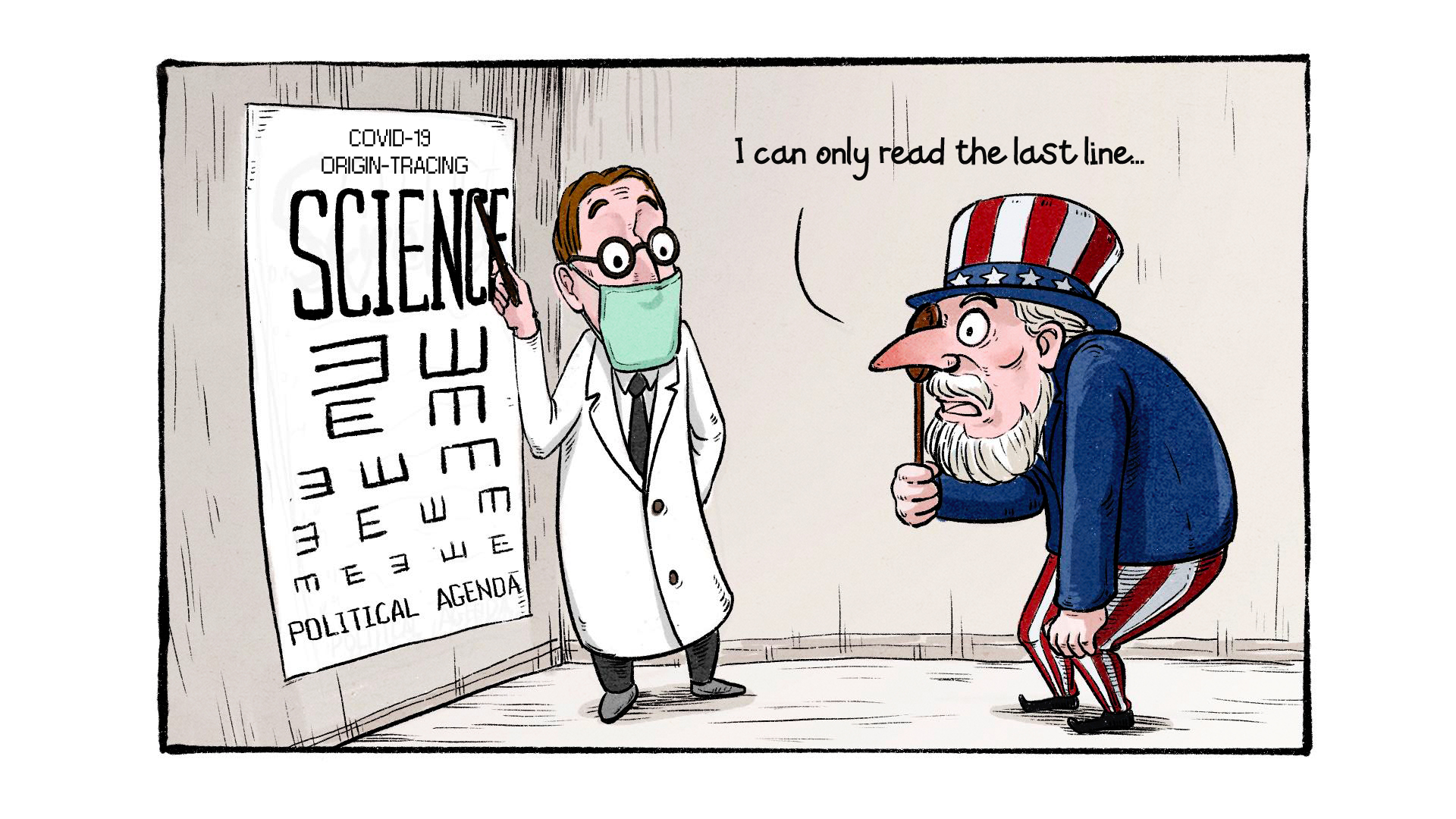
In recent years, the landscape in U.S. domestic politics has been characterised by increasing polarisation and a tendency to attribute internal challenges to external actors. The main victim for this finger-pointing has been China. This trend not only highlights the strain in U.S.-China relations but also points to a broader mechanism at play; Scapegoating. In this article, I aim to delve into the reasons behind the scapegoating of China by the U.S, examine some specific instances where China has been blamed for American issues, and explore the broader implications of this phenomenon.

In the Bible, in Old Testament Jewish tradition, a scapegoat was a sacrificial goat on which sins were placed and was then released into the wilderness to carry away the sins of the people. Currently, scapegoating refers to the practice of blaming an individual or a group for a wide range of problems, often without sufficient evidence. In the context of the United States, scapegoating is a way to divert public dissatisfaction away from domestic policy failures and on to an ‘external enemy’ somewhere. It is also a foreign policy mechanism of creating an adversary to constantly ‘protect’ the people from, consequently, justifying exorbitant defense budgets and questionable international adventures. This strategy is not new. Scapegoating has been used throughout history by states to distract from internal issues, unify public opinion and justify policy decisions.

Scapegoating is usually propagated on the crowds of citizens as a coping mechanism where their rage is pointed to a visible ever-present external enemy, the source of all problems. And it is often promised that with the defeat of that enemy, everything will come back to normal. However, as it is so often, after defeating one created enemy, another one is created in their place. This is because the fundamental problem is not with the monster outside the gates that is always popping up, instead the problem is within, the people must be kept distracted long enough to hopefully never discover that their being devoured from within.

The U.S’ focus on China can be traced back to several factors, including economic competition, ideological differences, and security concerns. The tension between the two giants is made even more worrisome due to media spin and political rhetoric that often paint China as the antagonist in spheres of trade and technology. China is the only truly viable economic competitor of the United States, being an even bigger economy than the United States with a GDP of $35 trillion in terms of PPP compared to $27trillion of the U.S.

The scapegoating of China by the U.S has come in various forms. Economically, China has been accused of unfair trade practices, with sharp rhetoric from U.S leaders like Donald Trump who claimed China is economically ‘raping’ the U.S and Joe Biden who claimed China will ‘eat our lunch.’ Additionally, the U.S has had issues with China regarding intellectual property and currency manipulation which the U.S points to as the reason for the industrialization of certain American sectors. Everyone remembers the infamous Trump trade war with China. Politically, the Covid-19 crisis has been blamed on China and some U.S politicians have not been shy to use derogatory language against China. Senators Tim Scott and Lindsey Graham have been vocal on the so-called origins of Covid-19. On the other hand, Pelosi, Majority leader Chuck Schumer and Marco Rubio have all criticized China on human rights and the mere fact that China is economically competing with the U.S. Rubio even went as far as lamenting that what China offers the world is a direct challenge to U.S national interests and values. This is not to mention all the U.S provocations of China concerning Taiwan and the South China Sea.

Currently, there is the Saga of banning the popular Chinese owned social media app ‘TIK TOK.’ The U.S claims the app poses a national security risk citing the potential for the Chinese government to access user data or disseminate misinformation. This focus on Tik Tok shadows broader issues within the tech industry such as data privacy, cyber surveillance and influence of social media over public opinion. Singling out Tik Tok is partisan and does not reflect well on the U.S congress. It is a form of killing off competition, hindering innovation and raises questions of free speech in a country which claims to have been founded on the fundamental right of freedom of Speech. There are calls for there to be comprehensive data protection laws that affect all companies and not just those based in China. Singling out china diverts attention from the much needed reforms in the tech industry concerning user information.

All these accusations against China are simplistic and short-sighted at best, they tend to ignore the complexities of international relations and eventually put world peace and prosperity at risk. China and the U.S must cooperate for the good of the world. China has raised a valid claim that the current global order is broken and needs fixing, the days of a unipolar world order are gone and it is time for a new multipolar world. This kind of adversarial approach to China hinders cooperation on Climate Change, International Security and pandemic response.

The Writer is a Senior Research Fellow with the Development Watch Centre 


The World at a Stand Off

By Moshi Israel

Growing up, many of us watched American “Westerns,” most popularly known as cowboy movies. In these movies, there was always a scene where two men, usually the protagonist and the villain, stood facing each other at a distance, and the one who could draw their gun the quickest would emerge victorious. These moments were commonly referred to as “standoffs.”

In today’s world, where the stakes are far higher than a mere Hollywood script, we find ourselves in a geopolitical stand-off. Despite the alarm bells ringing loudly, attention remains scarce as decision-makers are too busy pointing guns at each other. Only China seems to care about cooperation and the need for normalizing relations among the world’s heavy weights.

In Europe, the war in Ukraine has failed to reach a compromise as numerous young people die aimlessly. The West is set on punishing Russia for its military operations in their neighbor’s territory while the latter is set on protecting itself from NATO’s endless military expansion to its borders. Guns have been drawn and pointed and no one is dropping theirs. The developments on the battle field in Ukraine have had a negative effect on the global economy and specifically on the economies in Europe and the United Kingdom. As I pen this down, the UK has entered a recession by reporting a second consecutive negative quarter of GDP. On the other hand, Russia which was expected to fold under the weight of unprecedented sanctions has defied expectations. However, it is paying the cost with the blood of its young on battlefields in Ukraine.

Furthermore, political tensions are raising between EU allies. Most of Europe has resorted to ‘allegedly ‘using under handed tactics to coerce Hungary into getting in line with the agenda. Turkey is another wild card whose foreign policy is drenched in mind games of confusion which I believe are a reflection of Recep Tayyip Erdogan’s character. No one knows what Turkey might do or better yet what Erdogan might do. Also, one cannot forget about the protests by Farmers and other workers in Poland, Germany, France and the Netherlands. The Polish in particular have problems with special treatment for Ukrainian refugees and cheap Ukrainian grain that is devaluing the efforts of the local farmers. There have been intermittent squabbles between Ukraine and Poland but relations remain largely stable, at least for now.

In the Middle East, the war in Gaza has become a dividing factor within the international community. Israel has used what most have deemed excessive force in response to the Hamas terror attack on October 7th. The stories and pictures from this part of the world are painful to watch. The war is being carefully managed so as not to turn into a wider war regional war. We have Israel, Palestine, Iran and its proxies in Lebanon, Iraq and Syria, the Houthis in Yemen, the United States and a few willing allies, the Arab league, and Russia all pointing guns at each other. On the other hand, China is asking everyone to calm down in the region.

Furthermore, South Africa has prominently taken Israel to the International Criminal Court (ICC) on charges of genocide, sparking a heated exchange between the two nations. As anticipated, the ICC’s response was not definitive, underscoring the complexity of these issues that often transcend legal proceedings. On a less intense note, the ICC has been commendable in its pursuit of justice, particularly in holding warlords and dictators accountable across regions such as Africa, Eastern Europe, the Middle East, and South America. It’s notable that major world powers have not ratified the court’s jurisdiction, perhaps suggesting that they consider themselves beyond its reach, reserved for ordinary individuals.

Top of Form

In Africa, everyone seems to develop sudden amnesia when its people are dying. Sudan, South Sudan, Tigray and the DRC continue to be valleys and deserts of death. Some of these conflicts are triggered by external factors and influence. The endless massacres do not serve the interests of the African continent. The continent is a constant battle ground and backyard for great power struggles. Additionally, we have the dramatic series of coups in the Sahel belt. Mali, Burkina Faso, Niger, Guinea and Gabon have had military coups. Experts say, that Tunisia, Chad and Sudan had constitutional coups. Who are we to judge, let’s leave the nuances to the experts. However, this much is clear, most of these coups are internally popular and the common theme has been kicking out neo-colonial regimes that are deemed to be serving the interests of foreigners at the expense of the citizens. France has come up several times in these accusations. No one knows where all this is headed…but the guns are pointed.

When examining the United States, we encounter a complex entity akin to the mythological Cerberus, with three distinct challenges. Firstly, there are domestic political issues, secondly, concerns arise regarding US foreign policy, and finally, there’s the matter of US relations with the world’s second-largest economy. Internally, the US grapples with significant division. The political landscape is sharply split between the left and right wings. Progressives advocate for reform, while conservatives prioritize maintaining traditional values. Yet, both sides are influenced by a neoliberal ideology at their core, with only the fringes deviating from this norm. On the left, the fringe is represented by progressive socialists, often branded as “communists” by the right. Conversely, on the right, the fringe is perceived as the “MAGA right,” which the left tends to label as “fascist racist extreme MAGA conservatives.” If tensions persist between these factions, civil unrest within the US could be imminent. However, amidst this turmoil, there exists a dominant neoliberal core that has thus far maintained stability, despite being criticized by both the extreme left and right, and often referred to as the “uni-party.”

The Uni-Party is what has kept American foreign policy consistently antithetical to world peace. This includes interventions in foreign regimes, engagement in proxy wars for dominance, financial exchanges for political allegiance in developing nations, as well as conflicts against ideologies such as Islamic extremism, communism, and fascism. Notably, domestic issues in the US frequently spill over into global affairs, with US political decisions profoundly influencing international realities. Any internal discord within the US thus inherently poses a risk to global stability.

Tensions between the US and China are rapidly becoming tensions between the collective West, G7 and BRICS+. On the economic scale, Japan entered a recession alongside the UK. Japan has lost its global economic rank to Germany. These recessions have weakened the G7 economically as compared to BRICS+ economies. Currently, BRICS+ countries have a higher GDP in terms of purchasing power parity (PPP) than the G7. And the gap keeps increasing. This means nothing but guaranteed competition that will also put the world on its toes and guns will eventually be drawn.

The pressing question at hand is the significance of these developments and where they ultimately lead. Speculation is inevitable as we navigate this complex landscape. What is clear, however, is that the world finds itself in a scenario reminiscent of a ‘Western’, where every party seems poised for a shootout. Geopolitically, we’re at a standoff, and it seems only a matter of time before tensions escalate into action.

The Writer is a Senior Research Fellow at Development Watch Centre.

Examining ideological foundations informing China & the West’s relations with Africa

By Nnanda Kizito Sseruwagi

As a continent that is unfortunately suffering late development, Africa is a highly engaged region of the globe with interventions in trade, politics, and culture from the different global powers. We can taxonomize the divide of global powers intervening in Africa today under two categories; the West and China (East). How Africa benefits or loses and sometimes even suffers from its relations with these players, fundamentally depends on the ideological persuasions or prejudices which inform the policy makers designing each block’s foreign policy in Africa. These foundations of ideology are age-old in some instances. Over time, they have even been watered down and bastardized into “neo-isms” that are a vulgarized form of the original ideologies. Let us examine them.

The West’s ideological system can be described as liberal democratic capitalism. It has been over time been characterized by self-righteousness and religious universalism. Western elites who propagate this ideology sincerely believe that it is not just the best system of political-economic organisation in their countries but that it is really universal and can be transplanted onto any part of the world and superimposed on any society or culture. These elites/policymakers and implementers do not consider the importance of the differences and uniqueness of any country or society from theirs. They blindly believe that their systems of governance are the best across history, time and geography. This is not to say that there is overarching evidence that liberal democracy did not protect native Americans from genocide, black Americans from slavery or blacks across the West from racism. In fact, liberal democracy did not impede colonialism and apartheid.

These Western foreign policy elites perceive their ideology and intentions as benign. Like their colonialist great-grandparents, they see themselves as good people on a civilization mission trying to save Africa from poverty and bad governance.  They are very honestly deluded that no amount of criticism even from academics and philosophers in their own countries can impact their ideological views about Africa and how to deal with it. They are therefore unable to see Africa in the eyes of Africans and think about themselves in ways Africans would perceive them. Their self-righteousness only responds to the opinions of African elites who regurgitate their internal biases about Africa. Those are the Africans they award for championing change on the continent, offer sponsorships and provide funding.

On the other hand, China’s relationship with Africa is different from the West’s because they are informed by a different ideology. But there are commonalities which I want to address first.

Both the West and China’s foreign policies in Africa are fundamentally meant to promote their interests as well. As the saying goes, there is no free lunch in the world. China’s aid to Africa, just like the West’s are partly an economic instrument to support their national firms’ exports. Both their development finance to African countries also comes with expectations of some political alignment with them. This means that both their aid and loans are not only a tool to promote trade and development, but also a means to support their foreign policies. What should be emphasized is that while interests play a major eole on how the two sides conduct their international relations, for China, there is overwhelming evidence their relations with Africa are guided by the principle of win-win cooperation with emphasis on sincerity, real results, cooperation, amity and good faith.

However, unlike the West, China stands in the shoes of other countries and tries to see things from their vantage point. That is why China faces much less friction while dealing with Africa. China has diplomatic relations with 179 United Nations member states and maintains embassies in 174 of those countries. It also has the largest diplomatic network of any country in the world. This global reach and appeal has been streamlined because of their ideological position on international relations which is based on win-win cooperation, mutual respect and equality. The Chinese government’s foreign policy is informed by the five principles of peaceful coexistence. These include; mutual respect for each other’s territorial integrity and sovereignty, mutual non-aggression, mutual non-interference in each other’s internal affairs, equality and cooperation for mutual benefit, and peaceful co-existence. These principles are a strict interpretation of the Westphalian norms of state sovereignty. China’s relations with Africa are also driven by the concept of “harmony without uniformity”, which encourages diplomatic relations between states despite ideological differences.

This difference in ideology between the two competing global powers in Africa has left a practical footprint on how we respond to each of them, i.e. we are growing more aligned with China than the West. To avoid the dangers of political conflicts on the continent with foreign intervention, it is important for the West to also make policies that anticipate the perceptions of African leaders when dealing with foreign governments. Our leaders govern small countries but they are nevertheless sovereign. So, our leaders deserve to be respected when dealing with any global power’s leader. Our countries have contradictions and challenges but we want to deal with them organically and internally without taking contemptuous lectures from self-assuming paragons of virtuous governance.

The writer is a Lawyer and Research Fellow at the Development Watch Center.  


The Multilateral Trading System: The U.S Should Stop Undermining Global Practice

By Alan Collins Mpewo

It is not in doubt that the United States of America (US) has is always doing their best to stabilize global economy through various measures for selfish gains. Indeed, the US was among the spearhead as of what has popularly in recent times to be known as the Multilateral Trading System that has wide reception globally. This game after the second world that had seen an increase in various shortfalls especially during and shortly after the Cold war with the Soviets. The inception of this system lead to a finality of the General Arrangement on Tariffs and Trade. The Multilateral Trading System also saw the birth of the Uruguay Round sometime in 1980. Because of the growing conflict in the economies of scale between the competing blocs of the West and the Eastern globe there was need to set up formal rules to follow during international trade and business. Because of this, the United States was one of the founding members of the World trade organisation and consequently part of the formulation committee over the World trade organisation rules that would later bind all existing partners States at the time and those that would later in the near future adopt and assent to the World trade organisation. Countless achievements have been since achieved by the World Trade Organization due to the recognisable leadership over the United States of America. It therefore goes without saying that the United States of America has made its solid contribution to the growth and periodic stabilisation of the world’s economy.

Most important under the World Trade Organization rules was and still remains the dispute resolution mechanisms that have constantly been explored by the various parties whenever conflicts arise. The United States of America has without a doubt being on the forefront of always making sure that no more devastating consequences arise which would greatly affect majority of the global stakeholders in dangerously unimaginable levels. It should therefore be understood That’s that the United States of America has made various contributions as aforementioned herein, it has also in equal measures benefitted from the Multilateral Trading System. It is therefore safe to state that the system has been important in elevating various economies globally. The role played by the United States of America remains pivotal given that it is the world’s leading economy and ranks among the top three investment Nations in the world. Understanding that comes with major implications on how it exercises its dominance and authority in the various circles to which it trades and has power.

It is not bad for any Nation to come up with policies that seek to put it first ahead of other global key players’ interests. The United States of America in 2017 also came up with a major slogan and policy formulation along that line of “America first.” However, while it is a noble thing to do, friction and antagonism has since ruptured between the United States of America’s internal policies and the aspirations of other global actors under the Multilateral Trading System. The U.S has constantly deviated from the very ideas to which it was a founding state. Its trade protectionist policies have rather been hurting other trade stakeholders by closing the windows to trade information and active participation on the American soil. From commencing with ideas of globalisation, the Multilateral Trading System has now come into an uncertain trade abyss and now every country does as it wishes under the current structures of global economics.

Among other things that explain the above State of affairs is the constantly unchecked bullying through its hegemonic tendencies that are used to exert unwarranted sanctions and dominance through the guise of “National Security.” In other instances, depending on how it chooses to act or react to other countries, it uses the connotation of “Human Rights.” It has been seen with the Middle East and due to the sanctions and blockages there has been deprivation of equity, debt, and investment in many countries because trade diplomacy ends up as a victim. Additionally, dispute resolution and settlement mechanisms have also been greatly undermined by the United States of America. An example can be cited before 2022 when the United States of America blocked the requisite appointments of the new members to the Appellate body. That alone has paralysed the various efforts by concerned countries in trying to resolve the different disputes that have been arising on an appeal point of view. The United States of America holds a very important vote and by December 2022, it has refused the outcries from the other members of the World Trade Organization to have the Appellate body constituted for purposes of dispute resolution. While Article 17.2 of the Dispute Settlement Understanding gives the legal reception for the appointment of the members to the Appellate body, enforcement has been stalled by the United States of America. By February 2023, 29 appeals are still pending as a consequence of US’s actions.

Some other practices have included, offending export control, often undermining other members’ legitimate industrial policies, unwarranted sanction measures, economic coercion, disrupting industrial and global supply chains, among many other. Other strong economies and lead actors like China and Mexico and the World Trade Organization have constantly called out the United States of America over the above practices but the endeavours have met unresponsiveness. And therefore, while the U.S’ reaction remains an impediment, if unchecked, the once booming Multilateral Trading System is a route of demise.

Alan Collins Mpewo, is a Law and Senior Research Fellow, Development Watch Centre.

NOTE: This article was first published by the Development Watch Centre

America’s Long-Arm Jurisdiction Threatens Sovereignty and Human Rights  

By Allawi Ssemanda


For decades, the U.S has on numerous occasions unilaterally announced sanctions targeting foreign companies involved in trade Washington deem against their interests through the so-called long-arm jurisdiction. Long-arm jurisdiction refers to jurisdiction over persons or entities domiciled or resident outside the territory of the sanctioning state.


It was unilaterally established after a case of International Shoe Co. v. State of Washington (1945) in the U.S Supreme Court. This means that, it is largely in interest of the U.S.  


This law is unacceptable in present global order. For example, on a simple basis that the defendant has what American authorities consider to be some “minimum contacts” with the state, under the long-arm jurisdiction, U.S state courts are allowed to exercise in personam jurisdiction in civil and commercial cases including where jurisdiction cannot be exercised. It is not a surprise that it has been largely used by the U.S to “punish” countries and companies’ world over the U.S considers to be impeding America’s interests.


Secondly, going by international laws, the exercise of a country’s jurisdiction over an extraterritorial person or entity generally requires that the person or entity or its conduct has a real and sufficient connection to that country. Yet the U.S. exercises long-arm jurisdiction on the basis of the “minimum contacts” rule, constantly lowering the threshold for application. The law is very unfair and gives American judicial system unchecked powers to go after foreign individuals and companies which we have no guarantee that it cannot be abused because of politics. For example, a mere use of the U.S dollar for financial services or using U.S mail services is considered to constitute the so-called “minimum contacts.


Indeed, during Trump Administration, the U.S used long-arm jurisdiction to unfairly target China with endless unfair tariffs against Chinese products, an act some analysists argue was meant to promote unfair competition in favour of American companies.


A study by the Cato Institute, an American libertarian think tank found that the U.S used long-arm jurisdiction in violations of World Trade Organisation (WTO) and the U.S laws as Executive ignored Congress role. The study further revealed that while Chinese firms were most affected, even American’s citizens were affected as China responded to Trump administrations trade tariffs. The study entitled “Unfair Trade or Unfair Protection? The Evolution and Abuse of Section 301” argues that section 301 of long-arm jurisdiction “grants the executive branch far too much discretion in defining an actionable foreign trade practice” which may be exploited for political reasons – it allows American President to safeguard America’s trade interests by remedying any act, policy, or practice of a foreign country [that] is unreasonable or discriminatory and burdens or restricts United States commerce.” Important to note is that the same law defines “unreasonable” in very ambiguous manner simply calling it “otherwise unfair and inequitable.


All the above puts the U.S at advantage over other countries, potentially making the rest inevitable victims should American politician(s) feel that a foreign company is putting a stiff competition against American(s), such foreign companies or individuals can easily be sanctioned by America and tactfully kicked out of business.


As Alan Sykes, a Law professor at Stanford University argued, the choice of words used in long-arm jurisdiction “Section 301 can encompass virtually any foreign government practice unilaterally deemed objectionable by the U.S.” This has huge potential to facilitate political opportunism and harmful outcomes where the U.S can freely target other competing countries.


More worrying, the U.S keeps making the use of its unfair long-arm jurisdiction purposefully wide. It has developed the so-called “effects doctrine,” meaning that jurisdiction may be exercised whenever an act occurring abroad produces “effects” in the U.S regardless of whether the actor has U.S citizenship or residency, and regardless of whether the act complies with the law of the place where it occurred!

Because politics makes players selfish, it is perhaps the right time countries globally call on the U.S to abandon laws that antagonise global trade, order and peaceful co-existence as well as free and fair competition. This is because, whether you’re U.S’ adversary or ally, individual or a foreign company, provided you’re not American or fully serving their interests, we are all candidates of this unchecked long-arm jurisdiction.


Today, the U.S has come up with different legislations which are meant to advance the long-arm jurisdiction which has potential to harm interest of foreign countries. Other legislations that have been made to further strengthen long-arm jurisdiction among others include Trading with the Enemy Act, International Emergency Economic Powers Act, and Countering America’s Adversaries Through Sanctions Act.


Despite favouring the U.S, such legislations also in the long run hurt America(ns) and have potential to disrupt global chain supply and international trade. For example, despite Trump Administration targeting China, actions of Section 301 strained relations between Washington and the European Union as Trump administration twice targeted the EU using the same section.

European Union has been opposing Section 301 arguing it is inconsistent with the rules of the WTO which prompted EU to challenge it at the WTO which ruled in EU’s favour.  


While tensions as a result of U.S’ tariffs which EU called illegal ended after the Biden administration negotiated a mutual cease-fire, this did not result into total termination of the offending subsidy programs in the Airbus​Boeing case. Whilst the Biden argues that it is Trump administration that misused section 301 of long-arm jurisdiction, Biden administration which came promising to embrace globalism seems reluctant to move away from Trump-era section 301 and appears to be in agreement with the Trump era’s America first with reports that his administration is now considering a new Section 301 case against China.  Indeed, recent reports consistently shows U.S courting Japan and the Netherlands to restrict China from accessing semiconductor manufacturing equipment. 


In conclusion, as the famous Martin Niemöller would warn in his “first they came for Communists and I did not speak out because I was not a Communist.,” those who believe in fairness should stand up against America’s long-arm jurisdiction now before it is too late to have anyone to speak for us. The jurisdiction is a thing of past and is akin to colonialism. The practice is not only a major way of violating fundamental rights but has in many instances resulted into suffering and death of people. For example, as a result of the so-called long-arm jurisdiction, the U.S imposed sanctions on countries like Afghanistan, Iran, Syria and Yemen among others. U.S based Brooking Institute estimated that as a result of American sanctions, affected countries lost abilities to effectively contain COVID-19 pandemic. In Iran alone, over13,000 people died from the COVID-19 pandemic which was worsened by U.S sanctions.  

Allawi Ssemanda, PhD is a Senior Research Fellow at the Development Watch Centre.