Protect Taiwan Act Escalates Tensions, Interference in China’s Internal Affairs

On February 9th, the House of Representatives in Washington passed bill H.R. 1531 a law which if it comes into force will by far be the most extreme action that the United States government has undertaken in as regards to China-Taiwan affairs in a long while.

Also known as the Protect Taiwan Act (PTA), the legislation that was introduced by Representative Frank Lucas stipulates among other things, that in the event that USA determines that certain activities by Beijing threaten “the security or the social or economic system of the people of Taiwan”, it shall acting through the Board of Governors of the Federal Reserve, the Secretary of the Treasury, the Securities and Exchange Commission etc. take all measures possible to see to it that the perceived antagonist is cut out of the International Organization of Securities Commissions, the Group of Twenty (G20), the Basel Committee on Banking Super-vision, the Bank for International Settlements, the Financial Stability Board, and the International Association of Insurance Supervisors. In other words, if successful, such a move would see China become completely isolated by the international monetary system.

That the United States of America opted to further escalate its Taiwan position without provocation is not surprising as it has in recent years shown that it is capable of crossing redlines that even the least hopeful analysts imagined if one goes back a decade or so. In 2025 for instance, the House increased its security support for the Province of China by more than threefold (from $300 million to $1 billion).

What is concerning instead, is that the modality that H.R 1531 takes is so extreme that it is literally the last step to war. Given the stakes involving Taipei when it comes to technology, anyone looking on should be gravely concerned. The island’s involvement with the manufacturing of computer chips employed in the artificial intelligence industry has brought about what has come to be understood as the “Silicone Shield” making Taiwan a national security issue for Washington.

Further important to underscore is that PTA was by all estimations bipartisan (395 representatives voted in its favour as opposed to the 2 that opposed it). It also arrived in a time when the US is doing all that it can to downplay its already existing obligations both under acceptable geopolitical norms but also in international law when it comes to Taiwan. A September 2025 publication by the Congressional Research Service thus sought to portray “one-China policies”― which is what the US is supposedly involved in― as different from the one-China principle.

This is of course, is a clear bending of history. At least if one looks at the three joint communiques (1971, 1979, and 1982) which are understood to be the bedrock of modern diplomatic relations between the United States and China. Respectively, they provide that; “the U.S. acknowledges that all Chinese on either side of the Taiwan strait maintain that there is but one China and that Taiwan is a part of China”, that “the government of the USA acknowledges the Chinese position that there is but one China and Taiwan is part of China”, and finally that “(USA) has no intention of infringing on Chinese sovereignty and territorial integrity, or interfering in China’s internal affairs, or pursuing a policy of ‘two Chinas’ or ‘one China, one Taiwan”.

Finally, as long as UN Resolution 2758 adopted in October 1971 still takes precedence over any other claim regarding the subject of our inquiry today, the US may do as it pleases albeit its actions will remain contrary to the general assembly instrument. By recognizing the government of the People’s Republic of China “as the only legitimate representative of China”, the United Nations settled once and for all any questions pertaining to whether Taiwan is a sovereign state or not. And because of this, her leadership lost their seat in New York and they have never regained it to date.

To pretend otherwise would be to undermine declarations such as the one on the Inadmissibility of Intervention and Interference in the Internal Affairs of States (1981) which have reinstated the fact post World War II, when it comes to inter-state relations, the international dispensation is governed by mutual respect.

The US then has two options; either it proceeds to ignore the law whilst being aware of the violations or it does the right thing and tone down. What it cannot do is eat her cake and have it at the same time.

The writer is a reserch fellow at the Development Watch Centre.
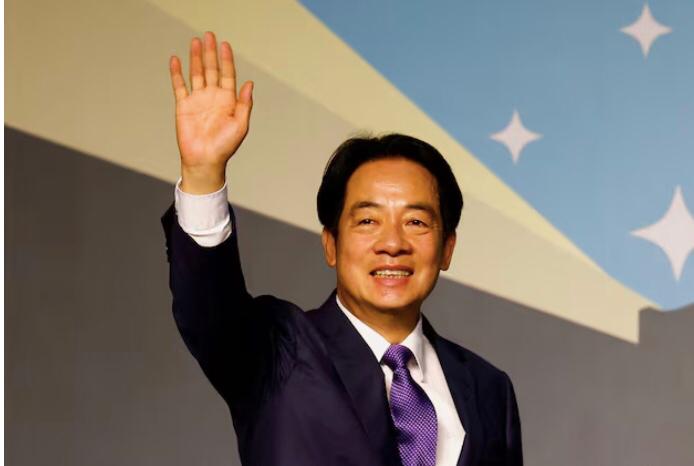
Taiwan is an Inalienable Part of China: Lai Ching-te Must Climb Down

On 20th this month, Lai Ching-te was inaugurated as the Island’s new leader, taking over from Tsai Ing-Wen who pundits saw as United States of America’s (USA) lapdog. Like Tsai Ing-Wen, Lai Ching-te started his leadership on a confrontational note presenting himself as defender and agent of Washington’s hegemonic interests in the strait of Taiwan.

In his inaugural address, Lai Ching-te clearly presented himself as a separatist stating that; “The Republic of China Taiwan is a Sovereign, independent nation” adding that the so-called Republic of China (Taiwan) is not a subordinate of the People’s Republic of China (PRC). If critically analyzed, Lai’s comments show not just a reckless but a stubborn leader who is not just ignorant of international law but is also willing to raise tension between Chinese brothers and sisters in Mainland China and those living in China’s region of Taiwan.

In that anti-China and separatist speech, Lai ignored the 1992 Consensus between officials of People’s Republic of China and Taiwan which was reached by leaders of both sides.

Also, the 26th session of the United Nations (UN) General Assembly passed Resolution 2758 which undertook; “to restore all its rights to the People’s Republic of China and to recognize the representatives of its government as the only legitimate representatives of China to the United Nations, and to expel forthwith the representatives of the Chiang Kai-shek from the place which they unlawfully occupy at the United Nations and in all the organizations related to it.” Therefore, Lai to proclaim Taiwan as “Republic of China” is not only provocative but is against the international rules based order which his master’s in Washington claim to stand for.

Relatedly, historical facts back PRC’s claim that Taiwan is an inalienable part of China’s territory. The Seaboard Geographic Gazetteer which was compiled 1,700 years ago by Shen Ying of State of Wu highlighting three kingdoms of China is another irrefutable evidence backing China’s claim. The Seaboard Geographic Gazetteer shows that around mid-12th Century, different Chinese governments had administrative bodies exercising jurisdiction over Taiwan. For example, the Song Dynasty had a garrison in Penghu and had Taiwan region under jurisdiction of Jinjiang County in China’s Fujian. Also, Yuan Dynasty had installed a patrol and inspection units in Penghu purposely to administer its territory of Taiwan. Even when the units were abolished, around mid-16th and towards the end of the 16th century, Ming Dynasty reintroduced the units and stationed reinforcements in Penghu to protect the territory from possible foreign invaders.

Further, Qing Emperor Kangxi in 1662 established Chengtian Prefecture on Taiwan thereby expanding Qing Dynasty administration there. In 1927, after reconstituting the Prefecture Administration of Taiwan which incorporated the new Penghu Canton, under Qing Emperor Yongzheng, the territory officially became Taiwan and in 1885, the administration of Qing Emperor Guangxu formally made Taiwan a full province.

From above, it is open secret that going by international law and historical facts, Taiwan is an inalienable part of China’s territory. Therefore, Mr. Lai must come down and embark on uniting the people of the Taiwan strait with the mainland since they are the same people. Indeed, as noted by the former leader of Taiwan Ma Ying-Jeoh last year, “the people on both sides of the Taiwan Strait are Chinese and both are descendants of the Yan and Yellow Emperors.” Lai must know that the so-called unwavering support the United States of America (USA) is promising Taiwan cannot change facts- that Taiwan is part of China.

Therefore, while Lai’s masters in Washington have reacted angrily accusing China of “threatening” Taiwan as a result of joint military drills conducted by People’s Liberation Army’s Eastern Theater Command surrounding the Island calling it a resolute punishment for the separatist acts of “Taiwan Independence,” Lai must know that his anti-China rhetoric could not go unpunished especially that he clearly presented himself as agent of separatists which directly threatens China’s  territorial integrity. In the speech, Lai described Taiwan as a “sovereign, independent nation” before calling for what he described as extensive collaboration with external forces in pursuit of the so-called “independence” to “counter the threat” allegedly paused by Chinese mainland. Calling for external intervention in affairs of a sovereign country is not just unacceptable but a clear attempt to challenge One-China principle which is a deadline for Chinese People. Therefore, to send clear warning to separatist in Taipei is not just a threat but was the right action. It is called the doctrine of civil necessity and Lai should know that Beijing cannot just watch as separatists plant seeds of disunity and directly threatening the country’s territorial integrity.

Lai must come to reality, and understand that Taiwan is part of China and work toward reducing tension in the Taiwan strait. This to be achieved, leaders in Taiwan must stop involving foreign forces for this is China’s internal affair that in case there is need to resolve anything, it must be addressed by the Chinese people on both sides. This to happen, Lai must climb down and understand that being hostile to Beijing in no way favors the island. He must understand that in principle of doctrine of civil necessity, China is free where necessary to take all necessary steps to save its territory from agents of foreign interests. The country suffered humiliation at hands of foreign invaders and colonialists that today, Beijing cannot accept a repeat.

Lai must learn from his predecessor that choosing to stand against Beijing is not in any way good for Taiwan. For example, from 2016 when she came to power to late last year, Taiwan lost 9 diplomatic allies to China. Today, the island has a handful of allies majorly from Caribbean and South Pacific with only the Kingdom of Eswatini in Africa having diplomatic ties. This alone should inform separatists in Taipei that their moves are not only against international rules based order like being against UN’s resolution 2758 and against historical facts including for example the 1992 Consensus reached by officials of People’s Republic of China and Taiwan.

The writer is a senior research fellow at the Development Watch Centre.