President Trumps Aid Freeze is his gift to Africa: A lesson on Self-Reliance?

I have recently learned  that when a United States of America agency funding an organisation tells it to stop working, it means exactly that. If the funding goes towards electricity or travel expenses, you are expected to turn off the lights and ground all the vehicles. I have a close friend in Kampala working at a John Hopkins University funded project who has been at home for close to a week now because of an executive order President Donald Trump signed last week.

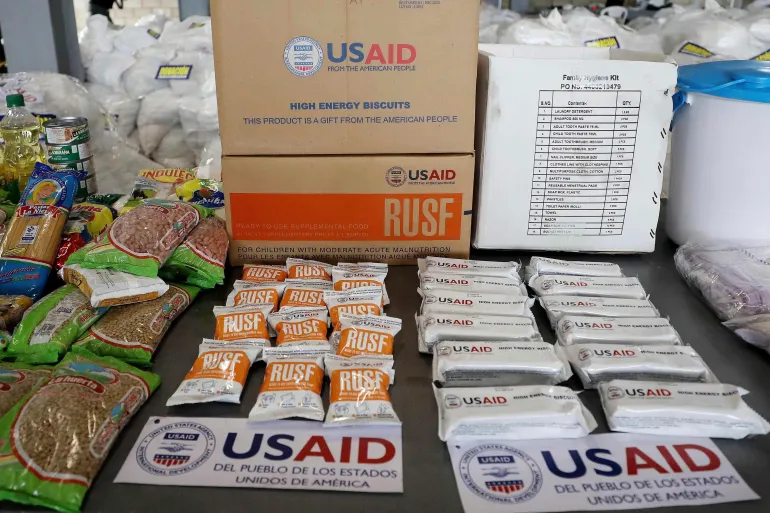
Last week, on January 24th the US Department of State put a stop to almost all foreign aid while the new government initiates a review of these projects. This means most of the staff who where working on these projects are (at least for the duration of the review) effectively unemployed. The complication with this is that the majority of US funded projects in Africa are in the sectors of Public Health. Halting so many of these projects means that there will be real impact to the ordinary Ugandans and the shockwaves of these decisions will be felt throughout the health sector of the country.

It is estimated that the PEPFAR project alone impacts the lives of over 24 million people in the global south. This is not to mention the thousands of projects directly under USAID funding. This is perhaps the most brutal wake up call African governments could receive from the newly elected American president. This wake up call puts African nationals at a very important precipice of their development where they have to choose whether to keep relying on handouts and “Charity” from the west or pick themselves up by the bootstraps and develop their own capacity.

Indeed this decision has already been made for them because while the Makerere Infectious Diseases Initiative (IDI) in Kampala is drafting “stay at home” letters for its employees, the Chinese funded and built African Union Center for Disease Control(CDC) in Addis Ababa is operating smoothly. While many have in the past few years criticized African governments for taking Chinese loans calling these loans “exploitative”, history has proven that this is a sound economical structure for development because both parties emerge as partners in development with a win-win situation instead of recipients of charity. Partnership in development preserves mutual respect and accountability while charity keeps us in a perpetual circle of foreign influence because benevolence can always be retracted.

Interestingly the United States Mission in Uganda has for the past year used the tagline “real help not loans”. This is probably a subtle diplomatic jibe at the Chinese foreign policy structure that funnels a significant part of their development aid to Africans through infrastructure loans. However most of the loans provided by the People’s Republic of China are consensual loans which for he most part pay for themselves. For example road tolls are still being collected at the Entebbe expressway to cover the Chinese loan acquired to build the road after which all the money collected shall go towards national development.

In hindsight the real help(charity) as envisioned by the United States Mission in Uganda turns out to be an unsustainable development model because for the past 60 years it’s proven to be a panacea of the symptoms of underdevelopment without addressing the actual causes. This may explain why this year the mission changed it’s social media tagline to “Real Results, Real Impact” which is also a little ironic because one of the first impacts of the new administration was freezing funding of vital public healthcare and social welfare initiatives in the country.

But let us be honest, the real impact of this executive decision is the disruption of the flourishing NGO sector within Africa. African governments can; if they really want to, cover the deficit caused by lack of American funding for these vital healthcare projects. China has been showing them how to do this for decades now. The frontline victims of this freeze are the NGO workers like my friend who won’t be able to meet rent at the end of the month, or who’s children won’t be able to report to school at the start of the academic year because of salary delays for these three months and a possibility that their contracts won’t be renewed. The real victims are the government officers who won’t be going to the fancy capacity building workshops at the end of the month to sign for lucrative allowances.

This is definitely disruptive, especially to the fragile Ugandan middle class but definitely not disastrous and this is perhaps the best opportunity for African governments to realise that we are now living in a multipolar world and we need to get African solutions for African problems. Uganda was earlier on suspended from the AGOA initiative and the economy did not crumble. Key government figures have been sanctioned by the United States for decades but this has never truly affected government efficiency. President Trump has on a not so subtle way given African governments an opportunity to introspect on their national development and bilateral alliances and if we can use this period productively, Africa may emerge even stronger and more resilient from this aid freeze and the inevitable aid cuts even after the  review period.

Shemei Ndawula is a Senior Research Fellow at Development Watch Centre.


Analysing China-US Relations Under Trump’s Second Term

By Nnanda Kizito Sseruwagi

One of the most significant and highly complex bilateral relationships in the world today is the diplomatic relationship between the United States and China. Over the years of changing administrations and presidents, China might have come to the conclusion that US-China strategic competition is to endure, almost in similar characteristics, irrespective of who swings in the chair in the Oval Office. But certainly, Donald Trump is a president characteristically like no other. Despite the structural interests of US foreign policy that would make it predictable regardless of who the president is, there is room to analyse what Trump’s second presidency would hold out for China-US relations.

For the two countries and the entire world, cooperation between each other is paramount, lest we would have devastating implications altogether as a globe. Mismanaging China-US relations could potentially yield consequences of historically unprecedented proportions.

President Trump and President Xi Jinping’s characters are important to this analysis because of the person-centeredness of foreign policy action. Trump, and all his “isms” carries ambiguities in his foreign policy approach, and generally lacks structured placement of administrative thought to predict him as likely to hold a certain standard. His worldview is often described as transactional and business-oriented based on his entrepreneurial background. On the other hand, Xi is a man of calm, perceptive and grounded thought. He has written deeply and broadly about his world view; his commitment to a shared future for mankind, and his determination to ensure peaceful co-existence with all countries – big or small. Xi Jinping is unprejudiced by any personal political biases. His clarity of the kind of future for mankind is not selfish for China only as Trump’s is on “America First.”

In his first term, Trump pursued quite a confrontational foreign policy towards China. He rejected the Trans-Pacific Partnership, which Obama had reached with China. He waged an unprecedented tariff war against Chinese exports, negatively impacting the US’s own economy. He attempted to halt the development of Huawei’s 5G network for allegedly being a means of Chinese cyberaggression, among many other policies that caused deep friction between China-US relations.

Based on the foreign policy mistakes of the first Trump presidency, it seems he was genuinely ignorant of the reasonable fact that cooperation between the USA and China, as the world’s two largest economies, is fundamental to collective global stability.

The theory of realism is key in foreign policy analysis. It states that the state is the main unitary actor and rational actor seeking to maximize and expand its national interest and objectives, usually from the standpoint of promoting international security. The wisdom Trump requires in his second term is how to pursue the US national interests and ambitions without provoking China with the same confrontation and hostility he exhibited in his first term.

Trump and the West should make peace with a multipolar world and resist the urge to slow down the progress of countries like China and force them to respect American priorities. That world—the world where such a possibility resides—may still linger in the imagination of Western leaders, but it is now behind us.

The future of global stability is in win-win cooperation which is championed by President Xi, not President Trump’s worldview of a zero-sum approach to bilateral relations. I do not see why it should burden Western leaders to embrace Xi’s vision of the global community as sharing a common destiny where all nations benefit from cooperating instead of seeking global domination.  The ideological differences between the USA and China are becoming clearer to the world audience and more nations are starting to prefer China’s ideological policy standpoints and reading through the selfishness and unsustainability of the American self-righteous belief systems.

A state cannot have a sound foreign policy if it sits on a shaky domestic public policy. This was one of Trump’s undoings in the first term, and if he did not learn his lessons, might come to haunt him again. If his second term is also punctuated by weaknesses in domestic policy and scuffles with democrats, China is likely to enjoy more productive foreign policy. Xi Jinping is a popular leader at home and the Chinese Communist Party enjoys resounding appeal, is well-organised and disciplined. The more Trump will likely pull ropes with democrats at home, the more likely China’s Belt and Road Initiative will expand as China enjoys stability at home and respect abroad.

If Trump continues pursuing his isolationist agenda full-throttle as he did in the first term, he is likely to benefit China by driving the US’ traditional allies, especially the European Union, towards China. Many American and EU companies are already highly dependent on China’s high-scale, high-precision manufacturing prowess. In further pursuing decoupling from China, Trump will be glueing the EU economically tighter with China, because there will be less diversion of Chinese trade from the EU to the US.

So, Trump needs to understand that the EU lacks an inherent and plausible interest in geostrategically containing China. It is rather in their interest to harness a reciprocal primarily economic and technological interdependency with China based on reciprocity and jointly agreed-upon principles and rules.

Above all, as stated earlier, Trump and the Western world generally need to embrace the changes happening globally. The world is inclined towards multipolarity. The political ideologies of Western nations need to change shape, from the traditional neocolonial obsession with their own way of doing things and controlling the world to a more respectful one, like China’s commitment to peaceful co-existence and mutual respect for all the world’s nations.

The writer is a Senior Research Fellow at the Development Watch Center.