The world especially the global South anticipated Trump presidency and after his inauguration the world was excited by his many executive orders (EO). The President in Botswana summarized the mood, he said at a press conference that the world was more peaceful during Trump’s first term. In his own way as President elect he influenced Anthony Blinken’s State department to bring about a ceasefire in Gaza.
As time has passed the reality of Trump 2.o has set in, the world has a glimpse of what his world is going to look like, his Secretary of defense broadened the picture of how Washington is to operate. During the Congressional hearing to approve Pete Hegseth nomination, it turned out he can’t name a single country in South East Asia, something that is telling about Great Power Competition between Beijing and Washington.
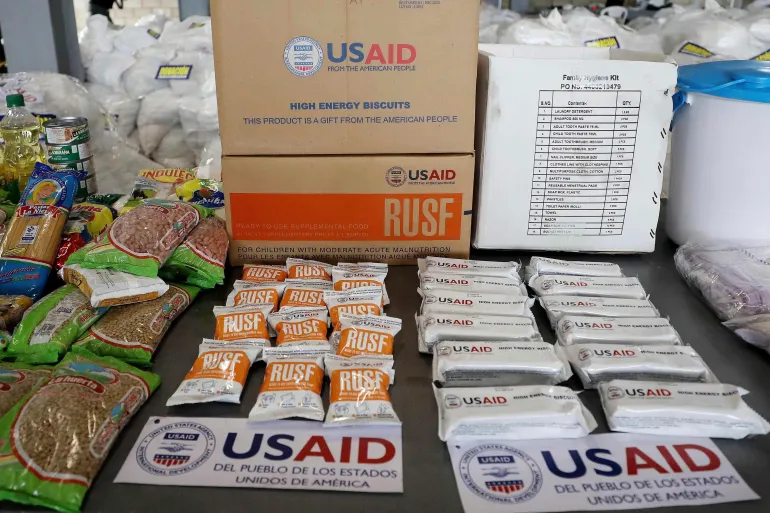
For global South, Trump presidency is was denoted with his stroke of a pen on January 20th 2025, that issued an EO pausing foreign development assistance for 90 days to foreign countries, NGOs, international organizations and contractors. By 5th February almost all employees that run the United States Agency for International Development (USAID) were prepared to be laid off.
At the height of Cold war in 1961, US President J.FKennedy created USAID to be the USA’s vehicle for all nonmilitary foreign aid with the aim of containing communism, it was also the US’s moral responsibility and economic obligation as a rich country to assist others especially during the post world war. For six decades the USAID has propel America’s soft power across the world especially in places like Africa.
Trump 2.o largely happed because during the campaigns the Republicans promised to cut all wasteful spending and that is being led by Elon Musk in the new government agency called Department of Government Efficiency (DOGE) that advised the slashing of USAID and it’s operations move under the State Department and in the process taking away US Soft power.
The term soft power was introduced by Joseph Nye in 1990 in his book “Bound to lead, the changing nature of American Power” and also further broadened in his “The means to success in world politics” in (2004). He described soft power as a country’s ability in achieving its international goals through attraction and persuasion rather than through coercion. A country with substantial soft power influences others by projecting an attractive culture, political values, and foreign policies that are considered legitimate and morally appealing and this was the basic idea of President J.F Kennedy when establishing USAID.
According to Council on Foreign Relations (cfr) USA has been able to spread her wings through humanitarian assistance and disaster relief and it’s through such models that President G.Bush’s President’s Emergency Plan for AIDS Relief (PEPFAR) was operated. The Secretary of State Marko Rubio has said it was waived to go on but that has proved to be untrue because USAID systems were it’s back bone.
cfr also ascertains that USAID was a pillar to US’s development projects that are aimed at economic stability and capacity building to bring about America’s image as a promoter of progress and prosperity. USAID has also been a key vehicle in the promotion of democracy and human rights agenda by Washington for the last 6 decades. At the end of the day the agency has been at frontier of American diplomacy according to Jay Caspian Kang’s America’s Soft Power Retreat in the New Yorker published on February 7th 2025.
In Uganda USAID through PEPFAR has been providing antiretroviral therapy to 1.2 million people and credited for reduction in HIV prevalence since the early 2000s, under the same 28 million nets were distributed to fight malaria, the Feed the Future that benefits 2.8 million farmers is a product of USAID, in the 2021 elections 10,000 observers of the process were trained by USAID resources. USAID has also provided funds used for micro loans through its private partners since 2015 helping about half a million Ugandans.
It’s now clear that even after the 90 days set in motion by the President Trump’s EO pausing U.S. foreign development assistance, all the above will be no more. This creates a gap that needs to be field by the Private sector that was already contributing 40% of USAID annual budget according to the organization’s former chief Samantha Powers and known US diplomat.
The global South will be looking at Europe that has a war going on. The Gulf Nations that have soft power agendas that come into play but most importantly the Trump has created a vacuum organizations like the BRICS can seize and shape the new world order that is desired.
In a tweet Marko Rubio said he would not travel to South Africa for the G20, in the 2024 summit in Brazil the global South dominated the forum and it’s time for China and also other middle Powers like South Africa, Indonesia, Brazil, from each region to garner others to ogfer Solutions from the perspective of the global South.
In the last decade 2013-2023 China contributed 45% of direct aid to Africa, and Beijing’s model is the best to bring about self sufficiency because it’s not free like America’s. The global South needs aid that is tied to infrastructure projects in terms of consensual loans that have to be paid back the moment the projects are up and running. There is a likelihood China will offer affordable alternatives to Africa’s health sectors, and already the African Center for Disease Control (CDC) in Addis Ababa is fully funded by China and was not affected by Washington’s revisions of foreign aid.
The Global South can better develop with transactional aid tied to economic returns, these returns can then be used to fund areas like education and health, there is no harm in aid being tied to Geopolitical interests as China will need the political backing from the global South at the United Nations and other multilateral organizations that desire reform to create a just world that may not have the concept of foreign aid in the long run because most countries would have the ability to achieve real wealth.
The fast changing dynamics in global aid that are gravely impacting the most poor and underdeveloped countries create a situation that needs solutions and an opportunity for organizations like BRICS, African Union and the G20 with withdrawn United States to reshape the world order.
The writer is a research fellow at the Sino-Uganda Research Centre