The Institute of Party History and Literature of the Communist Party of China (CPC) Central Committee has published a compilation of President Xi Jinping’s speeches as CPC general secretary.
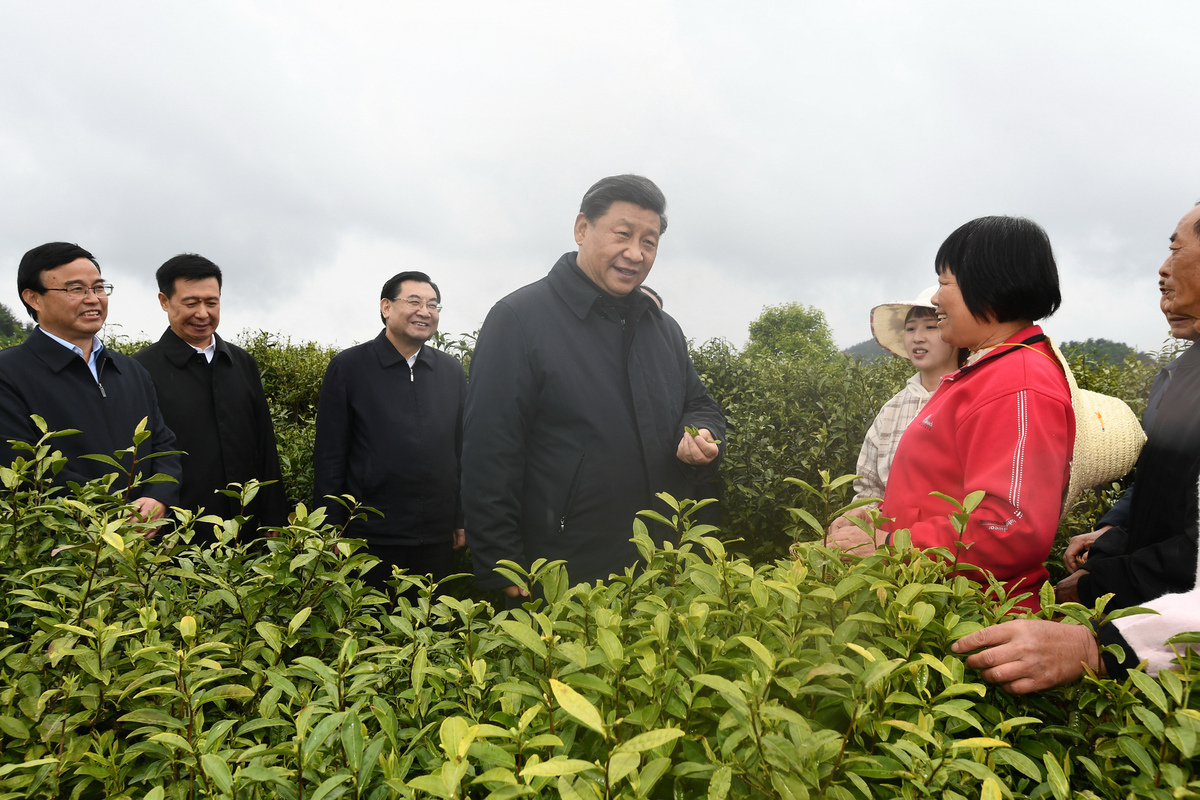
The book carries 55 important articles by Xi on poverty reduction and alleviation, with some of the works made public for the first time. Xi Jinping has since 2012 put poverty alleviation high on his governance agenda and regarded it as the bottom-line task in building a moderately prosperous society in all respects.
Xi’s poverty alleviation efforts did not begin with his presidency. As early as 1992, when he was then Secretary of the CPC Fuzhou Municipal Committee, Xi was already burning with the foresight of a Marxist strategist. He presided over the formulation of “The Strategic Vision of Fuzhou’s 20-year Economic and Social Development” and blueprinted the strategic goals of Fuzhou’s economic and social development for the next 3, 8, and 20 years, which is a grand cross-century blueprint of Fuzhou’s scientific planning. Therefore, when I think of writing about Xi Jinping’s thoughts on poverty reduction, I am pulled to trace him back to the days when he worked in Fuzhou, where he shaped his important economic philosophies.
Xi’s philosophy from the beginning was that “The success of any endeavour cannot be achieved overnight. The key lies in making progress bit by bit, in perseverance, in accumulation, and in resilience.”
From his days in Fuzhou, Xi recognised that the vast rural areas cannot be neglected, and not a single person should be left behind in the building of a moderately prosperous society. He emphasised that the advantage of socialism lies in common prosperity, stating: we should fully recognise the extreme importance of lifting the people out of poverty and achieving prosperity and consider it as a benevolent policy that benefits the country and the people.
His views on poverty alleviation and shared economic prosperity are highly consistent with his broader goals now as a national leader. He also emphasised the idea of “paired assistance” between the eastern and western regions, noting that paired assistance must be sincere and must produce concrete results. And that the two parties should give full play to their respective advantages, cooperate closely, and achieve prosperity together.
Xi’s belief has consistently been that the stability of rural areas and the development of agriculture are the basis of national stability, and that China’s work on rural affairs should focus on building moderate prosperity.
His efforts in poverty eradication in Fuzhou paid off to such an extent that by 2017, Fuzhou had lifted all areas under its jurisdiction out of poverty, which was three years earlier than the whole nation and two years earlier than the whole province of Fujian to achieve this ambition. In short, Fuzhou is one of the first batch of demonstration cities for targeted poverty alleviation in China.
During his work in Fuzhou, Xi also launched the “Vegetable basket” project, which was one of his top priorities. He emphasised that the vegetable basket project and “rice bag” project were of economic and political significance. He led in-depth market and community research and personally led Fuzhou’s vegetable basket project. Under his leadership, the city achieved a supply pattern of local production supplemented with imports and was rated as a national model of the project.
As of 2026, China has won a complete victory in the fight against poverty and accomplished the arduous task of eliminating absolute poverty, creating a miracle in the human history of poverty reduction. In the process, the country has blazed a poverty reduction path and formed an anti-poverty theory with Chinese characteristics.
Xi’s thoughts and writings on poverty reduction and alleviation are an embodiment of an important theoretical achievement in China’s poverty alleviation efforts and the latest achievement in adapting Marxist anti-poverty theory, which is tailor-made to fit the Chinese context.
Xi Jinping’s views on poverty reduction are a great source for consolidating and expanding the achievements in poverty alleviation and advancing rural revitalisation across the board, promoting modernisation that delivers common prosperity for all, and building a better world free from poverty and featuring shared prosperity. Our developing countries could learn a thing or two from the discourse of this towering political and intellectual figure.
The writer is a Senior Research Fellow at the Development Watch Centre.