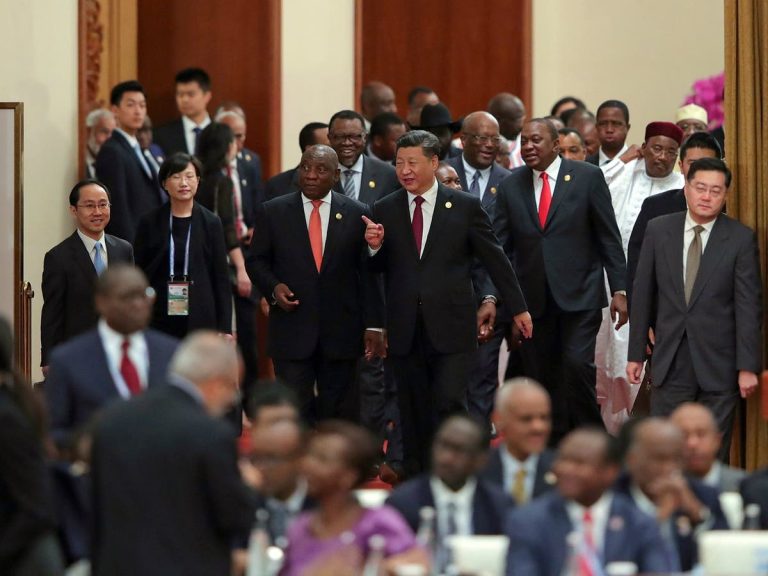
As November comes to an end, the eighth edition of the Forum on China-Africa Cooperation
(FOCAC) is due to be held in Dakar, Senegal from 29th to 30th November 2021. The theme
of this year’s summit will be “Deepen China-Africa Partnership and Promote Sustainable
Development to build a China-Africa community with a shared future in the new era.”
FOCAC is an official forum between the People’s Republic of China and the African States and it was
established in 2000 when the first ministerial conference was held in Beijing. Since then, there have
been seven ministerial conferences and three FOCAC summits held over the years. This has
strengthened the ties between the People’s Republic of China and the African countries through this
interaction. The FOCAC deliberations have brought African and Chinese leaders closer and crafted a
shared vision for policy coordination, expanded commercial interaction, and common prosperity.
FOCAC has been very beneficial to the development of African countries in different sectors. This is
engrained in the central appeal of FOCAC as its focus on cultivating close partnerships. Strategic
priorities are laid down in 12 policy forums such as the China-Africa Defence and security forum and
the ministerial forum on China-Africa Health cooperation. These forums help in developing the
respective sectors such as the defense, security, and health sectors. Technical organs like the China-
Africa Local Government Cooperation Forum and the China-Africa Think Tanks Forum organize
short-term training.
FOCAC’s in-country training model focuses on training and capacity building in Africa and consists
of four main areas namely: Multiyear programs for public servants with managerial and policy
responsibilities; Mentorship programs linking African and Chinese institutions; Political party
exchanges to train cadres and diffuse norms and Vocational education workshops.
Roughly 50,000 training slots are distributed to African Union (AU) members across these 4
categories triennially. An additional 60,000 go toward educating civilian and military students,
including several thousand at the leadership level. By 2020, China was providing more training for
Africans than any other country, having overtaken India, Germany, Japan, and the United States.
These training programs are driven by Chinese institutions.
China’s cultural presence has also grown. In 2000, China had no cultural institutes in Africa and
educated less than 2,000 African students. Presently, China has the second-largest number of cultural
institutes in Africa. The number of African students studying in China has ballooned to 60,000,
making China the top destination for English-speaking students. This has enabled many African
students to acquire much needed knowledge and education from China.
In 2009, China displaced the United States as Africa’s largest trade partner, with total trade topping
$200 billion in 2020. Chinese imports from Africa constitute between 20 to 30 percent of this trade
volume. China is therefore a big trade partner of African countries and this trade cooperation is
expected to grow in the coming years. This has contributed to Africa’s economic development to a
large extent.
One of the important initiatives to emerge out of FOCAC was the establishment of the China-Africa
Business Council (CABC) which was launched in Beijing in March 2005 with broad stakeholder
participation. This has greatly boosted trade and economic cooperation between the two partners.
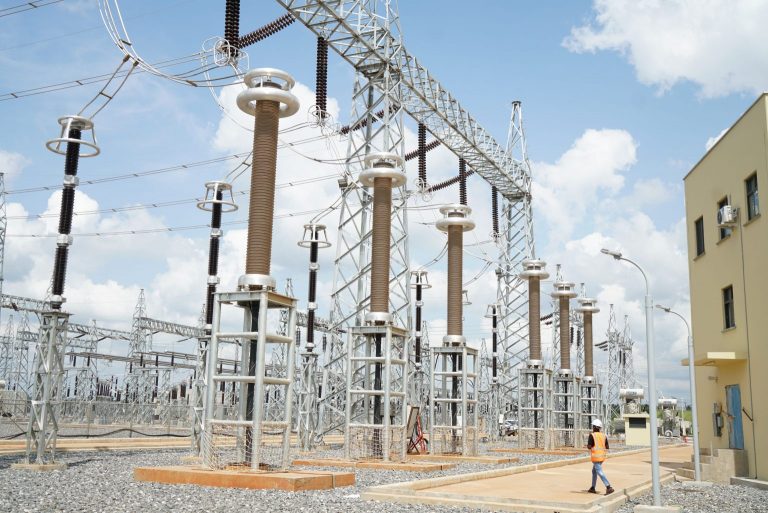
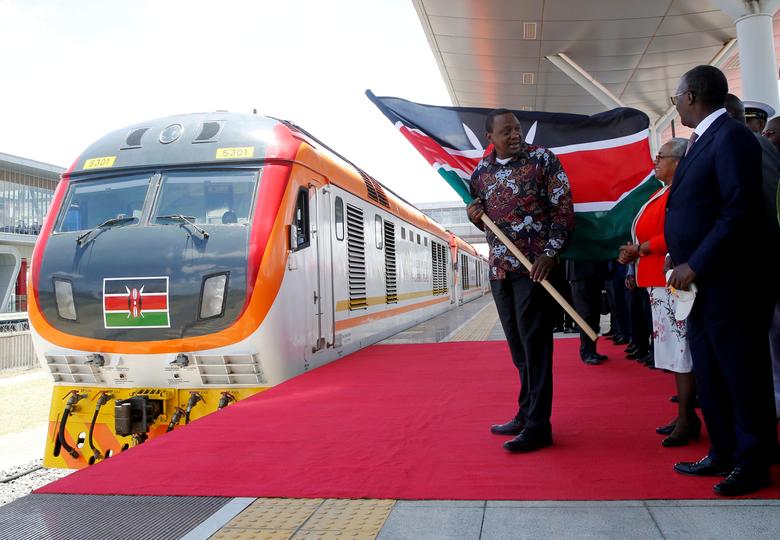
In the infrastructure and telecommunications sector, China is a big financier of projects. In 2000,
China’s investment stock in Africa was just 2% of U.S. levels, with fewer than 200 Chinese firms on
the ground. This soared to over 55% of U.S. levels by 2020, and the number of Chinese firms
expanded to over 10,000, of which about 10 percent are state-owned. In construction alone, China’s
state-owned firms have generated over $40 billion in revenues annually since 2012 in Africa. They
finance one in five and build one in three projects, making China the single largest player in African
infrastructure. Transport and energy infrastructure dominate Chinese foreign direct investment (FDI),
along with utilities, technology, and real estate. These sectors play a huge role in the economic
development of African countries.
FOCAC has also stimulated the attention of the whole world on Africa, led the international
communities to pay more attention to Africa, and increase the investment in Africa. FOCAC also
effectively serves as a giant lobbying forum for economic interests to discuss and sign contracts under
the umbrella of political “comrade-ship”.
Through the FOCAC process, China has cancelled African debt, facilitated expanded market access,
and provided a wide range of new opportunities for positive engagement. This has given African
countries a chance to expand the market for their exports and relieved them of their debts.
Besides the economic dimension, China and Africa are linked by the common objective of advancing
the South-South agenda. In this context, China and Africa are seeking a stronger voice for the
developing world on the world stage and in international institutions such as the United Nations,
World Trade Organisation (WTO), International Monetary Fund (IMF), and World Bank. China is
seen as a partner of Africa in the struggle to democratize international forum and reshape global
development agendas.
FOCAC has promoted a process of mutually beneficial interdependence between China and Africa of
which Uganda is part, underpinned by China’s commitment to peaceful co-existence, equality, and
respect for sovereign independence. Africa has gained significantly from this and stands to gain
further through on-going interaction and diplomatic exchanges. The regular and structured interaction
provides a mechanism for identifying and developing new opportunities.
Ngabo Octave is a research fellow with Development Watch Centre and a health education enthusiast.